I. Introduction: From Beijing’s Podium to Milano’s Challenge
The image is seared into the memory of a nation. It shows a jubilant Slovakian men’s hockey team draped in bronze medals. They are standing on the Olympic podium in Beijing. The 2022 Winter Games marked a watershed moment for Slovak hockey. It was the country’s first-ever Olympic medal in the sport. This cathartic triumph reverberated from Bratislava to Košice. This victory was achieved without the gloss of NHL superstars. It was a testament to meticulous preparation. The team had unwavering spirit. The masterful tactical system was implemented by Canadian coach Craig Ramsay. The campaign was defined by the collective effort. It was also immortalized by the singular arrival of 17-year-old Juraj Slafkovský. His seven tournament-leading goals earned him MVP honors. This achievement announced his arrival on the world stage.
Four years later, as the hockey world turns its eyes to Milano Cortina, the landscape has fundamentally changed. The 2026 Winter Olympics will see the much-anticipated return of NHL players. This return is a paradigm shift. It presents both a tantalizing opportunity and a complex challenge for Slovakia. On paper, the team will be immeasurably more talented. The teenager stunned the world in 2022 with his precocious talent. He is now a bona fide top-six power forward for the Montreal Canadiens. He will be joined by a cohort of battle-hardened NHL defensemen and a new wave of high-draft-pick prospects. Yet, this infusion of elite talent creates a fascinating paradox. The very formula forged the 2022 bronze because of an underdog identity and disciplined execution of a defensive system. The sum was greater than its parts. This formula is now subject to a new, more volatile set of variables.
This preview will explore the central conflict facing Team Slovakia. Can it successfully integrate its top-tier NHL talent into a cohesive, winning team concept? Or will the weight of heightened expectations and a new coaching regime prove too disruptive? Craig Ramsay was universally beloved. He stepped away due to health issues. The transition to his former assistant and national hockey hero Vladimír Országh is the most critical factor in this equation. Országh’s interim tenure at the 2025 IIHF World Championship ended in a disappointing 11th-place finish. This outcome has already raised questions. Can the magic of 2022 be recaptured? The journey to Milano is no longer about surprising the world. It is about proving that Beijing was not an anomaly. It marks the dawn of a new era for Slovak hockey.
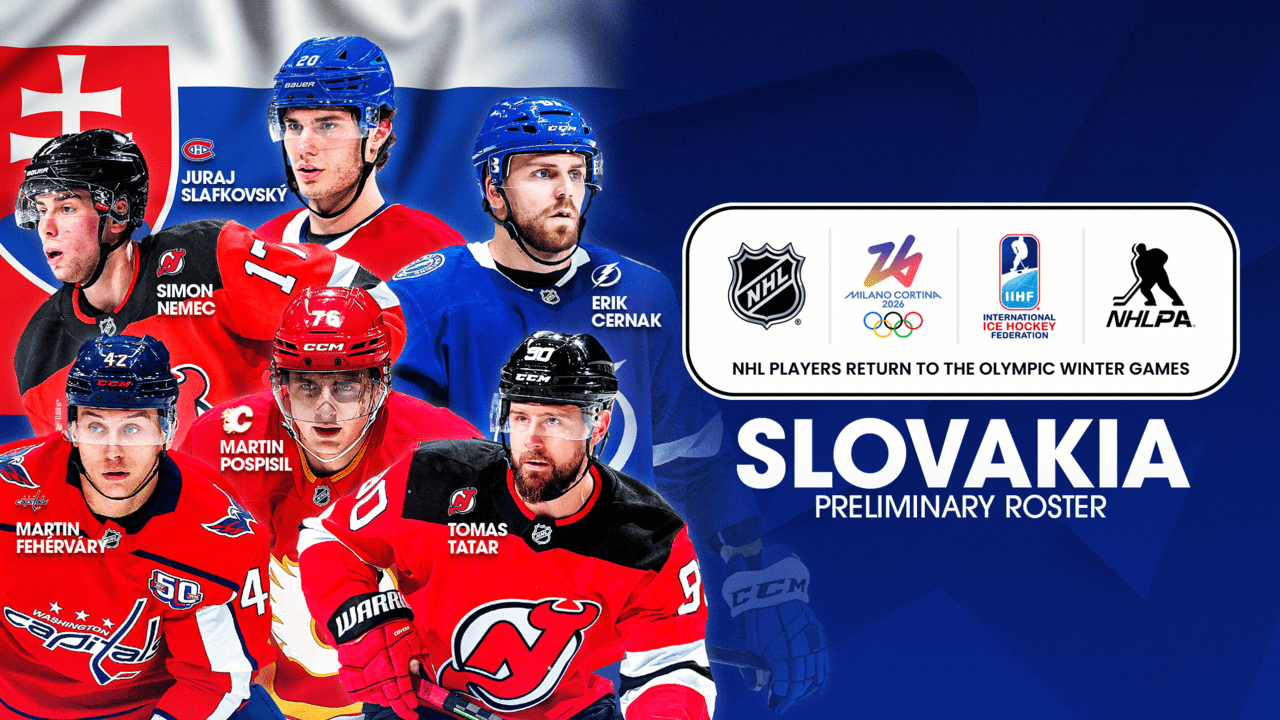
The return of NHL players represents more than just an upgrade in skill; it fundamentally alters Slovakia’s strategic identity. In 2022, they were a quintessential systemic underdog. Their roster was composed primarily of professionals from European leagues. They relied on flawless execution of Ramsay’s defensive structure. This strategy was used to frustrate more talented opponents. They capitalized on timely scoring. Their path to victory was narrow, predicated on every player buying into a disciplined, collective effort. The 2026 team, by contrast, will be a more top-heavy, star-reliant squad. Slafkovský, Šimon Nemec, Erik Černák, and Martin Fehérváry are key players. Their presence means that success is no longer solely about the integrity of the system. Their success now depends heavily on the performance of their best players. These players must consistently outplay the elite talent from powerhouse nations like Canada, the United States, and Sweden. This shift dramatically raises both the team’s potential ceiling and its potential for collapse. While the raw talent exists to challenge for a higher place on the podium, the team is also more vulnerable. The team might struggle in the tournament’s later stages if their NHL stars are neutralized by the world-class opposition. The team’s depth may not suffice. This makes their performance more volatile than their methodical march to bronze in 2022.
II. The New Guard: The Slafkovský-Nemec Era Arrives
The foundation of Slovakia’s hopes for 2026 and beyond depends on a new generation of talent. This group is led by the two highest NHL draft picks in the nation’s history. These players are not just future stars. They are the present. They are tasked with leading the team on the world’s biggest stage.
Subsection A: Juraj Slafkovský: The Olympic MVP Returns
Juraj Slafkovský’s performance at the 2022 Beijing Olympics was the stuff of legend. As a 17-year-old, he shouldered the offensive burden for his country. He scored a tournament-best seven goals in seven games. He was named the tournament’s Most Valuable Player en route to the historic bronze medal. He was not just a contributor; he was the primary driver of their success. Four years later, he returns to the Olympic stage. He is no longer a prodigious teenager; he is now a dominant NHL power forward.
His development with the Montreal Canadiens has been swift and impressive. The raw tools—size, skill, and a blistering shot—that were on display in Beijing have been honed. He developed them against the world’s best competition. In the 2024-25 NHL season, Slafkovský firmly established himself as a top-six force. He posted 18 goals and 33 assists for 51 points in 79 games. His statistics tell the story of a complete player. He has a positive plus-minus of +4. His physical presence is demonstrated by 194 hits. He has proven he can produce offensively while playing a responsible, physically demanding game. For Team Slovakia in 2026, his role will be unequivocal: he is the offensive centerpiece. The power play will be designed to run through him. He will be expected to generate scoring chances on every shift. The pressure to replicate his 2022 magic will be immense. This time, he will face starting lineups populated by NHL All-Stars. His rapid NHL development has prepared him for this challenge.
Subsection B: Šimon Nemec: Quarterbacking the Blue Line
Defenseman Šimon Nemec was selected just one pick after Slafkovský in the 2022 NHL Draft. He was the other teenage cornerstone of the 2022 bronze-medal squad. His calm demeanor and elite puck-moving skills were evident even then. His transition to the NHL with the New Jersey Devils has confirmed his status as a future top-pairing defenseman.
His 2024-25 season statistics show 2 goals and 2 assists for 4 points in 27 games with a -10 rating. These stats reflect the steep learning curve for a young defenseman in the NHL. However, they do not tell the full story. His poise under pressure was showcased during the 2025 Stanley Cup Playoffs. He scored a dramatic double-overtime game-winning goal. This moment highlighted his big-game temperament. In Milano, Nemec will be entrusted with a top-four role on the blue line, tasked with quarterbacking the transition game. He can cleanly exit the defensive zone. He can then initiate the rush. This ability will be a critical link in activating Slovakia’s offense. He is the natural choice to run the second power-play unit, where his vision and passing can be fully utilized. Alongside the team’s veteran defensive stalwarts, Nemec provides the modern, puck-moving element essential for success in today’s international game.
Subsection C: The Next Wave: Dvorský, Sýkora, and the Prospect Pipeline
Beyond the top two picks of 2022, Slovakia boasts an impressive pipeline of prospects. They are on the verge of making their mark. These players will be crucial for providing the team with much-needed depth.
- Dalibor Dvorský (St. Louis Blues): Selected 10th overall in the 2023 NHL Draft, Dvorský is the high-skill center Slovakia has craved for years. He excelled during his first professional season in North America in 2024-25. He dominated the AHL with 21 goals and 45 points in 61 games for the Springfield Thunderbirds. He also made his NHL debut with the Blues, appearing in two games. He is expected to be a key offensive contributor. He will likely center the second line. He adds a dynamic scoring threat down the middle.
- Adam Sýkora (New York Rangers): A second-round pick in 2022, Sýkora is the prototypical energy forward. He is known for his relentless motor. His tenacious forechecking has helped him carve out a significant role in the AHL with the Hartford Wolf Pack. There, he produced 9 goals and 21 assists for 30 points in 71 games in 2024-25. Sýkora is perfectly suited for a third-line energy role on the Olympic stage. His ability to disrupt opposing defenses and contribute secondary scoring will be invaluable.
- Filip Mešár (Montreal Canadiens): Another first-round pick from the celebrated 2022 draft class, Mešár is a creative and skilled playmaker. He has been honing his professional game in the AHL with the Laval Rocket. He recorded 4 goals and 14 assists in 42 games during the 2024-25 season. He will be in a battle for a spot on the third or fourth line. His offensive creativity could provide a spark.
- Samuel Honzek (Calgary Flames): A towering forward and a 2023 first-round pick, Honzek brings immense size to the forward group. After making his NHL debut in 2024-25, he is expected to be a bottom-six power forward. He can use his frame to win puck battles along the boards. He creates space for his linemates, adding a physical dimension that will be crucial in tight-checking tournament games.
The rise of this new generation signals a profound strategic shift in how Slovak talent is cultivated. Historically, the national team was built around players seasoned in Slovakia’s domestic league or other top European circuits. The core of the 2026 team, however, is being forged in the crucible of the North American development system. Slafkovský, Nemec, Dvorský, Sýkora, Mešár, Honzek, and top goaltending prospect Adam Gajan are all affiliated with NHL franchises. They are spending their most formative years playing in the NHL, AHL, OHL, or NCAA. This deep immersion in the faster style of North American hockey ensures that this group will be uniquely prepared. The exposure is more physical and more direct. They will be ready for the type of game they will face against Canada and the United States. This marks a significant tactical evolution for the program. Unlike past Slovak teams, past squads often relied on a more patient approach. The 2026 squad will likely play a more aggressive game. They will focus on a faster style. They are expected to adopt a north-south approach. This approach is better suited to the smaller NHL-sized rinks that are standard in best-on-best tournaments.
III. The NHL Foundation: A Battle-Hardened Core
The young stars represent the team’s future and high-end potential. However, the established Slovak NHL veterans provide the crucial foundation of experience, leadership, and defensive integrity. This group will be tasked with the toughest matchups, setting the tone for the entire team.
Subsection A: The Shutdown Wall: Erik Černák & Martin Fehérváry
Slovakia’s greatest strength lies in its top-four defense. This features a formidable pair of shutdown specialists. They can match up against any forward line in the world.
- Erik Černák (Tampa Bay Lightning): A two-time Stanley Cup champion, Černák is the epitome of a modern shutdown defenseman. He combines a massive frame with surprising mobility and a mean streak. His 2024-25 season was a masterclass in defensive hockey, reflected in a stellar +29 rating. He was a physical force, delivering 156 hits and blocking 99 shots in 76 games. At the Olympics, his role will be clear: to erase the opponent’s top offensive threats and anchor the penalty kill.
- Martin Fehérváry (Washington Capitals): Fehérváry provides the perfect complement to Černák. A mobile, left-shot defenseman, he is equally physical and defensively responsible. He enjoyed a career year in 2024-25. He posted 25 points, a +18 rating, 139 hits, and a team-leading 150 blocked shots in 81 games. Together, Černák and Fehérváry form a punishing, elite defensive duo. They can log heavy, difficult minutes against top competition. This ability gives Slovakia a defensive backbone. Slovakia has rarely, if ever, possessed such a backbone in a best-on-best tournament.
Subsection B: Veteran Firepower and Grit: Tomáš Tatar & Martin Pospíšil
Balancing the youth movement up front are veteran forwards. They bring vastly different skill sets to the lineup. Both skill sets are equally important.
- Tomáš Tatar: Tatar is a 14-season NHL veteran. He will be the team’s elder statesman. He is a critical leadership voice in the locker room. He has previous Olympic experience, having represented Slovakia at the 2014 Games in Sochi. While his offensive production in the NHL has tapered off, he scored 17 points in 74 games in 2024-25. His international acumen remains invaluable. He recently moved to EV Zug in the highly competitive Swiss National League. This move shows he remains a productive player at a high level in Europe. He will provide secondary scoring and stability.
- Martin Pospíšil (Calgary Flames): Pospíšil was one of the NHL’s breakout stories during the 2023-24 season. He solidified his role in 2024-25 as a uniquely effective player. He combines relentless energy and high-end physicality with an underrated skill set. His staggering 301 hits in 81 games ranked among the league leaders, but he also contributed a respectable 25 points. Pospíšil is the type of player built for tournament hockey. He is an agitator who can get under the skin of opponents. He can change the momentum of a game with a big hit. He also chips in with timely offense. He provides a sandpaper element. This quality will be crucial for Slovakia to succeed in the Olympics’ emotionally charged atmosphere.
IV. The European Contingent: Forging Depth Across the Continent
Slovakia’s top-end talent is now primarily based in North America. However, the team’s depth and chemistry will be forged in the top professional leagues across Europe. These veterans must seamlessly fill crucial bottom-six and third-pairing roles. This ability will be a key determinant of the team’s overall success.
The Czech Connection
For years, the Czech Extraliga has been essential for the development of Slovak players. It also serves as their professional home. This shared league experience has fostered a built-in chemistry that is a significant advantage in short international tournaments. The 2022 Olympic and 2024 World Championship rosters featured many players from Czech clubs. The situation in 2026 will be the same. Based on their strong performances in the 2024-25 season, several players are expected to play key roles:
- Forwards: A cadre of reliable, two-way forwards will form the backbone of the bottom-six. Robert Lantoši (51 games, 42 points) offers offensive skill. Matus Sukel (52 games, 35 points) provides scoring prowess. Veteran playmaker Libor Hudáček (40 games, 30 points) adds experience and playmaking ability. Meanwhile, players like Marko Daňo (44 games, 26 points) bring scoring and grit. This mix is ideal for a fourth-line role.
- Defensemen: The defensive depth will be anchored by seasoned veterans from the Extraliga. Peter Čerešňák was a key member of the 2022 bronze medal team. He remains a top defenseman in the league. He has contributed 22 points in 36 games. The towering Marek Ďaloga adds size and experience, having posted 18 points in 44 games. These players have extensive experience playing together on the international stage. They provide a stable and reliable presence on the back end.
Other European Leagues
Beyond the Czech Republic, Slovak players are impacting other elite European leagues. This provides Coach Országh with additional high-quality options.
- Swedish Hockey League (SHL): The SHL is widely considered one of the best leagues outside the NHL. It is home to a crucial offensive duo. Peter Cehlárik and Marek Hrivík are both veterans of the 2022 Olympic team. They played together for Leksands IF. They have consistently been top offensive players. They are expected to fill top-nine forward roles and contribute on the power play. Additionally, Marian Studenic had a productive season with Färjestad BK and will compete for a spot on the roster.
- Kontinental Hockey League (KHL): The number of Slovaks playing in the KHL has decreased in recent years. However, the league remains a source of potential talent. Forward Adam Ružička, after leaving the NHL, had a strong season with Spartak Moscow, recording 45 points in 65 games. While geopolitical considerations may play a role in selection, his offensive talent cannot be ignored.
- Swiss National League (NL): Tomáš Tatar, a veteran leader, has moved to EV Zug. This move adds another elite European-based player to the selection pool. Playing a prominent role in one of Europe’s top leagues will keep him sharp and ready for the Olympic challenge.
V. The Goaltending Conundrum: In Search of a No. 1
Slovakia has newfound strength on defense. There is also exciting potential up front. However, Slovakia’s most significant question mark lies between the pipes. Unlike the tournament favorites, who can call upon established NHL starting goaltenders, Slovakia will enter the games with talented netminders. These netminders are unproven at the highest level. The team’s fate could very well rest on which of them can rise to the occasion.
The Incumbent Hero: Patrik Rybár
Patrik Rybár’s performance at the 2022 Beijing Olympics was the bedrock of Slovakia’s bronze medal run. He was statistically one of the best goaltenders in the tournament, posting a remarkable .966 save percentage and a minuscule 0.86 goals-against average in six games. He was calm, positionally sound, and made crucial saves at key moments. However, since that career-defining performance, he has been playing in the KHL, most recently with Spartak Moscow. The KHL is a strong league. His form against a field of NHL All-Stars is less certain. This makes him both the sentimental favorite and a significant variable.
The AHL Challenger: Samuel Hlavaj
Samuel Hlavaj appears to be the leading candidate to seize the starting role. He spent the 2024-25 season in the American Hockey League with the Iowa Wild. The Iowa Wild is the primary affiliate of the Minnesota Wild. This experience in the fast-paced North American professional game is invaluable. Crucially, he was Slovakia’s best goaltender at the 2025 IIHF World Championship. He was thrust into the starter’s role and performed admirably under difficult circumstances. His combination of size and athleticism is notable. Recent experience against high-level competition makes him a strong and logical choice to start the tournament.
The High-Ceiling Prospect: Adam Gajan
Adam Gajan is widely regarded as Slovakia’s goaltender of the future. A second-round draft pick of the Chicago Blackhawks in 2023, he possesses elite athletic ability and raw talent. He was the starting goaltender for the University of Minnesota-Duluth in the 2024-25 season. This team plays in the NCAA, a top collegiate hockey conference. In 21 games, he posted a 3.33 goals-against average and an .885 save percentage, numbers that reflect the challenges of a young goalie playing in a difficult league. While it is unlikely he will start in Milano, his immense potential could earn him the third goaltender spot. Being part of an Olympic team would be an invaluable step in his development. This experience could help him become Slovakia’s undisputed No. 1 in the years to come.
VI. Behind the Bench: A New Voice, A New Vision
Perhaps the most significant change for Team Slovakia since their triumph in Beijing is the man behind the bench. The transition from the architect of their greatest success to a new leader brings both promise and uncertainty. This will be the most scrutinized aspect of the team’s preparation.
The Ramsay Legacy
Craig Ramsay, the veteran Canadian coach, is a revered figure in Slovak hockey. He took over the program in 2017. He methodically transformed the team’s culture and tactical identity. This transformation culminated in the historic 2022 Olympic bronze medal. His system prioritized defensive structure. It emphasized relentless puck pressure and disciplined team play. This approach allowed a roster without NHL stars to compete with and defeat the world’s best. His sudden departure due to pneumonia just before the 2025 World Championship dealt a significant blow to the program. It left a massive void to fill.
Enter Vladimír Országh
The task of succeeding a legend falls to Vladimír Országh, a man who is himself a hero of Slovak hockey. Országh is a former NHL forward. He was a key member of the 2002 World Championship team that won Slovakia’s only gold medal. He commands immense respect within the hockey community. He knows the current program well. He served as an assistant coach under Ramsay during the 2018 international season. His coaching resume is also strong. He led HC ’05 Banská Bystrica to back-to-back Slovak Extraliga championships in 2017 and 2018.
The Challenge Ahead
Despite his pedigree, Országh faces a monumental challenge. His first test as head coach on the international stage, the 2025 World Championship, ended in a disappointing 11th-place finish. The team failed to advance to the playoff round. Now, he must manage a roster with far more high-end talent and significantly higher expectations. The crucial question is whether he can successfully blend the disciplined, team-first ethos of the Ramsay era. Can he balance this with the offensive star power of the incoming NHL players? He needs to manage the egos of star players. He should implement a system that leverages their strengths without sacrificing defensive responsibility. He must also get the entire roster to buy into his vision. This will be his greatest test.
This transition places Országh in the classic “successor’s dilemma,” a challenge that is as much cultural as it is tactical. Ramsay’s success was built on a powerful culture rooted in an underdog mentality. There was also a non-negotiable commitment to a defensive system. This identity was arguably more important than any single tactical scheme. As the hand-picked successor, Országh must evolve the program delicately. He cannot abandon the principles that made it successful. With the influx of elite offensive talents like Slafkovský and Nemec, a purely defensive style might lose its effectiveness. The strategy needs to change. He needs to find ways to unleash their creativity. However, shifting too far from Ramsay’s identity risks losing the defensive structure. It could also affect team cohesion, which helped Slovakia upset more talented teams in 2022. Therefore, Országh’s success at the Olympics will hinge on his ability to strike a difficult balance. He must empower his stars to be offensive difference-makers. At the same time, he needs to maintain the defensive discipline. Additionally, he needs to uphold the collective work ethic that has become the hallmark of modern Slovak hockey. The underwhelming result at the 2025 Worlds suggests this delicate equilibrium has not yet been achieved.
VII. Projected 2026 Olympic Roster
We synthesized the analysis of the available talent pool from the NHL, AHL, and top European leagues. This is a projection of the 25-man roster. This team will represent Slovakia at the 2026 Winter Olympics in Milano Cortina.
| Position | Line/Pairing | Player | 2024-25 / 2025-26 Club | Snippet Reference |
| Forwards | Line 1 | Juraj Slafkovský | Montreal Canadiens (NHL) | |
| Line 1 | Dalibor Dvorský | St. Louis Blues (NHL) / Springfield (AHL) | ||
| Line 1 | Martin Pospíšil | Calgary Flames (NHL) | ||
| Line 2 | Tomáš Tatar | EV Zug (NL) | ||
| Line 2 | Marek Hrivík | Leksands IF (SHL) | ||
| Line 2 | Peter Cehlárik | Leksands IF (SHL) | ||
| Line 3 | Adam Sýkora | Hartford Wolf Pack (AHL) | ||
| Line 3 | Miloš Kelemen | HC Dynamo Pardubice (Czechia) | ||
| Line 3 | Pavol Regenda | San Diego Gulls (AHL) | ||
| Line 4 | Samuel Honzek | Calgary Flames (NHL) / Calgary (WHL) | ||
| Line 4 | Libor Hudáček | HC Oceláři Třinec (Czechia) | ||
| Line 4 | Róbert Lantoši | BK Mladá Boleslav (Czechia) | ||
| Extra | Martin Chromiak | Ontario Reign (AHL) | ||
| Extra | Filip Mešár | Laval Rocket (AHL) | ||
| Defensemen | Pairing 1 | Martin Fehérváry | Washington Capitals (NHL) | |
| Pairing 1 | Erik Černák | Tampa Bay Lightning (NHL) | ||
| Pairing 2 | Šimon Nemec | New Jersey Devils (NHL) | ||
| Pairing 2 | Peter Čerešňák | HC Dynamo Pardubice (Czechia) | ||
| Pairing 3 | Martin Marinčin | HC Oceláři Třinec (Czechia) | ||
| Pairing 3 | Patrik Koch | Tucson Roadrunners (AHL) | ||
| Extra | Samuel Kňažko | Cleveland Monsters (AHL) | ||
| Extra | Michal Ivan | Bílí Tygři Liberec (Czechia) | ||
| Goaltenders | Starter | Samuel Hlavaj | Iowa Wild (AHL) | |
| Backup | Patrik Rybár | Spartak Moscow (KHL) | ||
| Third | Adam Gajan | Univ. of Minnesota-Duluth (NCAA) |
VIII. Final Outlook: Contender or Dark Horse?
Slovakia approaches the 2026 Milano Cortina Olympics. They are one of the tournament’s most intriguing and high-variance teams. Their profile is a compelling mixture of elite, top-end talent and significant, lingering questions. The team’s strengths are formidable. The young core of Juraj Slafkovský and Šimon Nemec is burgeoning. They provide dynamic skill levels that Slovakia has not possessed in a generation. They have a legitimate, top-four NHL defensive group. Erik Černák and Martin Fehérváry lead the shutdown pairing. This pairing is capable of neutralizing even the most potent offensive attacks. Furthermore, the team’s depth is built upon a foundation of veterans. These veterans have extensive experience playing together in the Czech Extraliga. They have participated in numerous international tournaments. This ensures a baseline of chemistry and cohesion.
However, these strengths are balanced by undeniable weaknesses that could cap their potential. The most glaring issue is in goal. The team lacks a proven, top-tier starting goaltender. This stands in stark contrast to the elite netminders that will backstop the tournament favorites. The team’s scoring depth beyond its top-six forwards is also a concern. An injury or a cold streak from a key player could severely hamper their offensive output. Above all, the largest uncertainty looms behind the bench. Head coach Vladimír Országh faces an immense challenge. He must step into the shoes of a national hero. He needs to replicate the disciplined, unified culture of the Ramsay era. At the same time, he should empower a new generation of stars.
Ultimately, Slovakia enters the 2026 Olympics as a dangerous “Dark Horse.” They are no longer a simple underdog hoping for a miracle. Their high-end talent gives them the legitimate potential to defeat any team in a single-game elimination format. Their path to the podium, however, is significantly narrower and more fraught with peril than that of the top contenders. A successful tournament will require their young stars to do more than just contribute. They need to elevate their games and dominate their matchups. One of their goaltenders needs to get hot at precisely the right time. They must steal a game they might otherwise lose. And it will necessitate that Coach Országh finds the perfect tactical and cultural balance between defensive structure and offensive freedom. Replicating the bronze medal from 2022 will be a monumental task. For the first time in a best-on-best Olympic tournament, it stands as a realistic goal. However, it is incredibly challenging.


Leave a Reply