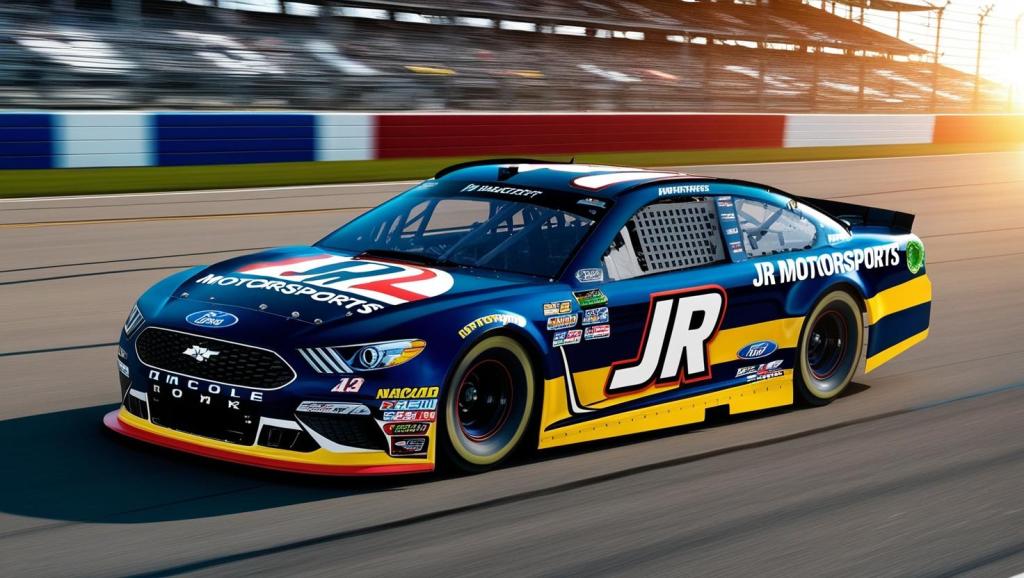
JR Motorsports, the team co-owned by NASCAR Hall of Famer Dale Earnhardt Jr., has become a powerhouse in the NASCAR Xfinity Series. JRM has four championships and 89 race wins in the series. It has established itself as a top-tier organization. It is also a proving ground for young drivers. But could the team be ready to take the next step and compete full-time in the NASCAR Cup Series?
After a successful one-off showing in the 2025 Daytona 500, where Justin Allgaier drove the No. 40 Traveller Whiskey Chevrolet Camaro ZL1 to a ninth-place finish. A full-time move to Cup racing is more relevant than ever. Let’s dive into what it would take for JR Motorsports to make the leap, based on recent reports.
Understanding the Current Landscape
JR Motorsports currently competes in the NASCAR Xfinity Series and has recently made its debut in the NASCAR Cup Series. The team also participates in the eNASCAR Coca-Cola iRacing Series. They are part of the CARS Late Model Stock Tour. Occasionally, they compete in the NASCAR Advance Auto Parts Weekly Series . In the Xfinity Series, they field four full-time entries: the No. 1 Chevrolet Camaro SS for Carson Kvapil, the No. 7 Camaro for Justin Allgaier, the No. 8 Camaro for Sammy Smith, and the No. 88 Camaro for Connor Zilisch .
JRM has achieved considerable success in the Xfinity Series. This includes championships with drivers like Chase Elliott, William Byron, Tyler Reddick, and Justin Allgaier. However, the NASCAR Cup Series represents a significant step up in competition and complexity.
JRM’s Driver Development Pipeline
One of the key factors contributing to JR Motorsports’ success is its robust driver development program. This program has helped nurture the careers of several talented drivers. These drivers have gone on to compete at NASCAR’s highest level. Drivers like Noah Gragson, Zane Smith, Sam Mayer, and Adam Lemke were among the inaugural members of this program . They gained valuable experience racing in JRM’s Late Model and Xfinity Series teams. They also raced with partner teams in the NASCAR Craftsman Truck Series and ARCA Menards Series. This development pipeline not only provides a pathway for young drivers but also strengthens JRM’s overall competitiveness.
Hurdles to Overcome
Moving to the Cup Series is a significant undertaking, and JR Motorsports would face several challenges:
1. Securing Funding: Cup Series racing is expensive. Teams need significant financial resources to compete at the highest level. Costs cover car construction and maintenance, which can range from $125,000 to $150,000 per car. Additionally, they include salaries for drivers, crew members, and engineers. There’s also a $4,300 entry and inspection fee for each race . To provide context, a mid-tier Xfinity Series team with four cars might spend about $71,400 per race weekend. These expenses include entry fees, tires, crew salaries, fuel, lodging, and flights . This translates to approximately $2,356,200 for a full season. That’s before factoring in the costs of the cars themselves and other major expenses. Estimates suggest that a top-tier Cup Series team can spend upwards of $35-40 million per car per season . JRM would need to secure substantial sponsorship to cover these costs.
2. Obtaining a Charter: NASCAR’s charter system guarantees entry into every Cup Series race. It also provides a share of the race purse. Charters are valuable assets, and their cost has been rising. Without a charter, JRM would have to qualify for races on speed. This is not a guarantee, especially with a new team. This could lead to missed races and lost revenue, making it difficult to attract sponsors and maintain a competitive program. The Next Gen car’s charter agreement has made it more economical to compete in the Cup Series. This change potentially makes charter acquisition more feasible for JRM .
3. Hiring Personnel: A Cup Series team requires a large and skilled workforce. JRM would need to expand its current staff, hiring experienced crew chiefs, mechanics, engineers, and other personnel to ensure competitiveness. Finding and retaining top talent in a competitive job market would be crucial for JRM’s success in the Cup Series.
4. Increased Competition: The Cup Series is the pinnacle of NASCAR, and the competition is fierce. JRM would be going up against teams with decades of experience and vast resources. Success wouldn’t come easy, and JRM would need to adapt quickly to the demands of Cup Series racing.
5. Logistics and Travel: The Cup Series schedule is demanding, with races held across the United States. JRM would need to invest in the infrastructure to transport personnel and equipment to each race weekend efficiently. This includes upgrading transporters, potentially acquiring a plane, and managing logistics for a larger team.
6. Rick Hendrick’s Ownership Stake: Rick Hendrick’s involvement has been beneficial for JRM in the Xfinity Series. However, it presents a unique challenge for their Cup Series aspirations. NASCAR’s rules limit team owners to four cars in the Cup Series. Hendrick already fields four cars with Hendrick Motorsports. Therefore, JRM cannot field a Cup Series entry unless Hendrick releases his interest in the team. This could require a restructuring of ownership or finding a different path to Cup Series entry.
Xfinity vs. Cup: A World of Difference
While JR Motorsports has thrived in the Xfinity Series, the Cup Series presents a different set of challenges. The travel demands are greater, with more races and longer distances between venues. The competition is significantly more intense, with the best drivers and teams in the world vying for victory. The cars themselves are more complex, requiring a higher level of technical expertise and specialized personnel. JRM would need to adapt to these increased demands to be successful in the Cup Series.
Steps to Cup Racing
Despite the challenges, a move to the Cup Series is achievable for JR Motorsports. Here’s a potential roadmap:
1. Secure Funding and Sponsorship: This is the most crucial step. JRM needs to attract major sponsors willing to invest in a long-term Cup Series program. Leveraging Dale Jr.’s popularity and the team’s Xfinity Series success will be key to attracting sponsors. Dale Jr.’s passion for Cup Series racing could be a strong selling point. He has stated, “I want to be here, and I think we can be successful here” .
2. Acquire a Charter: JRM could purchase an existing charter. They could also explore partnerships with existing Cup Series teams to lease a charter. This would guarantee entry into all races and provide a more stable financial footing. One potential avenue is partnering with a team like Trackhouse Racing. JRM already has a relationship with them through their Xfinity Series collaborations .
3. Expand Personnel: JRM needs to recruit experienced personnel from within the Cup Series garage. Building a strong team with a winning culture is essential for success.
4. Develop a Competitive Car: JRM must work closely with Chevrolet and Hendrick Motorsports. It’s essential to ensure its Cup Series car can run at the front of the pack. Investing in research and development is crucial.
5. Explore Partnerships: Beyond acquiring a charter, JRM could explore a deeper partnership with an existing Cup Series team. This could involve a merger, a technical alliance, or even taking over an existing team’s operations. This would provide JRM with an established infrastructure, experienced personnel, and potentially even existing charters.
Potential Benefits and Challenges
Benefits:
- Elevated Status: Competing in the Cup Series would elevate JRM’s status within NASCAR and the motorsports world.
- Increased Revenue: Cup Series teams have the potential to generate significantly more revenue through sponsorships, prize money, and merchandise sales.
- Driver Development: A Cup Series team would allow JRM to develop its drivers at the highest level. This could potentially produce future NASCAR stars.
- Brand Growth: Competing in the Cup Series would provide greater exposure for JRM and its sponsors. This exposure would lead to brand growth. It would also result in increased fan engagement. This is especially relevant considering Dale Jr.’s belief that JRM’s ability to draw interest and support would make a Cup Series endeavor more economical.
Challenges:
- Financial Risk: The high cost of Cup Series racing presents a significant financial risk, especially for a new team.
- Intense Competition: Success in the Cup Series is not guaranteed, and JRM would face stiff competition from established teams.
- Maintaining Xfinity Success: Balancing a Cup Series program with its existing Xfinity Series efforts could stretch resources. This balance could potentially impact performance in both series.
Learning from Others
Several teams have successfully transitioned to the Cup Series in recent years. 23XI Racing is co-owned by NBA legend Michael Jordan and Denny Hamlin. They entered the Cup Series in 2021. The team quickly found success. They won races and made the playoffs . Trackhouse Racing Team is owned by Justin Marks. They acquired Chip Ganassi Racing’s NASCAR assets in 2021. The team has become a consistent contender . These examples demonstrate that with the right resources and strategy, new teams can compete in the Cup Series .
Analyzing these teams reveals valuable lessons for JRM. Strong leadership is crucial for guiding a new team. Hamlin at 23XI Racing provides such leadership through the challenges of Cup Series competition. Strategic partnerships, such as Trackhouse’s acquisition of Chip Ganassi Racing, can provide a shortcut to establishing a competitive infrastructure. And a long-term vision, coupled with a commitment to continuous improvement, is essential for sustained success in the Cup Series.
The Emotional Factor
The business and logistical aspects of a Cup Series move are important. There’s also an emotional element for Dale Jr. and JR Motorsports. Dale Jr. has spoken about his desire to be a part of Cup Series racing. He also discussed the pressure he felt during JRM’s Daytona 500 effort. He admitted he tried to “downplay” how much he wants JRM to race in the Cup Series. He stated, “I didn’t really know exactly how badly I wanted to do this. I didn’t realize how much I wanted to be involved until we started experiencing it. I wanted to be a part of something like this.” This personal investment adds another layer of complexity to JRM’s potential Cup Series endeavor.
JRM’s Potential Impact on the Cup Series
JR Motorsports’ entry into the Cup Series could have a significant impact on the sport. Dale Jr.’s popularity and the team’s reputation for success could attract new fans and sponsors to the series. JRM’s driver development program could also inject new talent into the Cup Series, potentially shaking up the established order. Furthermore, JRM’s presence could intensify the competition, pushing other teams to elevate their performance.
The Driver Equation
A crucial aspect of JRM’s potential Cup Series program is the driver lineup. JRM has a strong stable of drivers in its Xfinity program. Selecting the right drivers for a Cup Series team is essential. Factors to consider include experience, sponsorship, and marketability. Justin Allgaier, with his recent Xfinity Series championship and strong Daytona 500 performance, would be a natural choice. Other potential candidates include Sam Mayer, who has shown promise in the Xfinity Series. Josh Berry is a veteran with a proven track record. Ultimately, JRM would need to choose drivers who can compete at the Cup Series level. These drivers must contribute to the team’s overall success.
Conclusion
A full-time move to the NASCAR Cup Series would be a significant step for JR Motorsports. While challenges exist, the potential rewards are substantial. With careful planning, JRM can ensure strong financial backing. Their commitment to excellence will help them become a competitive force in NASCAR’s top series. The team’s recent Daytona 500 performance was impressive. Justin Allgaier secured a ninth-place finish. This suggests they are ready to take on the challenge.
The main hurdles for JRM include securing funding and obtaining a charter. They also need to expand personnel and navigate increased competition. Managing logistics is another challenge, along with addressing Rick Hendrick’s ownership stake. However, JRM can take strategic steps to overcome these hurdles, such as leveraging Dale Jr.’s popularity to attract sponsors, exploring partnerships with existing Cup Series teams, and investing in research and development.
JRM can learn from the experiences of other successful new teams like 23XI Racing and Trackhouse Racing Team. They can prioritize strong leadership. Strategic partnerships and a long-term vision should also be prioritized. The emotional factor, particularly Dale Jr.’s personal investment in a Cup Series endeavor, adds another dimension to JRM’s potential move.
JRM’s entry into the Cup Series could greatly impact the sport. It could attract new fans, sponsors, and talent. With the right approach, JRM could become a force to be reckoned with in NASCAR’s highest echelon. The NASCAR world will be watching to see if Dale Jr. and his team make the leap.

 ScortonBoy17.ca
Leave a comment