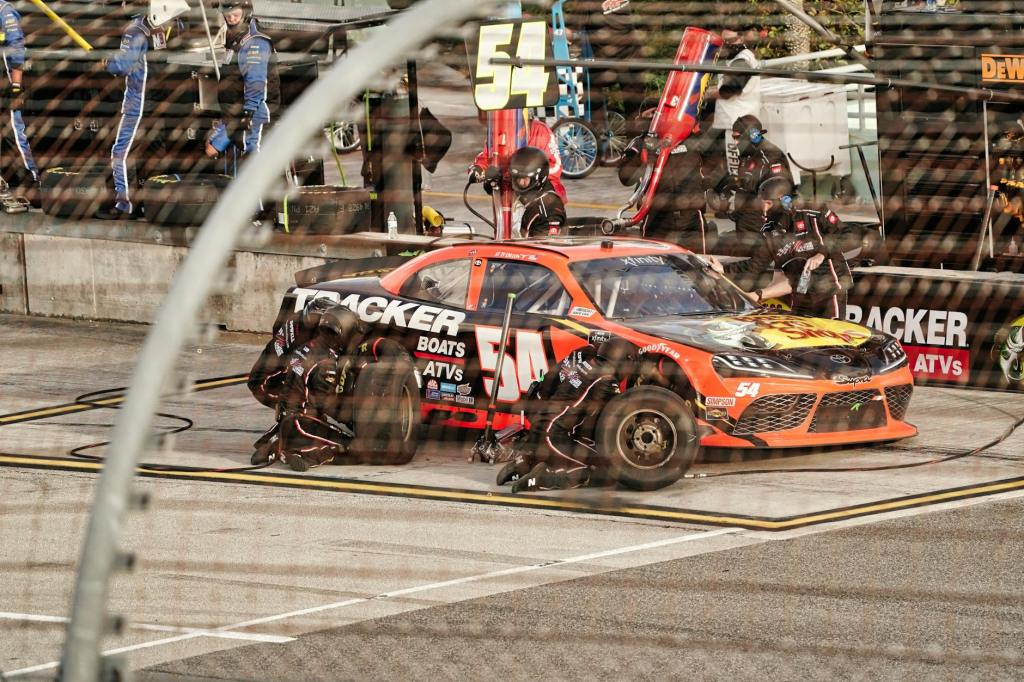
NASCAR has been a cornerstone of American motorsports for decades, captivating fans with its high-octane action and thrilling races. The Xfinity Series is NASCAR’s second-tier competition. It has traditionally served as a proving ground for rising stars. It also provides a platform for exciting racing . The automotive industry is evolving. It is time to consider whether NASCAR should embrace change. Adopting 6-cylinder engines for the Xfinity Series is worth evaluating. This shift could bring a multitude of benefits. These benefits include cost savings for teams. They also offer potential enhancements to the racing experience and environmental considerations. Additionally, there can be closer alignment with broader industry trends.
Current Engine Specifications in the NASCAR Xfinity Series
Currently, Xfinity Series cars are powered by 5.8-liter (358 cubic inch) pushrod V8 engines, generating approximately 650-700 horsepower unrestricted, and around 450 horsepower with restrictor plates . These engines share many similarities with their Cup Series counterparts, featuring naturally aspirated V8s. However, unlike the Cup Series, which uses fuel injection, Xfinity cars still utilize carburetors . While the Cup Series utilizes a five-speed sequential transmission, the Xfinity Series employs a four-speed transmission . The cars adhere to strict NASCAR standards. They include steel tube frames and 4-speed manual transmissions. They also have a minimum weight of 3,200 lbs (without driver) .
Interestingly, this wouldn’t be the first time the Xfinity Series has utilized V6 engines. From 1987 to 1994, the then Busch Grand National Series featured V6 engines. This was a way to differentiate the series from the Cup Series. It also helped control costs. This period saw a diverse range of champions. The racing was exciting as well. This suggests that V6s can be a viable option for the series.
Advantages and Disadvantages of 6-Cylinder Engines in Racing
6-cylinder engines, particularly inline-six configurations, offer several advantages in racing applications. Their inherent balance, due to the linear arrangement of cylinders, results in smoother power delivery and reduced vibration . Imagine the legendary smoothness of the BMW M4’s inline-six translated to the high-banks of Daytona! This inherent balance translates to a smoother driving experience and potentially greater engine longevity . Additionally, inline-six engines often produce ample torque at lower RPMs. This makes them suitable for both cruising and towing. They are comparable to the powerful diesel engines found in Ram Heavy Duty trucks .
However, 6-cylinder engines also have drawbacks. Inline-six engines can be longer and heavier than V6s. This can potentially affect a car’s center of gravity and handling. This could be a concern for tight road courses where agility is paramount. Their size can also pose packaging challenges in modern cars with limited engine bay space . V6 engines, while more compact, may experience a slight loss of power on the downstroke. They can also be more complex to service due to their tighter configuration . This could lead to increased maintenance costs and headaches for teams.
Potential Impact of Switching to 6-Cylinder Engines on the Xfinity Series
Cost Implications for Teams
Switching to 6-cylinder engines could potentially reduce costs for Xfinity Series teams. Manufacturing costs for 6-cylinder engines are generally lower than for V8s. Their simpler design can lead to easier maintenance. This design can potentially result in longer engine life. This could be particularly beneficial for smaller teams with limited budgets, potentially leveling the playing field and creating closer racing.
Potential Changes in Racing Dynamics and Excitement for Viewers
The impact on racing dynamics is an area ripe with possibilities. Some argue that 6-cylinder engines, with their different power delivery characteristics, could create more passing opportunities and exciting races . The reduced horsepower might make the cars more challenging to drive. This change emphasizes driver skill. It could potentially lead to more mistakes and dramatic moments. Others suggest that the reduction in power could make cars harder to handle. They also believe it could be less exciting for viewers . Ultimately, the effect on racing dynamics would depend on how the engines are implemented and regulated.
Furthermore, the change in engine sound could significantly impact fan perception . Would fans embrace the higher-pitched whine of a V6, or yearn for the deep rumble of the V8? This is a question that NASCAR would need to carefully consider.
Perhaps most importantly, the switch to V6s could create a unique identity for the Xfinity Series . The Xfinity Series could attract a new audience by differentiating itself from the Cup Series. It could solidify its position as a breeding ground for future stars. It could also serve as a showcase of exciting and different racing. This change could provide a platform for developing drivers. These drivers will need to be adaptable and skilled in managing different power delivery characteristics. This skillset could benefit their transition to the Cup Series .
Environmental and Industry Alignment
From an environmental perspective, the switch to 6-cylinder engines could be a positive step. With fewer cylinders and potentially improved fuel efficiency, these engines could contribute to a reduction in NASCAR’s carbon footprint . This change aligns with the broader industry trend towards smaller, more efficient engines. It could also enhance NASCAR’s image as a responsible motorsports organization.
NASCAR has already taken steps to reduce its environmental impact. One such step is transitioning to E15 fuel. This fuel is a blend that includes 15% ethanol, a renewable resource . The organization is also exploring electric vehicles. It has unveiled an electric race car prototype as part of its sustainability initiatives . Adopting V6 engines would be another step in this direction, demonstrating NASCAR’s commitment to a greener future.
The automotive industry is increasingly moving towards smaller, more efficient engines, often with turbocharging or hybrid technology . This trend is evident in everything from everyday passenger cars to high-performance sports cars and pickup trucks. Adopting 6-cylinder engines in the Xfinity Series would align NASCAR with this trend. It could potentially attract new manufacturers. It may also increase involvement from existing ones . Imagine Ford showcasing its powerful EcoBoost V6 technology in the Xfinity Series. Picture Toyota bringing its innovative hybrid systems to the track! This closer alignment with the automotive industry could also attract new fans interested in the latest automotive technology.
Examples of Other Racing Series with 6-Cylinder Engines
Several racing series have successfully implemented 6-cylinder engines. The Super6 Late Models series features three-quarter scale super late models with V6 engines. It provides thrilling racing. The focus is on affordability and driver skill. The IMSA WeatherTech SportsCar Championship features various classes with different engine configurations, including turbocharged V6s in the DPi class. These examples demonstrate that 6-cylinder engines can be competitive and exciting in various motorsports disciplines.
Opinions and Perspectives from NASCAR Drivers, Team Owners, and Industry Experts
The research material didn’t include direct quotes from NASCAR insiders. However, online discussions and forums reveal a general interest in exploring alternative engine configurations for the Xfinity Series. Some fans and experts believe that V6 engines, especially with turbocharging, could offer a compelling combination. Hybrid assistance might also contribute to performance, efficiency, and excitement. Others are hesitant, citing concerns about the potential impact on the sound of the race and the traditional NASCAR character.
Industry experts also highlight the potential benefits of inline-six engines in terms of balance, power delivery, and cost-effectiveness . They point to the success of inline-sixes in various applications. These range from high-performance sports cars like the BMW M4 to heavy-duty trucks. This success serves as evidence of their versatility and potential.
Potential Challenges of Implementing V6 Engines
The potential benefits of V6 engines are numerous. NASCAR would need to carefully consider the challenges associated with such a transition.
- Engine Development and Regulation: Developing a V6 engine formula that provides exciting racing while controlling costs would be crucial. NASCAR would need to work closely with manufacturers to ensure parity and prevent a spending war.
- Impact on Existing Teams: The switch to V6s could require significant investment from teams. This change might put smaller teams at a disadvantage. NASCAR would need to consider ways to mitigate this impact and ensure a level playing field.
- Fan Acceptance: As mentioned earlier, the change in engine sound and potential impact on racing dynamics could alienate some fans. NASCAR would need to effectively communicate the benefits of the change and manage expectations.
Conclusion
The potential adoption of 6-cylinder engines in the NASCAR Xfinity Series presents a compelling opportunity for the sport to evolve. It allows NASCAR to adapt to the changing automotive landscape. Although potential challenges and uncertainties exist, the benefits are significant. These benefits include cost savings, enhanced racing dynamics, environmental considerations, and alignment with industry trends. NASCAR could usher in a new era of exciting racing. This new era could also be sustainable in the Xfinity Series. It requires careful consideration of these factors and addressing the potential challenges.
The move towards V6 engines could be a catalyst for positive change. It could reduce costs for teams and promote closer competition. This change could also attract new manufacturers and fans. Furthermore, it would align NASCAR with the broader automotive industry’s focus on efficiency. It would emphasize environmental responsibility, contributing to the long-term sustainability of the sport. Ultimately, embracing innovation and exploring new technologies could revitalize the Xfinity Series. This could solidify its position as a vital part of the NASCAR ladder. At the same time, it would continue to provide thrilling and engaging racing for fans.

 ScortonBoy17.ca
Leave a comment