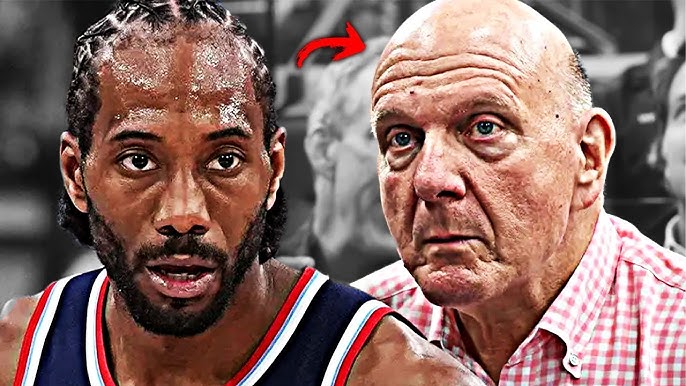
Introduction: A Tale of Two Legacies, One Lingering Question
There are two distinct, almost irreconcilable, portraits of Kawhi Leonard in the modern NBA consciousness. The first is a masterpiece of athletic conquest, painted in the vibrant red and black of the Toronto Raptors. It depicts the “King of the North,” a stoic, silent hero. In a single, mythic season, he shouldered the hopes of a nation. He delivered its first-ever NBA championship. He is the author of “The Shot.” He orchestrated a legendary playoff run. He was the centerpiece of a parade. Millions flooded the streets in a moment of pure, unadulterated national joy. This Leonard is a figure of unimpeachable basketball glory, his legacy in Canada forever cemented in championship champagne.
The second portrait is a far more complex and shadowed work. Rendered in the blue and red of the Los Angeles Clippers, it shows an enigmatic superstar. He is a hometown hero. His return has been defined less by triumph and more by persistent, frustrating absence. This Leonard is a specter in the annals of playoff basketball. He is a titan of talent. He is frequently sidelined by devastating injuries at the most critical junctures. Now, this portrait has been dramatically altered. Its background is filled with explosive allegations of a secret, multi-million-dollar “no-show job.” This is a purported scheme of breathtaking audacity. It is designed to circumvent the very salary cap that underpins the league’s competitive balance.
For years, the narrative surrounding Leonard’s seismic 2019 free-agency decision was a straightforward one. He left the defending champion Raptors. He turned down more guaranteed money and a chance to build a dynasty. His motivation was the simple, understandable desire to return to his Southern California home. It was presented as the ultimate act of player empowerment: a superstar choosing geography and personal preference over all else. However, recent investigative reporting has shattered that simple narrative. This poses a far more unsettling question. Was Leonard’s choice truly about going home? Or did it depend on unprecedented and allegedly illegal financial inducements? These inducements have only now been dragged into the light.
The answer to this question does more than just re-contextualize one of the most significant free-agent decisions in league history. It challenges the integrity of the NBA’s economic structure. It casts a long shadow over the Clippers franchise and its billionaire owner. It forces a re-evaluation of what the “player empowerment” era truly means. This is the story of Kawhi Leonard’s two divergent eras. The first is the perfect, fleeting reign in Toronto. The second is the promise-filled but problematic tenure in Los Angeles. A scandal now irrevocably splits this tale and threatens to redefine it all.
Part I: The North Remembers – A Perfect Gamble, A Fleeting Reign
1.1 The Trade That Shook a Franchise
The story of Kawhi Leonard, Toronto Raptors legend, began with an act of ruthless corporate calculus. In the summer of 2018, the relationship between Leonard and the San Antonio Spurs had completely fractured. This franchise had drafted and developed him into a Finals MVP. Leonard was sidelined for all but nine games of the 2017-18 season with a nagging quadriceps injury. He and the team were at odds over his medical treatment. This disagreement led to a trade request from the superstar, whose preferred destination was Los Angeles.
Into this maelstrom stepped Toronto Raptors President Masai Ujiri. Seeing a rare opportunity to acquire a top-five talent, Ujiri executed a monumental and deeply controversial gamble. He traded DeMar DeRozan, the franchise’s all-time leading scorer and a beloved icon. DeRozan had openly professed his loyalty to the city and the team. Ujiri also traded young center Jakob Poeltl and a protected first-round pick to San Antonio. In return, they acquired Leonard and veteran wing Danny Green. The move was a seismic shock to the NBA and a gut punch to the Raptors’ fan base. DeRozan was the first true star who chose to stay in Toronto. Many, including his close friend and teammate Kyle Lowry, saw his trade as a cold-blooded betrayal.
Ujiri was betting the franchise on a one-year “rental” of a superstar. The superstar had given no indication he wanted to play in Canada. According to some rumors, he might even consider sitting out the season to force his way to his preferred market. It was a high-risk, high-reward proposition. It could have spectacularly backfired. The Raptors might have been left without their cornerstone. They would have had nothing to show for it. In hindsight, however, the trade proved to be a masterstroke for both organizations. San Antonio recouped immense value. DeRozan remained an All-Star level player. Poeltl developed into a solid starting center. The draft pick they acquired became Keldon Johnson. He is a productive forward for the Spurs. It was, by all accounts, a win-win deal. But for Toronto, it was the move that would change everything.
1.2 The Art of Load Management and a Season of Dominance
The Raptors organization understood the precarious nature of their new superstar’s health. Leonard had a mysterious quadriceps injury that soured his final year in San Antonio. His physical condition was the team’s top priority. From the moment he arrived, the franchise implemented a meticulous strategy of “load management.” This progressive philosophy was designed to preserve his body for the rigors of the postseason. Leonard played in only 60 of 82 regular-season games. He frequently sat out one half of back-to-back sets to ensure he was at peak strength when it mattered most.
This approach paid enormous dividends. Leonard was a force of nature when he was on the court. He seamlessly integrated into Toronto’s system. He elevated the team to an elite level. He averaged a career-high 26.6 points per game, along with 7.3 rebounds and 1.8 steals, earning his third career All-Star selection. He was the undisputed alpha. He served as a steadying force. He could be relied upon to close out tight games. He created offense when the system broke down.
Crucially, the Raptors were not solely reliant on their superstar. Ujiri had constructed a deep, versatile, and defensively tenacious roster around him. The starting lineup of Kyle Lowry, Danny Green, and Leonard was powerful. A rapidly improving Pascal Siakam and the mid-season acquisition of former Defensive Player of the Year Marc Gasol strengthened it. Together, they formed a defensive juggernaut. The bench was equally formidable. It featured the clutch shot-making of Fred VanVleet. Serge Ibaka brought veteran savvy. Norman Powell excelled in athletic finishing. This team was meticulously built. As a result, they were able to post an excellent record in the 22 games Leonard sat out. This was a testament to their depth and coaching. The organizational philosophy was clear. Leonard was the weapon that would win them the war. The entire regular season was merely the preparation to ensure that weapon was perfectly calibrated for battle.
1.3 The Playoff Run for the Ages
The 2019 NBA Playoffs were a turning point. The Raptors’ season-long investment in Leonard’s health paid off. It resulted in one of the most dominant individual postseason runs in modern history. He transformed from a mere superstar into a basketball deity, elevating his performance across the board. Over 24 grueling playoff games, he averaged an astounding 30.5 points, 9.1 rebounds, and 3.9 assists, carrying the offensive load while consistently guarding the opponent’s best player.
His journey through the Eastern Conference was a collection of iconic, legacy-defining moments. After dispatching the Orlando Magic, the Raptors found themselves in a dogfight with the Philadelphia 76ers. The series culminated in a Game 7 for the ages. Leonard launched a high-arcing fadeaway jumper from the corner. The clock was expiring, and the score was tied. He shot over the outstretched arms of Joel Embiid. The ball bounced on the rim once, twice, three times, four times. It was a moment of suspended animation for an entire country. Then it dropped through the net. It delivered a series-winning buzzer-beater. This instantly became the most iconic moment in franchise history, simply known as “The Shot”.
He followed that performance by leading the Raptors back from a 2-0 deficit. They faced the top-seeded Milwaukee Bucks and the league MVP, Giannis Antetokounmpo. In the NBA Finals, Toronto faced the dynastic Golden State Warriors. The Warriors were hobbled by injuries to Kevin Durant and Klay Thompson. Meanwhile, the Raptors were clinical and relentless. They closed out the series in six games to capture their first NBA championship. Leonard was the clear choice for Finals MVP. It was his second such award. This achievement placed him in the elite company of Kareem Abdul-Jabbar and LeBron James. They are the only players to win the award with multiple teams. He had scored 732 points in a single postseason. This was the third-highest total in NBA history at the time. Only Michael Jordan and LeBron James had scored more. Masai Ujiri’s gamble had paid off in the most spectacular fashion imaginable. The one-year rental had delivered a permanent championship banner.
Part II: The Crossroads of 2019 – A Bidding War in the Shadows
2.1 Toronto’s Pitch: The Kingdom and the Keys
As the confetti settled on the championship parade, the Toronto Raptors entered the 2019 free agency period. They were armed with what appeared to be an unassailable pitch to retain their superstar. They were the reigning champions. They offered Leonard a seamless return to a roster constructed perfectly around his talents. It was tailored to his health needs. They possessed his Bird Rights. This meant they could offer a longer and more lucrative contract than any other team. It was a five-year deal worth approximately $190 million. The organization proved its competence. The front office made the bold trade. The medical staff masterfully managed his season. They could offer him control over a kingdom he had already conquered. He had the chance to build a dynasty. They also offered him the adoration of an entire country.
Yet, as negotiations began, it became clear that a standard max contract might not be enough. Reports from radio host John Gambadoro indicate that Leonard’s camp made a demand. They wanted an additional $15 million in endorsement money. In response, Raptors owner Larry Tannenbaum took significant action. He reportedly “bent over backwards” and personally called three different sponsors. He made these calls in an attempt to procure these deals for Leonard. This effort, however, did not go unnoticed. The league office was alerted to the situation. NBA Commissioner Adam Silver reportedly issued a warning to Tannenbaum. He seemed not to fully understand the collective bargaining agreement’s strict rules. These rules are against teams facilitating such side deals. This episode was a crucial early indicator of the nature of the negotiations. Leonard’s camp was not just seeking a salary. They were seeking a financial package that pushed the boundaries. In this case, it crossed the boundaries of what the league deemed permissible.
2.2 The “Uncle Dennis” Factor: A Pattern of Unprecedented Demands
Dennis Robertson was reportedly the driving force behind these extraordinary requests. He is Leonard’s uncle and chief advisor. Robertson became a central and controversial figure during the 2019 free agency tour. Despite not being a league-certified agent, Robertson handled Leonard’s off-court business and led the negotiations with his nephew’s suitors. It soon became apparent that his approach was anything but conventional. Widespread reports from reputable journalists at the time detailed a series of outlandish and impermissible demands. These demands were made to the teams courting Leonard. These requests went far beyond the scope of a standard player contract.
The Los Angeles Lakers were allegedly presented with a wish list as one of the frontrunners for his services. The list included part ownership of the franchise. It also demanded a private jet available for use at all times. There was also a request for a house. Additionally, it included a guaranteed amount of off-court endorsement money. These requests are illegal under the NBA’s CBA. When these demands were presented to Lakers owner Jeanie Buss, she reportedly informed Leonard’s camp. She stated that these demands were against league rules. This effectively ended their pursuit.
The Raptors were reportedly met with a similarly audacious request. According to a report from Bruce Arthur of the Toronto Star, Robertson asked for an ownership stake. He wanted a share in the Toronto Maple Leafs. This was a clever attempt to circumvent the ownership rule. It prohibits a player from having a stake in his own NBA team. Both the Raptors and Maple Leafs fall under the same parent company, Maple Leaf Sports & Entertainment. The Raptors “politely explained” that this was impossible. This pattern of behavior across negotiations with multiple teams showed a clear modus operandi. Leonard’s camp was not merely comparing max contract offers. They were actively soliciting impermissible, under-the-table benefits. They were testing the league’s ethical boundaries. They wanted to see which franchise was willing to break them.
2.3 The Clippers’ Winning Hand: A Hometown Discount or a Hidden Premium?
In the end, after a week of intense speculation that held the entire league hostage, Kawhi Leonard announced his decision. He was going home to sign with the Los Angeles Clippers. The move was paired with another blockbuster. At Leonard’s behest, the Clippers traded a massive haul of draft picks and players to the Oklahoma City Thunder. This included promising young star Shai Gilgeous-Alexander for Paul George.
The contract Leonard signed was, on its face, surprising. He declined the Raptors’ five-year, $190 million offer. Instead, he chose a shorter three-year, $103 million deal. This deal included a player option in the third year. The public narrative focused on his strong connection to his home. It also highlighted his desire to build a legacy in Southern California. He accepted less guaranteed money. He prioritized personal comfort and wanted the chance to team up with another superstar of his choosing. It was framed as the pinnacle of player empowerment.
A question began to bubble beneath the surface. This was given the context of the demands made to the Raptors and Lakers. This question was whispered in front offices around the league. Was Leonard truly taking a discount to play for the Clippers? Did the franchise with the league’s wealthiest owner, Steve Ballmer, manage to offer a hidden premium? Did this make their offer the most lucrative of all? The answer to that question would remain buried for years. It would only emerge in a scandal. This scandal would call the entire decision into question. It would threaten to upend the balance of power in the NBA.
Part III: The Clipper Conundrum – Promise, Payments, and Pain
3.1 The On-Court Reality: Flashes of Brilliance, Fields of Asterisks
Kawhi Leonard has been dominant when he is healthy enough to play for the Los Angeles Clippers. He has largely been the same two-way force he was in Toronto and San Antonio. His per-game production has remained at an elite, All-NBA level. In his first season with the team, he averaged a career-high 27.1 points per game, and across his tenure, his numbers have consistently placed him among the league’s best players.
However, this individual brilliance has failed to translate into the sustained team success that was widely anticipated. The Clippers, despite being perennial preseason championship favorites, have been a story of unfulfilled potential. Their deepest playoff run came in 2021. They reached the Western Conference Finals for the first time in franchise history. This milestone was achieved largely without Leonard. He suffered a season-ending knee injury in the previous round. The highly praised partnership between Leonard and Paul George has been plagued by injuries. This misfortune has prevented them from ever building true postseason momentum. Together, the duo has played in just 26 playoff games, compiling a perfectly average 13-13 record. The on-court reality for the Clippers has been a frustrating cycle. They show tantalizing flashes of what could be. This promise is inevitably cut short by the harsh reality of their star’s availability.
The stark contrast between Leonard’s singular, triumphant season in Toronto and his tenure in Los Angeles is apparent through statistics. His time in Los Angeles was extended yet less fruitful.
Table 1: Kawhi Leonard – Tale of Two Tenures (Comparative Statistics)
| Metric | Toronto Raptors (2018-19) | Los Angeles Clippers (2019-24 Avg.) |
| Regular Season | ||
| Games Played | 60 | 51.8 |
| Points Per Game (PPG) | 26.6 | 25.3 |
| Rebounds Per Game (RPG) | 7.3 | 6.5 |
| Assists Per Game (APG) | 3.3 | 4.5 |
| Steals Per Game (SPG) | 1.8 | 1.6 |
| FG% | 49.6% | 49.8% |
| 3P% | 37.1% | 39.8% |
| TS% | 60.6% | 61.2% |
| Playoffs | ||
| Games Played | 24 | 6.5 (Avg. per appearance) |
| Points Per Game (PPG) | 30.5 | 29.2 |
| Rebounds Per Game (RPG) | 9.1 | 8.0 |
| Assists Per Game (APG) | 3.9 | 4.5 |
| Team Result | NBA Champions | Furthest: WCF (2021) |
The data reveals a clear story. Leonard’s individual efficiency and playmaking numbers have remained elite with the Clippers. They have even improved slightly. However, the most critical metrics show a dramatic decline. These metrics are games played and ultimate team success. He played 24 playoff games in his single Toronto season. This nearly equals the 28 total playoff games he has managed in four separate postseason appearances with Los Angeles.
3.2 The Availability Crisis: The Man Who Wasn’t There
The greatest challenge to the Clippers’ success during the Kawhi Leonard era is his inability to stay on the court. This is especially true when the stakes are highest. The “load management” strategy worked to perfection in Toronto. However, it has failed to protect him from catastrophic injuries in Los Angeles. His tenure has faced numerous physical setbacks. These setbacks have derailed promising seasons. The franchise has been left in a state of perpetual limbo.
The injury ledger is extensive and devastating. In the 2021 playoffs, the Clippers looked like legitimate title contenders. However, he suffered an ACL tear in his right knee. This injury forced him to miss all of the Western Conference Finals and the entire 2021-22 season. He returned for the 2022-23 season. Unfortunately, he suffered another major injury in the same knee. This occurred during the first round of the playoffs against the Phoenix Suns. This time, it was a torn meniscus that sidelined him after just two games. The pattern repeated itself in the 2024 playoffs. Knee inflammation limited him to two games. This occurred in a first-round loss to the Dallas Mavericks. A staggering statistic from early in his tenure revealed he had played in just 56.1% of the team’s regular-season games. The Clippers mortgaged their future for him. However, he has too often been a spectator during the moments he was acquired to dominate.
Table 2: The Availability Report – Games Played vs. Missed (Clippers Tenure, 2019-2024)
| Season | Regular Season Games Played | Regular Season Games Missed | Playoff Games Played | Playoff Games Missed | Reason for Key Absences |
| 2019-20 | 57 | 15 | 13 | 0 | Load Management, Knee |
| 2020-21 | 52 | 20 | 11 | 8 | Torn ACL (missed end of WCSF & WCF) |
| 2021-22 | 0 | 82 | 0 | 2 (Play-in) | ACL Recovery (missed entire season) |
| 2022-23 | 52 | 30 | 2 | 3 | Torn Meniscus (missed end of 1st Round) |
| 2023-24 | 68 | 14 | 2 | 4 | Knee Inflammation (missed end of 1st Round) |
| Totals | 229 | 161 | 28 | 17 | Overall Played: 57.3% of 445 possible games |
The data in this table provides a stark, undeniable visualization of the Clippers’ predicament. Over five seasons, Leonard missed a staggering 178 out of a possible 445 regular season and playoff games. More critically, he has been unavailable for 17 of the team’s 45 postseason contests (37.8%), with those absences concentrated in the latter stages of playoff series, crippling the team’s championship aspirations.
3.3 The Aspiration Scandal: Unearthing the “No-Show Job”
In September 2025, years of whispers and speculation about Leonard’s 2019 free agency came to a head. They culminated in a bombshell investigative report from journalist Pablo Torre. This report provided a potential explanation for it all. The report alleged a complex scheme involving Leonard, Clippers owner Steve Ballmer, and a now-bankrupt company named Aspiration. This scheme was designed to provide Leonard with millions of dollars in off-the-books payments.
The alleged scheme, as detailed by Torre through thousands of pages of documents and interviews with former employees, worked as follows:
- The Investment: Steve Ballmer, the wealthiest owner in professional sports, made a $50 million personal investment into Aspiration. Aspiration is a fintech company that marketed itself as an eco-friendly, tree-planting service.
- The Contract: Subsequently, Aspiration entered into a four-year endorsement agreement worth $28 million. They signed this agreement with a limited liability company named “KL2 Aspire LLC”. Corporate filings list Kawhi Leonard as the manager and member of this LLC. The name clearly references his initials and jersey number. Further reporting suggested there was a secret side deal for an additional $20 million. This brought the total compensation to $48 million. This figure is suspiciously close to Ballmer’s $50 million investment.
- The “No-Show” Clause: The contract contained highly unusual clauses that raised immediate red flags. One clause explicitly stated that Leonard could “decline to proceed with any action desired by the Company.” This effectively allowed him to collect the full $28 million without performing any actual endorsement work. True to form, investigators could find no public record of Leonard ever promoting, mentioning, or endorsing Aspiration in any capacity.
- The “Clippers Clause”: The most damning provision was clear. It said the endorsement contract was only valid while Leonard was with the Los Angeles Clippers. This provision was a serious issue. The contract was only valid while Leonard played with the team. The third-party payment had a direct link to his employment with the team. This is the classic hallmark of a salary cap circumvention scheme.
The evidence supporting these allegations is substantial. Aspiration filed for bankruptcy in March 2025. Allegations of massive fraud by its co-founder accompanied the filing. Its list of creditors included KL2 Aspire LLC. KL2 Aspire LLC was still owed $7 million. Torre’s podcast featured a former Aspiration employee. This employee was from the finance department. The employee stated, on the record with a voice modifier, that the deal “was to circumvent the salary cap”.
This alleged arrangement provides a compelling logic for Leonard’s decision. Although illicit, it explains why he signed a shorter, less guaranteed contract with the Clippers. His official NBA salary combined with the secret “no-show” payments. This combination would have significantly increased the Clippers’ overall financial offer. It would have exceeded the maximum contract the champion Raptors could legally provide. The Clippers have repeatedly given Leonard high-risk contract extensions. These include a three-year, $153 million deal in January 2024. These extensions appear in a new light. These were not just basketball decisions made about an injury-prone player. They can be seen as essential business strategies. These moves ensured Leonard remained an “employee of the Clippers,” protecting the arrangement’s integrity. This kept all parties financially committed to secrecy. The fact that his 2024 extension was for less than the maximum allowable amount is particularly suspicious. It fuels speculation among other NBA owners that he was being compensated through other channels.
Part IV: The Fallout and the Future
4.1 Denials, Deflections, and the NBA’s Investigation
In the wake of the explosive report, the Los Angeles Clippers and Steve Ballmer issued swift and forceful denials. The organization’s official statement rejected the allegations as “absurd” and “provably false”. Their defense hinges on the narrative that Ballmer and the Clippers were themselves victims. Aspiration’s widespread fraud is the culprit, for which its co-founder has pleaded guilty to federal charges. The team believes there is “nothing unusual about team sponsors doing endorsement deals with players.” They argue it is not “untoward for players on the same team.” They also state that neither Ballmer nor the organization had any oversight of Leonard’s independent agreement. This defense has been publicly supported by figures like former Dallas Mavericks Principal, now Minority Owner Mark Cuban. He argued that Ballmer was “scammed.” Ballmer would not be foolish enough to let a company involved in a circumvention scheme go bankrupt. He knows its list of creditors would become public record.
Despite these denials, the NBA has taken the allegations with the utmost seriousness. The league office announced it was “commencing an investigation” into the matter. It has reportedly hired the prestigious New York-based law firm Wachtell, Lipton, Rosen & Katz to conduct the formal probe. This is a significant development. The league had previously investigated Dennis Robertson’s demands in 2019. It cleared the Clippers of any wrongdoing. The emergence of new documentary evidence has clearly prompted a re-examination.
The potential penalties for a proven case of salary cap circumvention are severe. Under the terms of the NBA’s Collective Bargaining Agreement, the league has a range of disciplinary actions at its disposal. These actions include fines of up to $7.5 million. They also include the forfeiture of first-round draft picks. The suspension of team personnel is another penalty. Most drastically, the authority to void the player’s contract is included. The outcome of this investigation could have franchise-altering consequences for the Clippers.
4.2 A Tale of Two Franchises: The Divergent Paths Since 2019
Five years have passed since Kawhi Leonard’s 2019 decision. During this time, the Toronto Raptors and Los Angeles Clippers have traveled down starkly different paths. The wisdom of their respective approaches is now clearer than ever.
The Raptors, after losing their Finals MVP, proved their organizational resilience. They posted an outstanding 53-19 record in the 2019-20 season. However, they lost in a hard-fought seven-game series in the second round of the playoffs. Following that season, they transitioned into a rebuild, pivoting toward a younger core. While they have not returned to championship contention, the franchise is in a healthy position. They possess their own draft picks, have financial flexibility, and, most importantly, have a championship banner hanging in their arena. Masai Ujiri’s one-year gamble delivered the ultimate prize with no crippling long-term consequences. They captured lightning in a bottle and wisely chose not to get burned trying to hold onto it.
The Clippers, conversely, went all-in. They traded a treasure trove of future assets. This included five first-round picks and the right to swap two more. They did this to acquire Paul George as the price of admission for signing Leonard. This massive investment has yielded a deeply disappointing return. There has been one trip to the conference finals. There is also a litany of playoff exits cut short by injuries. They are now an expensive, aging team. They have limited draft capital to improve their roster. Additionally, they face a serious league investigation that could strip them of even more future assets. The pursuit of a championship at all costs has, thus far, cost them dearly and produced very little.
4.3 The Verdict on Player Empowerment
The Kawhi Leonard saga, culminating in the Aspiration scandal, represents a critical inflection point for the NBA’s “player empowerment” era. This era began with LeBron James’s televised “Decision” to join the Miami Heat in 2010. Since then, superstars have exerted unprecedented control over their careers. They form superteams and force trades mid-contract to dictate their own destinies.
Leonard’s case, however, potentially pushes this phenomenon into a new and dangerous territory. The allegations move beyond a player choosing his destination or leveraging his talent to force a trade. They suggest a player and his camp are using that power to actively solicit compensation. They receive compensation that fundamentally violates the league’s economic bedrock—the salary cap. This is not merely player empowerment; it is an alleged assault on the principle of competitive balance.
The wealthiest owners can use their personal fortunes. They can exploit outside business interests. This allows them to create lucrative side deals for star players. The salary cap becomes a suggestion rather than a rule. This scenario would create a permanent and insurmountable advantage for teams in major markets with billionaire owners. As a result, it would be virtually impossible for smaller-market franchises to compete for top-tier free agents. The investigation into the Clippers is, therefore, more than just about one player and one team. It tests the league’s ability to enforce its foundational rules. These rules are being tested in an era of unprecedented player power and owner wealth.
Conclusion: A Legacy Redefined
In the end, the story of Kawhi Leonard’s career since leaving San Antonio is a tale of contrasts. It highlights two vastly different returns on investment. In Toronto, his transcendent talent was evident in a single season. A brilliant organization carefully managed him. This resulted in a priceless championship. It left a legacy of pure, unblemished triumph. In Los Angeles, a five-year commitment came at an immense cost of draft capital. It was allegedly secured through illicit financial means. This commitment has led to a litany of injuries, playoff disappointments, and a franchise-destabilizing scandal.
In the summer of 2019, Raptors fans lamented Leonard’s departure. Masai Ujiri offered a calm and confident message: “Don’t lose one day of sleep, one second of sleep. We’re gonna be just fine”. In hindsight, his words were not just reassuring; they were remarkably prescient. The Raptors had already gotten everything they needed from the Kawhi Leonard experience. They won their title and moved on. The Clippers, in their desperation to land him, may have inherited not just a superstar. They may have acquired a cascade of problems that are only now coming to a head.
Regardless of the final verdict from the NBA’s investigation, the Aspiration scandal has permanently altered the narrative. The story of Leonard’s 2019 decision can no longer be told as a simple, romantic tale of “going home.” It is now an unavoidably complex story of extreme leverage, unprecedented demands, and secret money. The championship banner that hangs in Toronto remains pristine, a monument to a perfect season. But the story of how its hero departed for Los Angeles will now forever be accompanied by an asterisk. It will also be accompanied by a legal file. Moreover, it will bring a series of profound and troubling questions about the true price of a superstar.

 ScortonBoy17.ca
Leave a comment