Introduction: Denmark’s Golden Era at the Olympic Crossroads
The 2026 Winter Olympics in Milano Cortina are poised to become the most consequential tournament for Danish ice hockey. It is expected to be a historic event. This is not hyperbole. It is the logical culmination of a decade-long ascent. This journey has transformed the Danish Lions. They have evolved from a respectable top-division nation into a legitimate threat on the world’s biggest stage. The arc of this transformation can be traced between two seminal events. The first is the program’s historic, long-awaited Olympic debut in Beijing in 2022. The second is its stunning, paradigm-shifting fourth-place finish at the 2025 IIHF World Championship. Four years have passed between these tournaments. During this time, the program matured and evolved. Most importantly, it developed a potent self-belief. This self-belief will be its greatest weapon in Italy.
Denmark’s first foray into Olympic men’s hockey in 2022 was a monumental achievement. It was the realization of a national dream. That roster was led by foundational veterans like Frans Nielsen and Peter Regin. They broke a barrier. This laid the groundwork for future ambitions. They competed admirably, securing a quarterfinal berth and proving they belonged. Yet, the narrative was still one of a small nation happy to be at the dance.
The 2025 World Championship, co-hosted in the familiar confines of Herning, shattered that narrative forever. The team was under the guidance of a new head coach, Mikael Gath. He has taken the reins from the long-serving Heinz Ehlers. As a result, the team achieved its best-ever result. The tournament was defined by a historic quarterfinal upset. They defeated a Canadian team laden with NHL talent. This victory reverberated throughout the hockey world. That single game did more than just advance Denmark to its first-ever semifinal. It fundamentally altered the program’s internal and external expectations. They are no longer just participants; they are contenders.
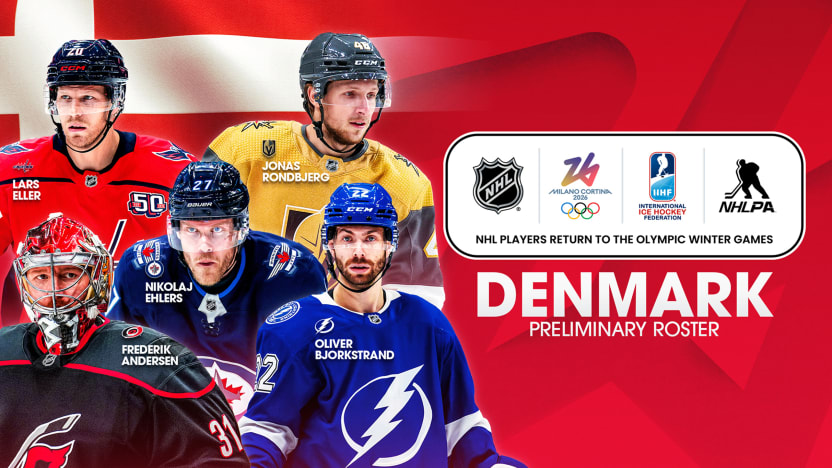
This shift in status arrives at a perfect crossroads for the national team. The roster for 2026 will feature a compelling blend of a “golden generation” of veterans. Many veterans are in their mid-30s making a final stand for Olympic glory. The roster will also include a core of elite NHL talent entering its absolute prime. This convergence has created a unique and finite competitive window. The Danish Ice Hockey Union demonstrated foresight. They took the unprecedented step of announcing the first six players to its preliminary Olympic roster in June 2025. This was a clear signal of a focused, long-term strategic vision. This core group consists of Nikolaj Ehlers, Frederik Andersen, Lars Eller, Oliver Bjorkstrand, Jesper Jensen Aabo, and Jonas Rondbjerg. They form the undisputed leadership. They are the tactical foundation around which the Milano Cortina roster will be built.
The success in 2025 was a profound validation of the entire Danish hockey ecosystem. The achievement came without key NHLers like Lars Eller and Oliver Bjorkstrand. This proves that the team’s strength is not solely dependent on its North American stars. Players based in top European leagues were the heroes of the Canadian upset. Goaltender Frederik Dichow delivered a legendary 39-save performance. Forward Nick Olesen scored the decisive goal. This proved the team’s tactical system is effective. The coaching is strong. The quality of its European-based professionals is high enough to win high-stakes games against global powerhouses. Therefore, the 2026 Olympic team will add its full complement of NHL talent to this already-proven and confident core. The team possesses a far higher ceiling. It has greater credibility as a “dark horse” than ever before. They will arrive in Italy not hoping to win, but expecting to.
The Cornerstones: Analyzing the “First Six”
The early selection of six foundational players is a statement of intent. This happens more than a year and a half before the Olympic flame is lit in Milan. It establishes a clear hierarchy, a leadership core, and a tactical identity. This group is a microcosm of the full roster. It includes elite NHL skill and veteran savvy. There is unwavering commitment to the national program and dedicated role-players. They are the pillars upon which Denmark’s medal aspirations will be built.
Nikolaj Ehlers
Forward, Winnipeg Jets
At 29 years old by the time of the tournament, Nikolaj Ehlers will be in the prime of his career. He is expected to peak during this period. He will serve as the undisputed offensive centerpiece of Team Denmark. As the nation’s all-time leader in NHL goals (225), his dynamic skill set will be crucial. He has scored 520 points, making him the engine that will drive the Danish attack. Ehlers is one of the most explosive skaters in the world. His speed and creativity in transition can single-handedly break down defensive structures. He is not just a passenger on a line. He is a play driver, carrying the puck from his own zone. He is capable of generating high-danger scoring chances. His commitment to the national team is unquestionable. This is evidenced by his dominant performance at the 2023 IIHF World Championship. He posted an incredible nine points (five goals, four assists) in just seven games. He led the team in scoring. For the 2026 squad, he will be the primary weapon on the top line. He will also be the quarterback of the first power-play unit. The entire offense flows through him.
Frederik Andersen
Goaltender, Carolina Hurricanes
Frederik Andersen, who will be 36, is the team’s backbone and its most critical component for success. He has a decorated NHL career with over 300 wins. This provides a level of experience and stability in the crease that few nations can match. While his career has been marked by periods of injury, his performance when healthy remains elite. His international resume is equally impressive. He was named the Best Goaltender at the 2018 World Championships. The tournament was held in his home country, demonstrating his ability to thrive under pressure on the international stage. He was the anchor for Denmark during their successful Olympic qualification tournament in the summer of 2024. He stopped 60 of 64 shots across three victories. In a short, high-stakes tournament like the Olympics, elite goaltending can erase talent disparities. A focused and healthy Frederik Andersen is more than capable of stealing games against any opponent. He is Denmark’s ultimate trump card.
Lars Eller
Forward, Washington Capitals
Lars Eller is the first Danish player to win the Stanley Cup. He is also a veteran of over 1,100 NHL games. He brings an intangible element of leadership and championship pedigree. These qualities cannot be quantified by statistics alone. At 36, his role will be that of the team’s two-way conscience and top shutdown center. While his offensive numbers may have declined from his peak, his value is in his exceptional defensive acumen. He shines in faceoff prowess. He can neutralize the opposition’s top offensive threats. He will be tasked with the most difficult defensive assignments, killing crucial penalties, and taking key defensive-zone draws. His experience in high-pressure playoff situations brings calm to the entire roster. His presence down the middle offers the coaching staff a reliable, intelligent player. He can be trusted in any situation.
Oliver Bjorkstrand
Forward, Tampa Bay Lightning
Oliver Bjorkstrand, who will be 30, is the consummate professional scorer. He is a six-time 20-goal scorer in the NHL. He provides a consistent and reliable offensive presence. This perfectly complements the high-flying creativity of Ehlers. Bjorkstrand’s game is built on intelligent positioning, a quick and accurate shot, and a responsible two-way work ethic. He is a versatile winger. He can seamlessly fit into the top-six. He contributes on the power play. He is trusted in his own end. Unlike more mercurial scorers, Bjorkstrand’s production is steady. He is a dependable source of offense. The team can count on him throughout the tournament. His inclusion in the “First Six” underscores the value placed on his proven, professional approach to the game.
Jesper Jensen Aabo
Defenseman, EC-KAC
The selection of Jesper Jensen Aabo as one of the initial six is powerful. It testifies to his importance to the national program. At 34, he is the team’s captain and the undisputed leader of the defensive corps. He has participated in an astonishing 14 World Championships and the 2022 Olympics. He represents the culture and continuity of Danish hockey. He has never played in the NHL. However, he has spent his career in Europe’s top professional leagues. These include the KHL, SHL, DEL, and Austria’s ICEHL. This gives him a wealth of experience on the larger international ice surface. He is not a flashy player. Instead, he is an intelligent, all-round defenseman who provides stability. He makes a strong first pass and is physically imposing. He is the glue that holds the blue line together. He is a coach on the ice. His leadership is as valuable as any goal or assist.
Jonas Rondbjerg
Forward, Vegas Golden Knights
At 26, Jonas Rondbjerg represents the bridge between the veteran core and the next wave of Danish talent. Jonas has spent significant time developing in the AHL with the Henderson Silver Knights. Being a fringe NHLer, his inclusion in the “First Six” speaks volumes. It shows how highly the coaching staff values his specific skill set. Rondbjerg is not expected to be a primary scorer. He is a high-energy, defensively responsible forward. Additionally, he is a key penalty killer. He brings a tenacious forecheck and a disciplined approach that is essential for a fourth-line player in a short tournament. His two goals at the 2025 World Championships showed his offensive capabilities. However, his true value is in his tireless work rate. His tactical intelligence is also invaluable.
The composition of this core group is highly instructive. By selecting Jensen Aabo and Rondbjerg alongside the four NHL stars, the Danish management has sent a clear message. They have avoided other available talents, such as NHL goaltender Mads Søgaard. Their focus is on rewarding long-term commitment to the national program. They also prioritize players who fit specific, crucial roles. Jensen Aabo’s inclusion is a direct acknowledgment of his captaincy and cultural importance. Rondbjerg’s selection highlights the premium placed on a modern, four-line system where every player has a defined purpose. This suggests that the final 2026 roster will not just be a simple collection of the most skilled individuals. Instead, it will be a meticulously constructed team designed to execute a cohesive game plan. This reinforces the idea that Denmark’s ultimate strength lies in its collective identity.
The Goaltending Trinity: A Position of Unprecedented Strength
In the modern era of international hockey, no single position can influence a nation’s fate more than goaltending. For Denmark, what was once a position of serviceable reliability has blossomed into its single greatest asset. It is the primary reason Denmark can realistically challenge the sport’s global elite. The trio of netminders projected to travel to Milan—Frederik Andersen, Mads Søgaard, and Frederik Dichow—provides exceptional depth and quality. Their stylistic diversity is the envy of nearly every other hockey nation.
Starter: Frederik Andersen (Age 36, Carolina Hurricanes)
There is no question as to who will be the man in the crease when the pressure is highest. Frederik Andersen is the undisputed number one. He is a veteran of over 500 NHL games. He has consistently performed at a high level. His recent playoff run with the Carolina Hurricanes in 2025, where he posted a sterling.937 save percentage and a 1.36 goals-against average, silenced any doubts about his ability to perform in his mid-30s. Andersen’s game is built on calm, positional excellence. He plays a conservative-depth style, staying deep in his crease to minimize exposure to cross-ice passes and backdoor plays. His mastery of high-danger chances is particularly noteworthy; he led the NHL with a.923 high-danger save percentage during the 2025 playoffs, a critical skill in tournaments where defensive breakdowns are inevitable. Although his health will always need monitoring, Andersen is an elite Olympic goaltender when he is rested and focused. He is capable of shutting down even the most potent offenses.
Backup: Mads Søgaard (Age 25, Ottawa Senators)
Mads Søgaard is the heir apparent and the perfect high-upside backup. His most obvious attribute is his colossal 6’7″ frame. This makes him an incredibly imposing figure. He takes away vast portions of the net before a shot is even released. He was a second-round draft pick of the Ottawa Senators. He will have another full season of professional development in North America under his belt by February 2026. While his NHL and AHL numbers have shown some inconsistency, his raw potential is immense. He is athletic for his size and possesses the raw puck-stopping ability that coaches covet. As a backup, he provides a completely different look for opponents compared to Andersen. His presence ensures that Denmark will maintain quality even if the starter needs a night off or is unavailable.
Third Goalie: Frederik Dichow (Age 24, HV71)
Frederik Dichow is the team’s wild card and a proven giant-killer. His performance at the 2025 World Championship ascended into the realm of national legend. In the historic quarterfinal victory over Canada, he was described as a “wall in the Danish goal.” He stopped 39 shots in a masterful performance. This secured the upset. Though his statistics in the Swedish Hockey League have been inconsistent, Dichow has repeatedly shown he can elevate his game. He reaches an extraordinary level in the national team jersey. He was part of the 2022 Olympic team. This experience gave him valuable insights into the unique environment of the Games. His proven ability to thrive in a high-pressure, short-tournament format makes him an invaluable third option. He provides the team with a goaltender who has already stared down the best in the world. He has won against the best.
This trio’s true strength lies not just in their individual talent but in their stylistic variety. An opponent preparing for Andersen’s calm, positional game would face a different challenge. Søgaard presents sheer size, while Dichow offers athletic resilience. This setup grants the Danish coaching staff tactical flexibility. It is typically a luxury reserved for powerhouse nations. They have the flexibility to customize their goaltending choice. For instance, they can use Andersen against a cycle-heavy team. Alternatively, they might opt for Søgaard against a team that relies on perimeter shots. This strategic depth in the most important position on the ice is fundamental. It is why Denmark enters the 2026 tournament as such a dangerous opponent.
The Blue Line Brigade: Cohesion and Experience as an Asset
Denmark’s defensive corps lacks a marquee NHL star like Roman Josi or Cale Makar. Its strength is not derived from individual brilliance. Instead, it comes from collective chemistry. The projected eight-man unit illustrates the value of cohesion. It highlights familiarity and a shared understanding of a defense-first system. This is a group built on years of playing together in international tournaments. They have also played in top European leagues. This creates a whole that is far greater than the sum of its parts. The pairings are constructed to balance specific skill sets, ensuring that each duo is a complementary and reliable unit.
Projected Pairings
First Pairing: Markus Lauridsen & Jesper Jensen Aabo
This duo represents the veteran heart of the Danish defense. Both will be 34 years old. They are long-time staples of the national team. They have shared the ice in countless World Championships and the 2022 Olympics. As the team captain, Jensen Aabo is the on-ice general, a steady and intelligent all-round defenseman whose leadership is indispensable. Lauridsen perfectly complements him. He brings years of top-level experience from the SHL. Lauridsen has honed a reliable, defense-first game in Germany’s DEL. This pair will face the toughest matchups. They will log heavy minutes against the opponent’s top forward lines. They will also anchor the primary penalty-killing unit.
Second Pairing: Oliver Lauridsen & Matias Lassen
This pairing combines immense physicality with smooth-skating, puck-moving ability. At 6’6″, Oliver Lauridsen is a physically imposing presence. He brings 16 games of NHL experience with the Philadelphia Flyers to the back end. He excels at clearing the front of the net and winning board battles. His partner, Matias Lassen, is a mobile, effective two-way defenseman. He has carved out a successful career in the SHL. Lassen recently moved to the DEL. Lassen is a fluid skater. He can join the rush and make a strong first pass to exit the defensive zone. This pass provides the transition element that balances Lauridsen’s stay-at-home style. Together, they form a versatile pair capable of shutting down cycles and quickly turning play up ice.
Third Pairing: Phillip Bruggisser & Nicholas B. Jensen
This unit brings the significant advantage of pre-existing chemistry, having played together for the Fischtown Pinguins in the DEL. Bruggisser is the more offensively inclined of the two. He possesses a strong shot from the point. His vision allows him to quarterback the second power-play unit. Jensen is a sturdy, dependable veteran who plays a simple, safe defensive game. Their familiarity allows them to read off each other instinctively. This makes them a highly reliable third pairing. They can be deployed in any situation without fear of miscommunication.
Seventh/Eighth Defensemen: Anders Koch & Oliver Larsen
Rounding out the defensive roster are two versatile and reliable European professionals. Koch and Larsen have consistently been part of the national team at recent World Championships. This involvement ensures they are fully integrated into the team’s system. Koch plays in Finland’s Liiga. He is a steady defender. Larsen was part of the 2022 Olympic team. He offers a well-rounded game. They provide the coaching staff with dependable depth. They can step into any of the three pairings seamlessly in the event of injury. They are also available to adjust to a specific matchup.
The deliberate construction of this blue line around established partnerships is a clear strategic choice. The coaching staff has maximized cohesion by pairing brothers (the Lauridsens). They have also paired club teammates (Bruggisser and Jensen) and long-standing international partners. This approach enhances on-ice communication. In a short tournament, every second counts. Practice time is minimal. This built-in chemistry is a significant competitive advantage. It allows the Danish defensive system to operate efficiently and build trust. This efficiency and trust can effectively mitigate the absence of a high-end NHL defenseman.
Forging the Attack: Balancing NHL Firepower with Four-Line Depth
Denmark’s forward group for the 2026 Olympics is projected to be the deepest and most balanced in the nation’s history. The roster moves beyond a simple top-heavy model. It reflects a modern, four-line philosophy. Every unit has a distinct identity and purpose. The top-six is loaded with NHL talent and proven international scorers. The bottom-six is meticulously crafted with specialists in checking, energy, and penalty killing. This structure will let Coach Gath roll four lines with confidence. He can manage ice time effectively. He can also adapt his tactics to any in-game situation.
Projected Lines
First Line: Nick Olesen (LW) – Alexander True (C) – Nikolaj Ehlers (RW)
This line is built to be the primary offensive engine. It is a dynamic trio that blends elite skill, size, and clutch scoring. Nikolaj Ehlers is the superstar driver. He uses his world-class speed to create controlled zone entries. He generates chaos in the offensive zone. At center, the 6’5″ Alexander True provides a massive frame to win puck battles. He creates space for his wingers and establishes a net-front presence. On the left wing is Nick Olesen, the hero of the 2025 World Championship. His performance at that tournament led the team in scoring. He was named to the Media All-Star team. This proved he is an elite producer at the international level. His knack for scoring timely goals makes him the perfect finisher to play alongside Ehlers and True.
Second Line: Joachim Blichfeld (LW) – Lars Eller (C) – Oliver Bjorkstrand (RW)
This is the ultimate two-way line, a unit that can score against top opposition while simultaneously shutting them down. Lars Eller is the defensive anchor. He is a savvy veteran center. He is capable of winning key faceoffs. He can neutralize the opponent’s best players. He is flanked by two highly skilled and responsible NHL wingers. Oliver Bjorkstrand is a consistent 20-goal threat in the NHL, bringing a professional and reliable scoring touch. On the other wing, Joachim Blichfeld offers high-end skill. He is a former San Jose Sharks prospect. He has a history of strong production in the SHL. This line gives the team a second legitimate scoring threat in any situation. It can be used against any opponent.
Third Line: Mikkel Aagaard (LW) – Oscar Fisker Mølgaard (C) – Patrick Russell (RW)
This unit is designed to be a high-energy line. It has a high upside. The line can tilt the ice with its relentless forecheck. It can also tilt the ice with puck pursuit. The centerpiece is 20-year-old Oscar Fisker Mølgaard. He is a top prospect for the Seattle Kraken. His mature, intelligent two-way game belies his age. He is flanked by two hard-working veterans from Europe’s top leagues. Mikkel Aagaard is a tenacious winger from the SHL who plays with an edge. Patrick Russell has 59 games of NHL experience. He is a versatile forward who excels in board battles. He plays a heavy game and is currently starring in the DEL. This line can wear down opponents, create turnovers, and provide valuable secondary scoring.
Fourth Line: Mathias From (LW) – Christian Wejse (C) – Jonas Rondbjerg (RW)
This is the dedicated checking and penalty-killing unit, tasked with protecting leads and handling difficult defensive-zone starts. Jonas Rondbjerg is the key specialist, bringing his NHL/AHL experience to the forefront of the penalty kill. At center, Christian Wejse is a reliable defensive forward who plays a structured game for Fischtown in the DEL. Mathias From, a speedy winger from Austria’s ICEHL, provides energy and defensive responsibility on the wing. This line’s primary purpose is not to score. Its main role is to execute the team’s defensive system perfectly. It also gives the top lines a chance to rest and reset.
Extras: Nicklas Jensen (F) & Mathias Bau Hansen (F)
The two extra forwards provide valuable and distinct tactical options. Nicklas Jensen, a former first-round NHL draft pick, possesses one of the most lethal shots on the team. He is a pure scoring threat. He can be inserted into the lineup to provide an offensive spark. He can also serve as a specialist on the power play. Mathias Bau Hansen, at an imposing 6’7″, offers a unique physical dimension. He is an ideal net-front presence for the power play. He can screen goalies and create chaos in the crease. This gives the coaching staff a powerful strategic weapon for specific situations.
The Final Roster, Strategic Outlook, and a Nation’s Ambition
A meticulous analysis of player performance was conducted. The team needs and strategic philosophy were carefully considered. Based on these criteria, the following 25-man roster represents Denmark’s strongest possible entry for the 2026 Winter Olympics. This group is defined by elite talent at key positions. It also exhibits unparalleled cohesion. Additionally, it possesses the invaluable confidence gained from its historic 2025 World Championship performance.
Projected 2026 Danish Olympic Roster
| Player Name | Position | Age (Feb 2026) | 2025-26 Club (Projected) |
| Forwards | |||
| Nikolaj Ehlers | LW/RW | 29 | Winnipeg Jets (NHL) |
| Lars Eller | C | 36 | Washington Capitals (NHL) |
| Oliver Bjorkstrand | RW | 30 | Tampa Bay Lightning (NHL) |
| Alexander True | C | 28 | MoDo Hockey (SHL) |
| Nick Olesen | LW/C | 30 | HC Motor České Budějovice (Czechia) |
| Joachim Blichfeld | RW/LW | 27 | Rögle BK (SHL) |
| Patrick Russell | RW/C | 33 | Kölner Haie (DEL) |
| Oscar Fisker Mølgaard | C | 20 | HV71 (SHL) / Seattle Kraken (NHL) |
| Jonas Rondbjerg | LW/RW | 26 | Vegas Golden Knights (NHL) |
| Mikkel Aagaard | LW/C | 30 | MoDo Hockey (SHL) |
| Christian Wejse | C/LW | 27 | Fischtown Pinguins (DEL) |
| Mathias From | LW/RW | 28 | EC-KAC (ICEHL) |
| Nicklas Jensen | RW/LW | 32 | SC Rapperswil-Jona Lakers (NL) |
| Mathias Bau Hansen | W/C | 32 | Herning Blue Fox (Denmark) |
| Defensemen | |||
| Jesper Jensen Aabo | D | 34 | EC-KAC (ICEHL) |
| Oliver Lauridsen | D | 36 | HC TPS (Liiga) |
| Markus Lauridsen | D | 34 | Löwen Frankfurt (DEL) |
| Matias Lassen | D | 29 | Iserlohn Roosters (DEL) |
| Phillip Bruggisser | D | 34 | Fischtown Pinguins (DEL) |
| Nicholas B. Jensen | D | 36 | Fischtown Pinguins (DEL) |
| Anders Koch | D | 28 | Kiekko-Espoo (Liiga) |
| Oliver Larsen | D | 27 | HIFK (Liiga) |
| Goaltenders | |||
| Frederik Andersen | G | 36 | Carolina Hurricanes (NHL) |
| Mads Søgaard | G | 25 | Ottawa Senators (NHL) |
| Frederik Dichow | G | 24 | HV71 (SHL) |
Projected Line Combinations & Pairings
| Position | Player 1 | Player 2 | Player 3 |
| Line 1 | Nick Olesen (LW) | Alexander True (C) | Nikolaj Ehlers (RW) |
| Line 2 | Joachim Blichfeld (LW) | Lars Eller (C) | Oliver Bjorkstrand (RW) |
| Line 3 | Mikkel Aagaard (LW) | Oscar Fisker Mølgaard (C) | Patrick Russell (RW) |
| Line 4 | Mathias From (LW) | Christian Wejse (C) | Jonas Rondbjerg (RW) |
| Extras | Nicklas Jensen (F) | Mathias Bau Hansen (F) | |
| Pairing 1 | Markus Lauridsen (LD) | Jesper Jensen Aabo (RD) | |
| Pairing 2 | Oliver Lauridsen (LD) | Matias Lassen (RD) | |
| Pairing 3 | Phillip Bruggisser (LD) | Nicholas B. Jensen (RD) | |
| Extras | Anders Koch (D) | Oliver Larsen (D) | |
| Starter | Frederik Andersen | ||
| Backup | Mads Søgaard | ||
| Third | Frederik Dichow |
Strategic Outlook
Team Denmark’s identity is built on a foundation of world-class goaltending. They have a structured and disciplined defensive system. Their offensive strategy is opportunistic and driven by elite skill. Their core strengths are clear:
- Goaltending: The trio of Andersen, Søgaard, and Dichow is very talented. Arguably, they are one of the deepest teams in the entire tournament. This is the team’s ultimate advantage.
- Top-End Firepower: With players like Ehlers and Bjorkstrand, Denmark possesses the game-breaking offensive talent necessary to score against any opponent.
- Cohesion and Experience: The vast majority of this roster has played together for years under the same national team system. This chemistry is particularly evident on the blue line. It is a notable strength in the bottom-six forward group. This is a significant asset in a short tournament.
The potential weaknesses are equally identifiable. While cohesive, the defense lacks a true number-one puck-moving defenseman. This player needs to log 25 minutes a night against elite NHL forwards. They could be vulnerable to teams that attack with overwhelming speed in transition. The leadership core and defensive backbone of the team are aging. Their ability to withstand the grueling pace of an Olympic tournament will be a key variable.
Ultimately, Denmark’s success in Milano Cortina will hinge on its ability to leverage its strengths to mitigate its weaknesses. They must play a tight, structured defensive game in front of their elite goaltenders. They should rely on their special teams. They also need to capitalize on the offensive chances created by their top-end talent.
The true X-factor, however, is intangible. The “2025 Belief” is a profound psychological shift. It occurred when they defeated Canada. This victory proved to themselves and the world that they belong among the hockey elite. For the first time, this team will step onto Olympic ice with confidence. They are a battle-tested unit. They have a legitimate belief that they can win. This makes them a dangerous dark horse. They have a clear path to the quarterfinals. They also have the potential to once again shock the world.

 ScortonBoy17.ca
Leave a comment