Introduction: “When You Ride…”
In the summer of 2012, Total Nonstop Action Wrestling (TNA) was a promotion at a crossroads. The “Hogan-Bischoff era” was in full swing. It was an ambitious and often controversial period defined by the creative influence of Hulk Hogan and Eric Bischoff. It was a time marked by a relentless push for mainstream relevance. This pursuit frequently clashed with the company’s foundational identity. Their identity was built on the X-Division and homegrown stars like AJ Styles and Samoa Joe. Amidst this turbulent creative landscape, TNA embarked on its most audacious narrative experiment. They launched a sprawling, 18-month saga. This saga was centered on a mysterious biker gang known as Aces & Eights.
This was TNA’s definitive attempt to capture lightning in a bottle. It aimed to create a long-term, company-defining storyline reminiscent of the New World Order (nWo). This was the very angle that had propelled Bischoff’s World Championship Wrestling (WCW) to unprecedented heights. The motto of the leather-clad invaders was, “When you ride with the Aces and Eights, you never walk alone.” It became a weekly promise of chaos and conspiracy. For a time, the promise was fulfilled. The storyline generated genuine intrigue. It created weekly tune-in buzz. It also featured one of the most perfectly executed heel turns in modern wrestling history.
Yet, the story of Aces & Eights is ultimately a perfect microcosm of TNA itself. It is a tale of immense potential and moments of undeniable brilliance. However, it is counterbalanced and ultimately crippled by the promotion’s persistent flaws. These flaws include inconsistent long-term booking and questionable casting choices that undermined the narrative’s credibility. Additionally, there was a critical inability to sustain momentum after reaching its creative peak. The saga was both a “favorite storyline” for a segment of the audience. It was also the very angle that caused many long-time fans to stop watching the product entirely. This is the exhaustive story of that polarizing legacy—the rise, reign, and ruin of Aces & Eights.
Part I: The Takeover (June 2012 – October 2012)
The Spark: An Attack on an Icon
The invasion began not with a declaration, but with a statement of brutal intent. On the June 14, 2012, episode of Impact Wrestling, the legendary Sting stood in the center of the ring, addressing his impending induction into the TNA Hall of Fame. It was a moment of celebration for one of the industry’s most beloved and respected figures. That celebration was violently cut short when three masked men, clad in black, stormed the ring and laid out “The Icon” in a shocking, unprovoked assault. The attack, strategically placed in the final segment of the show, immediately established the anonymous group as a serious, villainous threat. By targeting a figure of Sting’s stature, TNA’s creative team signaled that no one was safe and that this new force operated outside the established rules of engagement.
Building the Mystery: The Dead Man’s Hand
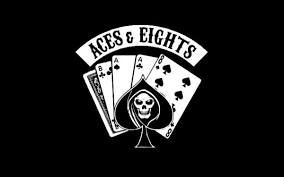
In the weeks that followed, the storyline thrived on suspense and a carefully cultivated aura of mystery. The assailants remained nameless until the July 5 episode. An unnamed man delivered a cryptic envelope to TNA General Manager Hulk Hogan. Inside was a photograph of a poker hand showing two aces and two eights. This hand is famously known as the “dead man’s hand.” The envelope also contained a simple, ominous note: “see you next week.” With this single, chillingly effective piece of iconography, the group had a name: Aces & Eights.
Their campaign of terror escalated. On July 12, they returned in greater numbers to attack both Sting and Hogan, with the latter being stretchered out with a kayfabe pelvic fracture to explain a real-life absence for back surgery. Crucially, the group’s targets were not limited to the heroes of TNA. They attacked heels like Bobby Roode with the same viciousness, creating a sense of impartial chaos that positioned them as a “Vigilante Gang” operating on their own agenda. This ambiguity was a masterful narrative stroke. By attacking everyone, it prevented fans from immediately trying to connect the dots to a specific disgruntled wrestler or a rival promoter, fostering genuine mystery and compelling viewers to tune in each week to see who would be targeted next and why.
Sons of Anarchy and the Biker Aesthetic
The visual presentation of Aces & Eights was an overt homage. It was a widely recognized nod to the popular FX television series Sons of Anarchy. The motorcycles and the uniform of jeans and leather vests (known as “kuttes”) were elements taken from biker club culture. The hierarchical structure of “prospects” and “patched in” members also derived from the show. This was a double-edged sword for the promotion. On one hand, it provided a ready-made, culturally relevant aesthetic that was instantly recognizable to a mainstream audience. The performers were passionate, many of whom were reportedly fans of the show. This passion lent an initial authenticity to the gimmick.
On the other hand, directly imitating left the storyline vulnerable to criticism. Critics called it a “cheap rip-off” or a “cringe SoA wannabe.” The Hogan-Bischoff regime clearly attempted to chase a pop culture trend. This strategy often felt disconnected from TNA’s core wrestling product. While the look was effective, the success of the angle hinged on the story’s substance. It also relied on the credibility of the men behind the masks.
The First Reveal: “Testify!”
The first major turning point happened at TNA’s biggest pay-per-view of the year. The storyline truly gained traction at Bound for Glory on October 14, 2012. Two masked members of Aces & Eights faced Sting and Bully Ray in a No Disqualification match with high stakes. If the faction lost, they would leave TNA forever. If they won, they would gain unfettered access to the Impact Zone. Following interference from other members, Aces & Eights secured the victory. In the aftermath, one of the interfering members was unmasked to reveal
Devon, Bully Ray’s long-time tag team partner.
The brilliance of the storyline’s initial phase lay in its subtle manipulation of the audience’s real-world knowledge. Fans were accustomed to the backstage turmoil of TNA, including frequent and sometimes public contract disputes. Devon had been recently written off television. He was stripped of the TNA Television Championship due to a supposed contract impasse. This story felt entirely plausible within the TNA ecosystem. By revealing him as the first “patched in” member, the storyline masterfully blurred the lines between reality and fiction. It immediately gave the anonymous group a credible TNA star. This established person was already in its ranks. It created a deeply personal conflict with Bully Ray. Fans began to question which other “disgruntled” wrestlers might be waiting behind a mask. This was a level of meta-storytelling that TNA had rarely achieved. It weaponized its own reputation for instability. This created a more compelling and unpredictable narrative.
Part II: The President’s Reveal (October 2012 – March 2013)
The Long Con: Weaving the Web
With Devon’s identity revealed, the storyline pivoted from a mystery of “who are they?” to a more complex conspiracy of “who is pulling the strings?” The nine-month period between Devon’s unmasking and the ultimate reveal of the faction’s President was a masterclass. It exemplified long-term narrative construction. It was filled with subtle clues and deliberate misdirection. A central babyface performance fooled nearly everyone.
The narrative architects meticulously wove a web of intrigue around Bully Ray. He was positioned as the sympathetic hero. He was a man betrayed by his own “brother,” Devon. He was forced to fight against the gang that had torn his family apart. Yet, looking back, the signs were there for those who chose to see them. Aces & Eights would frequently interfere in Bully’s matches. The outcomes were often ambiguous. They sometimes appeared to cost him a match but subtly advanced his position in the long run. His constant invocation of “Bully Nation” was re-contextualized in hindsight as a veiled reference to his hidden army. An infamous segment was when a “limping” Bully Ray, armed only with a chain, held off seven faction members. It was a blatant clue. This moment of theatrical implausibility could only have been staged as “a part of the plan”.
TNA’s creative team also employed a classic red herring to throw viewers off the scent. On one episode of Impact, a masked figure with a voice modulator appeared. The figure claimed to be the President. This figure kidnapped Sting and Hulk Hogan. The voice was a barely disguised Eric Bischoff. This move successfully ignited a wave of speculation among fans and media. They speculated that the former WCW head was behind this new invasion. It deflected suspicion from the true culprit.
The Human Element: The Hogan Romance
The narrative engine that drove the conspiracy to its climax relied on a controversial romantic subplot. This subplot was between Bully Ray and Brooke Hogan. Brooke is the daughter of his arch-nemesis, Hulk Hogan. The angle was widely criticized for its execution. Many viewers found the pairing “uncomfortable and weird.” They also cited Brooke Hogan’s acting as a significant weakness. Despite these criticisms, the storyline was indispensable. It allowed Bully to infiltrate the Hogan family. He earned the trust of the skeptical Hulk. Bully manipulated his way into the main event picture.
The storyline reached a pivotal moment during their on-air wedding on January 17, 2013. In a shocking swerve, Bully’s own best man, TNA commentator Taz, revealed himself as a member of Aces & Eights. He took off his suit jacket to reveal the group’s kutte underneath. Taz cited a contract that made him immune to retaliation. He then became the group’s official spokesperson. This added another layer of betrayal and inside help to the conspiracy. It was a moment of “genuinely actually good pro wrestling bullshit.” This moment furthered the plot. It also added another credible name to the faction’s ranks.
The Climax: Lockdown 2013
The nine-month conspiracy reached its zenith at the Lockdown pay-per-view on March 10, 2013. In the main event, Jeff Hardy defended his title inside a steel cage. He faced the man who had seemingly earned everyone’s respect, Bully Ray. The match took place in front of TNA’s largest-ever domestic crowd, a testament to the storyline’s success in generating interest. In the match’s closing moments, Devon slid a hammer into the ring. Bully Ray used it on Hardy and captured the championship. The hero had become the villain.
Bully Ray was revealed as the President of Aces & Eights.
The post-match scene was electric. Bully Ray grabbed a microphone. He delivered the iconic lines that defined the entire saga: “I’m the one that married your daughter. Hogan, I fooled you. Brooke, I SCREWED you!” The promo sparked real anger from the San Antonio crowd. They pelted the ring with garbage. It was a visceral display of hatred. Such intense emotion had not been seen since the nWo’s formation. This moment is hailed as the storyline’s creative apex. It marks the culmination of a patient heel turn. This turn was well-executed in modern professional wrestling. On the following Impact, Bully delivered a lengthy promo. He explained the entire hoax. He even detailed how the group had to adjust their plans on the fly. This happened when Jeff Hardy had unexpectedly won a previous match he was supposed to lose. This added a final layer of realism and narrative cohesion to the masterful con.
The success of this reveal was directly proportional to the length and believability of Bully Ray’s babyface performance. The angle ran for nine months before the final payoff, an eternity in modern wrestling. This extended period allowed the audience to suspend their disbelief. They forgot their initial suspicions. The audience became genuinely invested in Bully’s heroic journey. His performance was not a half-hearted act. He was a convincing and sympathetic hero. He feuded with his traitorous brother. He earned the trust of the fans and Hulk Hogan. This long-term commitment made the eventual betrayal exponentially more impactful than a quick, shocking turn ever could have been. It demonstrated that when a promotion commits to a patient, long-term vision, the payoff can be significant. This approach can create a truly unforgettable moment in wrestling history. A performer capable of executing it is crucial too. The tragedy of the Aces & Eights saga was not in its conception or its climax. Instead, it lay in its utter failure to build a future beyond that single, perfect moment.
Part III: The Reign and the Rot (March 2013 – August 2013)
The Problem of “What’s Next?”
After the masterful climax at Lockdown, the Aces & Eights storyline immediately faced a creative crisis. The chase was over. The central mystery that had fueled the narrative for nine months was solved, and the intrigue vanished almost overnight. It was replaced by the far more generic and less compelling booking of a standard “dominant heel faction”. The group’s primary, long-term goal was to install Bully Ray as the TNA World Heavyweight Champion. This goal had been achieved, and now they lacked a clear and compelling narrative direction. The story had been about the “how”; once that was revealed, the “why” became far less interesting.
The Roster Issue
The faction’s fundamental and most persistent weakness was the composition of its roster. The nWo had been built around three legitimate main-event superstars. In contrast, Aces & Eights was a top-heavy organization. Its credibility plummeted after its leadership core. The group had phenomenal heel work by Bully Ray. It also had the established veteran presence of Devon. Mr. Anderson added credibility, although he was somewhat past his peak. The group was populated by wrestlers who were simply not perceived by the audience as main-event threats.
This issue was twofold. First were the “nepotism hires,” Wes Brisco (son of Gerald Brisco) and Garett Bischoff (son of Eric Bischoff). A significant portion of the audience saw both as green and untalented wrestlers. They believed these wrestlers were only in their position due to family connections. Their inclusion immediately damaged the faction’s tough, intimidating aura. Second were the soldiers of the group: D.O.C. (the future Luke Gallows), Knux (formerly Mike Knox), and D’Lo Brown. While all were solid, experienced professionals, they were largely presented as midcard-level talents. They were there to fill out the numbers, not as individual stars who could elevate the group’s overall threat level. This created a bizarre dynamic. The anonymous, masked horde that attacked in the early months felt far more dangerous. They seemed more formidable than the unmasked, fully revealed members who followed.
| Member | Position in Faction | Date In | Date Out | Notes on Tenure/Departure |
| Bully Ray | President | Mar 10, 2013 | Nov 21, 2013 | Leader of the faction; group disbanded after his loss to Mr. Anderson. |
| D’Lo Brown | 1st Vice-President | Mar 7, 2013 | Jul 7, 2013 | Revealed as VP; later demoted to Prospect after losing to Kurt Angle and was released from TNA. |
| Mr. Anderson | 2nd Vice-President | Jan 3, 2013 | Sep 5, 2013 | Joined and became VP; quit the group, leading to the final feud with Bully Ray. |
| Devon | 1st Sgt. at Arms | Oct 14, 2012 | Aug 22, 2013 | First member revealed; forced to leave TNA after being pinned by AJ Styles in a 5-on-5 match. |
| Tito Ortiz | 2nd Sgt. at Arms | Aug 29, 2013 | Sep 12, 2013 | Joined as a surprise member; was pulled from TV by Bellator MMA shortly after. |
| Taz | Spokesperson | Jan 17, 2013 | Nov 21, 2013 | Revealed at Bully & Brooke’s wedding; remained with the group until its disbandment. |
| D.O.C. | Soldier | Nov 1, 2012 | Jul 12, 2013 | Unmasked by Joseph Park; parted ways with TNA when his contract expired. |
| Garett Bischoff | Soldier | Jan 31, 2013 | Nov 21, 2013 | Revealed as a member after attacking Kurt Angle; remained until the end. |
| Knux | Soldier | Jan 3, 2013 | Nov 21, 2013 | Unmasked as Devon’s partner; remained until the end. |
| Wes Brisco | Soldier | Oct 18, 2012 | Sep 26, 2013 | Revealed as a member after attacking Kurt Angle; forced out after a loss to the Main Event Mafia. |
| Brooke | First Lady | Aug 22, 2013 | Nov 21, 2013 | Officially joined after her relationship with Bully was revealed. |
The Opposition and The Lone Wanderer
TNA’s answer to the now-dominant Aces & Eights was to fall back on a familiar trope. They reformed the Main Event Mafia (MEM), which is another faction of established veterans. This included Sting, Kurt Angle, and Samoa Joe. This move led to some entertaining multi-man tag team matches. However, it underscored a core creative problem within TNA. They tended to rely on factions of older stars to combat other factions. This approach was used instead of taking the opportunity to build new, individual heroes from the ground up. The feud also served as a narrative device. It wrote out key members of Aces & Eights, such as Devon. He was forced to leave the company after losing a “Loser Leaves TNA” match against the MEM. This weakened the faction through attrition, often due to real-life contract expirations, rather than through decisive, story-driven defeats.
A significant bright spot during this period of decline was the faction’s feud with AJ Styles. After a period of soul-searching, Styles returned with a darker persona. It was more intense and reminiscent of Sting’s “Crow” character. He became a silent anti-hero. His journey to reclaim the TNA World Heavyweight Championship from Bully Ray at Bound for Glory 2013 was captivating. It was a significant character arc. However, the victory ultimately felt like the culmination of AJ’s personal story. It was more his swan song with the company than a definitive triumph over the faction. The faction was already beginning to fracture from within.
The decline of Aces & Eights was accelerated by a structural flaw in TNA’s booking philosophy. Once Bully Ray held the title, the creative focus shifted heavily toward large-scale gimmick matches. The direction also included faction warfare. This was evident in the Lethal Lockdown match at Lockdown 2013 and the series of clashes with the MEM. This approach consistently devalued individual championships and character arcs. The Television Championship, held by Devon, was effectively erased after a convoluted contract angle. More egregiously, Chris Sabin’s emotional, career-capping World Title victory over Bully Ray was treated as a shocking but temporary upset. The belt was quickly moved back to the faction leader to maintain the status quo. This decision sacrificed a potential new star for the sake of the ongoing gang storyline. The post-reveal creative rot was not just a simple lack of ideas. It was a symptom of a systemic booking philosophy. This philosophy prioritized the short-term spectacle of faction brawls over the long-term health of its championships. Most critically, it impacted the creation of new main-event babyface stars.
Part IV: The Implosion and the Funeral (September 2013 – November 2013)
The Seeds of Dissent
The end for Aces & Eights mirrored many dominant factions before it. It did not come from an external force. Instead, it came from implosion. The seeds of dissent were sown within its leadership structure, creating a classic power struggle. The primary conflict erupted between President Bully Ray and his hand-picked Vice President, Mr. Anderson. Anderson began to publicly question Bully’s autocratic leadership style. The final straw came with a unilateral decision. They patched in MMA fighter Tito Ortiz as the new Sergeant at Arms without a club vote. This breach of their own code created palpable internal strife. The story’s focus shifted from the group’s war with TNA to its own civil war.
The Break-Up
The feud escalated quickly. On the September 5, 2013, episode of Impact Wrestling, Anderson made his break official. He cost Bully Ray a No Disqualification match against their long-time nemesis, Sting. Anderson then formally quit the group. This set up a high-stakes Last Man Standing match between the two at the No Surrender special event. Bully Ray defeated Anderson to retain his World Heavyweight Championship. This victory seemingly put an end to the rebellion. It also solidified his power.
However, after a brief absence, Anderson returned with a singular goal: to destroy the faction he once helped lead. He declared his intention to end Aces & Eights for good, setting the stage for the storyline’s final confrontation at the Turning Point special on November 21, 2013. The main event was a No Disqualification match between Anderson and Bully Ray, but the stipulations were monumental. If Anderson won, the Aces & Eights faction would be forced to disband permanently. If Bully Ray won, Anderson would have to leave TNA. In a match that symbolized the end of an era, Anderson caught a hammer tossed by Brooke, used it on his former President, and hit his Mic Check finisher for the victory, officially forcing the end of the 18-month saga.
The Funeral
The storyline’s final, bizarre, and strangely fitting chapter aired on the following week’s Impact. Mr. Anderson, the man who brought the faction down, hosted a mock “funeral” for Aces & Eights. The segment was pure wrestling theater. It featured eulogies from TNA stars. A coffin was filled with the group’s signature leather kuttes. For many viewers, the segment was comedy gold. It was a moment of meta-commentary. This allowed the company and its characters to acknowledge that the angle had run its course. They could poke fun at its own absurdity. It was an unconventional but memorable end to one of TNA’s longest and most ambitious storylines.
The decision to have Mr. Anderson dismantle Aces & Eights was a significant misstep. He had been a loyal heel for most of the angle’s run. It prevented a truly satisfying heroic payoff. There was a critical weakness in the company’s roster. They lacked top-tier babyfaces who could be believably positioned as the company’s savior. A classic wrestling story arc shows a dominant heel faction is beaten by a valiant top hero. This is similar to Sting’s long war against the nWo. TNA had a potential candidate in AJ Styles. However, his title victory was framed as the climax of his own personal redemption story. Additionally, he was on his way out of the company. The other established heroes were engaged in the Main Event Mafia storyline. This storyline featured another faction of veterans, including Sting and Kurt Angle. TNA had failed to build a new, singular hero to stand against the tide. This creative vacuum left Mr. Anderson as the only credible, main-event-level character available for the role. His turn against Bully Ray was influenced by internal politics. It resulted from a power struggle. It was not a heroic crusade to save TNA. Consequently, the storyline ended not with a triumphant bang, but with the whimper of internal backstabbing. TNA failed to build a compelling babyface protagonist over the 18-month narrative. This failure led to an unsatisfying conclusion. They had to use a recently-turned heel to close the book.
Conclusion: A Polarizing Legacy
Successes and Failures
The legacy of Aces & Eights is one of the most complex and polarizing in modern wrestling history. It is a story of brilliant highs and bewildering lows. Its successes were undeniable. The initial mystery surrounding the group was compelling. It was well-paced and masterfully executed. This created genuine “must-see TV” that had fans and media speculating weekly. The nine-month build to the reveal of Bully Ray as the President was a masterclass in long-term storytelling. It culminated in a moment at Lockdown 2013. This moment stands as one of the greatest and most memorable in the entire history of TNA. For a brief, shining period, the faction achieved incredible “heel heat”. Their perceived dominance legitimately drew comparisons to the early days of the nWo.
However, these successes must be weighed against the storyline’s significant and ultimately fatal flaws. The angle went on far too long. It drastically overstayed its welcome. There was a severe and almost immediate drop in creative quality following the Lockdown reveal. The most critical failure was the casting of its supporting members. The group included wrestlers widely perceived as undeserving nepotism hires. There was a general lack of credible main-event threats outside of the leadership circle. These factors prevented the group from ever feeling like a legitimate, top-to-bottom threat on par with the nWo. The imitation of Sons of Anarchy was overt. While it initially provided a cool aesthetic, it often felt uninspired. It became derivative as the story wore on. Critics widely agreed with this perspective. The Wrestling Observer Newsletter awarded the gimmick its “Worst Gimmick” award in 2012. It received the same award again in 2013.
The Final Verdict
Ultimately, Aces & Eights is the quintessential “what if?” storyline in TNA’s history. It had all the ingredients to become the company’s own version of the nWo. However, it was fatally hampered by the promotion’s worst creative instincts. These problems included an over-reliance on older, established stars. There was a fundamental inability to create new ones. The booking was inconsistent and lost all momentum after the climax. There was also a glaring failure to develop a strong creative plan for the story’s second act.
Its legacy is a fractured one. Some remember it fondly for its thrilling beginning. It reached a spectacular peak. During that time, TNA felt unpredictable and exciting. For others, it represents the moment they gave up on the promotion. It became a symbol of a bloated, derivative, and frustrating creative era. This era drove them away for good. The Dead Man’s Hand was played, and while it produced a few winning moments, the house ultimately lost. The story of Aces & Eights remains a polarizing, ambitious, flawed, and occasionally brilliant saga. It perfectly encapsulates the turbulent and often paradoxical history of TNA Wrestling itself.

 ScortonBoy17.ca
Leave a comment