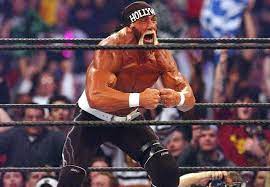
*I would have posted about his life, career, legacy and death sooner but when the news broke about his death I was traveling to a family vacation and did not have time to complete this until very recently.*
Introduction: The Final Bell
The myth of “The Immortal” Hulk Hogan, a character seemingly chiseled from granite, came to a sudden end. Prayers and vitamins powered him through millions. However, his starkly mortal end came on Thursday, July 24, 2025. Terry Gene Bollea, the man who embodied the myth, passed away at the age of 71. Reports confirmed that Bollea suffered a cardiac arrest at his expansive home in Clearwater, Florida. Emergency services responded to a 911 call placed at 9:51 a.m. regarding a severe cardiac episode. Paramedics from the Clearwater Fire & Rescue team treated him at the scene. Afterward, he was rushed to a local hospital. He was pronounced dead upon arrival.
The timing of his death came with tragic irony. It seemed to encapsulate the central conflict of his life: the chasm between public facade and private reality. Just weeks earlier, his wife, Sky Daily, had fiercely denied swirling rumors. People speculated that the wrestling legend was in a coma after multiple surgeries. She had assured fans that his heart was “strong” and that he was recovering well. But behind the curtain of bravado, Terry Bollea was fighting a losing battle. His health had been in decline for years. This decline was a direct consequence of a four-decade career that subjected his body to unimaginable abuse. Friends and insiders mentioned frequent heart procedures. They noticed a general “slowing down” in the months leading up to his death. This was a painful reality that his camp had consistently downplayed. He openly admitted to using anabolic steroids during the peak of his career. This complicates the narrative further. He later regretted this choice, but it may have set the irreversible course for his body’s decline.
The news of his passing shocked the world immediately. It triggered a tidal wave of tributes. These tributes reflected the deep and often contradictory legacy he leaves behind. Fellow wrestlers like Ric Flair shared heartfelt memories of his friendship and generosity. WWE, the company he transformed into a global empire, issued a carefully worded statement. They acknowledged him as “one of pop culture’s most recognizable figures.” He helped the company achieve “global recognition.” Political figures, including former President Donald Trump, mourned the loss of a “great friend” and MAGA supporter.
Yet, intertwined with the praise was the unavoidable shadow of the controversies that had defined his later years. The man was a childhood hero to an entire generation. However, he was also a deeply flawed and polarizing figure. His legacy is permanently scarred by public scandals involving racism and privacy. This is the dichotomy of Hulk Hogan. He was unforgettable, but he was also complicated. As fans around the world scrolled through old highlight reels, they found new meaning in one of his signature catchphrases. It echoed: “Whatcha gonna do when Hulkamania runs wild on you?”. For over 40 years, it ran wild on the world. It left an indelible and complex mark on popular culture. Now, it is finally complete. The story of Terry Bollea is the story of how an “immortal” icon ultimately had to confront his own mortality.
Part I: Forging the Hulk
From Ruckus to the Ring
Terry Gene Bollea is a kid from Augusta, Georgia. He was born on August 11, 1953. His father, Pietro, worked as a construction foreman. His mother, Ruth, was a homemaker and dance teacher. Terry Gene Bollea was merely a child from Augusta, Georgia. This was before the applause of the crowd. It was before the torn t-shirts and the “24-inch pythons.” He was born on August 11, 1953, to a construction foreman, Pietro, and a homemaker and dance teacher, Ruth. At a year and a half old, his family moved to Port Tampa, Florida. This state would become synonymous with his larger-than-life persona. As a boy, he was a pitcher in Little League, but his true passions lay elsewhere. By 16, he was drawn to professional wrestling. He attended shows at the Tampa Sportatorium and idolized charismatic performers like Dusty Rhodes. He was particularly mesmerized by the “inhuman” physique of “Superstar” Billy Graham, a look he would later emulate and perfect.
However, Bollea’s first stage was not the wrestling ring but the smoky bars of the Tampa Bay music scene. For a decade, he was a dedicated musician, playing fretless bass guitar in a series of rock bands. In 1976, he and two other musicians formed a band called Ruckus, which quickly became a popular regional act. This experience was foundational. It was here, on stage with a guitar in hand, that he learned the art of performance. He learned how to command a room. He also learned how to project charisma to a live audience. He was a frontman long before he was a main eventer, a distinction that would define his entire career. He wasn’t an amateur wrestler. He wasn’t a traditional athlete. He was a performer. This made him the ideal vessel for the “sports entertainment” revolution to come.
In his own telling, Bollea was “scared to death” of the wrestlers he admired from afar, knowing their reputation for being fiercely protective of their business. But as Ruckus gained popularity, wrestlers began frequenting their gigs. This proximity demystified the giants he idolized and gave him the confidence to pursue his dream. His formidable physique, honed at Hector’s Gym, had already caught the attention of wrestling luminaries Jack and Gerald Brisco, who saw him performing and encouraged him to train. He finally agreed and was sent to the infamous training “dungeon” of Hiro Matsuda. In a now-legendary display of toughness, Matsuda broke Bollea’s leg on the very first day of training. Rather than quit, Bollea rehabilitated for ten weeks and returned, earning the veteran’s respect and proving his own resilience.
The AWA Proving Ground & Thunderlips
Bollea cut his teeth in regional promotions. He had a brief but impactful run in the World Wrestling Federation. This was under the guidance of Vince McMahon Sr. It was McMahon Sr. who combined his existing nickname, “The Hulk,” with the Irish surname “Hogan” to appeal to fans in the Northeast. However, Bollea’s ambition extended beyond the squared circle. In 1982, against McMahon Sr.’s explicit warning that wrestlers “don’t act,” he took on the role of the monstrous wrestler “Thunderlips.” This was in Sylvester Stallone’s blockbuster film Rocky III. True to his word, McMahon Sr. fired him.
This firing, which could have been a career-ending setback, instead became the most crucial turning point of his life. Cast out from the WWF, Bollea landed in Verne Gagne’s Minneapolis-based American Wrestling Association (AWA). This period, from 1981 to 1983, was not a step backward but an indispensable incubation period for a global phenomenon. The common narrative often claims a direct path from Rocky III to WWF superstardom. However, this viewpoint ignores the essential contribution of the AWA. In the arenas of the Midwest, Bollea took his newfound celebrity from the movie. He transformed it into a viable, money-making wrestling persona.
The AWA became the unwitting laboratory for Hulkamania. It was here that he transitioned from a villainous “heel” to a beloved “babyface” hero. Fans couldn’t help but cheer for his magnetic presence. He developed the signature red-and-yellow color scheme, inspired in part by the father of fellow wrestler Randy Savage, Angelo Poffo. He began ripping his shirt off during interviews and, most importantly, first coined the term “Hulkamania”. He demonstrated the concept’s marketability. He printed his own “Hulkamania” t-shirts and sold them out of the trunk of his car. He made more money from merchandise than from wrestling itself. By the time Vince McMahon Jr. came calling in late 1983, he wasn’t just hiring a wrestler from a movie. Vince was acquiring a fully formed movement. It was market-tested and wildly popular. The AWA, a rival territory, had inadvertently served as the research and development department for the WWF’s 1980s boom.
Table 1: Hulk Hogan’s Career Timeline
| Year | Event |
| 1953 | Born Terry Gene Bollea in Augusta, Georgia (August 11) |
| 1977 | Professional wrestling debut after training with Hiro Matsuda |
| 1979 | First joins the World Wrestling Federation (WWF) |
| 1982 | Appears as “Thunderlips” in the film Rocky III |
| 1981-1983 | Develops the “Hulkamania” persona in the American Wrestling Association (AWA) |
| 1984 | Wins his first WWF World Heavyweight Championship from The Iron Sheik (January 23) |
| 1985 | Headlines the first-ever WrestleMania, teaming with Mr. T |
| 1987 | Defeats André the Giant in the iconic main event of WrestleMania III |
| 1994 | Signs with World Championship Wrestling (WCW) |
| 1996 | Turns heel and forms the New World Order (nWo) at Bash at the Beach (July 7) |
| 2002 | “Icon vs. Icon” match against The Rock at WrestleMania X8* |
| 2005 | Inducted into the WWE Hall of Fame for the first time |
| 2005-2007 | Stars in the VH1 reality show Hogan Knows Best |
| 2015 | Fired from WWE and removed from Hall of Fame over racist remarks scandal |
| 2016 | Wins landmark lawsuit against Gawker Media |
| 2018 | Reinstated into the WWE Hall of Fame |
| 2020 | Inducted into the WWE Hall of Fame for a second time as a member of the nWo |
| 2025 | Passes away at age 71 from cardiac arrest (July 24) |
Part II: The Hulkamania Era: A Red and Yellow Empire
The Birth of a Kingdom
When Vince McMahon Jr. purchased the WWF from his father, he had a revolutionary vision. He wanted to break from the regional territory system. His aim was to transform professional wrestling into a national spectacle and eventually a global entertainment spectacle. To accomplish this, he needed a new kind of superstar. This superstar had to have undeniable charisma. They also required a physique that looked like it belonged in a comic book and had to possess mainstream appeal. Terry Bollea, fresh off his AWA run and with the national recognition from Rocky III, was the perfect candidate.
Hogan returned to the WWF in December 1983, and the landscape of professional wrestling changed forever just one month later. On January 23, 1984, inside the hallowed walls of Madison Square Garden, Hulk Hogan faced The Iron Sheik. Hogan defeated him to capture the WWF World Heavyweight Championship. The victory was more than just a title change; it was a coronation. The eruption from the crowd marked the official birth of “Hulkamania.” This cultural phenomenon would propel wrestling into the mainstream. It established Hogan as the undisputed face of the industry. This moment marked a pivotal shift. It transformed the gritty, niche sport of professional wrestling into a vibrant, family-friendly entertainment product. This transformation captivated a generation. Hogan’s first championship reign was a testament to his drawing power, lasting an incredible 1,474 days—more than four years.
The Three Demandments & The American Superhero
The character of Hulk Hogan was a product perfectly tailored for its time. He was presented as a real-life superhero. He was a flag-waving, patriotic American icon. He defended the nation’s honor against a rogues’ gallery of foreign villains and dastardly rule-breakers. This persona did not emerge in isolation. It was a flawless reflection of the cultural zeitgeist of 1980s Reagan-era America. This period was defined by a renewed, bombastic patriotism and clear-cut, good-versus-evil narratives. Hogan, with his simple moral code, became a living avatar of this ethos.
He preached a simple, positive mantra to his legions of young fans, the “little Hulkamaniacs.” He encouraged them with a message: “To all my little Hulkamaniacs: say your prayers. Take your vitamins. You will never go wrong.” This message was safe, marketable, and perfectly aligned with the family audience McMahon was determined to capture. His iconography became globally recognized. People endlessly imitated his massive arms he dubbed his “24-inch pythons.” The signature blond horseshoe mustache, bandana, and the iconic red-and-yellow ring gear also became famous. His pre-match ritual became a trademark. He cupped his ear to the crowd and tore his t-shirt to shreds. This sent arenas into a frenzy. He was more than a wrestler. He was a living cartoon. He became an avatar of 80s American pop culture. The culture was optimistic and materialistic. It was presented in bright, MTV-ready colors.
This character was the engine of a business empire. Hogan’s popularity led to the creation of WrestleMania. This annual pay-per-view spectacle became the Super Bowl of professional wrestling. He was the main event draw for eight of the first nine WrestleMania events. This run of dominance is unlikely to ever be matched. On his broad, sun-tanned back, the WWF grew from a regional promotion into a billion-dollar global entertainment company.
Table 2: World Championship Reigns (WWF/WWE & WCW)
| Promotion | Championship | Reigns |
| World Wrestling Federation (WWF/E) | WWF/E World Heavyweight Championship | 6 |
| World Championship Wrestling (WCW) | WCW World Heavyweight Championship | 6 |
| Total World Championships | 12 |
The Irresistible Force vs. The Immovable Object (The André the Giant Feud)
No challenge to Hulkamania was greater than the one posed by the “Eighth Wonder of the World,” André the Giant. Their feud was a masterpiece of long-term narrative construction, its power stemming from years of carefully crafted storytelling. From 1982 to 1986, the WWF meticulously established Hogan and André as the best of friends, frequently teaming them together against common enemies. The audience was invested in their bond, which made André’s eventual betrayal in 1987 all the more shocking and heartbreaking. On a legendary segment of the interview show Piper’s Pit, André, now aligned with the villainous manager Bobby “The Brain” Heenan, challenged Hogan for the WWF Championship, ripping the crucifix from Hogan’s neck and shattering their friendship in an unforgettable moment.
The feud culminated in arguably the most important match in professional wrestling history. It was the main event of WrestleMania III on March 29, 1987. The event was held
in front of a reported 93,173 fans. They were packed into the Pontiac Silverdome in Michigan. The “irresistible force” met the “immovable object”. The match was a spectacle that transcended wrestling and captured the attention of the world. The defining moment occurred when Hogan summoned every ounce of his strength. He lifted the 520-pound André for a thunderous bodyslam. This feat became known as “the bodyslam heard ’round the world”. He followed it with his signature leg drop. He retained his championship, which created an image that would define an entire generation of wrestling.
But this was not just a single match; it was a multi-act saga. The story continued into 1988. In that year, André finally defeated Hogan for the title on a prime-time television special, The Main Event. The broadcast drew an astonishing 33 million viewers, a record for American wrestling that still stands today. The win involved deceit. André’s manager had paid off a referee who was the identical twin of the original official. This storyline twist furthered the drama. It led to the title being vacated. This long-form, serialized narrative, with its betrayals, conspiracies, and long-term consequences, established a new blueprint for modern wrestling storytelling. It showed that, when executed correctly, professional wrestling could have epic drama. This drama rivaled any other form of popular fiction.
Part III: Hollywood and the New World Order
“You Can Call This the New World Order of Wrestling, Brother”
By the mid-1990s, the once-unstoppable force of Hulkamania was beginning to wane. The red-and-yellow hero had a wholesome message of prayers and vitamins. He felt increasingly out of step with a culture embracing the cynicism of grunge music. The rise of the anti-hero compounded this disconnect. After leaving the WWF, Hogan signed a lucrative contract with rival promotion World Championship Wrestling (WCW) in 1994. At WCW, he initially reprised his familiar heroic role. But the character was perceived by many as stale. A change was needed. It came as one of the most shocking moments in entertainment history. It was audacious.
On July 7, 1996, at the Bash at the Beach pay-per-view, two former WWF stars joined forces. Scott Hall and Kevin Nash, known as “The Outsiders,” were wrestling a team of WCW loyalists. The match ended in chaos. As the brawl ensued, Hulk Hogan marched to the ring to a thunderous ovation. The fans expected him to save the day as he had done countless times before. Instead, he committed the ultimate wrestling sin. He dropped his signature leg drop not on the invaders. Instead, he dropped it on his long-time friend and ally, “Macho Man” Randy Savage. The crowd fell into a stunned silence, which quickly curdled into a torrent of boos and rage. In a visceral display of betrayal, fans who had idolized him for a decade began showering the ring with cups. They also threw cans and garbage.
In a post-match interview amidst the debris, a defiant Hogan was flanked by Hall and Nash. He delivered a promo that would change the industry. He berated the fans for their fickle support. He bragged about his money and power. He famously declared, “You can call this the New World Order of wrestling, brother!”. With that line, he named the new villainous faction. It was called the New World Order (nWo). He then slammed the door on the Hulkamania era.
This was more than a simple character change; it was a calculated and stunningly successful act of creative self-destruction. Hogan dismantled the icon he had spent a decade building. He weaponized his own catchphrases. He turned the fans’ love into fuel for his new, cynical “Hollywood” Hogan persona. It was a terrifying gamble, one that he himself feared would backfire spectacularly. But it was a masterstroke. He didn’t just change his shirt from yellow to black. He tapped into a new cultural current. This demonstrated an incredible, and often overlooked, instinct for what the audience wanted before they knew it themselves.
The Reign of the nWo
The formation of the nWo ignited a new boom period in professional wrestling. As the swaggering, cowardly leader of the black-and-white faction, “Hollywood” Hogan became the most hated—and most compelling—villain in the sport. The nWo storyline, with its themes of hostile takeover and anti-establishment rebellion, was a colossal success. It was the primary engine that drove WCW to defeat the WWF in the “Monday Night Wars” ratings. They achieved victory for 83 consecutive weeks. This was a feat once thought impossible.
The nWo’s “cool heel” dynamic fundamentally changed the wrestling landscape. It brought about a more mature and edgy product. This was a stark departure from the family-friendly entertainment of the Hulkamania era. This paradigm shift forced the WWF to abandon its old model. The organization had to respond in kind. This change directly led to the creation of its own edgier “Attitude Era.” This era produced stars like “Stone Cold” Steve Austin and The Rock. The nWo’s influence was so profound. It was undeniable because in 2020, the group was inducted into the WWE Hall of Fame. Hogan, Hall, Nash, and Sean Waltman represented the nWo during this honor. This achievement made Hogan a rare two-time inductee. It shows his ability to define not just one era, but two of the most significant eras in wrestling history. His famous nWo catchphrase became a self-fulfilling prophecy. “When you’re nWo, you’re nWo for life.” This cemented the faction’s place in wrestling immortality.
Part IV: The Man Outside the Ring
From the Ring to the Red Carpet
Throughout his career, Terry Bollea harbored a deep and recurring ambition. He wanted to achieve mainstream success in Hollywood. This dream was never fully realized. His acting career began with a memorable bang in Rocky III. His role as Thunderlips gave him the mainstream credibility that Vince McMahon Jr. would later capitalize on. However, his attempts to become a leading man were largely met with commercial failure. Many of his films have since gained a cult following for being “so-bad-it’s-good”.
His first starring role was in the 1989 wrestling film No Holds Barred, which failed to ignite the box office. He followed this with a string of family-friendly comedies, including the sci-fi romp Suburban Commando (1991) and Mr. Nanny (1993), in which he famously donned a tutu. Other notable efforts included Santa with Muscles (1996) and his final lead role in Little Hercules (2009). He also made numerous television appearances. He starred in the syndicated action series Thunder in Paradise. He made cameos on popular shows like The A-Team and Baywatch. Perhaps his most memorable non-wrestling appearances were his clever cameos as himself. These appearances broke the fourth wall in films like Gremlins 2: The New Batch and Muppets from Space.
Bollea’s on-screen persona was too specific. It was inextricably linked to “Hulk Hogan.” This made a successful transition into a versatile actor impossible, unlike future wrestler-turned-megastar Dwayne “The Rock” Johnson. His filmography is not a sign of his boundless celebrity, but rather a testament to its limits. Each time his Hollywood ambitions stalled, he returned to the wrestling world. It was the one arena where his superstardom was absolute. His status there was unquestioned.
Hogan Knows Best?
In 2005, Bollea once again stepped in front of the camera, but this time as himself. He and his family—then-wife Linda, daughter Brooke, and son Nick—starred in the VH1 reality series Hogan Knows Best. The show ran for four seasons. It was pitched as a “clean version of ‘The Osbournes’.” It presented a starkly different picture of the wrestling icon. The show depicted him as sometimes comically overprotective. However, he was ultimately a loving father. He hoped this persona would show fans a softer, more human side of the screaming, body-slamming hero.
The show was a ratings success, but its legacy is deeply ironic. By putting his private life under a microscope for entertainment, the series magnified the fallout when that life began to publicly and spectacularly fracture. The show’s run immediately preceded the implosion of his family. His messy and acrimonious divorce from Linda was finalized in 2009, a split that resulted in a massive financial blow. According to the terms of the settlement, he lost a reported 70% of the couple’s liquid assets, $3 million in property settlements, and a 40% ownership stake in his various businesses. This tumultuous period also saw his son, Nick, at the center of a devastating 2007 car crash that left his passenger and friend, John Graziano, with permanent, life-altering brain injuries.
The intense public scrutiny engendered by Hogan Knows Best may have acted as a catalyst. It can be argued that this contributed to the family’s disintegration. The show erased the final barrier between Terry Bollea the man and Hulk Hogan the brand. This meant the collapse of his personal life was also a public relations catastrophe.
The Hogan Brand
Bollea was active beyond the ring and the screen. He was a prolific entrepreneur with a portfolio of business ventures. These ventures saw both notable successes and infamous failures. His most visible and enduring successes are his Florida-based hospitality and retail businesses. In 2012, he launched Hogan’s Beach Shop, which later expanded into other retail locations in Orlando and Clearwater. He also found success with his restaurant and bar, Hogan’s Hangout. This venue is a popular Clearwater Beach destination for tourists and fans. It serves food and drinks. It also hosts live entertainment.
However, not all of his ventures were successful. He is famously associated with the short-lived Pastamania restaurant. It opened at the Mall of America in the mid-1990s. The restaurant quickly closed. In his final years, he entered the beverage industry. He launched his own brand of beer called “The Real American Beer.” This venture tapped into his iconic patriotic persona. At the time of his death, his net worth was estimated to be around $25 million. This figure was significantly diminished by his costly divorce.
Part V: A Legacy of Controversy
The Steroid Trial
In 1994, the seemingly invincible world of professional wrestling was rocked by a federal investigation. WWF owner Vince McMahon was put on trial by the U.S. government, accused of illegally distributing anabolic steroids to his wrestlers. The trial threatened to expose the industry’s deepest secrets. At its center was the prosecution’s star witness: Hulk Hogan.
Bollea, who was then working for the rival WCW, testified under a grant of immunity. On the stand, he admitted under oath what had long been an open secret. He had used steroids for 14 years to maintain his superhuman physique and recover from injuries. He stated that they were as common as “aspirin” in the locker rooms of the era. However, his testimony was ultimately crucial to McMahon’s acquittal. Bollea stated unequivocally that McMahon had never sold him steroids nor ordered him to take them. The trial cleared McMahon of the charges. However, Hogan’s public admission permanently linked the golden age of Hulkamania with the pervasive use of performance-enhancing drugs.
Gawker and the Price of Privacy
In October 2012, Terry Bollea’s life changed drastically. An online gossip website named Gawker published an excerpt from a surreptitiously filmed sex tape. The excerpt lasted one minute and 41 seconds. The tape was recorded in 2007. It showed Bollea having sex with Heather Clem. She was the then-wife of his friend, radio personality Bubba the Love Sponge. Bollea responded by filing a $100 million lawsuit against Gawker Media. He claimed it was for invasion of privacy. This action set the stage for a landmark legal battle.
The case became a flashpoint for debates on press freedom, celebrity privacy, and the nature of newsworthiness. What unfolded, however, was far more complex than a simple celebrity lawsuit. It was later revealed that Bollea’s case was being secretly bankrolled with $10 million from Silicon Valley billionaire Peter Thiel. Thiel held a deep, personal vendetta against Gawker. He was using the lawsuit as a proxy war to destroy the company.
In March 2016, a Florida jury sided with Bollea. They awarded him a stunning $140 million judgment for emotional distress and punitive damages. The verdict was a death blow to Gawker. Unable to pay, the company filed for bankruptcy and was forced to sell its assets, effectively ceasing to exist. The case raised chilling questions about the power of immense wealth to silence media outlets. But with profound irony, Bollea’s lawsuit to protect his image caused its greatest and most permanent stain.
The Scandal That Erased a Hero
In July 2015, during the legal discovery process for the Gawker trial, sealed court documents were leaked. They contained transcripts from the sex tape. These documents were published by The National Enquirer. The transcripts revealed Bollea was on a racist tirade. He repeatedly used the N-word and other slurs. He expressed fury that his daughter, Brooke, was dating a Black man.
The public backlash was immediate and devastating. WWE, a publicly-traded company highly sensitive to its corporate image, acted swiftly. They terminated Bollea’s contract. They fired him from all his duties. In a move that shocked the wrestling world, they scrubbed every mention of him from their website. This included his profile in the Hall of Fame. The man who had built the company was, for a time, erased from its history.
Bollea issued multiple public apologies, calling his language “unacceptable” and stating, “there is no excuse for it”. In 2018, WWE reinstated him into the Hall of Fame after a three-year exile. The decision was met with a deeply mixed reaction. Many fans and wrestlers were critical. Reports from his return suggested that his private apology to the WWE locker room was poorly received. Some wrestlers felt he was more sorry about being caught on camera than for the racist beliefs he expressed. In his final WWE appearances, a significant portion of the audience often greeted him with boos. This reception contrasted starkly with the deafening cheers that had once defined his career.
The scandal shattered the carefully blurred line between Terry Bollea and Hulk Hogan. The public was forced to confront the repulsive views of the man behind the beloved childhood hero. In a modern era of heightened social awareness and accountability, the heroic persona was no longer an impenetrable shield. It could not protect against the personal failings of the individual. The incident revealed a harsh reality. Even an icon as globally recognized as Hulk Hogan could not escape the consequences of his own words. Even an icon as globally recognized as Hulk Hogan faced accountability. His legendary past could not grant him a permanent pass. His legacy was irrevocably fractured.
Conclusion: Reconciling an Icon
In the end, the story of Terry “Hulk Hogan” Bollea is one of profound and unreconciled contradictions. The immediate reactions to his death captured this duality perfectly. There were heartfelt tributes from lifelong friends like Ric Flair, who remembered his kindness and generosity during their darkest hours. There was the corporate statement from WWE. It was carefully worded and rightfully praised his monumental contributions to the business. However, it strategically sidestepped the controversies that made him a liability. Political allies like Donald Trump offered enthusiastic endorsements. These endorsements highlighted the specific cultural tribe he aligned with in his final, polarizing years.
He was the ultimate babyface. He was the “Real American” hero in red and yellow. He inspired millions of children to believe in themselves. He was also the ultimate heel. He was the swaggering leader of the nWo in black and white. He made wrestling cool for an entire generation of adults. He was a pop culture titan. He dreamed of conquering Hollywood. However, he could never quite escape the gravitational pull of the wrestling ring. He was a devoted family man whose private life unraveled in the most public and painful way imaginable. And ultimately, he was a global icon. His name became synonymous with the sport. His legacy is permanently scarred by his own words and actions.
Terry Bollea built a career on the idea of being an “immortal” superhero. He created a legend as a figure larger than life and impervious to pain. But he will be remembered for his all-too-human frailties. He leaves behind a legacy as powerful, as complicated, and, in the final accounting, as mortal as he was.

 ScortonBoy17.ca
Leave a comment