Introduction: A Ghost on the Fourth Line
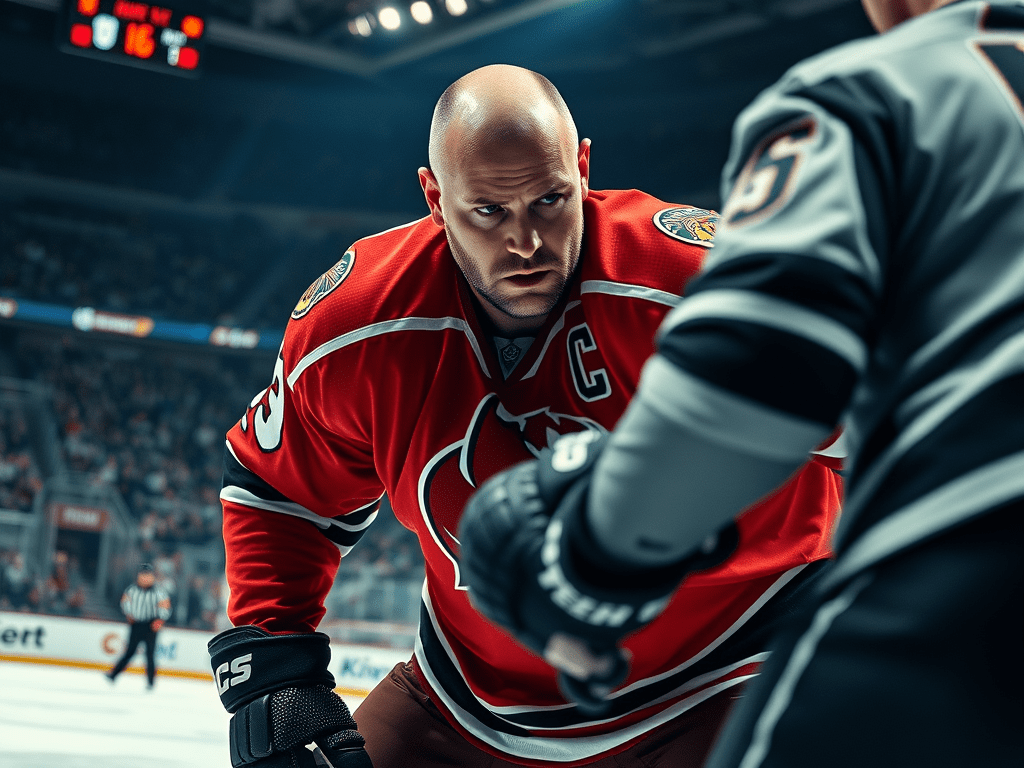
The scene is a familiar one to any hockey fan from a bygone era. A star player is hit late, and a palpable tension ripples through the arena. From the bench, a hulking figure steps onto the ice, his gaze fixed on the perpetrator. The gloves drop, and for a brief, violent moment, the game of hockey is replaced by a bare-knuckle brawl. After a flurry of punches, the combatants are separated, and the enforcer skates to the penalty box, his job done. This was the world of players like Bob Probert and Tie Domi, where justice was meted out not by referees, but by the team’s designated tough guy.
Contrast this with a typical fourth-line shift in today’s National Hockey League (NHL). A trio of fast, energetic skaters pursue the puck on the forecheck. They disrupt the opponent’s breakout and grind out valuable, possession-driving minutes. Their job is not to fight, but to tilt the ice through speed and defensive responsibility. The enforcer, once a celebrated and seemingly indispensable “working-class superhero” , has been rendered nearly extinct. This change was not a single event. It was a slow, inexorable phasing out. This change was driven by three main forces. First, a strategic revolution prioritized speed and skill. Second, a legislative crackdown addressed violence. Finally, scientific research highlighted the role’s devastating human cost.
I. The Code and the Colossus: Anatomy of a Hockey Enforcer
To understand the enforcer’s disappearance is to first understand why the role was once considered essential. It was a specialized position. It was governed by its own internal logic and unwritten rules. This role served a clear strategic purpose in a more brutal version of the sport.
Defining the Role
The enforcer’s primary function was to act as an on-ice deterrent and policeman. Their role was synonymous with terms like “fighter,” “tough guy,” or “goon.” They were tasked with responding aggressively to dirty or violent play by the opposition. This was particularly important against a team’s star players or goaltender. This role was distinct from that of a “pest.” The “pest” aimed to agitate and draw penalties. The “grinder” was known for hard work and checking rather than fighting.
The enforcer was typically deployed as a winger on the fourth line. They were prized for aggression, size, and fighting ability. This was often at the expense of traditional hockey skills like skating and scoring. They were among the lowest-paid players. They received minimal ice time and frequently moved between teams. Even so, they were often fan favorites. They embodied a blue-collar ethos of protecting their more skilled teammates.
The Unwritten “Code”
Enforcers operated under a strict but unwritten set of rules known as “the Code”. This informal system of conduct dictated the timing and manner of fights. It emphasized a peculiar form of fair and respectful combat. Fights were rarely personal. They were a part of the job. Opposing enforcers often held mutual respect. They sometimes even maintained friendships off the ice. A crucial tenet of the Code was that enforcers fought each other. They very rarely targeted star players in a fight. Instead, they held their counterpart on the opposing team accountable for any transgressions committed by their teammates. This maintained a violent but predictable equilibrium.
The Enforcer as a Deterrent and Momentum-Shifter
From a strategic standpoint, the enforcer’s value was rooted in deterrence theory. The enforcer’s presence was like a military power’s strength projection. It was meant to prevent an attack. A feared enforcer on the bench made opponents think twice before taking liberties with skilled players. This threat created more time and space on the ice for offensive stars to work their magic. Beyond deterrence, a well-timed fight could act as a strong catalyst. It is capable of shifting a game’s momentum. This shift comes from energizing the home team and crowd. A young enforcer would fight often to establish his reputation. A veteran enforcer, on the other hand, would pick his spots carefully. This approach maximizes his impact.
The Golden Age: Icons of Intimidation
The enforcer’s heyday spanned from the 1970s through the 1990s. It produced some of the most feared and iconic players in NHL history. The Philadelphia Flyers of the 1970s were famously nicknamed the “Broad Street Bullies.” They institutionalized intimidation as a winning formula and captured two Stanley Cups. Dave “The Hammer” Schultz was their chief pugilist. He set a single-season record with 472 penalty minutes in 1974-75. This record embodied the era’s ethos.
The offensive explosion of the 1980s was not independent of this era of toughness; it was directly enabled by it. The generational talents of Wayne Gretzky and Mike Bossy flourished under the protection of their personal bodyguards. Dave Semenko shadowed Gretzky in Edmonton. Later, Marty McSorley accompanied him in Los Angeles. This arrangement ensured Gretzky could operate with less fear of injury. Similarly, Clark Gillies protected the New York Islanders’ stars during their dynasty years. The relationship between the “goon” and the “great one” was symbiotic; one could not thrive without the other. This era also saw the rise of heavyweight champions like Bob Probert and Tie Domi. These players were so feared for their fighting prowess that their reputation alone was often enough to keep the peace. Some, like Probert and Boston’s Terry O’Reilly, were tough but also had surprising offensive skill. They earned All-Star Game appearances. This proved that grit and talent were not always mutually exclusive.
II. The Game Outskated the Goon: Speed, Skill, and the Salary Cap
The decline of the enforcer was not a single event. It was a gradual erosion caused by fundamental shifts in the way the game was played. Changes in how the game was managed and analyzed also contributed. A confluence of strategic, economic, and technological forces rendered the one-dimensional fighter a liability his team could no longer afford.
The 2005 Lockout: A Line in the Sand
The 2004-05 NHL lockout stands as the primary turning point in the enforcer’s demise. The league emerged from the full-season shutdown with a clear mandate: increase game speed and boost scoring. To achieve this, a series of rule changes were implemented. These changes aimed to end the “clutch-and-grab” era. Officials strictly enforced penalties for obstruction, hooking, and holding. This crackdown opened up the ice, placing a new premium on skating ability and puck skills. Eliminating the two-line pass rule further sped up the game. It rewarded fast transitions instead of the previously dominant grinding, physical style.
The Rise of the Speed-and-Skill Game
The new on-ice environment favored a completely different type of player. The game became faster, more skilled, and more strategically complex than ever before. Teams began to build their rosters around a new generation of agile, dynamic superstars. Sidney Crosby and Patrick Kane are examples of these superstars. They broke into the league in the immediate post-lockout era.
Defensive strategies evolved in tandem. Simple man-to-man coverage gave way to intricate systems. These include the neutral zone trap and aggressive, coordinated forechecks. Each requires five mobile skaters working in unison. In this new paradigm, a slow-footed player, regardless of his toughness, became a significant defensive liability. The game had simply become too fast for a player whose primary skill was fighting.
The Economic Squeeze: The Salary Cap and the Analytics Revolution
The strategic evolution on the ice was compounded by an economic revolution in the front office. The hard salary cap introduced in 2005 required general managers to make the most out of every roster spot. They also had to maximize every dollar spent. A player who spent most of the game on the bench was an inefficient allocation of precious resources.
This economic pressure coincided with the rise of advanced analytics. Teams became equipped with dedicated analytics departments. They began using metrics like Corsi (shot attempt differential) and Expected Goals (xG) to evaluate player performance. These metrics provided an objectivity that went far beyond traditional statistics. This data-driven approach provided irrefutable evidence of what many had begun to suspect. A one-dimensional fighter was often a net negative. They were on the ice for more goals against than for. Additionally, they contributed little to puck possession. The new team-building philosophy required that every player positively contribute to the game flow. Each team member needed to enhance the game. This included players on the third and fourth lines. The specialist goon no longer had a place.
These three forces—strategic, economic, and technological—created a powerful feedback loop. The new rules devalued the enforcer’s on-ice role. The salary cap made him a financial burden. Analytics provided the objective proof to justify his removal from the roster.
III. Legislating the Lout: How the Rulebook Tamed the Tough Guy
The game’s evolution pushed the enforcer to the margins. A series of targeted rule changes actively legislated his core function out of existence. The NHL systematically dismantled the environment in which the enforcer thrived, replacing on-ice retribution with league-officiated justice.
The Instigator Rule: The Game Changer
The most significant blow was the introduction of the “Instigator Rule” (Rule 46.11) in 1992. This rule imposes an additional two-minute minor penalty on any player who starts a fight. It also adds a 10-minute misconduct penalty. This was a direct attack on the enforcer’s primary job of retaliation. Under the new rule, responding to a dirty hit on a teammate resulted in a two-minute penalty. This put one’s own team at a disadvantage on the scoreboard.
The impact was immediate and profound. Multiple statistical analyses have confirmed a significant decrease in fights per game following the rule’s implementation. One study noted a drop in the league-wide average from 0.71 to 0.51 fights per game in the years after the rule was adopted. While the rule existed, its clash with the unwritten “Code” of the players created a paradox. It penalized the very act of self-policing. This was something the players’ culture demanded. This caused a “cultural lag” where official and unofficial rules were in direct conflict. This tension helps explain why the debate over fighting persists, even as the enforcer role has faded.
The Cumulative Effect of Other Rules
Other regulations, while less direct, also contributed to the decline of fighting.
- The Third Man In Rule: This rule requires the ejection of any player who joins a fight already in progress. It effectively ended the era of chaotic line brawls. It also ensured fights remained one-on-one contests.
- Helmet and Visor Rules: The league mandated that all new players entering the league wear visors. It introduced a penalty for a player who intentionally removes his own helmet before a fight. These were primarily safety measures. They also served as practical deterrents. Punching a helmeted opponent is a common cause of hand injuries.
- Formal Regulation: The NHL has officially regulated fighting since 1922. That year, it instituted a five-minute major penalty (originally Rule 56, now Rule 46) instead of an automatic ejection. This policy is unique among major North American sports leagues. While this historically legitimized fighting to a degree, the slow accumulation of stricter sub-rules has gradually choked it off.
The Rise of the Department of Player Safety
Perhaps the most crucial change was the centralization of justice. The modern NHL uses its Department of Player Safety (DoPS) to manage the game. They implement a system of fines and suspensions. The DoPS operates out of a high-tech video room in New York. They review every game for plays that warrant supplemental discipline. This system effectively usurps the enforcer’s traditional role of “self-policing”. The league, not the players, now holds the final word on retribution.
IV. A Grim Reckoning: The Unacceptable Cost of a Career in Fists
Beyond the strategic and legislative shifts, the most powerful force driving the enforcer from the game has been the growing, undeniable evidence of the role’s devastating human toll. A series of tragic deaths and groundbreaking scientific research revealed the unacceptable long-term consequences of a career built on absorbing and delivering blows to the head.
A Summer of Tragedy
The summer of 2011 served as a horrific wake-up call for the hockey world. Within a four-month span, three beloved and feared enforcers died tragically. Derek Boogaard was 28 and died from an accidental overdose of alcohol and painkillers. Rick Rypien was 27 and died by suicide. Wade Belak was 35 and also died by suicide. These deaths brought the hidden struggles of enforcers—depression, addiction, and chronic pain—into the public consciousness like never before.
They were not isolated incidents. Many former enforcers have died young. Others have suffered publicly from the after-effects of their careers. It includes legends like Bob Probert. More recently, Chris Simon died by suicide in March 2024 and was posthumously diagnosed with severe CTE.
The Science of CTE
These tragedies spurred intense scientific inquiry into Chronic Traumatic Encephalopathy (CTE). It is a degenerative brain disease caused by repeated head trauma. This includes both concussions and less severe, sub-concussive impacts. CTE can only be definitively diagnosed after death. It is characterized by a buildup of abnormal tau protein in the brain. This buildup leads to symptoms like memory loss and impaired judgment. Mood swings, depression, and eventually, progressive dementia can also occur.
Groundbreaking research, particularly from the Boston University CTE Center, has established a clear causal link between hockey and the disease. One landmark study found that the odds of a male hockey player developing CTE increased by 34%. This increase was for each additional year played. Enforcers were at high risk. The research clearly showed that the primary driver of the disease was years of play. The cumulative head impacts that come with those years were also significant factors.
I previously wrote about CTE and hockey at the following link https://wp.me/p8b1bH-8E
The Data of Death: Enforcers at Extreme Risk
Scientific studies have moved beyond tragic anecdotes to provide stark, quantitative proof of the dangers specific to the enforcer role. This research highlights the paradox of protection. The players hired to protect their teammates became the most vulnerable in the long run. They were unprotected and sacrificed their own future health. This raises profound ethical questions about the league’s moral culpability. The league celebrated and profited from a role it knew was leading to debilitating disease. It should have known this role also led to premature death.
Multiple peer-reviewed studies comparing cohorts of NHL enforcers to non-enforcing players have yielded chilling results. A 2023 study by Popkin et al. defined enforcers as players with 50 or more career fights. Alternatively, they could average over three penalty minutes per game. The study found that they died approximately 10 years earlier on average than their matched peers. The causes of death were alarmingly different. Enforcers died far more often from suicide. They also died from drug overdoses and neurodegenerative disorders. All these outcomes are strongly linked to CTE pathology.
| Metric | Enforcer Cohort | Non-Enforcer Control Group | Key Finding/Significance |
| Mortality Rate | 9.6% | 3.8% | Enforcers had a significantly higher mortality rate. |
| Average Age at Death | 47.5 years | 57.5 years | Enforcers died, on average, 10 years younger. |
| Deaths by Suicide/Overdose/ Neurodegenerative Disease | 9 of 21 deaths (43%) | 0 of 24 deaths (0%) | These causes of death, linked to CTE, were dramatically more prevalent in enforcers. |
| Post-Mortem CTE Diagnosis | 2.9% | 0.4% | Enforcers were diagnosed with CTE at a significantly higher rate. |
Table data compiled from multiple matched-cohort studies comparing NHL enforcers to non-enforcer controls.
This grim data made the human cost of the enforcer role impossible to ignore. Its elimination became not just a strategic or economic decision. It turned into a moral imperative.
V. The New Breed: From Enforcer to Elite Power Forward
The enforcer role has not vanished entirely; rather, its essential functions of toughness and intimidation have been absorbed and evolved. The one-dimensional fighter is no longer present. A new breed of hybrid player has replaced it. This modern power forward combines physicality with elite skill, skating, and hockey sense.
The Evolution, Not Extinction, of Toughness
Physicality remains a cornerstone of the NHL. However, teams no longer have the roster space for a player who only provides that attribute. The modern player expected to “enforce the code” is a multi-dimensional athlete. They must contribute meaningfully to scoring, defense, and special teams. Additionally, they should possess the ability to drop the gloves when necessary. This reflects a broader trend in the sport toward eliminating specialists of all kinds. The salary cap and advanced analytics demand versatile, multi-tool athletes. There is no room for a single-purpose goon. This widens the skill gap between the league’s top players and its role players.
Case Study 1: Tom Wilson – The Prototype of the Modern Power Forward
Washington Capitals alternate captain Tom Wilson is the quintessential example of this new breed. A first-round draft pick, the 6-foot-4, 220-pound winger possesses a rare combination of size, speed, and skill. He consistently scores 20 goals and logs over 18 minutes of ice time per game. He plays a key role on both the power play and penalty kill. Yet, he remains one of the league’s most feared physical presences. He leads his team in hits. He is willing to fight to protect teammates or change a game’s momentum. His career has been marked by controversy and suspensions. This has forced him to adapt his game to the league’s ever-changing standards of player safety. It is a perfect illustration of the fine line modern physical players must walk.
Case Study 2: Ryan Reaves – The Last of the Traditionalists
At the other end of the evolutionary spectrum is Ryan Reaves, widely considered one of the last true traditional enforcers. Reaves has built a long and respected career based on intimidation. He has accumulated over 1,100 penalty minutes. Reaves also has nearly 80 career fights. However, unlike Wilson, he lacks the skating and scoring ability to be a consistent on-ice contributor. Advanced analytics reveal that despite often playing for winning teams, his impact on possession and scoring-chance metrics is frequently negative. His recent career trajectory shows how one-dimensional specialists struggle in the modern NHL. He has been waived and traded for salary cap relief. Reaves often serves as a healthy scratch. He is a beloved teammate and a formidable presence, but his style of play is from a “bygone era”.
| Metric | Tom Wilson (Modern Hybrid) | Ryan Reaves (Traditionalist) |
| Average Time on Ice (2024-25) | 18:44 | ~5:00 (when in lineup) |
| Special Teams Role | Key contributor on Power Play (2:48/game) and Penalty Kill (1:35/game) | Minimal to no special teams usage |
| Offensive Production | On pace for fourth career 20-goal season; elite playmaker | 2 assists in 35 games (2024-25); not an offensive factor |
| Career Fights / PIMs | ~50 Fights / ~1400 PIMs | ~80 Fights / ~1100 PIMs |
| Advanced Metrics Impact | Strong positive impact on possession and scoring chances | Generally a negative impact on possession and scoring chances |
The table data is compiled from multiple sources. It illustrates the statistical differences between the modern hybrid power forward and the traditional enforcer.
VI. An Uneasy Truce: The Future of Fighting in the NHL
The dedicated enforcer is a ghost of hockey past, but fighting itself persists, albeit in a transformed state. The debate over its place in the game continues. It is fueled by tradition and emotion. Data and science have debunked many of the long-held justifications for its existence.
Debunking the Myths
The arguments traditionally used to defend fighting have crumbled under empirical scrutiny.
- The Deterrence Argument: The claim that fighting deters more dangerous plays is a cornerstone of the pro-fighting stance. However, multiple studies have found no quantifiable evidence to support this. In fact, research indicates that there is no deterrent effect. Teams who fight more also tend to incur more violent penalties overall.
- The Winning Argument: The “Broad Street Bullies” are often cited as proof that intimidation wins championships. Modern analysis, however, shows no correlation between a team’s fighting frequency and its success. Some studies even show a statistically significant inverse relationship, suggesting that teams that fight less, win more.
- The Fan Attendance Argument: The belief that fans love fights and that it drives ticket sales is pervasive. Yet, data from the last two decades shows the opposite. As the rate of fighting has plummeted from a peak of 0.64 fights per game in 2002 to below 0.20 in recent seasons, NHL attendance has remained stable or even increased. A significant negative correlation exists between fights per game and attendance. This suggests fans may prefer the higher-scoring, more skilled product that has emerged in its place.
The State of Fighting Today
Fighting has not been eliminated, but it has been fundamentally altered. The league and its players appear to have settled into an uneasy truce. The staged, pre-meditated bouts between heavyweight enforcers are largely gone. Today’s fights are far more likely to be spontaneous, emotional flare-ups between skilled players in the heat of a moment. The frequency has dropped so dramatically that many games pass without a single fight, a scenario that was once unthinkable.
Conclusion: The End of an Era
The dedicated, one-dimensional enforcer is a relic, a casualty of a game that evolved past him. The confluence of forces was simply too powerful to overcome. A strategic shift to a game of speed made him a liability. Rule changes legislated him out of his job. Economic pressures made him a poor investment. And finally, a moral and scientific reckoning with the devastating human cost of his profession made his continued existence unconscionable.
Physicality will always be a part of hockey. Spontaneous fights will likely persist. However, the era of rostering a player primarily for the strength of his fists is definitively over. The NHL has traded the “goon” for a faster, more skilled, and—belatedly—more conscientious game. The working-class superhero has been retired, not due to disrespect for his sacrifice. Instead, it is due to a necessary evolution for the sport. There is also a long-overdue concern for the men who were asked to make it.

 ScortonBoy17.ca
Leave a comment