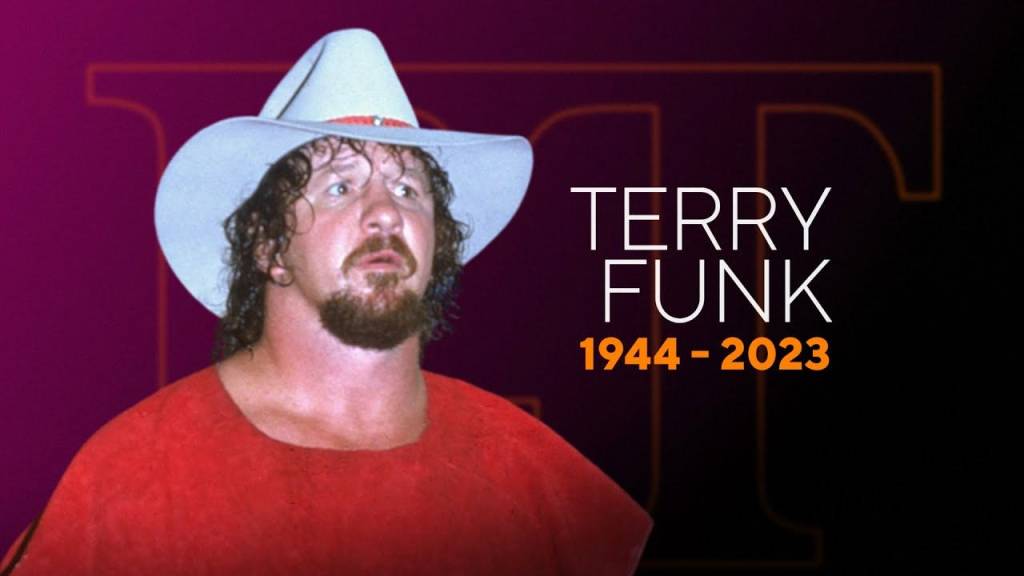
Introduction: The Enduring Legacy of a Hardcore Icon
The name Terry Funk stands as a monument in the annals of professional wrestling. It is synonymous with unparalleled intensity and fearless innovation. His career defied time and expectation. He was not merely a wrestler. He was a force of nature. He was a “Texas Bronco” whose influence reverberates through every corner of the industry. His impact is immeasurable. He shaped the landscape of wrestling. He left an indelible mark that continues to inspire performers and captivate fans alike.
Funk’s remarkable journey spanned over five decades, a testament to his enduring passion and unique ability to reinvent himself. He transitioned seamlessly from a revered technical NWA World Champion. He became a chaotic hardcore pioneer. This transformation inspired generations of performers to push boundaries and redefine the art form. His life was a living embodiment of resilience and a profound understanding of the wrestling business.
A defining characteristic of Terry Funk’s extraordinary career was his remarkable longevity, frequently highlighted across various accounts. This was inextricably linked to his infamous pattern of multiple, often short-lived, retirements. Yet, what truly set Funk apart was not just his endurance, but his continuous evolution and reinvention. He began with a more traditional, technical style, but progressively transformed into a deliberate brawler, eventually becoming a hardcore icon. This was not a series of coincidental shifts. Instead, it stemmed from a deep, almost intuitive, understanding of the wrestling business. He was willing to adapt. He constantly pushed boundaries in the ring. He strategically employed these “false retirements.” These actions served as integral components of his sustained relevance. These periodic departures often worked as powerful promotional tools. They generated immense anticipation for his return. This strategy allowed him to re-enter the wrestling scene with a refreshed persona, ready to “pound out new ground.” Demand and supply constantly cycled. This ensured his continuous presence in the ever-changing wrestling landscape. It demonstrated a masterful grasp of the industry’s dynamics beyond simple in-ring mechanics. Funk’s continuous evolution allowed him to connect with diverse fanbases. He strategically used “retirement” to bridge vastly different eras and promotions. His career spanned from the traditional NWA territories to the mainstream World Wrestling Federation (WWF) and World Championship Wrestling (WCW). Funk also ventured into the extreme environments of Extreme Championship Wrestling (ECW) and Japanese deathmatch circuits. His unparalleled adaptability solidified his status. He became a truly universal and timeless figure. This prevented him from being confined to a single style or era. It secured his enduring legacy.
Roots in Amarillo: The Funk Family Dynasty
Terrence Dee Funk was born on June 30, 1944, in Hammond, Indiana. However, his true roots in professional wrestling were forged in the heart of Texas. After World War II ended, Dory Funk Sr., his father, led the family to relocate to Amarillo. This move was foundational. Amarillo would soon become synonymous with the “Funks’ territory,” a renowned hotbed for a physical “shoot style” of wrestling. This style prioritized authenticity and toughness.
Terry and his older brother, Dory Funk Jr., were quite literally raised within the confines of the wrestling business. Their father, Dory Sr., shaped their approach significantly. He meticulously instilled in them the paramount importance of legitimacy and toughness. This applied both in their in-ring performances and in their conduct outside the squared circle. The family’s ranch was affectionately known as the “double cross ranch.” It became a powerful symbol of their deep roots in the industry.
Before fully committing to the demanding world of professional wrestling, Terry showcased his natural athleticism in other sports. He competed in football and amateur wrestling at West Texas State University. There, he notably shared the field with future wrestling luminaries like Stan Hansen and Dusty Rhodes. This foreshadowed the interconnectedness of the wrestling world.
Terry made his professional wrestling debut in 1965, stepping into the ring against Sputnik Monroe on December 9. This inaugural match was a raw introduction to the business. It was unfiltered and indelibly marked by his father’s unwavering demand for grit. Resilience was also required. Dory Sr. famously yelled from ringside, “Get yer ass off the mat and get up and do something!”. This pivotal moment underscored the high standards and tough-love approach that would define Funk’s entire career.
Multiple accounts explicitly state that Dory Funk Sr. “instilled” in his sons the paramount importance of “legitimacy and toughness” and was instrumental in popularizing the “Texas Death Match”. Terry Funk’s early wrestling style initially focused on technical prowess. He quickly adopted elements of “Texas-style brawling.” He swiftly earned a reputation as “one of the toughest men in the sport.” His father gave a direct and no-nonsense command during his very first match. This anecdote vividly shows how the foundational principle was ingrained from day one. This suggests that for Terry, toughness and realism were not merely learned skills. They were deeply embedded values. These qualities were a fundamental part of his identity. They were passed down through a family legacy that prioritized authenticity above all else. This inherent quality would serve as the bedrock for all his future stylistic evolutions. The ethos of toughness and realism was deeply ingrained in his childhood. It was cultivated in the “shoot style” environment of the Amarillo territory. It provided the authentic foundation for his later transition into hardcore wrestling. It was more extreme. This transition was not sudden or opportunistic. It was an organic amplification of qualities he already possessed. His hardcore persona felt inherently genuine rather than a fabricated gimmick. This shows why he consistently took risks that others would avoid. It matched his core wrestling philosophy.
From Technical Prowess to NWA World Champion
Terry and Dory Jr. quickly distinguished themselves in their father’s Western States Sports promotion and other regional territories. They rapidly ascended the ranks to become “big money wrestlers” in both singles and tag team competition. Terry secured his first singles title, the NWA Western States Heavyweight Championship, in 1970. He achieved this impressive feat ten times by 1975. This firmly established him as a top-tier performer in the Texas region.
On a historic night, December 10, 1975, Terry Funk won against Jack Brisco in Miami, Florida. He claimed the prestigious NWA World Heavyweight Championship. This monumental victory etched the Funk name into wrestling history, making Terry and Dory Jr. the only brothers to have ever held that coveted title. In a twist of fate, Dory Jr. was originally slated for the title shot that evening. However, Terry stepped in. He transformed a mere substitution into a legendary, career-defining moment.
His reign as NWA World Champion spanned an impressive 424 days. During this time, he tirelessly defended the title across North America, Australia, Japan, and Singapore. He faced a diverse array of top challengers, including Jack Brisco, Dusty Rhodes, Giant Baba, and Pat O’Connor. Funk’s championship style during this period was particularly noteworthy. He blended traditional NWA technical prowess with an “unorthodox and unpredictable decision making.” This approach set him apart from his more “pure NWA style” brother. Terry eventually lost the NWA title to Harley Race in Toronto on February 6, 1977. In a revelation that speaks volumes about his priorities, Funk later stated that he gave up the title. He did this to dedicate more focus to his relationship with his wife, Vickie.
Terry Funk held one of professional wrestling’s most prestigious titles for over a year. He was recognized as “Wrestler of the Year” in 1976. Yet, he later candidly stated something that contrasted with traditional reverence for such accolades. “Titles never meant anything to me. Not even the world championship.” He viewed the title primarily as a means to “money.” It was also a tool to elicit “the best response I could from the fans.” His decision to voluntarily relinquish the title to prioritize his wife further underscores this unconventional perspective. This outlook challenged the widely held belief within professional wrestling. Many view a world championship as the ultimate career achievement. It is also seen as personal validation. This pragmatic and deeply personal approach to his career reveals that Funk’s motivations transcended mere championship glory. Unlike many of his peers, Funk did not chase gold as an end in itself. He saw titles as strategic instruments to enhance his drawing power. Titles deepened his connection with the audience. This unique detachment from conventional accolades granted him greater freedom. He could evolve his wrestling style. He pursued innovative and often more dangerous avenues in the business. His ultimate drivers were audience engagement and providing for his family.
The International Phenomenon: Conquering Japan
Terry and Dory Jr. achieved immense popularity in All Japan Pro Wrestling (AJPW) throughout the 1970s and 1980s. Upon their arrival, they were introduced as foreign heels. They engaged in intense feuds with revered Japanese icons like Giant Baba and Jumbo Tsuruta.
Their raw intensity and heroic performances stood out. These were particularly evident in brutal encounters against formidable opponents like The Sheik and Abdullah The Butcher. Over time, they gradually transformed the Japanese audience’s perception. They evolved into beloved babyfaces, with fans admiring Terry’s unparalleled passion and his rugged “Texas bronco” persona. The Funk brothers became a dominant force in tag team wrestling. They won the prestigious World’s Strongest Tag Determination League three times (1977, 1979, 1982). They were involved in legendary feuds with other powerhouse teams. Stan Hansen and Bruiser Brody were notable opponents. They produced 5-star matches that are still revered today.
In 1981, a truly unique and highly anticipated singles bout between Terry and Dory Jr. took place in AJPW. This rare occurrence for brothers of their stature happened because of an injury to Bruiser Brody. It showcases Funk’s willingness to step into unexpected, high-stakes situations.
Japan was the environment where Terry Funk’s “over the top mannerisms” truly made him a “star”. His sometimes colorful get-ups and his brawling ability were key aspects of this transformation. His transformation from a heel to a beloved “Texas bronco” was directly attributed to his “passion” and “heroic performances”. The Japanese audience is renowned for its discerning appreciation of realism, intensity, and fighting spirit. They validated Funk’s style and actively encouraged the more “unorthodox” and “relentless” aspects of it. This unique cultural acceptance demanded hard-hitting wrestling. It proved to be the ideal proving ground for the raw, intense elements. These elements would later define his hardcore persona. His participation in the “King of the Deathmatch” tournament in IWA Japan further cemented this evolution. It showed how his Japanese experience directly informed his later extreme ventures. Japan was far more than just another territory for Terry Funk. It was a critical developmental environment. Here, he could experiment with and refine the raw and intense elements of his wrestling style. He did this without the traditional constraints often found in American wrestling booking. This international exposure was profound. The unique, appreciative audience provided the essential foundation. It gave him the confidence for his later, more extreme, hardcore ventures back in the U.S., particularly with Extreme Championship Wrestling (ECW). It strongly demonstrates that his “outlaw” approach was not just tolerated but also celebrated. The culture deeply valued legitimate fighting spirit and emotional investment.
“Middle-Aged and Crazy”: The Mainstream Resurgence
Terry Funk debuted in the WWF in June 1985, immediately establishing a controversial and unpredictable persona. In his televised debut, he famously attacked ring announcer Mel Phillips. The attack was prompted by the seemingly innocuous act of touching his cowboy hat. He further amplified his rogue image by carrying a branding iron to the ring. He used it to “brand” his fallen opponents. This quickly led to a high-profile feud with Junkyard Dog. He briefly teamed with his brother Dory (billed as “Hoss” Funk). He also teamed with a storyline “brother,” Jimmy Jack Funk, managed by Jimmy Hart.
In 1989, Funk joined World Championship Wrestling (WCW) and became a prominent member of the J-Tex Corporation. His return to the spotlight was marked by an iconic feud with Ric Flair. After serving as a neutral judge for a Flair vs. Ricky Steamboat match, Funk audaciously challenged Flair for the NWA World Heavyweight Championship. Flair refused. He cited Funk’s time in Hollywood. Funk famously snapped. He attacked Flair and delivered a brutal piledriver through a ringside table. This shocking act immediately generated the iconic commentary line, “Terry Funk snapped” from Jim Ross. It was noted as a moment that “hearkened to a future of this happening de rigueur in pro wrestling.” The intensely personal feud culminated in a brutal “I Quit” match at Clash of the Champions IX. The bout earned a rare 5-star rating from Dave Meltzer. Despite ultimately losing, Funk’s performance solidified his reputation. He engaged in incredibly intense and personal rivalries. These rivalries blurred the lines of reality.
Funk retired briefly many times. He made a memorable return to WWE in late 1997. He returned as the masked “Chainsaw Charlie,” a wildly unpredictable character. He formed an unlikely but highly popular tag team with Mick Foley (Cactus Jack). They captured the WWF Tag Team Championship at WrestleMania XIV. They defeated the New Age Outlaws in a memorable dumpster match. They famously used a forklift to secure their victory.
Funk’s “middle-aged and crazy” persona, particularly in the late 1980s and 1990s, was not merely an unhinged act. It was a highly strategic amplification of his inherent “deliberate brawler” style. His “unorthodox and unpredictable decision making” was also part of this strategy. The infamous piledriver on Ric Flair was a shocking, boundary-pushing act. It generated immense heat and attention. This demonstrated his ability to be a “pain in Vince McMahon’s side” and a significant draw. He was willing to avoid traditional wrestling matches. Instead, he engaged in wild, unpredictable brawls. This was perfectly suited for the evolving, theatrical mainstream wrestling landscape of the Attitude Era. This period showcases Funk’s astute understanding of how to generate maximum impact and remain relevant in a changing industry. This period shows Funk’s remarkable skill in reading the wrestling landscape. He adapted his persona to maximize both impact and drawing power. His “crazy” antics and deliberate blurring of the lines between reality and kayfabe made him a compelling figure. He became a must-see figure in an era that valued edginess and unpredictability. This proved his “outlaw” approach was rooted in authenticity. It not only translated but thrived in mainstream wrestling. This cemented his value as a unique and indispensable talent. It highlights his self-awareness as a “manipulator” of public perception. He admired this skill in others like Paul Heyman.
The Hardcore Innovator: ECW and the Deathmatch King
Terry Funk is widely and unequivocally credited with pioneering and popularizing the hardcore wrestling genre. This style was characterized by extreme physicality and intense violence. It showed a relentless willingness to push the boundaries of pain and spectacle. This approach became synonymous with his later career. His wrestling style notably evolved from traditional NWA-style wrestling to a far more violent, hardcore approach.
Funk’s early, bloody brawls in Texas made a profound impression on Atsushi Onita. Onita would later become a colossal star in Japan. He became the driving force behind the deathmatch style in Frontier Martial-Arts Wrestling (FMW). Funk served as a crucial mentor and trainer to Onita, passing on the ethos of extreme wrestling.
In 1995, Funk took part in the infamous King of the Deathmatch tournament. It was hosted by International Wrestling Association of Japan (IWA Japan). He endured a series of brutal, extreme-style matches featuring barbed wire-covered boards, glass, and chains. The tournament finished in an ultra-violent final against his close friend and mentee, Mick Foley (Cactus Jack). The match famously included barbed-wire ropes and C-4 explosives. It pushed the limits of what was considered wrestling.
Funk began contributing his immense talent to Eastern Championship Wrestling in 1993. This organization was later renamed Extreme Championship Wrestling or ECW. His notoriety played a pivotal role in elevating the promotion’s profile. He maintained a regular schedule. He engaged in intense feuds with hardcore legends. These included Cactus Jack, “The Franchise” Shane Douglas, The Sandman, Sabu, and his own protégé, Tommy Dreamer. A crowning achievement of his ECW run was headlining the promotion’s first-ever pay-per-view, Barely Legal, on April 13, 1997. In a testament to his enduring toughness and passion, Funk, then in his fifties, overcame a grueling three-way dance. Immediately after, he defeated the sadistic Raven to capture the ECW World Heavyweight Championship. He would hold the title twice during his ECW tenure. Mick Foley consistently cited Funk as a primary inspiration for his own hardcore style. Funk’s mentorship and influence on Foley were profound, shaping his character development.
The transition to hardcore wrestling was not sudden for Terry Funk. It was not an opportunistic shift. Instead, it was a logical and extreme progression of his deeply ingrained wrestling philosophy. His father instilled a core value of “legitimacy and toughness.” From early on, Terry’s style included “Texas-style brawling.” He also used “unorthodox and unpredictable decision making” during his NWA reign. The infamous motor oil promo showed his willingness to push beyond traditional wrestling boundaries. The shocking piledriver on Flair was another early, visceral indicator of his desire to achieve a more “real” impact. Hardcore wrestling, with its barbed wire, glass, and explosives, simply became the ultimate expression of his commitment. He was dedicated to making the match presentation legitimate. He also aimed to make himself tough. He was willing to take risks. These were risks that other wrestlers of his era would shy away from. Funk’s pioneering role in hardcore wrestling was not a mere gimmick. It was a genuine and profound expression of his deep-seated desire. He wanted to elicit genuine, visceral reactions from the audience. He aimed to redefine the limits of professional wrestling as an art form. This authenticity resonated deeply with fans. It critically inspired a new generation of wrestlers like Mick Foley and Atsushi Onita. His legacy was cemented as a true innovator rather than simply a brawler. It also suggests that his “outlaw” spirit was about breaking conventional norms. This was done to achieve a more profound connection with the audience. He wanted to make this connection believable and impactful.
The Man Who Couldn’t Retire: A Career of Comebacks
Terry Funk’s first announced retirement match took place on August 31, 1983. This decision was famously and quickly reversed within months. Countless jokes and memes arose about his many subsequent “retirements” throughout his career. One such “retirement” famously lasted less than two weeks, highlighting his inability to stay away from the ring. Funk himself later clarified in his autobiography that his initial 1981 announcement was part of a two-year plan. The announcement led to the 1983 match, intended to build momentum for All Japan Pro Wrestling. He never explicitly stated he was retiring from all wrestling, only from Japan.
Over his remarkable 50+ year career, Funk experienced “multiple short-lived retirements.” He consistently returned to major promotions like WWF (famously as Chainsaw Charlie), ECW, and WCW. Funk also made numerous appearances on the independent circuit. His final official match was in 2017.
Funk was candid about the motivations behind his returns. He famously stated that “absence makes the heart grow fonder.” This created a demand that promoters were eager to capitalize on if he could “make them more money”. He emphasized that he was always “in control” of his decisions. He genuinely “loved what I was doing,” especially the opportunity to “pound out new ground” in promotions like ECW. He also noted pragmatically, “money changes constantly.” His deep love for the business was closely tied to financial incentives. His unparalleled longevity and repeated, often unexpected, comebacks became a defining characteristic of his career. This unique aspect not only inspired countless wrestlers and fans. It also made him a primary subject of the critically acclaimed documentary film “Beyond the Mat.” The film explored the physical and emotional toll of his enduring career.
The sheer number of Terry Funk’s “retirements,” reportedly 22 by one count , is almost comedic. It makes it a running gag within the wrestling community. However, Funk’s own candid explanations provide a deeper, more nuanced understanding. He explicitly stated that these “retirements” were a “ploy” designed to build momentum. He believed that “absence makes the heart grow fonder.” This reveals a shrewd business acumen beneath his chaotic persona. He admitted that financial incentives (“M-O-N-E-Y” ) played a role. He also declared profoundly that he “loved what I was doing” and wanted to “pound out new ground”. This indicates that his returns were not merely about financial gain. They were driven by an insatiable passion for the craft and the performance. He also had a unique connection he forged with the audience. Terry Funk changed how wrestlers view retirement. He turned it from a final end into a recurring promotional tool. His numerous returns were perceived as compelling demonstrations of his enduring appeal. They were seen as a strategic method to refresh his character and generate renewed interest. This cyclical pattern of “false finishes” (a term borrowed from wrestling itself) became an intrinsic part of his legend. It highlighted his deep understanding of fan psychology. He also understood the intricate economics of the wrestling business. Ultimately, it underscores a profound love for the performance. There is an almost inseparable connection to the visceral reaction of the crowd. It also includes the very essence of professional wrestling itself.
Beyond the Ropes: Acting, Personal Life, and Character
Beyond the squared circle, Terry Funk carved out a notable acting career, appearing in numerous films and television shows. His most recognizable film roles include the tough bouncer Morgan in Road House (1989) alongside Patrick Swayze. He also played Frankie “The Thumper” in Paradise Alley (1978). Another role was Ruker in Over the Top (1987). He brought his physical prowess as a stuntman to major productions. These included Rocky III (1982), Rocky V (1990), and Rambo: First Blood Part III (1988).
On television, he held recurring roles in series such as Wildside (1985) and Tequila and Bonetti (1992). He also made memorable guest appearances on popular shows like Quantum Leap (1991) and The Adventures of Brisco County, Jr. (1993). Funk candidly revealed his primary motivation for pursuing acting: “for insurance for my family. Because in wrestling you have no insurance. You can’t get any insurance”. This sheds light on the often-overlooked financial realities and insecurities within the wrestling industry.
Terry Funk’s Notable Acting Roles
| Year | Title | Role | Notes |
| 1978 | Paradise Alley | Frankie “The Thumper” | Also stunt coordinator |
| 1982 | Rocky III | Stunts | |
| 1985 | Wildside | Prometheus Jones | TV series, recurring: 6 episodes |
| 1987 | Over the Top | Ruker | |
| 1987 | Timestalkers | Bearded Cowboy | |
| 1988 | Rambo: First Blood Part III | Stunts | |
| 1989 | Road House | Morgan | |
| 1990 | Rocky V | Stuntman | |
| 1991 | Quantum Leap | Carl Shilo | TV series, episode: “Heart of a Champion – July 23, 1955” |
| 1991 | Swamp Thing | J. J. Dax | TV series, episode: “The Prometheus Parabola” |
| 1992 | Tequila and Bonetti | Sgt. Nuzo | TV series, recurring: 11 episodes |
| 1993 | The Adventures of Brisco County, Jr. | Angeklagter | TV series, episode: “Pilot” |
| 1993 | Danger Theatre | Gefängnissaufseher/ Fahrer | TV series, episode: “Tropical Punch: Vengeance in the Grass” |
| 1994 | Thunder in Paradise | Amarillo Doaks | TV series, episode: “Queen of Hearts” |
| 1998 | Mom, Can I Keep Her? | Jungle Ed | |
| 1998 | Beyond Belief: Fact or Fiction | Dirk Simmons | TV series, episode: “The Wrestler” |
| 2000 | Active Stealth | Morgan | |
| 2004 | Friday Night Lights | Fan | Uncredited |
| 2005 | The Ringer | Frankie | |
| 2010 | Holyman Undercover | Tony | |
| 2011 | Guido | Duke | |
| 2011 | Marriage Retreat | Sam |
Terry Funk was married to Vicki Weaver in 1964 (some sources indicate 1965), and they had two children. Vicki passed away in 2019. Despite his wild and often chaotic in-ring persona, Funk was consistently regarded by his peers as kind. Fans viewed him as a “warm-hearted gentleman.” His peers and fans consistently regarded him as kind and warm-hearted. He was also seen as a “class act.” He often spoke fondly of his family. He expressed contentment with life in Texas. He humorously mentioned that he even enjoyed mowing his lawn for fun. Personal anecdotes abound, illustrating his genuine character. One story tells of him carrying 150 lbs of personal weights in his airport bag. He good-naturedly ribbed a valet who struggled to lift it. Another cherished memory comes from a young fan, to whom Funk humbly stated, “Mr. Funk was my daddy. You can call me Terry,” showcasing his approachable and down-to-earth nature. In interviews, he was known for his candidness and humor. He openly admitted that the infamous motor oil promo “burned the piss out of my eyes.” He admitted to being the “lead idiot” in a chaotic situation. He confessed that he had called for chairs to be thrown into the ring. Around 2020 or 2021, it was reported that Funk had been diagnosed with dementia. He was living in an assisted living facility and quietly retired from public life. Terrence Dee “Terry” Funk passed away on August 23, 2023, at the age of 79, leaving behind an unparalleled legacy.
Terry Funk’s in-ring persona and personal character present a stark and compelling contrast. His persona is chaotic, “crazy,” and often brutally violent. It is marked by piledrivers through tables, barbed wire, C-4 explosives, and the infamous motor oil promos. However, outside the ring, he was widely described as a “kind, warm-hearted gentleman.” He cherished his family. He also found simple joy in mundane tasks like mowing his lawn. His candid admissions about the “dumbest thing I ever did” (referring to the motor oil promo) show a profound self-awareness. He humorously referred to himself as the “lead idiot” when chairs were thrown into the ring. This highlights his humorous nature. It also shows the distinction between his performative and authentic selves. Furthermore, his stated motivation for pursuing acting was “for insurance for my family.” This reveals a deep sense of responsibility and foresight. It stands in contrast to the reckless abandon of his wrestling character. This dichotomy highlights Terry Funk’s exceptional skill as a professional wrestler. He was able to fully embody and commit to a character. He blurred the lines between reality and kayfabe so convincingly that he could “sometimes make even a skeptic believe.” Yet, he maintained his true, compassionate self outside the spotlight. This speaks volumes about his professionalism, his dedication to the craft, and his inherent understanding of performance. It also highlights the often-unseen sacrifices and practical considerations. These include the lack of health insurance in wrestling. They shaped his career choices and added depth to his professed “love for the business.” This demonstrates a complex individual driven by both passion and pragmatism.
A Lasting Influence: The Funker’s Unmatched Legacy
Terry Funk is universally regarded as one of the most influential and greatest professional wrestlers of all time. His remarkable evolution from a traditional technical wrestler to a brawling and, ultimately, a hardcore pioneer fundamentally revolutionized the industry. His ability to connect with audiences through his words was as impactful as his physical prowess. This skill earned him accolades such as “Best on Interviews” (1989) and “Best Brawler” (1989) from the Wrestling Observer Newsletter. His promos were legendary. They ranged from calling Dusty Rhodes an “egg sucking dog” to his unforgettable motor oil antics with Jerry Lawler.
Beyond his own performances, Funk was a “student of the game.” He would go on to become a teacher to many. He actively mentored future generations of wrestlers. He profoundly inspired hardcore legends Mick Foley and Atsushi Onita. They carried forward his spirit of innovation and intensity.
Terry Funk’s extraordinary career is recognized by an unprecedented number of Hall of Fame inductions. He is the first and only individual to be inducted into the WWE (2009, with Dory Jr.), WCW (1995), NWA (2009), Hardcore (2005), Professional Wrestling (2004), George Tragos/Lou Thesz (2010), and Wrestling Observer Newsletter (1996) Halls of Fame, a testament to his universal impact across various eras and styles of wrestling.
Key Championships and Accolades
| Category | Championship/Award | Times Held/Class | Notes |
| Major World/Heavyweight Championships | NWA World Heavyweight Championship | 1 | |
| ECW World Heavyweight Championship | 2 | ||
| USWA Unified World Heavyweight Championship | 1 | ||
| IWA World Heavyweight Championship | 2 | ||
| JCW Heavyweight Championship | 1 | ||
| 3PW World Heavyweight Championship | 1 | ||
| Major Tag Team Championships | WWF World Tag Team Championship | 1 | With Cactus Jack |
| NWA International Tag Team Championship | 3 | With Dory Funk Jr. | |
| World’s Strongest Tag Determination League | 3 | With Dory Funk Jr. (1977, 1979, 1982) | |
| Other Significant Championships | ECW Television Championship | 1 | |
| NWA/WCW United States Heavyweight Championship | 2 | ||
| WCW Hardcore Championship | 3 | ||
| NWA Western States Heavyweight Championship | 7 | ||
| Hall of Fame Inductions | WWE Hall of Fame | Class of 2009 | With Dory Funk Jr. |
| WCW Hall of Fame | Class of 1995 | ||
| NWA Hall of Fame | Class of 2009 | ||
| Hardcore Hall of Fame | Class of 2005 | ||
| Professional Wrestling Hall of Fame and Museum | Class of 2004 | ||
| George Tragos/Lou Thesz Professional Wrestling Hall of Fame | Class of 2010 | ||
| Wrestling Observer Newsletter Hall of Fame | Class of 1996 | ||
| St. Louis Wrestling Hall of Fame | Class of 2010 | ||
| Key Awards | PWI Wrestler of the Year | 1976 | |
| PWI Feud of the Year | 1989 | Vs. Ric Flair | |
| PWI Most Inspirational Wrestler of the Year | 1997 | ||
| PWI Stanley Weston Award | 2021 | ||
| WON Best Brawler | 1989 | ||
| WON Best Heel | 1989 | ||
| WON Best on Interviews | 1989 | ||
| WON Hardest Worker | 1989 | ||
| Tokyo Sports Popularity Award | 1979 | ||
| Tokyo Sports Lifetime Achievement Award | 1983 |
Upon his passing, the outpouring of tributes from peers and fans underscored his immense impact. Ric Flair praised his unparalleled work ethic. He said, “In My Entire Life, I’ve Never Met A Guy Who Worked Harder.” Mick Foley expressed profound grief, stating, “RIP TERRY FUNK.” Dutch Mantell famously noted his ability to “have a match with a broomstick” and draw significant money worldwide. JBL cited Funk as a direct reason for entering the business. Pollo Del Mar eloquently summarized his “enduring impact” on ECW, AEW, and Mick Foley’s style. He hailed him as “one of the single greatest displays of a very talented wrestler evolving with the times.” He received the prestigious PWI Wrestler of the Year award in 1976. He also won the PWI Stanley Weston Award for lifetime achievement in 2021.
Terry Funk was frequently described as an “outlaw” within professional wrestling. This was primarily due to his willingness to “eschew traditional, hold-for-hold wrestling matches.” He often engaged in unpredictable, often chaotic confrontations “who knows what, who knows where.” This “outlaw” mentality combined with his “unmatched intensity.” His willingness to take risks was not merely rebellious. It was creatively disruptive. His innovative approach led to his pioneering of hardcore wrestling. He profoundly influenced figures like Atsushi Onita and Mick Foley. These individuals would carry this extreme torch forward. His consistent ability to evolve “with the times” and “pound out new ground” shows his profound creativity and forward-thinking. His non-conformity was not destructive. He was a “great creator of entertainment.” He noted this himself. However, he did so through methods distinct from traditional promoters like Vince McMahon. Funk’s enduring legacy goes beyond his individual accomplishments. It lies in his unique, rebellious spirit. This spirit fundamentally pushed the boundaries of professional wrestling itself. He showed that authenticity is essential. A willingness to innovate is crucial. A fearless commitment to one’s craft is needed, even if it is controversial or unconventional. These qualities could lead to profound and lasting influence. He did not just adapt to wrestling’s evolution. He was a catalyst for it. He shaped not just a style but an entire sub-genre. This inspired a paradigm shift in what professional wrestling could be. He was a true disruptor who, ironically, enriched and expanded the very art form he often seemed to defy.
Conclusion: There Will Never Be Another Terry Funk
Terry Funk’s career was unparalleled and multifaceted. He originated from the Funk family dynasty. His reign as NWA World Champion solidified his status. He became an international phenomenon and is the undisputed “Deathmatch King.” He was a master of reinvention. He was a true “outlaw” who transcended eras and styles. He left an indelible mark on every promotion he graced.
His impact on wrestling’s stylistic evolution is undeniable. His promo delivery was groundbreaking. His mentorship of future generations of stars was invaluable. His ability to connect with fans is unmatched. He does this through sheer passion and authenticity. He also shows a willingness to sacrifice his body for the art form.
Terry Funk’s journey was wild and unpredictable. It was marked by blood and sweat. He had an unyielding, almost spiritual, love for the business. His passing leaves an irreplaceable void. His legacy will endure forever. It is much like his many “retirements,” etched into the very fabric of professional wrestling history. As the echoes of “Funk is on a roll!” echo through arenas and highlight reels, his spirit inspires. It ensures that indeed, there will never be another Terry Funk.

 ScortonBoy17.ca
Leave a comment