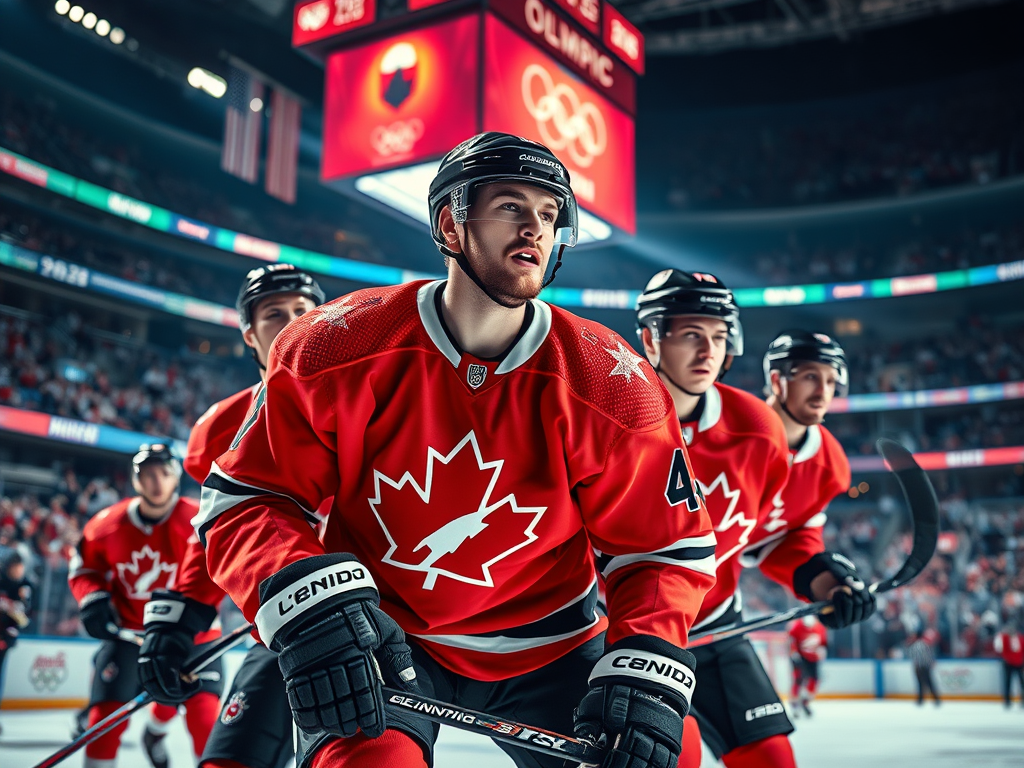
The Return of Best-on-Best
For the first time in 12 years, the world’s greatest hockey players will return to the Olympic stage. The 2026 Winter Games in Milano Cortina will mark the end of a frustrating hiatus. It will finally unleash a generation of superstars. These superstars have never had the chance to compete for the ultimate prize in international hockey. Since the last best-on-best Olympic tournament in Sochi in 2014, Connor McDavid has emerged as a remarkable talent. Auston Matthews, Nathan MacKinnon, and Leon Draisaitl have also shown their extraordinary skills. They have become stars. They have become the faces of the National Hockey League (NHL). However, the Olympic gold medal has remained tantalizingly out of reach. Their debut accompanies a new wave of international talent. It represents the last stand for legends like Sidney Crosby. These elements set the stage for what promises to be one of the most anticipated hockey tournaments in history.
The formal countdown to Milano Cortina began with a coordinated, unprecedented announcement. All 12 qualified men’s hockey federations revealed the “First Six” players proposed for their preliminary rosters. This initial reveal is more than a simple list of names. It is a declaration of intent. This reveal is a window into the strategic philosophies and national identities that will define the battle for gold. This report will provide an exhaustive, team-by-team analysis of these foundational selections. It will dissect what they tell us about each nation’s strengths. It will also reveal their weaknesses and ultimate path to potential glory.
The tournament framework itself adds layers of intrigue. Twelve nations, qualified based on the 2023 IIHF World Ranking, will be divided into three groups of four. Host Italy received an automatic berth. Slovakia, Latvia, and Denmark had to fight through grueling qualification tournaments to secure the final spots. However, the most significant alteration to the field is a geopolitical decision. The International Ice Hockey Federation (IIHF) continued the ban of Russia due to the ongoing military conflict in Ukraine. France was the next-highest-ranked nation. It was named the replacement. This move fundamentally reshaped the competitive balance of the groups. It also reshaped the tournament at large.
The table below offers an overview of the foundational cores. Each core is associated with one of the 12 participating nations. The information is organized by their preliminary round groups. This at-a-glance summary highlights the immense concentration of NHL talent. It sets the stage for the detailed strategic analysis that follows.
| Group A | Group B | Group C |
| Canada | Finland | United States |
| Sidney Crosby (F, Pittsburgh Penguins), Connor McDavid (F, Edmonton Oilers), Nathan MacKinnon (F, Colorado Avalanche), Cale Makar (D, Colorado Avalanche), Brayden Point (F, Tampa Bay Lightning), Sam Reinhart (F, Florida Panthers) | Sebastian Aho (F, Carolina Hurricanes), Aleksander Barkov (F, Florida Panthers), Miro Heiskanen (D, Dallas Stars), Esa Lindell (D, Dallas Stars), Mikko Rantanen (F, Dallas Stars), Juuse Saros (G, Nashville Predators) | Auston Matthews (F, Toronto Maple Leafs), Jack Eichel (F, Vegas Golden Knights), Quinn Hughes (D, Vancouver Canucks), Charlie McAvoy (D, Boston Bruins), Brady Tkachuk (F, Ottawa Senators), Matthew Tkachuk (F, Florida Panthers) |
| Switzerland | Sweden | Germany |
| Kevin Fiala (F, Los Angeles Kings), Nico Hischier (F, New Jersey Devils), Roman Josi (D, Nashville Predators), Timo Meier (F, New Jersey Devils), Nino Niederreiter (F, Winnipeg Jets), Jonas Siegenthaler (D, New Jersey Devils) | Rasmus Dahlin (D, Buffalo Sabres), Victor Hedman (D, Tampa Bay Lightning), Adrian Kempe (F, Los Angeles Kings), Gabriel Landeskog (F, Colorado Avalanche), William Nylander (F, Toronto Maple Leafs), Lucas Raymond (F, Detroit Red Wings) | Leon Draisaitl (F, Edmonton Oilers), Philipp Grubauer (G, Seattle Kraken), Lukas Reichel (F, Chicago Blackhawks), Moritz Seider (D, Detroit Red Wings), Nico Sturm (F, Florida Panthers), Tim Stützle (F, Ottawa Senators) |
| Czechia | Slovakia | Latvia |
| Lukáš Dostál (G, Anaheim Ducks), Radko Gudas (D, Anaheim Ducks), Martin Nečas (F, Colorado Avalanche), Ondřej Palát (F, New Jersey Devils), David Pastrňák (F, Boston Bruins), Pavel Zacha (F, Boston Bruins) | Erik Černák (D, Tampa Bay Lightning), Martin Fehérváry (D, Washington Capitals), Šimon Nemec (D, New Jersey Devils), Martin Pospíšil (F, Calgary Flames), Juraj Slafkovský (F, Montreal Canadiens), Tomáš Tatar (F, EV Zug) | Rodrigo Ābols (F, Philadelphia Flyers), Uvis Balinskis (D, Florida Panthers), Teddy Blueger (F, Vancouver Canucks), Zemgus Girgensons (F, Tampa Bay Lightning), Elvis Merzļikins (G, Columbus Blue Jackets), Artūrs Šilovs (G, Vancouver Canucks) |
| France | Italy | Denmark |
| Yohann Auvitu (D, HC Vítkovice), Pierre-Édouard Bellemare (F, HC Ajoie), Jules Boscq (D, HPK), Hugo Gallet (D, Tappara), Jordann Perret (F, Mountfield HK), Alexandre Texier (F, St. Louis Blues) | Damian Clara (G, San Diego Gulls), Diego Kostner (F, HC Ambrì-Piotta), Thomas Larkin (D, Schwenninger Wild Wings), Daniel Mantenuto (F, HC Bolzano), Tommy Purdeller (F, HC Pustertal), Luca Zanatta (D, HC Pustertal) | Frederik Andersen (G, Carolina Hurricanes), Oliver Bjorkstrand (F, Tampa Bay Lightning), Nikolaj Ehlers (F, Winnipeg Jets), Lars Eller (F, Washington Capitals), Jesper Jensen Aabo (D, EC-KAC), Jonas Røndbjerg (F, Vegas Golden Knights) |
Section I: Group A – The Juggernaut, The Upstart, and The Underdogs
The IIHF made a decision that dramatically altered the composition of Group A. They replaced the banned Russian team with France, the next-highest-ranked nation. This shift creates a fascinating dynamic. It pits the overwhelming tournament favorite, Canada, against a Swiss team entering its golden era. It also includes a Czech squad that values chemistry above all. Additionally, there is a French team facing a monumental uphill battle.
Team Canada: An Embarrassment of Offensive Riches
Hockey Canada and General Manager Doug Armstrong revealed the first six names. They sent an unambiguous message to the rest of the world. The 2026 Canadian Olympic team will be defined by a relentless, multi-generational offensive onslaught. The management team named five forwards and only one defenseman. This move lays its strategic cards on the table. They are betting that their unparalleled depth of offensive talent is the clearest path to gold.
The selections of centers Sidney Crosby, Connor McDavid, and Nathan MacKinnon were the most predictable. Yet, they were the most profound of the announcement. They represent a continuum of Canadian hockey excellence. At 37, Crosby is the decorated veteran leader. He is the captain of two previous gold medal-winning teams (2010, 2014). His intelligence and two-way responsibility remain elite. McDavid, 28, and MacKinnon, 29, are arguably the two most dominant and dynamic offensive players in the world. They are finally granted their first chance to compete on the Olympic stage. This trio provides Canada with a 1-2-3 punch down the middle. No other nation can hope to match this. It is a foundation of speed, skill, and power. This will dictate the terms of engagement in every game they play.
To support this legendary core, Canada named two more elite forwards. Brayden Point of the Tampa Bay Lightning is a two-time Stanley Cup champion. He is renowned for his clutch goal-scoring and electrifying speed. Brayden consistently elevates his game in high-pressure moments. Sam Reinhart of the Florida Panthers provides elite finishing ability. He is coming off a staggering 57-goal season. Sam offers the versatility to play both center and wing effectively. The lone defenseman named, Cale Makar of the Colorado Avalanche, is a generational talent in his own right. Makar is a two-time Norris Trophy winner. He is also a Conn Smythe Trophy recipient. Makar redefines the defense position with his skating and offensive creativity. He serves as the perfect puck-moving engine to ignite the forwards ahead of him.
The decision to name five forwards and only one defenseman is a clear strategic signal. It demonstrates that Canada’s management believes its primary identity lies in offensive firepower. They plan to win by overwhelming opponents. This approach is born from the nation’s historic depth at the forward position. The management team has secured the core of its offensive attack. They have selected the three best centers in hockey and two elite, versatile forwards. This early decision has established their identity. The remaining roster spots are open for a fierce competition. This is particularly true on defense and in goal, where selection is based on specific roles. The selection of only Makar implies that the other defensive slots will likely be filled by specialists. These include shutdown defenders and penalty-killing experts. They are tasked with providing the necessary balance to support the high-octane offense. This strategy exerts immense pressure on opposing defenses and goaltenders. It forces them to handle wave after wave of elite scoring talent. It is a bold declaration of Canada’s confidence in their offensive superiority. Their plan is to win by forcing every other nation to adapt to Canada’s pace and style.
Team Switzerland: A Golden Generation Arrives
For Switzerland, the “First Six” announcement represents a historic moment, a culmination of decades of systematic player development. For the first time, the foundational core of a Swiss Olympic team is composed entirely of high-impact, prime-age NHL players. This signals their arrival not as a plucky underdog, but as a legitimate medal contender.
The roster is anchored by one of the world’s elite defensemen, Roman Josi. The Nashville Predators captain is a two-time Norris Trophy winner. His skating and offensive instincts make him a threat every time he steps on the ice. He is the undisputed leader of this group. Complementing him on the blue line is Jonas Siegenthaler of the New Jersey Devils. Siegenthaler provides a steady and reliable defensive presence. His style perfectly complements Josi’s offensive dynamism.
The forward group is equally impressive. Another New Jersey Devil leads it. He is team captain Nico Hischier. Hischier was the first-overall pick in the 2017 NHL Draft. Hischier has evolved into a premier two-way center, capable of producing offensively while shutting down the opposition’s top players. He is joined by Kevin Fiala of the Los Angeles Kings. Timo Meier of the New Jersey Devils joins him as well. Nino Niederreiter of the Winnipeg Jets completes this potent trio of scoring wingers. All three are consistent 20-goal scorers in the NHL. This consistency provides Switzerland with a level of offensive depth. It delivers firepower that Switzerland has never before possessed on the Olympic stage.
The selection of an all-NHL core represents a fundamental shift. Previous Swiss Olympic rosters were typically built around a handful of NHLers. These were supplemented by top players from their domestic National League (NL). This group, however, is composed entirely of players in key roles on their respective NHL clubs. This concentration of elite talent gives them a solid foundation. They can realistically match up against the top lines of the tournament powerhouses. Three players from the New Jersey Devils—Hischier, Meier, and Siegenthaler—are included. This points to a deliberate strategy of leveraging built-in chemistry. This is a crucial advantage in a short tournament. This is the golden generation of Swiss hockey. They are battle-tested and decorated with multiple IIHF World Championship silver medals. Their “First Six” announcement is a clear statement of their ambition. They are not coming to Milan simply to compete; they are coming to win a medal.
Team Czechia: Chemistry Forged in Gold
The Czech management team has made a fascinating and calculated decision with its “First Six.” They prioritize recent international success and team cohesion. This is over a pure, on-paper talent evaluation. Every single player named was part of the squad. The team captured a dramatic gold medal at the 2024 IIHF World Championship. This is a clear signal. The Czechs believe the intangible bonds forged in that victory are critical for their Olympic strategy.
The offensive centerpiece is, without question, David Pastrňák of the Boston Bruins. A former Maurice “Rocket” Richard Trophy winner, “Pasta” is one of the most lethal goal-scorers in the world. He will be the focal point of the Czech attack. The selections around him are built on established tandems. He is joined by his Bruins teammate, the versatile and intelligent center Pavel Zacha. The defensive side features another pair of teammates from the Anaheim Ducks. They are the rugged, intimidating defenseman Radko Gudas and the team’s newly anointed starting goaltender, Lukáš Dostál.
The inclusion of Ondřej Palát and Radko Gudas, in particular, speaks volumes. Some analysts might point to the superior individual skill of players like Tomáš Hertl or Filip Hronek. However, the Czech management opted for the veteran leadership and proven winning pedigree of Palát. He is a two-time Stanley Cup champion. They also valued the physical, tone-setting presence of Gudas. Both played crucial roles in the 2024 World Championship victory. Their selection shows that their experience and chemistry within that winning structure are more valuable than raw talent. The most significant vote of confidence was given to 24-year-old Lukáš Dostál, who was named as the lone goaltender. This move anoints him as the undisputed number one for the present and future of Czech hockey. He earned this role with his stellar play in the AHL. His growing NHL resume further supports it.
This roster construction is a strategic gamble. It is a bet on the crucible of a short, high-pressure tournament. A team that has already climbed the mountain together can overcome a talent deficit. They can also compete against deeper rosters. The Czechs select a core forged in the fire of a recent gold medal victory. They aim to build a “team” in the truest sense of the word. They focus on unity rather than assembling a mere collection of all-stars. This strategy is classic for nations aiming to outperform expectations. They leverage unity and a shared identity as their primary weapons.
Team France: Les Bleus Face a Monumental Challenge
France was thrust into the tournament as the replacement for the banned Russian team. They enter as the definitive underdog in a group populated by hockey giants. Their “First Six” selections reflect this reality. The roster is built on a foundation of seasoned European professionals. It includes a couple of players with valuable NHL experience. One current NHL standard-bearer is also included. Their goal is not necessarily to win. They aim to compete with honor. They want to demonstrate the progress of French hockey on the world’s biggest stage.
The offensive hopes of Les Bleus will rest heavily on the shoulders of Alexandre Texier. The St. Louis Blues forward is the team’s only current, full-time NHL player and will be tasked with driving the offense. His ability to create chances against top-tier competition will be paramount. Providing crucial leadership and experience is veteran forward Pierre-Édouard Bellemare. Bellemare is now playing in the Swiss National League. His 700 games of NHL experience make him an invaluable presence in the locker room. He also provides important contributions on the ice. Another former NHLer, defenseman Yohann Auvitu, brings a steadying influence to the blue line.
The remaining selections underscore the professional backbone of the French program. Jordann Perret is a forward who has established himself in the Czech Extraliga. Hugo Gallet is a defenseman playing in the Finnish Liiga. Meanwhile, Jules Boscq has honed his craft in the ECHL and now also plays in the Finnish Liiga. These players represent the depth that France has been carefully cultivating across the continent.
For a nation ranked 13th in the world, success in Milan will be measured differently. Facing Canada, Switzerland, and Czechia, a group stage victory would be a historic upset. A more realistic measure of success will be their ability to remain competitive in every game. They need to challenge their heavily favored opponents. They must also showcase the skill and tenacity of French hockey. The “First Six” announcement celebrates the pinnacle of their national program. It is not about medal contention. The roster is built to earn respect. It aims to inspire the next generation of French players. This is a worthy and honorable goal for the host nation of the next Winter Olympics in 2030.
Section II: Group B – Nordic Rivalry on Italian Ice
Group B is set to be a cauldron of intensity. It features one of international hockey’s most storied rivalries between Finland and Sweden. A young, ascendant Slovakian team adds to the drama. This team is built on a formidable defensive foundation. The host nation, Italy, is eager to put on a proud performance in front of a home crowd.
Team Finland: The Methodical, Reigning Champions
Finland’s 2022 Olympic gold was won without NHL players. Their “First Six” for 2026 demonstrates precisely why they are perennial medal contenders. The team is strong in any best-on-best tournament. Their selections are a masterclass in building a complete, balanced, and elite core. This core perfectly embodies the national hockey identity: disciplined, defensively impenetrable, and ruthlessly opportunistic.
The Finnish forward group is spearheaded by two of the world’s most dominant two-way centers. Aleksander Barkov of the Florida Panthers is a multiple-time winner of the Frank J. Selke Trophy as the NHL’s best defensive forward, a player whose offensive skill is matched only by his defensive acumen. Sebastian Aho of the Carolina Hurricanes joins him. Aho is another elite center. He excels in all three zones of the ice. This one-two punch down the middle provides a foundation of defensive responsibility and offensive creativity that few teams can match. Mikko Rantanen, a dominant winger from the Dallas Stars, complements them. He brings size and skill. He has a proven ability to score big goals.
The commitment to a complete team structure is even more evident in the defensive and goaltending selections. Finland was one of the few nations to name its undisputed starting goaltender, Juuse Saros of the Nashville Predators. Saros is a perennial Vezina Trophy candidate. His athleticism and technical prowess make him one of the best netminders in the world. In front of him, the Finns have named the Dallas Stars’ top defensive pairing of Miro Heiskanen and Esa Lindell. Heiskanen is a sublime skater. He is also one of the most dynamic offensive defensemen in the game. Lindell is a premier shutdown defender. He is known for his penalty-killing and defensive reliability.
This core of six players is the most positionally complete and strategically coherent of any nation’s initial reveal. While other countries focused on offensive stars, Finland named an elite player at every critical spot on the ice. Other nations left key positions open for competition. Finland has two top-line centers and a scoring winger. They also have a number one puck-moving defenseman, a top-tier shutdown defenseman, and a world-class goaltender. This leaves no questions about their identity. They are built to win the low-scoring, one-goal games that so often decide international tournaments. This “complete core” approach gives them a significant head start in building their systems. It sends a clear message. They will arrive in Milan as one of the most prepared teams. They will also be among the most disciplined and formidable teams in the field.
Team Sweden: A Tre Kronor in Transition
Sweden’s “First Six” announcement paints a picture of a program at a fascinating crossroads. It blends the decorated old guard with a dynamic new generation of stars. The selections suggest a deliberate pivot towards a younger, faster identity. This change is highlighted by the most talked-about omission of the entire reveal process.
The Swedish blue line will be led by a formidable duo. They represent both the past and future of the nation’s defensive prowess. Victor Hedman of the Tampa Bay Lightning, at 34, is a veteran player. He is a former Norris and Conn Smythe Trophy winner. Hedman has a towering presence and a championship pedigree. Playing alongside him will be Rasmus Dahlin of the Buffalo Sabres. The 25-year-old former first-overall pick has emerged as an elite, all-around defenseman. He was recently named captain of his NHL club. This positions him as the heir apparent to Hedman on the Tre Kronor blue line. This pairing symbolizes a clear passing of the torch.
The most significant statement, however, came via omission. Erik Karlsson, a multi-time Norris Trophy winner, is absent from this initial group. The younger Dahlin is favored. This signals a clear strategic shift. For over a decade, Karlsson has been a fixture and offensive engine for Sweden. This decision shows that the Swedish management is building a new core. They are prioritizing the dynamism of its younger stars. They are focusing over the accolades of the past.
This forward-looking approach is also evident in the forward selections. The inclusion of 23-year-old Lucas Raymond of the Detroit Red Wings highlights a focus on high-end skill. The 29-year-old William Nylander of the Toronto Maple Leafs adds creativity and speed. They are joined by the reliable and versatile Adrian Kempe of the Los Angeles Kings. The biggest wild card is the selection of Gabriel Landeskog. The Colorado Avalanche captain is a proven winner and a revered leader. His inclusion after missing nearly three full seasons with a significant knee injury is a high-risk, high-reward gamble. If healthy, he provides an invaluable physical and emotional presence. If not, his spot could have gone to a more certain commodity. This blend of established veterans, rising stars, and calculated risks is what makes Sweden one of the most compelling teams. They are also one of the most unpredictable as they head into the tournament.
Team Slovakia: Building From the Blue Line Out
Slovakia’s path to repeating its historic bronze medal performance from 2022 is clear, and it starts on the blue line. The Slovak management team made a strategic move that sets them apart from nearly every other nation. They named three defensemen to its “First Six.” This was a powerful declaration of a team identity built on toughness, structure, and defensive responsibility.
The foundation of this team will be its formidable defensive corps. Erik Černák of the Tampa Bay Lightning is a physical and intimidating presence. He is a two-time Stanley Cup champion. Černák excels in a shutdown role. Washington Capitals defenseman Martin Fehérváry joins him. Fehérváry is another rugged, defense-first player. He logs heavy, difficult minutes against top opposition. Rounding out the trio is Šimon Nemec of the New Jersey Devils. The second-overall pick in the 2022 NHL Draft, Nemec is a supremely skilled player. He is a mobile puck-mover. Nemec represents the future of the Slovak blue line. He is already an Olympian. As a teenager, he played a key role in the team’s bronze medal run in Beijing.
This defense-first philosophy is designed to create a protective shell for a young but talented forward group. The offense will be led by the 2022 first-overall pick, Juraj Slafkovský of the Montreal Canadiens. Slafkovský was the MVP of the 2022 Olympic tournament and will be the primary offensive driver for this team. Veteran leader Tomáš Tatar brings years of NHL and international experience. Martin Pospíšil, a tenacious and physical forward from the Calgary Flames, will provide energy and agitation.
By selecting three defensemen and no goaltender, the Slovak management is signaling that their system is their greatest asset. They are betting that a strong, cohesive defensive unit can insulate their goaltending. It can frustrate more skilled opponents. This strategy creates opportunities through transition and counter-attack. This is a classic and intelligent underdog strategy. Lacking the top-to-bottom offensive depth of the tournament favorites, Slovakia has correctly identified its greatest strength. This strength is a young, talented, and versatile defense corps. Slovakia is building its entire identity around it. They will not try to out-skill teams like Finland or Sweden. Instead, they will try to out-work and out-structure them. Every inch of ice will be a battle.
Team Italy: The Pride of the Host Nation
As the host nation, Italy enters the 2026 Olympics with a unique set of goals. A medal may be out of reach. However, competing on home ice provides a powerful platform. It showcases the growth of their national program. It also inspires a new generation of players. Their “First Six” selections reflect this dual focus on celebrating their current best while looking firmly toward the future.
The most significant and symbolic selection is that of 20-year-old goaltender Damian Clara. Clara was a second-round draft pick of the Anaheim Ducks in 2023. He is the brightest prospect in the history of Italian hockey. By naming him as a foundational piece, Italy is making a statement about the future. Clara has been developing in top Swedish leagues and the AHL. He will be thrust into the global spotlight. His performance against the world’s best will be a central storyline for the host nation.
A core of seasoned veterans surrounds the young netminder. They have been the backbone of the Italian national team for years. Defensemen Thomas Larkin and Luca Zanatta are seasoned players. They bring extensive professional experience. They have played in top European leagues like the German DEL and the cross-border ICEHL. Larkin, a former Columbus Blue Jackets draft pick, has had a long and successful career in Germany. Zanatta is a mainstay of the Italian league system.
The forward group is led by another veteran of the European circuit. His name is Diego Kostner. He has spent over a decade playing in Switzerland’s top National League. He is joined by Daniel Mantenuto, a Canadian-born forward with Italian heritage. He has become a key player for both HC Bolzano in the ICEHL and the national team. Tommy Purdeller, another promising young forward, also joins him. Like Clara, he represents the next wave of Italian talent. For this group, success will be defined by their ability to compete with pride. They need to challenge their more powerful opponents in Group B. They must deliver a performance that makes their country proud.
Section III: Group C – A Clash of Styles
Group C presents a fascinating microcosm of the international hockey landscape, featuring a clash of distinct team-building philosophies. The United States arrives with a star-studded roster brimming with skill and power. Germany boasts a top-heavy collection of elite talent capable of challenging anyone. Latvia and Denmark join them. These underdogs are among the tournament’s most disciplined and structured teams. They rely on stellar goaltending and cohesive team play to slay giants.
Team USA: A New Golden Era Awaits
The “First Six” players named to the 2026 U.S. Olympic Men’s Hockey Team showcase a new golden generation of American talent. They are a core group of players entering their absolute prime and are poised to compete for gold. Every player selected is a first-time Olympian. This marks a definitive turning of the page. It powerfully states the program’s intent. The program is eager for its first Olympic title with NHL players since the “Miracle on Ice” in 1980.
The American forward group is a fearsome blend of elite skill and overwhelming power. Auston Matthews of the Toronto Maple Leafs headlines this group. He is the most prolific goal-scorer of his generation. Matthews is also a former Hart Trophy winner. Jack Eichel of the Vegas Golden Knights joins him. Eichel is a dynamic center who has won the Stanley Cup. His playmaking ability is world-class. The most defining feature of this forward corps, however, is the inclusion of brothers Matthew and Brady Tkachuk. Matthew is a Stanley Cup champion with the Florida Panthers. Brady is the captain of the Ottawa Senators. They are two of the most effective power forwards in the NHL. They provide high-end offensive production. Their punishing, agitating physical style is perfectly suited for the intensity of Olympic competition.
On the blue line, the Americans have established an elite, modern defensive pairing. Quinn Hughes of the Vancouver Canucks is the reigning Norris Trophy winner as the NHL’s top defenseman. He is a sublime skater and puck-mover. Hughes can control the pace of the game from the back end. His partner, Charlie McAvoy of the Boston Bruins, is a premier two-way force. He is a physical defender who can shut down top opponents. McAvoy effortlessly transitions the puck to offense.
The selection of the Tkachuk brothers is a masterstroke that clearly defines this team’s identity. In past tournaments, American teams have sometimes been criticized for being too focused on skill and finesse. This roster will have no such weakness. By building around the Tkachuks, alongside the elite talent of Matthews and Eichel, the U.S. has assembled a team that can win in multiple ways. They can out-skill opponents with speed and creativity. Additionally, they can dominate them physically by wearing them down along the boards and in front of the net. This combination of “skill and sandpaper” makes them one of the most complete teams in the tournament. They are dangerous and built not just to score, but to impose their will on every opponent they face.
Team Germany: More Than Just Superstars
Germany’s “First Six” is a powerful testament to the nation’s emergence as a legitimate hockey power. It showcases a core of elite, top-of-the-lineup talent that can stand with any in the world. This group is building on the momentum of a silver medal at the 2018 Olympics. They also achieved another silver medal at the 2023 IIHF World Championship. With these successes, they have the foundation to make another deep run in Milan.
The German roster is built around a formidable “spine” of elite players at each key position. Leon Draisaitl of the Edmonton Oilers leads the attack. He is a former Hart and Art Ross Trophy winner. Draisaitl is unequivocally one of the top five players on the planet. Tim Stützle of the Ottawa Senators joins him. He is a dynamic young center. Stützle has already established himself as a point-per-game offensive force in the NHL. Moritz Seider of the Detroit Red Wings patrols the blue line. He is a former Calder Trophy winner. Seider has the size, skill, and poise of a true number-one defenseman. In net, Germany has Philipp Grubauer of the Seattle Kraken. He is a veteran and a Stanley Cup-winning goaltender. Grubauer has extensive experience on the international stage.
This core quartet gives Germany a significant level of high-end talent. Few other nations outside the traditional “Big Five” can match it. Nico Sturm is a Stanley Cup-winning two-way center from the Florida Panthers. Lukas Reichel is a skilled young forward from the Chicago Blackhawks. Their inclusion adds valuable NHL depth and experience.
The strategic brilliance of these selections lies in the establishment of this elite spine. The German management has secured a world-class player at goalie, defense, and in the forward group. This achievement has created a solid foundation. The rest of the roster can be built upon this foundation. This provides them the opportunity to add complementary role players. Many come from Germany’s excellent domestic league, the DEL. These players can excel in specific areas like penalty killing, checking, and energy roles. They do not need every player to be an offensive driver because their core stars can carry that load. This is a highly efficient and intelligent way to construct a roster for a nation with top-heavy talent. This strategy makes Germany a legitimate dark horse for a medal.
Team Latvia: The Giant-Slayers in Net
In the most talked-about and strategically fascinating move of the “First Six” reveals, Latvia made its identity unmistakable. It did so by naming two goaltenders to its core group. This unprecedented decision is a powerful statement of intent. Latvia will live and die by its goaltending. The team embraces the underdog role and builds its entire system from the crease out.
The Latvian net features a two-headed monster. One is Elvis Merzļikins of the Columbus Blue Jackets. The other is Artūrs Šilovs of the Vancouver Canucks. Merzļikins is the established NHL veteran, a fiery and athletic goaltender who has been a starter for several seasons. Šilovs, meanwhile, is the national hero. He backstopped Latvia to a historic bronze medal at the 2023 IIHF World Championship. He was named the tournament’s Most Valuable Player. This tandem gives Latvia an enviable combination of experience and recent international success.
The skaters selected in front of them are perfectly suited to a defense-first system. The forward group is led by three hard-working, responsible NHL centers. The trio includes Zemgus Girgensons of the Tampa Bay Lightning. It also includes Teddy Blueger of the Vancouver Canucks and Rodrigo Ābols of the Philadelphia Flyers. Girgensons and Blueger are veteran checking-line specialists. They are known for their defensive prowess and penalty-killing abilities. Ābols provides size. He also has a scoring touch that has translated well to the bigger international ice surface. The lone defenseman named is Uvis Balinskis of the Florida Panthers. He is a steady, reliable blueliner. He played for Latvia at the 2022 Olympics.
By naming two goalies, the Latvian management has done more than just select players; they have declared a philosophy. This move reinforces their identity as a team that will win games 2-1, not 5-4. It creates a healthy and intense internal competition for the starting job. This ensures that both Merzlikins and Šilovs will be at their absolute best heading into the tournament. It also sends a clear message to their own players. The foundation of this team is its goaltending. They will be difficult to play against. They will be defensively structured. They will wait for their moments to strike. This is the formula that won them a bronze medal. It is also the formula they are betting on for Olympic glory.
Team Denmark: Riding on the Backs of its NHL Elite
Denmark is making just its second appearance in the men’s Olympic tournament. The “First Six” selections reflect a pragmatic and logical approach. They are leaning entirely on their proven NHL talent to lead the way. The Danes have a smaller pool of high-end players. They have drawn their undisputed best players at the most critical positions.
The team’s fortunes will begin and end with their goaltender, Frederik Andersen of the Carolina Hurricanes. Andersen is a long-time NHL starter. He has the ability to steal games on his own. This skill is a crucial asset for any underdog nation in a single-elimination format. The Danish offense will rely on the dynamic skill of Winnipeg Jets forward Nikolaj Ehlers. He is one of the most electric skaters in the NHL. He receives support from a pair of reliable, Stanley Cup-winning two-way forwards. These forwards are Oliver Bjorkstrand of the Tampa Bay Lightning and Lars Eller of the Washington Capitals. They provide both scoring depth and defensive responsibility.
The initial roster includes forward Jonas Røndbjerg of the Vegas Golden Knights organization. It also has defenseman Jesper Jensen Aabo. Røndbjerg brings valuable North American professional experience. Jensen Aabo is a long-time captain of the national team. He is also a stabilizing veteran presence on the blue line. Nick Olesen, a hero of Denmark’s recent run at the 2025 World Championship, was notably omitted. This suggests a clear preference from management for players with an established NHL pedigree.
This strategy creates a clear hierarchy for the Danish team. Their success will be almost entirely dependent on the performance of their top-end NHL talent. If Andersen gets hot in goal, Denmark has the potential to be a dangerous “giant-killer.” Ehlers and Bjorkstrand need to create offense at an elite level. They can pull off an upset in any single game. However, they lack the depth to recover if their stars are not at their best. This makes them a volatile and fascinating team to watch. Their Olympic fate relies heavily on their “First Six.”
Conclusion: The Road to Milano Cortina
The reveal of the “First Six” players for the 2026 Olympic Men’s Hockey Tournament was coordinated. It has done more than just unveil a handful of names. It has provided a tantalizing and insightful preview into the strategic heart of each of the 12 competing nations. The diverse philosophies on display are intriguing. Canada’s philosophy is an all-out offensive declaration. Finland showcases a masterclass in balance. Latvia has an unprecedented focus on goaltending. These strategies have laid the groundwork for the storylines that will captivate the hockey world.
The announcements have thrown the tiers of international hockey into sharp relief. The powerhouse nations are Canada, the United States, Sweden, and Finland. They built their foundations exclusively from the NHL’s elite. This signals a fierce, four-way battle for gold. The rising contenders, particularly Switzerland and Germany, showcased their strongest-ever cores of NHL talent. They have made it clear they are no longer content with moral victories. These teams are now aiming for the podium. The underdog nations, meanwhile, have embraced their identities with intelligence and pragmatism. Slovakia is building a fortress from its blue line out. Latvia is entrusting its fate to its goaltending tandem. Denmark is placing its hopes squarely on the shoulders of its NHL stars. Host Italy aims to compete with pride. The late-entry French team seeks to showcase the growth of their programs on the ultimate international stage.
The NHL’s best players are returning to the Olympics for the first time in over a decade. This sets the stage for a tournament of epic proportions. Can the new generation of North American superstars, like Connor McDavid and Auston Matthews, finally win the Olympic gold? This victory has eluded their predecessors for so long. Will the reigning, non-NHL champion Finns prove their systematic approach is superior even in a best-on-best format? Can a dark horse nation, armed with its own golden generation, break through the traditional hierarchy? The first moves have been made. The strategic battle lines have been drawn. The road to Milano Cortina has officially begun.

 ScortonBoy17.ca
Leave a comment