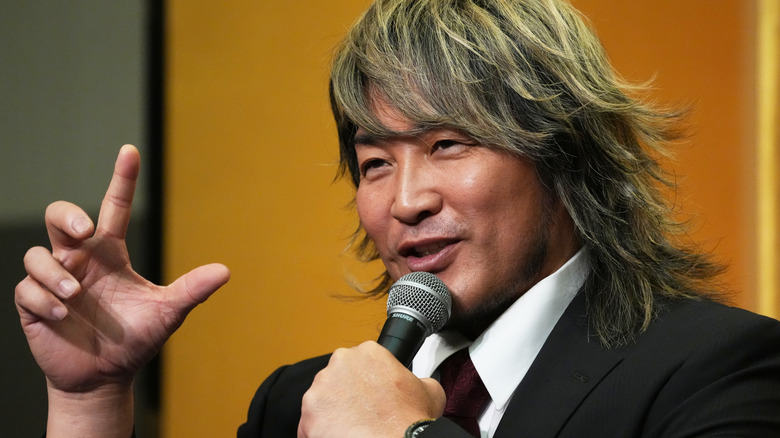
The modern history of New Japan Pro-Wrestling (NJPW) is fundamentally a narrative of resurrection. Hiroshi Tanahashi stands at the absolute center of this structural restoration. Widely acknowledged as the “Ace of the Universe” and the “Once in a Century Talent,” Tanahashi’s career is unique. It spans from his university wrestling days to his retirement at Wrestle Kingdom 20 on January 4, 2026. This career represents a unique convergence of athletic excellence, psychological mastery, and executive leadership.1 To examine Tanahashi’s impact is to examine the survival of professional wrestling in Japan during its most precarious decade. His influence is not merely confined to the record books. There, he holds a storied eight reigns as IWGP Heavyweight Champion. His influence is woven into the very fabric of how the industry communicates with its audience.1 Tanahashi dismantled the grim, hyper-realistic constraints of the “Inokiism” era. He replaced them with a vibrant, fan-centric, and emotionally resonant philosophy. Tanahashi did not just save a promotion. He redefined the cultural footprint of the “King of Sports” for a globalized era.4
Institutional Foundations and the Young Lion Ascendancy
The genesis of Hiroshi Tanahashi as a professional wrestler was rooted in a traditional Japanese athletic background. This background emphasized discipline. It also emphasized academic rigor. Tanahashi was born in 1976 in Ogaki-city, Gifu. He was a dedicated baseball player throughout high school. This background often correlates with the explosive lower-body strength required for high-impact wrestling.1 His intellectual pursuits led him to Ritsumeikan University in Kyoto. There, he studied law. This detail is often highlighted to illustrate the analytical mind he would later bring to match psychology.1 During his university years, he began practicing freestyle wrestling. This eventually attracted the attention of NJPW talent scouts.1 After a successful tryout in February 1998, he joined the NJPW Dojo. He graduated to his professional debut on October 10, 1999. His debut match resulted in a loss to Shinya (Togi) Makabe.1
Tanahashi was immediately identified as a foundational prospect. He was grouped with Shinsuke Nakamura and Katsuyori Shibata as the “New Three Musketeers.” This was a branding exercise designed to evoke the legendary trio of Keiji Mutoh, Masahiro Chono, and Shinya Hashimoto. These three had carried the company through the 1990s.9 The internal dynamics of this group showed a competitive friction. This friction would dictate NJPW’s main event scene for decades.9 Nakamura was positioned as the “Chosen One” because of his legitimate Mixed Martial Arts (MMA) background. Shibata embodied the grim aggression of a “real” fighter. Tanahashi cultivated a persona built on charisma and accessibility. He also flamboyantly rejected the traditional, stoic wrestler archetype.5
Table 1: Comparative Background of the New Three Musketeers
| Attribute | Hiroshi Tanahashi | Shinsuke Nakamura | Katsuyori Shibata |
| Background | Law Student, Baseball | Amateur Wrestling, MMA | Second-gen Dojo trainee |
| Philosophy | Fan-centric, “Never Tired” | “King of Strong Style” | Brutalist “The Wrestler” |
| Dojo Class | 1998 (Debut 1999) | 2002 (Debut 2002) | 1998 (Debut 1999) |
| Early Persona | Flashy Babyface 4 | Stoic Prospect 5 | Aggressive Striker 5 |
| Mentors | Keiji Mutoh, Fujinami | Antonio Inoki | NJPW Dojo Staff |
The early years of Tanahashi’s career were a period of rapid technical evolution. He adopted several maneuvers from his mentors. The most notable were the Dragon Screw and various suplex variations from Tatsumi Fujinami and Keiji Mutoh.1 His 2002 G1 Climax performance was impressive. He pinned the legendary Kensuke Sasaki in under two minutes. This swift victory signaled to the fanbase that a generational shift was underway.1 However, this ascent was nearly derailed by a life-threatening personal incident in November 2002.1
The 2002 Incident and the Narrative of Resilience
In November 2002, Tanahashi was stabbed twice in the back by a former girlfriend, Hitomi Hara, a TV Asahi reporter, following his attempt to end their relationship.1 The attack was severe, leading to significant blood loss and hospitalization, while Hara was subsequently charged with attempted murder and sentenced to four years of probation.1 From a purely analytical standpoint, this event—while tragic—functioned as a catalyst for Tanahashi’s mainstream proliferation.15 The story was widely reported across Japanese national media, providing Tanahashi with a level of visibility that transcended the wrestling niche.18
His return to the ring in February 2003, just months after the stabbing, cemented his reputation for “fighting spirit” (Tokon).6 The legend that he had ridden himself to the hospital on a scooter with the knife still lodged in his back became a part of his mythos, transforming him into a resilient hero whose real-world struggles mirrored the perseverance he displayed in the ring.18 This incident marked the beginning of his transition from a promising prospect to a cultural icon, as the “High Energy” return provided the emotional hook necessary to captivate a broader audience during a period when the wrestling business was otherwise in decline.6
Dismantling Inokiism: The Crisis of the Dark Ages
The most significant hurdle in Tanahashi’s career was not an opponent. It was the creative direction of NJPW itself under founder Antonio Inoki.5 During the early 2000s, Inoki became obsessed with the rising popularity of MMA. He attempted to integrate shoot-fighting elements into NJPW.5 This “Inokiism” era forced professional wrestlers into legitimate MMA fights. Wrestlers were often defeated by trained combatants. This, in turn, destroyed their credibility. The “suspension of disbelief,” which is essential to wrestling’s appeal, was also undermined.5 Attendance plummeted, and the product became a bleak, niche exhibition that alienated families and younger fans.6
Tanahashi’s intervention was both a stylistic and institutional rebellion.4 He realized that for NJPW to survive, it had to move away from the “curse” of Strong Style. This style had become synonymous with grim, unscripted violence. NJPW had to return to being a form of “pro-wrestling” that focused on drama, charisma, and fun.4 He dyed his hair. He adopted more colourful attire. He prioritized connection with female fans and children. This was a demographic that the MMA-focused product had completely ignored.5 In a symbolic act of defiance in 2007, he removed Antonio Inoki’s portrait from the NJPW Dojo, signalling that the company no longer belonged to the ghost of its past, but to the stars of its future 6
The success of this pivot is evidenced by the “V10” era of the early 2010s. During this time, Tanahashi’s championship matches were once again drawing vibrant, vocal crowds to the Tokyo Dome and Korakuen Hall.20 Some critics in the mid-2000s were incredulous of his rise. They labeled him a “non-draw” and criticized his flamboyant style. However, his persistence eventually won over even the most ardent purists.8 Respectability was restored to the IWGP Heavyweight Championship during this period. He moved past the “dark days” of short-lived, MMA-influenced title reigns.5
The Record-Breaking Ace: Analysis of the Championship Zeniths
Tanahashi’s first IWGP Heavyweight Championship victory occurred on July 17, 2006. He defeated Giant Bernard in a tournament final for the vacant title. Brock Lesnar was stripped of the belt for failing to show up for a defense.1 This win marked a turning point. It established a homegrown trainee as the leader of the promotion’s post-Inoki restructuring.15 However, his most impactful period of dominance was his fifth reign, which began in early 2011.1
During this fifth reign, Tanahashi set a record with 11 successful title defences. This streak included victories over legends like Yuji Nagata and Satoshi Kojima. He also defeated modern rivals like Shinsuke Nakamura and Minoru Suzuki.14 This period is often cited as the structural peak of Tanahashi’s in-ring career. His workrate and psychological depth reached their absolute zenith.14 He acted as a “gatekeeper” of the main event. He legitimized new talent while he maintained the prestige of the championship through grueling, 30-plus minute epics.20
Table 2: Tanahashi’s IWGP Heavyweight Championship Record Reigns
| Reign # | Start Date | Opponent Defeated | Notable Defense(s) | End Date | Length (Days) |
| 1st | July 17, 2006 | Giant Bernard | Taiyo Kea 1 | Apr 13, 2007 | 270 |
| 3rd | Jan 4, 2009 | Keiji Mutoh | Shinsuke Nakamura, Kurt Angle 1 | May 6, 2009 | 122 |
| 5th | Jan 4, 2011 | Satoshi Kojima | Record 11 Defenses (Nagata, Nakamura, Bernard) 22 | Feb 12, 2012 | 404 |
| 7th | Oct 13, 2014 | AJ Styles | Kazuchika Okada (WK9) 24 | Feb 11, 2015 | 121 |
| 8th | Jan 4, 2019 | Kenny Omega | End of his eighth reign 25 | Feb 11, 2019 | 38 |
The fifth reign ended with the “Rainmaker Shock” on February 12, 2012. On that day, Kazuchika Okada defeated Tanahashi. This was one of the most significant upsets in the history of the promotion.16 This transition was not merely a change in titleholders. It marked the beginning of a multi-year narrative arc. The “Ace” would struggle to maintain his status against a younger, faster, and more arrogant successor.4
Rivalry Dynamics: The Architects of Modern New Japan
Hiroshi Tanahashi’s career is defined by his rivalries. The three most important ones are with Shinsuke Nakamura, Katsuyori Shibata, and Kazuchika Okada. Each of these relationships represented a different challenge to his leadership and a different facet of the Japanese wrestling soul.9
The Ideological War: Tanahashi vs. Nakamura
The rivalry with Shinsuke Nakamura was defined by a profound stylistic and philosophical divide.14 Nakamura was the younger, taller “Chosen One” who was initially favored by management for his MMA legitimacy.9 Tanahashi felt overlooked during Nakamura’s early push. He became the aggressor in their early encounters. His actions were fueled by a fierce professional jealousy.14 As both men matured, they became the two pillars of NJPW. Tanahashi became the heroic Ace. Nakamura evolved into the mercurial, flamboyant King of Strong Style.4
Their matches were clinics in tactical evolution. At first, Nakamura’s raw power and martial arts background gave him the advantage. However, Tanahashi’s superior endurance and scientific wrestling eventually allowed him to surpass his rival as the company’s face.14 Their final singles match was the G1 Climax 25 final in 2015. It is regarded as the “end of an era” match. Both men performed at the absolute limit of their abilities.14 Their mutual respect was clear at Tanahashi’s retirement in 2026. He performed Nakamura’s “Boma Ye” knee strike. This act paid tribute to the man who had pushed him to greatness for over a decade.2
The Loyalty Conflict: Tanahashi vs. Shibata
The rivalry with Katsuyori Shibata was the most personally bitter of the three.4 In 2005, when NJPW was struggling, Shibata left the company. He became a freelancer and an MMA fighter. Tanahashi viewed this move as a betrayal.4 When Shibata returned in 2012, Tanahashi was visibly hostile. He stated that those who didn’t stay to help NJPW in its dark times should not expect any benefits. They did not deserve any benefits from its recovery.4
This real-life animosity led to some of the most physical matches of the era. These matches were characterized by stiff strikes. There was a total lack of typical wrestling cooperation.16 Their five-star match at Destruction in Kobe 2014 was the climax of this arc. The two finally found a mutual understanding through the language of violence.16 The reconciliation was completed at Wrestle Kingdom 20. Shibata had miraculously returned from a brain injury years prior. He was the first person to enter the ring for Tanahashi’s retirement ceremony. This led to a poignant embrace between the two fellow Musketeers.2
The Generational Shift: Tanahashi vs. Okada
The series against Kazuchika Okada is arguably the greatest rivalry in the history of professional wrestling.16 It spanned from 2012 to 2026 and was the engine that drove NJPW’s international expansion.24 The story was simple. The aging Ace was trying to keep his spot. Meanwhile, the young, super-talented “Rainmaker” tried to take it.4
Their matches at Wrestle Kingdom 7, 9, and 10 saw the “Ace” status slowly transfer from one to the other.24 Even as Okada became the undisputed top guy, Tanahashi remained the “Final Boss.” Okada had to overcome him to truly solidify his legacy. 24 Okada’s final record of 10-5-3 reflects the natural progression of a veteran putting over his successor. Yet Tanahashi’s ability to remain a credible threat well into his 40s speaks to his unparalleled durability. His continued fan support is also remarkable. 2
Psychological Archetypes and In-Ring Methodology
Tanahashi’s wrestling style is a sophisticated blend of Western psychology and traditional Japanese storytelling.23 He has frequently cited Shawn Michaels as his favourite wrestler. This influence is visible in his dramatic “selling.” His ability to construct a match as a series of emotional crescendos is also influenced by Michaels.1 Unlike many of his contemporaries who relied on “head-drop” suplexes or hyper-aggressive striking, Tanahashi took a different approach. He focused on “logical” wrestling by attacking a limb, usually the leg, to set up his finishing sequence.23
His use of the High Fly Flow (a frog splash) is a masterclass. It makes a standard maneuver feel like a devastating finish.7 He uses the Dragon Screw leg whip to disable an opponent’s mobility. This tactic makes the subsequent High Fly Flow feel “earned” rather than random.7 His matches are characterized by “layering,” where early technical exchanges inform the desperate striking of the final minutes.23 This attention to detail was crucial. Even as his physical condition deteriorated, he could still produce classic matches. Weak knees became a significant weakness in his later years. He relied on narrative intelligence alone.23
Table 3: Evolution of Tanahashi’s Signature Maneuvers
| Era | Primary Finisher | Secondary Maneuver(s) | Impact on Psychology |
| Early years (1999-2003) | Dragon Suplex | Sling Blade, Roll-ups | Speed and amateur background 1 |
| Rise to Stardom (2003-2010) | Sling Blade / Dragon Suplex | Texas Cloverleaf, U-30 suplex | Establishing a unique identity 1 |
| Prime Ace era (2010-2018) | High Fly Flow | Dragon Screw, Twist and Shout | Focus on limb work and high-impact climax 7 |
| Final Road (2019-2026) | High Fly Flow / Sling Blade | Homages (Boma Ye, PK) | Relying on savvy and legacy 2 |
Global Ambassador: Impact on the International Community
Tanahashi’s influence extended beyond the domestic Japanese market. He played a critical role in NJPW’s partnerships with CMLL, Ring of Honor (ROH), and All Elite Wrestling (AEW).1 In CMLL, he held the World Tag Team and World Trios Championships. He earned respect in the “Lucha Libre” style. He then integrated this style into his own repertoire.1 His work in the U.S. greatly contributed to the “New Japan Boom” of the 2010s. In this era, matches against stars like AJ Styles and Kurt Angle helped legitimize NJPW. He gained the recognition of Western fans.1
His interactions with AEW were particularly significant.1 His rivalry with Kenny Omega in 2018-2019 was framed as a “clash of philosophies.” This clash was between Tanahashi’s traditional storytelling and Omega’s high-octane, “modern” style.25 Tanahashi’s victory over Omega at Wrestle Kingdom 13 was seen as a defense of the Japanese wrestling soul.25 Even though top stars like Okada and Omega moved to AEW, Tanahashi’s presence in “Forbidden Door” matches against Jon Moxley was significant for NJPW. It highlighted NJPW. It ensured NJPW remained a vital part of the global wrestling conversation.25 Even as top stars like Okada and Omega moved to AEW, Tanahashi’s presence in “Forbidden Door” matches against Jon Moxley and others ensured that NJPW remained a vital part of the global wrestling conversation 25
The Presidential Mandate: Restructuring for the Future
On December 23, 2023, Hiroshi Tanahashi was appointed as the President and Representative Director of NJPW, succeeding Takami Ohbari.41 This appointment was a strategic move by owner Bushiroad. They wanted to put a leader in place who possessed a deep “wrestler’s mindset.” The leader also needed an innate understanding of the fanbase.3 Tanahashi immediately identified several “pain points” for the company. He noted a bloated number of championships. Following the COVID-19 pandemic, there was also a decline in attendance.44
In June 2024, Tanahashi unveiled a “Ten Steps to Success” roadmap.44 This included refocusing on young talent like the Reiwa Three Musketeers. It also involved reducing outside interference in matches, specifically targeting the House of Torture faction. Additionally, it aimed at strengthening ties with STARDOM following its acquisition by Bushiroad.44 He emphasized that NJPW needed to be “cheerful” and attract a mainstream audience once again.41
Table 4: Key Performance Indicators (FY2019 – FY2025)
| Metric | FY2019 (Peak) | FY2021 (Low) | FY2024 (Recovery) | FY2025 (Stabilization) |
| Total Attendance | 443,000 45 | 179,000 45 | 296,000 45 | 286,000 45 |
| Avg Show Attendance | ~2,500 | ~1,200 | 2,035 46 | 1,879 46 |
| Revenue (Yen) | Record High | Sharp Decline | 98% of 2019 45 | ~1.48B (Quarterly) 46 |
| # of Championships | 7 | 10 | 13 | 11 (Projected target) 44 |
Under his presidency, the focus shifted toward “player-management,” where he balanced his administrative duties with a rigorous in-ring schedule.41 His presence as an active wrestler-president provided a morale boost to the locker room. It also acted as a “seal of quality” for the fans.3 In late 2025, overall attendance was stagnant. However, the “Wrestle Kingdom 20” event was a resounding success. It sold out the Tokyo Dome with over 50,000 fans. This was a testament to Tanahashi’s enduring drawing power.48
The Retirement Road: Wrestle Kingdom 20 and Beyond
The “Final Road” for Hiroshi Tanahashi began in late 2024 and was a meticulously booked farewell tour.7 He sought out matches with the roster’s youth. These included Yota Tsuji, Shota Umino, and Yuya Uemura. He aimed to pass on the knowledge of the “Ace” style.7 He participated in special crossover bouts. One example was his match against Stalker Ichikawa in DRAGONGATE. This showed his commitment to the broader Japanese wrestling community.50
His final match at Wrestle Kingdom 20 on January 4, 2026, was a 33-minute “emotional epic” against Kazuchika Okada.2 Tanahashi entered the ring with visible knee issues. He delivered a performance that relied on his legendary endurance. His connection with the crowd was also evident.2 The match highlighted a retrospective of his career. It featured his trademark Dragon Screws. It also included the Texas Cloverleaf and several High Fly Flows.2 Okada finally hit the Rainmaker for the three-count. This marked the official end of an era. The era had lasted over a quarter-century.2
The post-match ceremony was a star-studded affair. The NJPW roster surrounded the ring in Tanahashi-themed shirts. Rivals like Jay White, Will Ospreay, and the Golden Lovers (Kenny Omega and Kota Ibushi) returned to pay tribute.2 Tanahashi tearfully addressed the crowd with his iconic “Aishitemasu” (I love you) catchphrase. Then, he circled the Tokyo Dome in the “Acemobile” to wave a final goodbye to the 46,913 people in attendance.2
Impact Analysis: The Legacy of the Savior Angel
The career of Hiroshi Tanahashi provides a blueprint for how a single individual can stabilize a failing multi-million dollar institution.3 His impact is categorized into three primary levels:
First, he was the Structural Architect who saved NJPW from the financial and creative ruin of Inokiism.5 He advocated for a return to traditional professional wrestling storytelling. This restoration brought back the suspension of disbelief. It also recovered the emotional core of the product.6 This allowed the company to weather the rise of MMA and remain competitive in a fragmented entertainment market.6
Second, he was a Psychological Innovator who modernized the Japanese wrestling style.23 He proved that a top star didn’t need to be a stoic fighter. A top star could be a charismatic, vulnerable, and relatable figure.4 This expanded the fanbase significantly. It particularly increased among women. This growth provided NJPW with the revenue stability necessary to survive the 2010s.5
Third, he was a Generational Bridge.3 He successfully passed the torch to Kazuchika Okada and Tetsuya Naito. In his final years, he focused on mentoring the “Reiwa Three Musketeers”—Shota Umino, Ren Narita, and Yota Tsuji.10 His presidency ensured that his career’s lessons would remain at the heart of the company’s corporate culture. These lessons include kindness, respect, and a tireless commitment to the fan experience.3
Conclusion: The Once in a Century Standard
Hiroshi Tanahashi’s 26-year career is more than a list of championship statistics. It is a testament to the power of a specific wrestling philosophy. This philosophy prioritizes the heart over the fist and the audience over the ego.3 From the blood-stained scooter ride of 2002 to the sold-out retirement ceremony of 2026, he remained “The Ace.” He was a constant point of reference for quality. He also embodied integrity.2 As he moves into a full-time role as President, NJPW faces a future without its most reliable in-ring hero. The institution is more secure now than at any point since its founding.41 The “King of Sports” lives on. It continues not because it became a legitimate fight but because Tanahashi reminded the world. Pro-wrestling is the greatest drama in the universe.6 The standard he set will remain the measuring stick for every Ace that follows. While Tanahashi has retired, the fire he reignited will never be extinguished.10
Works cited
- Hiroshi Tanahashi – Wikipedia, accessed January 6, 2026, https://en.wikipedia.org/wiki/Hiroshi_Tanahashi
- Here’s What You Missed From Hiroshi Tanahashi’s Retirement At …, accessed January 6, 2026, https://www.si.com/fannation/wrestling/njpw/here-s-what-you-missed-from-hiroshi-tanahashi-retirement-at-wrestle-kingdom-20
- President Ace: Hiroshi Tanahashi’s Task In Returning NJPW To Glory – Voices of Wrestling, accessed January 6, 2026, https://www.voicesofwrestling.com/2024/01/02/president-ace-hiroshi-tanahashis-task-in-returning-njpw-to-glory/
- The Characters of NJPW, Part 2: Hiroshi Tanahashi | by Guilherme Jaeger | Medium, accessed January 6, 2026, https://guijaeger.medium.com/the-characters-of-njpw-part-2-hiroshi-tanahashi-4e148deff37d
- What’s the story of Tanahashi reviving NJPW? : r/SquaredCircle – Reddit, accessed January 6, 2026, https://www.reddit.com/r/SquaredCircle/comments/4iai25/whats_the_story_of_tanahashi_reviving_njpw/
- The resurgence – How NJPW rebounded from the dark ages : r/SquaredCircle – Reddit, accessed January 6, 2026, https://www.reddit.com/r/SquaredCircle/comments/5mmdm7/the_resurgence_how_njpw_rebounded_from_the_dark/
- Hiroshi Tanahashi | NEW JAPAN PRO-WRESTLING, accessed January 6, 2026, https://www.njpw1972.com/profile/693
- The complete history of: Hiroshi Tanahashi 1999~2025 : r/njpw – Reddit, accessed January 6, 2026, https://www.reddit.com/r/njpw/comments/1pjp80d/the_complete_history_of_hiroshi_tanahashi_19992025/
- Wrestle Kingdom Rewind: A Legendary Rivalry Begins 【WK20】, accessed January 6, 2026, https://www.njpw1972.com/544634
- Reiwa Three Musketeers Formed – NEW JAPAN PRO-WRESTLING, accessed January 6, 2026, https://www.njpw1972.com/o154358
- The Three Musketeers (professional wrestling) – Wikipedia, accessed January 6, 2026, https://en.wikipedia.org/wiki/The_Three_Musketeers_(professional_wrestling)
- Ace’s HIGH #35: The New Three Musketeers | NEW JAPAN PRO-WRESTLING, accessed January 6, 2026, https://www.njpw1972.com/o87881
- Ace’s HIGH #31: Rubbing Elbows With Misawa | NEW JAPAN PRO-WRESTLING, accessed January 6, 2026, https://www.njpw1972.com/o85848
- Hiroshi Tanahashi vs Shinsuke Nakamura – G1 Climax 2015 Final – Full Match FREE on YouTube : r/njpw – Reddit, accessed January 6, 2026, https://www.reddit.com/r/njpw/comments/1jwn61d/hiroshi_tanahashi_vs_shinsuke_nakamura_g1_climax/
- Shifting The Spotlight: Hiroshi Tanahashi | by Guure – Medium, accessed January 6, 2026, https://medium.com/@iGuure/shifting-the-spotlight-hiroshi-tanahashi-1c2010414628
- Hiroshi Tanahashi – Pro Wrestling | Fandom, accessed January 6, 2026, https://prowrestling.fandom.com/wiki/Hiroshi_Tanahashi
- TIL that in 2002, New Japan star Hiroshi Tanahashi was stabbed in the back by his then girlfriend, who Tanahashi was trying to break up with. The girlfriend, a TV reporter, was then charged with attempted murder. – Reddit, accessed January 6, 2026, https://www.reddit.com/r/SquaredCircle/comments/1zomep/til_that_in_2002_new_japan_star_hiroshi_tanahashi/
- [TIL] In 2002 Tanahashi was stabbed twice by his ex-girlfriend : r/SquaredCircle – Reddit, accessed January 6, 2026, https://www.reddit.com/r/SquaredCircle/comments/78m96n/til_in_2002_tanahashi_was_stabbed_twice_by_his/
- How did Tanahashi save NJPW? : r/SquaredCircle – Reddit, accessed January 6, 2026, https://www.reddit.com/r/SquaredCircle/comments/95a3b5/how_did_tanahashi_save_njpw/
- Ace’s HIGH #87: King of Developing Styles – NEW JAPAN PRO-WRESTLING, accessed January 6, 2026, https://www.njpw1972.com/o112171
- Hiroshi Tanahashi first and last Iwgp championship wins Against giant bernard and kenny omega (2006 & 2019) : r/SquaredCircle – Reddit, accessed January 6, 2026, https://www.reddit.com/r/SquaredCircle/comments/1pkjxor/hiroshi_tanahashi_first_and_last_iwgp/
- Hiroshi Tanahashi – Simple English Wikipedia, the free encyclopedia, accessed January 6, 2026, https://simple.wikipedia.org/wiki/Hiroshi_Tanahashi
- How would you describe Hiroshi Tanahashi in at least one paragraph? : r/njpw – Reddit, accessed January 6, 2026, https://www.reddit.com/r/njpw/comments/sy4bqy/how_would_you_describe_hiroshi_tanahashi_in_at/
- How Did We Get Here? A Short History Of Kazuchika Okada vs. Hiroshi Tanahashi, accessed January 6, 2026, https://www.voicesofwrestling.com/2023/02/17/how-did-we-get-here-a-short-history-of-kazuchika-okada-vs-hiroshi-tanahashi/
- Top 5 Matches of Hiroshi Tanahashi – Monthly Puroresu, accessed January 6, 2026, https://monthlypuroresu.com/features/top-5-hiroshi-tanahashi-matches/
- Tale Of The Feud: Hiroshi Tanahashi vs Kazuchika Okada – Ramblings About Wrestling, accessed January 6, 2026, https://ramblingsaboutwrestling.com/2019/07/05/tale-of-the-feud-hiroshi-tanahashi-vs-kazuchika-okada/
- Tag Archives: Tanahashi vs. Nakamura – Handwerk Reviews – WordPress.com, accessed January 6, 2026, https://handwerkreviews.wordpress.com/tag/tanahashi-vs-nakamura/
- [SPOILER] Finish to Kazuchika Okada vs Hiroshi Tanahashi : r/njpw – Reddit, accessed January 6, 2026, https://www.reddit.com/r/njpw/comments/1q3w4fu/spoiler_finish_to_kazuchika_okada_vs_hiroshi/
- Can you guys recommend me some must-watch Tanahashi matches? : r/njpw – Reddit, accessed January 6, 2026, https://www.reddit.com/r/njpw/comments/1dt2ugj/can_you_guys_recommend_me_some_mustwatch/
- Shibata has said that it’s “essential” Tanahashi faces Nakamura during his retirement road. He also said there could be nothing more dramatic than the New Three Musketeers being reunited in the ring, and that maybe Tanahashi can make it happen with his influence. : r/njpw – Reddit, accessed January 6, 2026, https://www.reddit.com/r/njpw/comments/1huuo3t/shibata_has_said_that_its_essential_tanahashi/
- Hiroshi Tanahashi Retires in Emotional NJPW WRESTLE KINGDOM 20 Main Event, accessed January 6, 2026, https://monthlypuroresu.com/features/hiroshi-tanahashi-retires-in-emotional-njpw-wrestle-kingdom-20-main-event/
- Hiroshi Tanahashi about his Wrestling Philosophy, Psychology and Consequences of Dangerous Moves : r/SquaredCircle – Reddit, accessed January 6, 2026, https://www.reddit.com/r/SquaredCircle/comments/26111h/hiroshi_tanahashi_about_his_wrestling_philosophy/
- Kenny Omega × Hiroshi Tanahashi : r/AEWOfficial – Reddit, accessed January 6, 2026, https://www.reddit.com/r/AEWOfficial/comments/1onq84b/kenny_omega_hiroshi_tanahashi/
- Wrestling Psychology: The Mind Behind the Match, accessed January 6, 2026, https://www.voicesofwrestling.com/2025/07/28/wrestling-psychology-the-mind-behind-the-match/
- Matches with the best in-ring storytelling/psychology/chemistry? : r/SquaredCircle – Reddit, accessed January 6, 2026, https://www.reddit.com/r/SquaredCircle/comments/44rkjt/matches_with_the_best_inring/
- Hiroshi Tanahashi – High Fly Flow compilation – YouTube, accessed January 6, 2026, https://www.youtube.com/watch?v=hwomd-9ZPWU
- The Final Road: Hiroshi Tanahashi Interviewed 【WK20】【ACE】, accessed January 6, 2026, https://www.njpw1972.com/621185
- Kenny Omega Reveals Who He Believes Is The Ace Of AEW – Sports Illustrated, accessed January 6, 2026, https://www.si.com/fannation/wrestling/aew/kenny-omega-reveals-who-he-believes-is-the-ace-of-aew
- Hiroshi Tanahashi says “Kenny [Omega]’s puroresu is like watching a movie with no Kishotenketsu (dramatic arc of traditional Japanese narratives).” He feels that the last 5 minutes of a Kenny match is all that matters, because there’s no story. : r/SquaredCircle – Reddit, accessed January 6, 2026, https://www.reddit.com/r/SquaredCircle/comments/9gntj8/hiroshi_tanahashi_says_kenny_omegas_puroresu_is/
- Hiroshi Tanahashi Appointed as President & Representative Director of New Japan Pro-Wrestling – Sacnilk, accessed January 6, 2026, https://www.sacnilk.com/news/Hiroshi_Tanahashi_Appointed_as_President__Representative_Director_of_New_Japan_ProWrestling
- Hiroshi Tanahshi addresses media as President | NEW JAPAN PRO-WRESTLING, accessed January 6, 2026, https://www.njpw1972.com/o167068
- Hiroshi Tanahashi is New Japan Pro Wrestling’s New President & Representative Director, accessed January 6, 2026, https://www.sescoops.com/article/hiroshi-tanahashi-njpw-new-president-representative-director
- Hiroshi Tanahashi on New Opportunity as President of New Japan Pro-Wrestling, accessed January 6, 2026, https://www.si.com/fannation/wrestling/news/hiroshi-tanahashi-on-new-opportunity-as-president-of-new-japan-pro-wrestling
- Pres. Tanahashi Offers Ten Steps to NJPW Success in Coming …, accessed January 6, 2026, https://news.njpw1972.com/pres-tanahashi-offers-ten-steps-to-njpw-success-in-coming-months-931667878253
- Bushiroad’s report on NJPW as of 9-24-2025: “FY2021 marked the bottom, and from there until FY2023 the company showed a gradual recovery trend. However, with the departure of key wrestlers and other factors, performance has since leveled off, remaining flat from FY2024 onward.” : r/SquaredCircle – Reddit, accessed January 6, 2026, https://www.reddit.com/r/SquaredCircle/comments/1nrzbyf/bushiroads_report_on_njpw_as_of_9242025_fy2021/
- Bushiroad financial results show New Japan stagnant but gains for Stardom – Wrestlenomics, accessed January 6, 2026, https://wrestlenomics.com/articles/2025/bushiroad-financial-results-show-new-japan-stagnant-but-gains-for-stardom/
- Hiroshi Tanahashi: Being NJPW President Allows Me To Focus On Short And Long-Term Goals – Fightful, accessed January 6, 2026, https://dev.fightful.com/wrestling/hiroshi-tanahashi-being-njpw-president-allows-me-focus-short-and-long-term-goals/
- Hiroshi Tanahashi’s Farewell At Wrestle Kingdom 20 Sells Out The Tokyo Dome, accessed January 6, 2026, https://www.si.com/fannation/wrestling/njpw/hiroshi-tanahashi-s-farewell-at-wrestle-kingdom-20-sells-out-the-tokyo-dome
- Hiroshi Tanahashi Announces Over 30,000 Tickets Have Been Sold For NJPW WRESTLE KINGDOM 20 – Monthly Puroresu, accessed January 6, 2026, https://monthlypuroresu.com/features/hiroshi-tanahashi-announces-over-30000-tickets-have-been-sold-for-njpw-wrestle-kingdom-20/
- EVIL crashes Tanahashi retirement conference | by New Japan Pro-Wrestling, accessed January 6, 2026, https://news.njpw1972.com/evil-crashes-tanahashi-retirement-conference-c5cfacb32518
- New Japan’s Shota Umino, Ren Narita and Yota Tsuji officially become the ‘Reiwa Three Musketeers’ – POST Wrestling, accessed January 6, 2026, https://www.postwrestling.com/2023/06/30/new-japans-shota-umino-ren-narita-and-yota-tsuji-officially-become-the-reiwa-three-musketeers/
- Wrestling World Reacts To Hiroshi Tanahashi’s Retirement At NJPW Wrestle Kingdom 20, accessed January 6, 2026, https://www.si.com/fannation/wrestling/njpw/wrestling-world-reacts-to-hiroshi-tanahashi-retirement-at-njpw-wrestle-kingdom-20
- Tanahashi says he has “no worries” NJPW will remain hot after his retirement – PWTorch, accessed January 6, 2026, https://www.pwtorch.com/site/2026/01/01/tanahashi-says-he-has-no-worries-njpw-will-remain-hot-after-his-retirement/

 ScortonBoy17.ca
Leave a comment