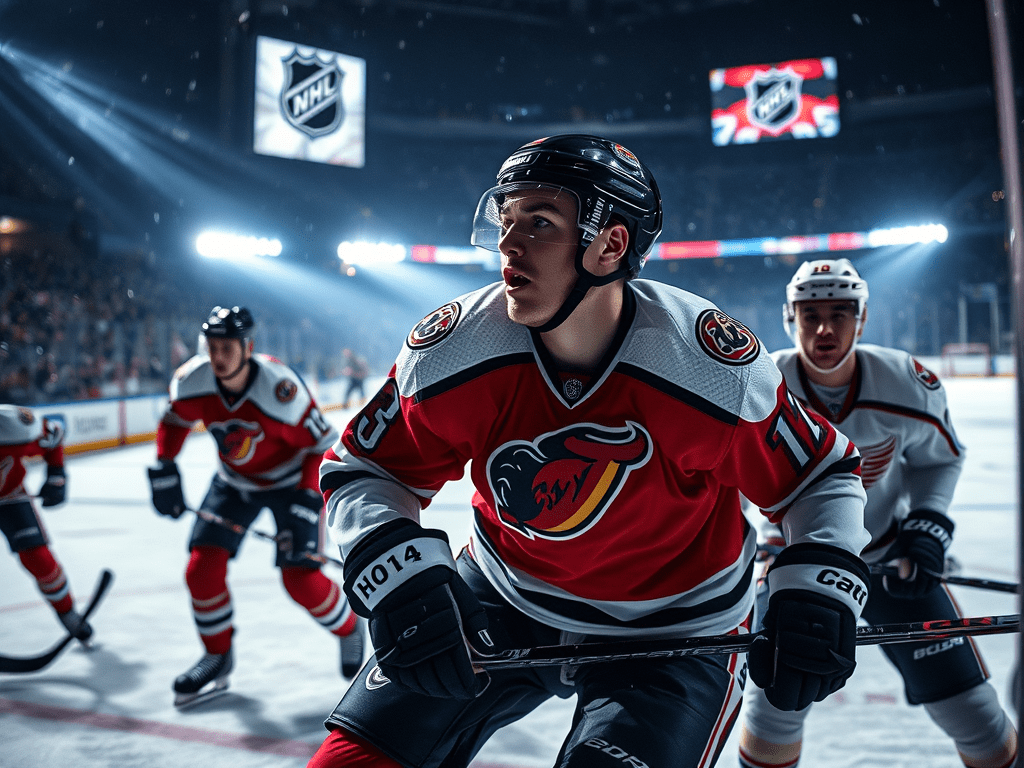
The echoes of the Florida Panthers’ second consecutive Stanley Cup celebration have barely faded. Yet, the National Hockey League is already hurtling toward a new season. This season is defined by seismic shifts in its power structure. The 2025-26 campaign dawns not as a continuation of the old order, but as a potential realignment. The Panthers, battered but unbowed, start a challenging quest for a historic three-peat. This quest is monumentally more difficult due to significant injuries to their core leadership. While one dynasty fights to extend its reign, another potential superpower has emerged in the desert. The Vegas Golden Knights executed the offseason’s single most impactful move. They acquired superstar winger Mitch Marner. This acquisition instantly creates one of the league’s most terrifying offensive tandems. This dramatic personnel change is occurring in a league experiencing unprecedented upheaval. A staggering nine franchises will begin the year with a new head coach. This league-wide referendum on leadership and strategy signals a new era of desperation and transformation. It sets the stage for a season where established hierarchies will be challenged. New stars will emerge, and the race for hockey’s ultimate prize will be more unpredictable than ever.
The Offseason That Reshaped the League
The summer of 2025 will be remembered as a period of aggressive, landscape-altering moves. General managers felt the pressure of closing championship windows. They faced the impatience of prolonged rebuilds. As a result, they abandoned caution in favor of bold, decisive action. Blockbuster trades relocated franchise cornerstones. A coaching carousel spun at a dizzying pace. The offseason has fundamentally redrawn the NHL’s competitive map.
Blockbuster Summer: Marner, Miller, and Zegras Find New Homes
The trade market was headlined by a series of transactions. These involved young, established stars. This signals a new era where teams are willing to part with significant assets to acquire talent in its prime.
The offseason had an undisputed centerpiece. A trade sent Mitch Marner from the Toronto Maple Leafs to the Vegas Golden Knights. This was not merely a trade; it was a philosophical realignment for two of the league’s most prominent franchises. Vegas, never shy about making aggressive moves, acquired Marner. They immediately signed him to a massive 8-year, $96 million contract. Marner is now paired with elite center Jack Eichel to form a duo with terrifying offensive potential. The move solidifies the Golden Knights as a premier Stanley Cup favorite. It also serves as a declaration of their intent to return to the top. For Toronto, the trade marks the definitive end of the “Core Four” era. It marks a shift to a grittier and more balanced identity. Second-year coach Craig Berube now has the cap flexibility to build a roster more in his image.
Meanwhile, the Carolina Hurricanes signaled their all-in approach. They acquired defenseman K’Andre Miller from the New York Rangers. They promptly signed him to an 8-year, $60 million extension. This was a pure “win-now” move, adding a young, top-four defenseman to an already formidable blue line. The team has consistently dominated the regular season but often falls short in the playoffs. They have frequently been defeated by rivals like Florida. Miller’s acquisition is a direct attempt to build a roster that is finally playoff-proof. For the Rangers, trading Miller was a direct result of a deeply disappointing 2024-25 season. The season saw them miss the playoffs. This led to the hiring of coach Mike Sullivan. The move indicates a shift in the type of defenseman the new regime values. This shift is further highlighted by the signing of Vladislav Gavrikov.
The Philadelphia Flyers demonstrated the trend of aggressive rebuilding. They acquired dynamic forward Trevor Zegras from the Anaheim Ducks. The Flyers traded center Ryan Poehling and draft picks. In return, they landed the high-end, creative offensive talent they have desperately lacked for years. This move suggests that some general managers are no longer content with the slow, traditional rebuild of accumulating draft picks. Instead, they are using their assets to acquire talent that is cost-controlled and near-prime. This approach aims to accelerate the process. It helps build around a tangible core immediately. The Montreal Canadiens executed a higher-risk, higher-reward strategy. They traded for defenseman Noah Dobson. He is another young star poised to become a franchise cornerstone.
Navigating the Market: Key Signings and Roster Reconstruction
Trades dominated the headlines. Meanwhile, the free-agent market saw teams make critical decisions. These moves were made to either secure their futures or strategically add key pieces. Teams displayed a notable trend. They showed a willingness to commit long-term to their restricted free agents. They often bypassed the traditional “bridge deal.” The New Jersey Devils locked up star defenseman Luke Hughes with a 7-year, $63 million contract. The Vancouver Canucks secured their cornerstone in Brock Boeser with a 7-year deal. The Edmonton Oilers secured their cornerstone in Evan Bouchard with a 4-year deal. These moves underscore a league-wide priority: identifying and retaining elite young talent is paramount.
Perhaps the most impressive feat of roster management came from the two-time defending champion Florida Panthers. General Manager Bill Zito faced a potential exodus of key unrestricted free agents. Yet, he managed to re-sign winger Brad Marchand for 6 years. He also re-signed center Sam Bennett for 8 years. Additionally, he secured defenseman Aaron Ekblad for 8 years. Securing these veterans likely involved deals that prioritized the chance to win. This approach was favored over maximizing salary. It is a testament to the powerful draw of a championship culture.
Other teams made savvy additions to bolster their depth. The Golden Knights complemented their Marner acquisition by re-signing veteran winger Brandon Saad. The Minnesota Wild added scoring punch with Vladimir Tarasenko. The Detroit Red Wings made a significant move by trading for John Gibson to address their long-standing goaltending issues.
| Category | Highlighted Moves |
| Blockbuster Trades | Mitch Marner to Vegas Golden Knights; K’Andre Miller to Carolina Hurricanes; Trevor Zegras to Philadelphia Flyers; Noah Dobson to Montreal Canadiens |
| Major Free Agent Signings | Luke Hughes (RFA) re-signs with NJD (7 yrs); Brock Boeser (UFA) re-signs with VAN (7 yrs); Evan Bouchard (RFA) re-signs with EDM (4 yrs); Brad Marchand (UFA) re-signs with FLA (6 yrs); Sam Bennett (UFA) re-signs with FLA (8 yrs); Aaron Ekblad (UFA) re-signs with FLA (8 yrs); Brandon Saad (UFA) re-signs with VGK |
Changing of the Guard: A New Voice for Nine Franchises
The league is experiencing a significant identity crisis. There have been nine coaching changes in total. Patience has worn thin. Simply making the playoffs is no longer enough for many organizations. Peter DeBoer’s firing in Dallas occurred after three consecutive trips to the Western Conference Final. Peter Laviolette was fired in New York after just one non-playoff season. These actions underscore an era of extreme impatience.
In response, several teams opted for proven winners, signaling a clear mandate for immediate contention. The Anaheim Ducks hired three-time Stanley Cup champion Joel Quenneville. The New York Rangers brought in two-time champion Mike Sullivan. These hires demonstrate a preference for championship pedigree. Teams expect that their demanding, structured systems will instill a winning culture.
Other franchises turned to experienced hands to guide them through rebuilds or periods of stabilization. The Philadelphia Flyers brought back former player Rick Tocchet. The Chicago Blackhawks hired Jeff Blashill with the specific task of mentoring Connor Bedard. The Seattle Kraken turned to Lane Lambert. These coaches are tasked with implementing structure and fostering player development. In Vancouver, the Canucks chose continuity. They promoted assistant Adam Foote to head coach after Rick Tocchet’s departure. This move was designed to maintain stability for a core group led by captain Quinn Hughes.
The Next Generation Arrives
Established stars are settling into new homes. Meanwhile, a fresh wave of talent is set to make its mark on the league. The 2025 NHL Entry Draft ushered in a class of prospects with the potential for immediate impact. Additionally, a deep pool of previously drafted players is ready to challenge for the Calder Memorial Trophy.
Meet the Class of 2025: Schaefer, Misa, and the Future of the NHL
The top of the 2025 draft class reflects three distinct team-building philosophies, providing a fascinating case study for the future.
The New York Islanders, selecting first overall, opted for stability and a franchise cornerstone by drafting defenseman Matthew Schaefer. A dynamic, mature two-way defenseman with elite skating ability, Schaefer is seen as a potential No. 1 blueliner who can control the game in all three zones. His readiness was confirmed when he made the Islanders’ opening night roster, a rare feat for a young defenseman.
With the second pick, the San Jose Sharks continued their strategy of stockpiling overwhelming skill, selecting center Michael Misa. An elite offensive talent with high-end skating and hockey IQ, Misa is a dual-threat playmaker and goal-scorer. He joins a burgeoning young core in San Jose. This core already includes Macklin Celebrini and Will Smith. Their presence dramatically accelerates the Sharks’ rebuild.
The Chicago Blackhawks used the third pick. They aimed to find a perfect complement to their superstar, Connor Bedard. They selected Swedish center Anton Frondell. Frondell is described as an intelligent, responsible, two-way center. He plays a clean, projectable game that should translate seamlessly to the NHL. This gives the Blackhawks a potential future 1-2 punch down the middle for the next decade.
Other notable first-round picks include smooth-skating center Caleb Desnoyers (4th, Utah Mammoth). A powerful winger, Porter Martone (6th, Philadelphia Flyers). A highly skilled center, James Hagens (7th, Boston Bruins). All of them possess the talent to become key players for their respective franchises.
The Calder Chase: More Than Just First-Years
The race for the Calder Trophy is evolving. It is no longer solely the domain of the highest-drafted 18-year-olds. Instead, it has become a showcase for the best overall prospect making their full-season debut. This is true regardless of age or development path. This shift is evidenced by defenseman Lane Hutson’s victory in 2024-25. It has created a diverse and highly competitive field for the upcoming season.
The preseason favorite is Ivan Demidov of the Montreal Canadiens. The highly skilled Russian winger impressed in a late-season cameo last year. He possesses elite creativity. Demidov is expected to play a top-six role with significant power-play time. This gives him a prime opportunity to post big numbers. His primary challenger is the No. 1 overall pick, Matthew Schaefer, whose all-around game and immediate role with the Islanders will put him in the spotlight.
However, the field includes several “seasoned” rookies who could have an advantage. Alexander Nikishin, a 23-year-old defenseman for the Carolina Hurricanes, comes to the NHL after a dominant career in the KHL. His maturity and expected top-four role on a contending team make him a formidable candidate. Similarly, St. Louis Blues forward Jimmy Snuggerud joins the team after a stellar NCAA career. He is projected to step directly into a top-six scoring role.
Dark horse candidates to watch include Zayne Parekh. He is a gifted offensive defenseman for the Calgary Flames. He could put up massive point totals if given power-play duties. Another candidate is Zeev Buium. He is a defenseman for the Minnesota Wild, projected to start on the top pairing. He could log heavy, impactful minutes from day one.
The Gauntlet: A Division-by-Division Breakdown
The offseason’s transactions have created fascinating new dynamics within each of the league’s four divisions. Some are top-heavy races between titans, while others are wide-open battles where new contenders could emerge.
| Division | 1st Place | 2nd Place | 3rd Place | 4th Place (Wild Card) | 5th Place (Wild Card) |
| Atlantic | Tampa Bay Lightning* | Toronto Maple Leafs* | Florida Panthers* | Ottawa Senators** | Montreal Canadiens |
| Metropolitan | Carolina Hurricanes* | New York Rangers* | New Jersey Devils* | Washington Capitals | Columbus Blue Jackets |
| Central | Dallas Stars* | Colorado Avalanche* | Winnipeg Jets* | Utah Mammoth** | Minnesota Wild** |
| Pacific | Vegas Golden Knights* | Edmonton Oilers* | Los Angeles Kings* | Vancouver Canucks | Anaheim Ducks |
* Clinched Division Playoff Spot
** Clinched Wild Card Spot
Atlantic Division: The Wounded Kings and the Circling Sharks
The Atlantic remains arguably the toughest division in hockey, but its power structure is uniquely fragile. The two-time defending champion Florida Panthers are the team to beat, having impressively retained key veterans Ekblad, Bennett, and Marchand. However, captain Aleksander Barkov and star winger Matthew Tkachuk are expected to miss significant time with injuries. This leaves their throne vulnerable. This opens the door for the Tampa Bay Lightning, whose elite core remains intact. Additionally, it opens opportunities for the post-Marner Toronto Maple Leafs. They still boast immense talent and a new, harder-edged identity. The ascending Ottawa Senators and Montreal Canadiens are bolstered by young talent. Key additions make them poised to challenge for a playoff spot. They could cause a rapid reordering of the standings if any of the top teams falter. Meanwhile, the Buffalo Sabres and Detroit Red Wings appear destined to continue their long playoff droughts. The Boston Bruins are in the early stages of a full rebuild. They are expected to finish at the bottom.
Metropolitan Division: The Hurricanes’ Reign and the Rangers’ Revenge
The Metropolitan Division is a study in contrasts, with a clear upper echelon and a definitive group of rebuilders. The Carolina Hurricanes are the undisputed favorites. They aggressively added high-impact players Nikolaj Ehlers and K’Andre Miller to an already dominant roster. Their biggest challenges will come from the New York Rangers. The Rangers are expected to have a major bounce-back season under new coach Mike Sullivan. They also face the high-flying New Jersey Devils. The Devils’ success hinges on the health of stars Jack and Luke Hughes. The Washington Capitals stunned many by winning the division last season. They are widely projected to regress. However, they should remain in the wild card hunt. The young Columbus Blue Jackets are a team on the bubble that could surprise. At the bottom, the New York Islanders, Philadelphia Flyers, and Pittsburgh Penguins are in various stages of rebuilding. These teams are not expected to contend.
Central Division: The Western Conference Bloodbath
The Central has emerged as the deepest and most competitive division in the Western Conference, creating a potential playoff imbalance. The race for the top spot will be a fierce battle. The Dallas Stars possess arguably the league’s deepest forward group. The Colorado Avalanche are led by superstars Nathan MacKinnon and Cale Makar. They get a massive boost from the return of captain Gabriel Landeskog. The Winnipeg Jets, last year’s Presidents’ Trophy winners, remain a contender. The offseason loss of Nikolaj Ehlers puts immense pressure on goaltender Connor Hellebuyck. He needs to replicate his MVP season. The division’s incredible depth means both Western Conference wild card spots will likely be claimed by Central teams. The Utah Mammoth are an intriguing and rapidly improving team. The Minnesota Wild boast an elite goaltending tandem. They are the leading candidates to secure those spots. This leaves a solid St. Louis Blues team on the outside looking in, while the Nashville Predators and Chicago Blackhawks continue their rebuilds.
Pacific Division: A Two-Horse Race to the Finish
Unlike the deep Central, the Pacific Division is a top-heavy affair, with a clear two-horse race for the crown. The Vegas Golden Knights, now armed with Mitch Marner, are an offensive juggernaut and the team to beat. The Edmonton Oilers are their primary challenger. They are supremely motivated to finally get over the hump after two consecutive losses in the Stanley Cup Final. Connor McDavid is leading them with determination. The Los Angeles Kings are a solid third team. However, they had a quiet offseason. They may lack the firepower to keep pace with the top two. Behind them, the Vancouver Canucks and the Joel Quenneville-led Anaheim Ducks are bubble teams with the potential to surprise. The Calgary Flames, Seattle Kraken, and San Jose Sharks are all in rebuilding phases. These teams are expected to occupy the bottom of the division standings.
The Hardware Hunt: Predicting the 2025-26 Award Winners
The individual award races are shaping up to be as compelling as the team competitions. Familiar faces are vying to add to their legacies. New challengers are looking to make their mark.
The Hart Memorial Trophy race begins with the perennial favorites, Connor McDavid (+200 odds) and Nathan MacKinnon, the 2023-24 winner. McDavid’s narrative is fueled by his relentless pursuit of a Stanley Cup, while MacKinnon aims to defend his title. However, the Marner trade has fundamentally altered the landscape, immediately inserting Jack Eichel into the top tier of candidates. Playing with an elite playmaker could unlock a new level of goal-scoring for Eichel, making him a tantalizing dark horse.
For the Vezina Trophy, the main question concerns whether Connor Hellebuyck can win for a third consecutive season. This has not been accomplished since the 1990s. He enters as the betting favorite. However, he will face stiff competition from Igor Shesterkin and Andrei Vasilevskiy. These are two elite netminders on contending teams who are hungry to reclaim the title of the league’s best goaltender.
The James Norris Memorial Trophy race is shaping up to be a battle between the league’s premier defensemen. The reigning winner, Cale Makar, is the preseason favorite to repeat. His all-around dominance sets the standard at the position. His primary challenger is Vancouver’s Quinn Hughes, whose offensive production is virtually unmatched from the blue line. A potential surprise finalist could be last year’s Calder winner, Lane Hutson, if he continues his meteoric rise.
| Award | Predicted Winner | Top Finalist #1 | Top Finalist #2 |
| Hart Trophy | Connor McDavid (EDM) | Jack Eichel (VGK) | Nathan MacKinnon (COL) |
| Vezina Trophy | Igor Shesterkin (NYR) | Connor Hellebuyck (WPG) | Andrei Vasilevskiy (TBL) |
| Norris Trophy | Cale Makar (COL) | Quinn Hughes (VAN) | Zach Werenski (CBJ) |
| Calder Trophy | Ivan Demidov (MTL) | Matthew Schaefer (NYI) | Alexander Nikishin (CAR) |
Primed for the Leap: Identifying the Breakout Stars of 2025-26
Every season, a handful of players capitalize on new opportunities to elevate their game and establish themselves as stars. This year, several players are perfectly positioned for a breakout campaign.
In Florida, with the team’s top two offensive stars sidelined, center Anton Lundell is set for a major role change. He will move from being a reliable third-line, two-way player to becoming a top-six offensive driver. He has the opportunity to break his previous career-high of 45 points. This will prove he is a premier young center in the league.
The Los Angeles Kings have a significant void on their blue line following the departure of Vladislav Gavrikov. This opens the door for 22-year-old Brandt Clarke, a gifted offensive defenseman known for his possession-driving abilities. Clarke will see a substantial increase in minutes. With this added responsibility, he is poised to become the Kings’ top offensive threat from the back end.
The Chicago Blackhawks have placed a massive bet on Frank Nazar. They have signed the 21-year-old to a long-term contract. This was done before he has played a full NHL season. After showing promising flashes late last year, Nazar will have every opportunity to succeed as the team’s second-line center. He is expected to become a key fixture on the top power-play unit. There, he could form a dynamic partnership with Connor Bedard.
Finally, Logan Stankoven has been tapped as the second-line center for the powerhouse Carolina Hurricanes. His tenacious, high-energy style is a perfect match for coach Rod Brind’Amour’s demanding forechecking system. Stankoven has been elevated to a key offensive role. He is set to become a vital secondary scorer. Stankoven is on the path to becoming a household name.
The Final Verdict: Stanley Cup Prediction
After an offseason of dramatic change, the path to the 2026 Stanley Cup will be a grueling one. The league’s elite have reloaded, and new contenders are emerging.
In the Eastern Conference, the Carolina Hurricanes’ aggressive offseason moves will finally pay off. Their upgraded roster, particularly on defense, will provide the necessary depth. They will have the resilience to overcome a still-elite but aging Tampa Bay Lightning team in the Conference Final. The Panthers face significant injuries. These injuries will hinder their quest for a fourth consecutive trip to the Final.
The Western Conference Final will feature a clash of titans between the Vegas Golden Knights and the Colorado Avalanche. In a star-studded series, Jack Eichel and Mitch Marner share a dynamic connection. This will give Vegas an offensive edge. Even Colorado’s immense talent cannot consistently contain this advantage. The highly motivated Oilers will once again fall just short. They are hampered by a lack of defensive depth compared to the true contenders.
This sets the stage for a Stanley Cup Final between the two teams that made the biggest offseason splashes. In the end, the Vegas Golden Knights will hoist their second Stanley Cup. They have elite top-end skill. They also have championship experience from their 2023 run. Solid goaltending will give them the decisive edge. Acquiring Mitch Marner will be the key move. It will push them back to the pinnacle of the hockey world.
Of course, the Toronto Maple Leafs will win the Stanley Cup. Vegas will have 8 years of winning a round every couple of years. However, they will not achieve much else in the post season. Just kidding, but hey GO LEAFS GO!!

 ScortonBoy17.ca
Leave a comment