The sound is unmistakable. It is the sharp, percussive crack of a carbon-fiber shaft striking a plastic helmet. Then follows the whip-like snap of a netted stick launching a solid rubber ball at over 160 kilometers per hour. It is the thunderous roar of a crowd tightly packed into an arena. This sound reverberates off the boards and echoes in the rafters. Players are in constant, kinetic motion. Ten players sprint, check, and battle in a space barely larger than a hockey rink. This is box lacrosse—a sport of breathtaking speed, startling physicality, and sublime skill. Starting in the 2025-26 season, the sound and fury will find a new home in the National Lacrosse League (NLL). The Albany FireWolves will relocate to Oshawa, Ontario.
On the surface, this is a franchise move, a business decision driven by logistics and market opportunities. But to view it through that lens alone is to miss the profound significance of the moment. This is not merely a relocation; it is a homecoming. It is the return of the highest level of the sport to one of its most sacred and fertile heartlands. The arrival of the Oshawa FireWolves is the culmination of a story that began centuries ago on these lands. The team will now call this their home. This narrative is woven through the spiritual traditions of Indigenous peoples. It is forged in the fires of legendary local dynasties. It is passed down through generations of players and fans who live and breathe the game.
The Oshawa FireWolves are destined for success. This is not simply because of the talent on their roster or the acumen of their front office. It is because they are planting their roots in the most fertile soil imaginable for the sport. They are joining a community where lacrosse is not just a game. It is part of the cultural DNA. This region is defined by a profound Indigenous heritage and a century of championship-winning history. It also has a deeply ingrained, multi-generational fan culture waiting for a team to call its own.
The Sacred Game on Ancestral Lands
To understand the potential success of professional lacrosse in Oshawa, one needs to look far back in time. This journey goes beyond the modern arenas and codified rules to the origins of the game itself. Lacrosse is not an invention of the last century. It is an ancient tradition. It is a gift with deep spiritual roots in the Indigenous cultures of Turtle Island (North America).
A Gift from the Creator
European settlers first witnessed the game played by Indigenous peoples across the continent. Long before this, variations of a stickball game that held immense cultural and spiritual importance were played. To the Haudenosaunee (also known as the Iroquois Confederacy), whose traditional territories include Southern Ontario, the game is called Tewaarathon. To the Algonquin, it is known as Baggataway. While names and rules varied, the core belief remained the same. The game was a gift from the Creator. It was played for His enjoyment and as a way for people to show their love for nature. It was, and still is, referred to as the “Creator’s Game” or the “Medicine Game.” It is a powerful ceremony used for healing individuals and communities. It resolves conflicts between nations and prepares young warriors for the rigors of life.
These were not casual sporting events. Traditional games were epic affairs. They could last for days. Teams could number in the hundreds or even thousands of players. The fields were boundless, often stretching for miles between villages, with goals marked by trees or rock formations. These contests were major social and ceremonial events. They strengthened tribal unity. They fostered discipline and leadership. They served as a substitute for war in settling disputes. The Haudenosaunee believe the Creator watches with enthusiasm when the game is played. Playing is a way to give thanks for this sacred gift. It is from this deeply spiritual Haudenosaunee version of the game that modern lacrosse most directly descends.
The Game on Local Lands
This ancient history is not an abstract concept in the Durham Region; it is embedded in the land itself. The area is the traditional and treaty territory of the Mississaugas of Scugog Island First Nation. They are a branch of the greater Anishinaabeg Nation. This includes the Algonquin, Ojibway, Odawa, and Pottawatomi peoples. The deep connection between the land and the game is a living heritage. It is formally recognized by local lacrosse organizations. For instance, the Whitby Warriors Junior Lacrosse Club proudly prefaces its activities with a land acknowledgement. They state, “It is on these Ancestral and treaty lands that we learn, live and play lacrosse”.
The arrival of a professional team that explicitly seeks to honor this legacy is significant. It creates a powerful and authentic connection to the community from day one. The FireWolves’ ownership has directly stated their intention to pay tribute to this history. Owner and CEO Oliver Marti announced the team name. He explained, “We named our team the Oshawa FireWolves to honor this heritage. We embrace the Indigenous meanings of ‘Fire’ and ‘Wolf.’ These meanings reflect courage, strength, community, and leadership.”
This commitment is more than just a branding exercise; it represents a fundamental understanding of the local culture. The team is not introducing a foreign concept into the market. Instead, it is aligning itself with a core, pre-existing value system. This value system is already deeply respected within the Durham lacrosse community. This alignment provides the franchise with a unique opportunity. They can build an identity that is more profound. Their identity can resonate more than that of any other professional sports team in the region. The FireWolves can build a bond with their fanbase. They can do this by respectfully acknowledging the Creator’s Game is played on ancestral lands. This bond is grounded in shared values. It is built on mutual respect. This foundation is far more resilient than one built solely on wins and losses. It suggests a capacity for long-term community integration and support. This capacity is rare for a relocated franchise.
Forging a Canadian Identity: The Rise of Modern Lacrosse
The evolution of lacrosse from a sacred Indigenous tradition to Canada’s official national summer sport is intricate. It involves cultural exchange, codification, and occasional conflict. This transformation occurred primarily in the 19th and early 20th centuries. It set the stage for the modern game that will be played at the Tribute Communities Centre.
Codification and Colonization
European settlers were the first to document the Indigenous game. French missionaries in the 1600s named it “la crosse” because the stick resembled a bishop’s crosier, or staff. By the mid-1800s, English-speaking Canadians began to adopt the sport. The first recorded match between anglophones and Mohawk players took place in 1844.
The pivotal figure in this transition was a Montreal dentist named Dr. William George Beers. An enthusiast of the game, Beers sought to standardize the rules to facilitate organized competition. In 1867, the year of Canadian Confederation, he published the first lacrosse rulebook. He also helped form the National Lacrosse Association. This was the country’s first-ever governing body for a sport. Beers championed lacrosse as a sport that could forge a distinct Canadian identity. He claimed it “knocks timidity and nervousness out of a young man.” The sport trains him to have temperance, confidence, and pluck. By the turn of the 20th century, lacrosse was arguably Canada’s most popular sport.
However, this era of “civilizing” the game carried a dark undercurrent. The codification of rules by settlers was often accompanied by the exclusion of the game’s creators. Beers’s own rulebook included a clause forbidding Indigenous peoples from playing for non-Indigenous clubs “unless previously agreed upon”. By 1880, the National Lacrosse Association, having become an amateur organization, outright banned Indigenous players from championship competitions. This systemic erasure of the sport’s Indigenous history is critical. It is often overlooked as part of its journey to becoming a national pastime.
The Birth of the Box Game
For its first several decades as an organized sport, lacrosse was played exclusively on a field. Its popularity began to wane after World War I, however, as other sports gained traction. A crucial innovation in the 1930s would not only revive the sport but redefine it for generations of Canadians. NHL club operators and arena owners wanted to fill their empty arenas during the summer hockey off-season. They introduced a modified indoor version of the game.
This new format was named “box lacrosse.” It was played 6-on-6 in the confines of a hockey rink with the ice removed. The result was a faster, more physical, and higher-scoring game that immediately captivated both players and spectators. Professional box lacrosse leagues quickly formed, featuring teams sponsored by NHL franchises like the Montreal Canadiens and Toronto Maple Leafs. The indoor game’s popularity exploded, soon surpassing the field version to become the dominant form of lacrosse in Canada. This is the version of the sport that the National Lacrosse League plays today. It is the game that is woven into the fabric of the Durham Region. In 1994, the Government of Canada officially recognized lacrosse as the nation’s National Summer Sport. This was a testament to its enduring cultural significance.
The Heartbeat of the Game: Durham Region’s Dynasties
The rules of modern lacrosse were born in Montreal. The box game was popularized in major cities. However, the soul of the sport found its home in the communities of the Durham Region. For over 60 years, this area has been a veritable factory of lacrosse excellence. It has produced a succession of legendary teams. These teams have dominated the national stage at every level of the sport. The names Clarington, Oshawa, Whitby, and Brooklin are synonymous with championship pedigrees. This creates a legacy that the FireWolves will now inherit.
The Unbreakable Gaels: Oshawa’s Original Dynasty (1960s)
Any history of lacrosse in Durham must begin with the Oshawa Green Gaels. From 1963 to 1969, this Junior ‘A’ team was remarkable. They assembled one of the most remarkable dynasties in the history of Canadian sport. The brilliant coach Jim Bishop led the Green Gaels. They captured an astonishing seven consecutive Minto Cup championships. The Minto Cup is the trophy awarded to the national Junior ‘A’ champion of Canada. This record has never been approached. Given modern eligibility rules, it is unlikely ever to be broken.
The Gaels’ dominance was absolute. Over that seven-year span, Bishop’s teams compiled a staggering record. Their regular season and playoff record included 220 wins, 20 losses, and 1 tie. This amounts to a winning percentage of .914. They were not just winning. They were changing the sport with a fast-paced, disciplined style of play. This set a new standard for excellence. The team was a collection of future legends. Six times in seven years, a Green Gael was the recipient of the McConaghey Memorial Trophy. The award recognized them as the most outstanding player in the Minto Cup. Merv Marshall was honored in 1963. Jim Higgs earned the recognition in 1965, 1968, and 1969. The transcendent Gaylord Powless was awarded in 1964 and 1967. He is widely regarded as one of the greatest players of all time. Through it all, one player, Don Stinson, achieved the unique distinction of playing on all seven Minto Cup-winning teams. The 1963-1969 Green Gaels were collectively inducted into the Canadian Lacrosse Hall of Fame in 2000. This honor serves as a permanent testament to their unparalleled reign.
The Green Gaels were reborn in 1995. This time they played at the Jr B level. They moved to Bowmanville in 1997 to become the Clarington Green Gaels. The have won 4 Founders Cup national Jr B Championship) wins in 1998, 2000, 2002, and 2004. In the 1999 season, the Green Gaels had a perfect record of 20-0. However, they lost in the Jr B Provincial Championship. The Gaels were also the 2009 Provincial Champion but ended up losing in the Founder’s Cup Final to Calgary.
The Warriors of Whitby: A Legacy of Sustained Excellence
The Green Gaels’ era of dominance concluded. The torch of junior lacrosse supremacy did not leave the region. Instead, it was passed a few kilometers down the road to Whitby. The Whitby Warriors franchise entered the Junior ‘A’ ranks in 1975. They built a legacy of sustained excellence across multiple decades, not of a single, concentrated dynasty.
The Warriors have captured the Minto Cup eight times, a total that ranks third all-time nationally. Their championships in 1980, 1984, 1985, 1997, 1999, 2011, 2013, and most recently in 2022, demonstrate a remarkable ability. They have built and rebuilt championship-caliber teams over a span of more than 40 years. This longevity has cemented Whitby’s status as a crucial development hub for elite talent. The Warriors program has consistently produced players. Many players have gone on to star at the collegiate and professional levels. This includes NLL Hall of Famers like Gavin Prout. He led the Warriors to Minto Cups in 1997 and 1999. Shawn Williams is now the team’s head coach.
The Brooklin Machine: Senior ‘A’ Dominance
Oshawa and Whitby were dominating the junior ranks. Meanwhile, the village of Brooklin, just north of Whitby, became the epicenter of Senior ‘A’ lacrosse in Canada. The Brooklin Lacrosse Club (formerly the Brooklin Redmen) has captured the Mann Cup, the national Senior ‘A’ championship, seven times. Their most formidable era was the dynasty of 1985-1991, a period of almost unbelievable dominance.
During this stretch, the team won four Mann Cups in six years (1985, 1987, 1988, 1990). Their 1985 championship is the stuff of legend. After traveling to British Columbia to face the New Westminster Salmonbellies, Brooklin fell behind 3-0 in the best-of-seven series. They mounted a historic comeback and won four straight games to claim the cup. This is the only time this has ever been accomplished in Mann Cup history. From 1987 through the 1989 season, the team went on an 84-game winning streak without a single loss. This remarkable streak represents a record of sustained perfection that is difficult to comprehend. This team was laden with talent. It featured Hall of Fame players like John Fusco, Derek Keenan, and goaltender Wayne Colley. Wayne Colley was the MVP of the 1985 Mann Cup comeback.
The combined success of these three organizations reveals something essential about the Durham Region. It is not merely a place where good lacrosse teams have occasionally emerged. It is a self-sustaining lacrosse ecosystem. The nationally dominant teams at both the junior (Minto Cup) and senior (Mann Cup) levels play a crucial role. They create a complete developmental pathway for athletes. This also fosters a lifelong engagement model for fans. Children grow up watching local heroes win Minto Cups with the Warriors. They continue to follow these heroes as they graduate to chase Mann Cups with Brooklin. This continuous cycle of elite talent development and community support has nurtured a fanbase. This fanbase possesses an unusually deep and sophisticated understanding of the game. The FireWolves are not entering a market that needs to be educated about lacrosse. They are entering a market of experts. This drastically reduces the fan development challenges faced by new or relocated professional teams. It provides a foundation for immediate and passionate support.
| Championship Year | Trophy | Winning Team |
| 1963 | Minto Cup | Oshawa Green Gaels |
| 1964 | Minto Cup | Oshawa Green Gaels |
| 1965 | Minto Cup | Oshawa Green Gaels |
| 1966 | Minto Cup | Oshawa Green Gaels |
| 1968 | Mann Cup | Brooklin Redmen |
| 1967 | Minto Cup | Oshawa Green Gaels |
| 1968 | Minto Cup | Oshawa Green Gaels |
| 1969 | Minto Cup | Oshawa Green Gaels |
| 1969 | Mann Cup | Brooklin Redmen |
| 1980 | Minto Cup | Whitby CBC Builders |
| 1984 | Minto Cup | Whitby Warriors |
| 1985 | Minto Cup | Whitby Warriors |
| 1985 | Mann Cup | Brooklin Redmen |
| 1987 | Mann Cup | Brooklin Redmen |
| 1988 | Mann Cup | Brooklin Redmen |
| 1990 | Mann Cup | Brooklin Redmen |
| 1997 | Minto Cup | Whitby Warriors |
| 1998 | Founders Cup | Clarington Green Gaels |
| 1999 | Minto Cup | Whitby Warriors |
| 2000 | Mann Cup | Brooklin Redmen |
| 2000 | Founders Cup | Clarington Green Gaels |
| 2002 | Founders Cup | Clarington Green Gaels |
| 2004 | Founders Cup | Clarington Green Gaels |
| 2011 | Minto Cup | Whitby Warriors |
| 2013 | Minto Cup | Whitby Warriors |
| 2022 | Minto Cup | Whitby Warriors |
Table 1: A Legacy of Champions: Durham Region’s National Lacrosse Titles
A New Era: The FireWolves Arrive in Oshawa
The journey of the FireWolves franchise to the Durham Region is a story in itself. It reflects the evolving landscape of the National Lacrosse League. Its arrival marks a strategic move into a market that is not just promising, but proven.
The Road to Oshawa
The franchise has a long and storied history. It traces its lineage back to one of the NLL’s original four teams, the Philadelphia Wings. They were founded in 1987. After a successful run in Philadelphia, the team relocated to Connecticut in 2014, becoming the New England Black Wolves. In 2021, the franchise moved again. This time, it was to New York’s state capital. They were rebranded as the Albany FireWolves.
Despite on-field success in Albany, including a trip to the NLL Finals in 2024, the franchise faced significant off-field challenges. A primary logistical issue was the composition of its roster. A large contingent of the team’s players lived in the Greater Toronto Area. This made the commute to Albany for practices and home games both difficult and costly. This was compounded by economic pressures. These included high workers’ compensation insurance fees in New York State. Additionally, disappointing attendance figures were among the lowest in the league. The decision to relocate, while “bittersweet” for the organization, was driven by the need for a more sustainable operational model. Oshawa provided the perfect solution.
A New Home and a New Identity
The FireWolves will play their home games at the Tribute Communities Centre. This modern, multi-purpose arena is located in downtown Oshawa. They will share it with the Ontario Hockey League’s storied Oshawa Generals. The move coincides with a major commitment from the City of Oshawa to invest $50 million in the facility’s modernization. This ambitious project involves a main entrance expansion. It includes upgraded fan amenities. The seating capacity will increase to a minimum of 7,000. This ensures a world-class experience for both athletes and spectators.
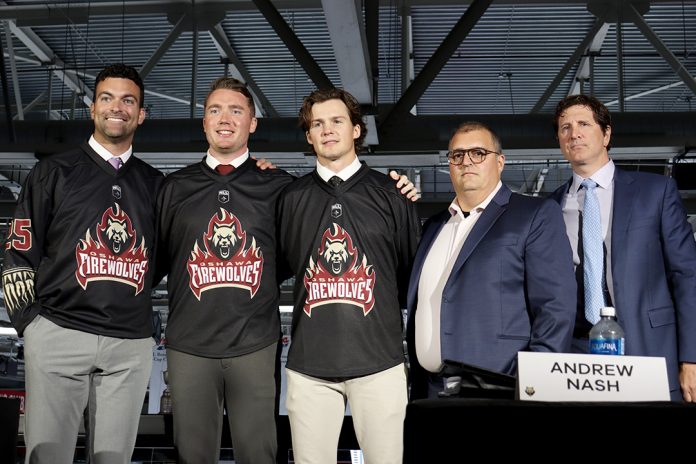
The team will be known as the Oshawa FireWolves. This move signals a deep understanding of their new market. They will retain the name that ownership has linked directly to the region’s Indigenous heritage. This decision connects the team’s identity to the foundational history of the sport in the region. It reinforces the narrative of a homecoming. It shows dedication to fielding a team. It also shows commitment to becoming a genuine and integrated element of the community’s rich lacrosse tapestry.
The Blueprint for Success: Why the Oshawa FireWolves Will Thrive
The relocation of the FireWolves to Oshawa is not a speculative venture. It is a calculated move. This decision is based on a confluence of factors. These factors create an ideal environment for a professional lacrosse franchise to succeed. The team has a championship-caliber roster and elite leadership. They also benefit from a passionate, built-in fanbase and a new rivalry that strengthens the league. All the necessary ingredients are in place.
Built to Win: A Championship-Caliber Roster
Unlike many relocated teams that are in a rebuilding phase, the FireWolves arrive in Oshawa as a legitimate championship contender. The team had a remarkable 2024 season. They reached the NLL Finals, demonstrating that their on-field product is already among the league’s elite.
The roster is one of the youngest in the NLL and is built around a core of exceptional, high-end talent. The team boasts the last two NLL Rookies of the Year. Alex Simmons won the award in 2024. Dyson Williams was the 2025 winner and the first overall pick in the 2023 NLL Draft. Williams’s presence is particularly significant. He is an Oshawa native. He is a product of the local lacrosse system. He is now returning home to play professionally. The roster is filled with players from Ontario. This includes fellow Oshawa natives Zachary Young and Ben MacDonnell. Their presence immediately forges a powerful connection with the local community. It gives fans homegrown heroes to cheer for.
The Right Leadership at the Helm
A winning roster requires elite leadership, and the FireWolves possess one of the most respected figures in the sport. General Manager and Head Coach Glenn Clark is a five-time NLL champion as a player. He is the reigning (2024) NLL General Manager of the Year. He also won the Les Bartley Award for Coach of the Year. Clark has the proven ability to build a winning culture. He develops young talent effectively. This provides the franchise with a level of stability. It also offers the expertise that is crucial for long-term success. He is also from Pickering which is another city in the Durham Region. This is complemented by an ownership group. CEO Oliver Marti leads this group and has publicly and repeatedly emphasized its commitment to community engagement. They honor the deep-rooted lacrosse heritage of the Durham Region. The front office, coaching staff, and ownership share a commitment to the franchise’s core values. This unity creates a cohesive and purposeful organization.
A Passionate, Educated, and Underserved Fanbase
Perhaps the most compelling reason for the FireWolves’ anticipated success is the market they are entering. NLL Commissioner Brett Frood emphasized Oshawa’s importance. He stated, “Oshawa sits within one of the core epicenters of the indoor lacrosse world in Ontario”. Generations of support for the Green Gaels, Warriors, and Brooklin Lacrosse Club have cultivated a large fanbase. This fanbase is passionate and knowledgeable. These are not casual observers; they are sophisticated consumers of the sport who understand its nuances and appreciate high-level play.
For decades, these dedicated fans have faced a significant geographic barrier to watching professional box lacrosse. The NLL’s other Greater Toronto Area franchise, the Toronto Rock, plays its home games in Hamilton. This is a “long commute” that can be prohibitive for many in the Durham Region. The arrival of the FireWolves in Oshawa fills this void. It offers an accessible, top-tier professional product to a large and underserved market. The local excitement is palpable, with one minor lacrosse official describing the team’s arrival as “winning a lacrosse lottery”.
Igniting Regional Rivalries and Market Growth
The FireWolves’ move is not just a win for Oshawa. It is a strategic victory for the entire National Lacrosse League. The team’s presence creates a natural and intense geographic rivalry with the Toronto Rock. This rivalry establishes a “Battle of the 401.” It will generate significant fan interest and media attention. The FireWolves, alongside the Ottawa Black Bears, strengthen the NLL’s presence in Ontario. This area is the heartland of Canadian box lacrosse.
This expansion within the Greater Toronto Area—North America’s fourth-largest metropolitan region—exponentially grows the league’s commercial and broadcast opportunities. A thriving Oshawa franchise strengthens the NLL’s most important Canadian market. It creates a more dynamic and competitive landscape. This benefits the entire league. The move represents a strategic pivot for the NLL. It shifts focus away from speculative ventures in crowded American sports cities. Instead, it embraces a more sustainable model. This model prioritizes markets with a deep, pre-existing cultural connection to the game. The franchise’s journey from Philadelphia to New England to Albany, and finally to Oshawa, reflects a learning process. The logistical and economic struggles in Albany highlighted logistical challenges. Operating where the player base is remote is difficult. The fan culture there is also not deeply ingrained. The choice of Oshawa is a direct investment in a community where the players are local. The passion for lacrosse in this community is an inherited trait. The FireWolves’ success in this environment could become a blueprint for the NLL’s future growth strategy. It shows that the most fertile ground for the professional game is in the heartlands. Here, the Creator’s Game has been played for generations.
Conclusion
The story of the Oshawa FireWolves is more than a simple franchise relocation. It is the convergence of a sacred past and a promising future. Canada’s national summer sport is returning in its highest professional form. This marks its return to a community that has served as its faithful custodian for generations. This narrative threads together several key moments. It starts from the spiritual origins of Tewaarathon on the ancestral lands of the Mississaugas of Scugog Island First Nation. The story continues through the unparalleled championship dynasties of the Green Gaels, Warriors, and Brooklin Lacrosse Club. It culminates in the arrival of a modern NLL powerhouse.
The FireWolves are not just a team in Oshawa; they are a team of the Durham Region. They arrive with a championship-caliber roster. It is laden with local talent. They have a decorated and respected leadership team. They also hold the keys to a modernized, first-class arena. Most importantly, they inherit a legacy of excellence and a community whose passion for lacrosse is unmatched. A winning product, expert management, and a state-of-the-art facility form a comprehensive blueprint. This is enhanced by an authentic connection to the local culture. The arrival of the FireWolves is set to ignite a new golden age for lacrosse in its truest home. This ensures that the sound of the Creator’s Game will echo through the Durham Region for years to come.
The rest of the schedule will be released on Friday, September 19. The Oshawa FireWolves kick off their inaugural season in Oshawa on Friday, November 28. They will play at home against the Toronto Rock. Season tickets are currently on sale and single game tickets will be available in the near future. Visit OshawaFireWolves.com to keep up to date with news as it is announced and to purchase tickets.

 ScortonBoy17.ca
Leave a comment