Introduction: The Paradox of the Inductee
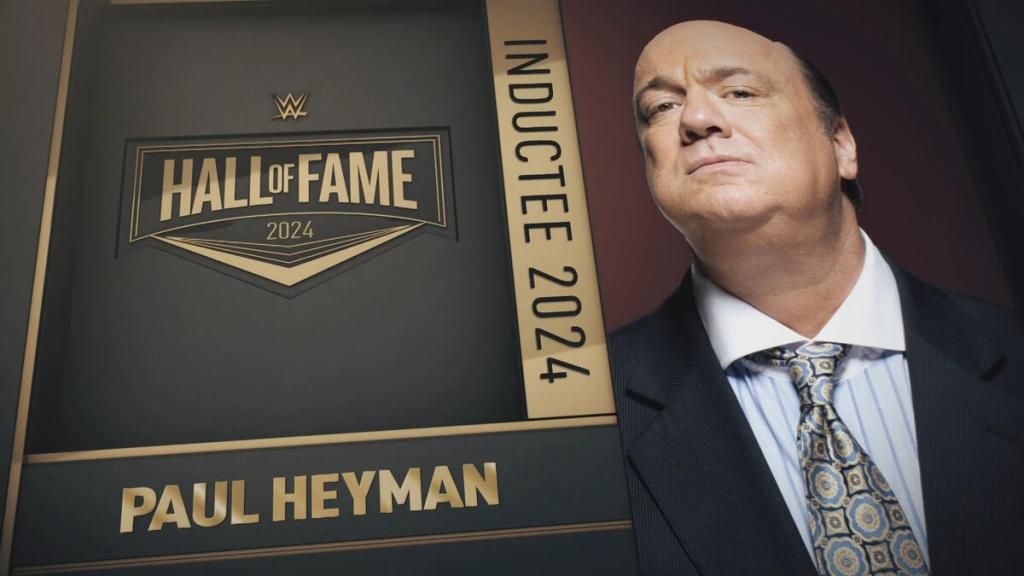
When Paul Heyman was inducted into the WWE Hall of Fame in 2024, the ceremony’s location was paradoxical. It took place in Philadelphia. This city served as the birthplace of his greatest creation, Extreme Championship Wrestling (ECW). It was also where it met its end. For decades, Heyman has existed as the ultimate contradiction in professional wrestling. He is an industry insider with an outsider’s soul. He is also a system-builder who thrives on disruption. He is a revolutionary who became the ultimate consigliere to the establishment. His career is a masterclass in manipulation, innovation, and oration. The journey he embarked on raises a central question. How did the self-described “schmuck son of two extraordinary human beings” talk his way into influence? How did he scheme and create to become the most influential non-wrestler in the industry’s history?
The answer lies within the layers of his persona, a complex tapestry of contradictions. He is the creative visionary. His genius birthed a wrestling revolution. Yet, he was a man who couldn’t balance a checkbook. He left a trail of debt and broken promises in his wake. He is the master of authenticity. He blurred the lines between fiction and reality to build a cult following. Despite this, he is a notorious and admitted liar. He is the ultimate “advocate.” He championed his talent with unparalleled passion. Yet, he often failed to provide them with their most basic due: a paycheck. To grasp Paul Heyman’s essence, one must break down these paradoxes. Follow the trajectory of a career built on hustle and intellect. It also rests on his unwavering belief in the power of narrative.
The Forging of a Disruptor: From the Bronx to Studio 54
The foundational pillars of Paul Heyman’s character were forged in the crucible of his upbringing. They were shaped by the inherited intensity of his mother and the professional template of his father. He learned the hustle of a self-taught New York teenager. This drive was focused on breaking into the guarded world of professional wrestling.
“The Schmuck Son of Two Extraordinary Human Beings”
Heyman’s entire career can be viewed as a performance of the two powerful archetypes his parents represented. His mother, Sulamita Heyman (née Szarf), was a Holocaust survivor. She endured the unimaginable horrors of the Lodz Ghetto, Auschwitz, and Bergen-Belsen. He described her as the “single most intense driven individual” he had ever met. She was a woman who lived her life carrying the memory of the family she lost. This fierce, survivalist intensity fueled Heyman’s own relentless drive. It also created the “us against the world” siege mentality. This mentality later defined ECW’s fight against corporate wrestling giants.
In stark contrast, his father, Richard S. Heyman, was a respected and “ethical honest personal injury attorney” in the Bronx and a World War II veteran. This provided the direct antecedent for Heyman’s most famous on-screen roles as an “advocate” and “special counsel.” These roles were grounded in his articulate, strategic performances. They were based in a familial reality. His mother may have viewed his career choice as a disappointment. However, his father admired his son’s “moxy and drive and hustle.” This admiration gave him the validation to pursue his unconventional dreams. Heyman’s unique toolkit was created by combining two figures. The lawyer’s intellect and verbal dexterity were paired with the survivor’s grit. There was also a willingness to do whatever it takes to win.
The Teenage Hustler
Heyman’s audacious entry into the wrestling business began long before he ever stepped in front of a camera. He showed entrepreneurial instincts from a young age. By age 11, he was running a mail-order sports and celebrity memorabilia business from his home. At 13, his passion for wrestling was ignited by a televised interview with “Superstar” Billy Graham. This led him to start photographing events. He eventually invested in his own photo lab and published a newsletter called The Wrestling Times Magazine.
His defining moment came at age 15. He famously bluffed his way into Madison Square Garden. He secured a press pass by claiming to be a photojournalist for a wrestling publication. This move demonstrated a profound, early understanding. In a closed industry like wrestling, access is more valuable than money. The camera was not just for capturing images. It served as a key to unlock doors. It led him backstage into the inner sanctum of the World Wide Wrestling Federation (WWWF). This access resulted in an iconic photograph of the teenage Heyman with the era’s top heel managers. These managers were “Classy” Freddie Blassie, The Grand Wizard, and “Captain” Lou Albano. Decades later, the photo would prove prophetic. Roman Reigns began calling Heyman “The Wise Man.” This was a direct echo of the “Three Wise Men” who had inadvertently mentored him. This initial hustle for access became a lifelong strategy for accumulating knowledge, relationships, and, ultimately, power.
The Proving Ground of Studio 54
Before he became a wrestling personality, Heyman honed his promotional instincts at the epicenter of 1980s pop culture: Studio 54. He started as a house photographer at 19. His ambition quickly propelled him into roles as an in-house publicist, producer, and promoter at the world’s most famous nightclub. This experience was a crucial step in his development outside of wrestling. It taught him about presentation and marketing. He also learned how to generate buzz beyond the insulated wrestling bubble. He even organized a wrestling-themed event at the club, “Wrestle Party ’85.” When Hulk Hogan canceled a planned appearance, the resourceful Heyman called Jim Crockett Promotions. He arranged for Ric Flair to be flown in on a private jet to accept a made-up award. This ensured the event was still a success.
Paul E. Dangerously: The Architect of Anarchy
Heyman’s ambition was never just to be behind the scenes; he wanted to “write, direct and produce the shows”. He realized, however, that he needed to become a performer himself first. This was necessary to gain the “cache” to give instructions to the talent. This led to the creation of his first major on-screen persona. It was also his first attempt at building a dominant faction of top-tier talent.
Birth of a Persona
The character of “Paul E. Dangerously” was a theatrical extension of Heyman’s own personality. He was a brash, fast-talking New Yorker from Scarsdale. He was armed with a comically oversized 1980s mobile phone that often doubled as a weapon. The name was lifted from the 1984 Michael Keaton comedy Johnny Dangerously. The persona was an instant heat magnet in territories like the American Wrestling Association (AWA). It was especially notable in World Championship Wrestling (WCW). He first formed versions of his “Dangerous Alliance” in the AWA and other territories. He managed talents like Adrian Adonis and the Original Midnight Express to championship success.
The Alliance Forms
The most impactful incarnation of the Dangerous Alliance was formed in WCW between 1991 and 1992. The storyline was born out of conflict, beginning after Heyman was “fired” from his role as a commentator. He vowed to dismantle WCW “brick by brick,” returning as a manager with a vengeance. He proceeded to assemble a supergroup of wrestling’s finest. It was a collection of varied talents. Under his guidance, they became more than the sum of their parts. The group’s collective strength made every individual member seem more important, a strategy he would later perfect.
This early mastery of faction booking demonstrated Heyman’s core philosophy of accentuating positives while hiding negatives. He united a charismatic main-eventer like Rick Rude with a veteran technician like Arn Anderson. Additionally, he included a rising brawler like Steve Austin. In doing so, he created a unit where each member’s strengths shielded the others’ potential weaknesses. The faction itself became the main event, elevating all its members simultaneously. The Alliance dominated WCW. They held multiple championships at once. They also engaged in a legendary feud with “Sting’s Squadron.” This feud culminated in a classic WarGames match at WrestleWar 1992.
| Member | Role in Faction | Notable Accomplishments in Faction |
| Paul E. Dangerously | Leader / Mouthpiece | Assembled and managed one of WCW’s most dominant heel stables. |
| “Ravishing” Rick Rude | Top Star | WCW United States Heavyweight Champion |
| “Stunning” Steve Austin | Rising Star | WCW World Television Champion |
| Arn Anderson | Veteran Enforcer | WCW World Tag Team Champion |
| Bobby Eaton | Tag Team Specialist | WCW World Tag Team Champion |
| Larry Zbyszko | Veteran Strategist | Key member in main event feuds and WarGames match. |
| Madusa | Valet / Enforcer | Provided a strong female presence for the group. |
The Inevitable Clash
Heyman’s tenure in WCW ended acrimoniously. The arrival of new head booker Bill Watts, a staunch traditionalist, created a clash of personalities and philosophies. Heyman was ultimately fired, with the company accusing him of falsifying expense reports. This departure was not just a career setback; it was a formative experience that solidified his anti-establishment identity. The conflict with Watts hardened Heyman’s resolve. He wanted to create a product that was the antithesis of the corporate, creatively stifling environment. He felt that environment had rejected him. This firing was the spark needed to ignite the ECW fire. His next creation might not have been nearly as revolutionary without that rejection.
Extreme Championship Wrestling: The Revolution Will Be Televised
Heyman’s magnum opus, Extreme Championship Wrestling, was a product born of rebellion, creative genius, and financial recklessness. It was a cultural movement that forever changed the landscape of professional wrestling. However, it burned itself out in a spectacular blaze of glory and debt.
The Mad Scientist’s Laboratory
In September 1993, Heyman took over the booking duties for a small promotion in Philadelphia. This was for Eastern Championship Wrestling. He took over from his friend Eddie Gilbert. Gilbert aimed to recreate classic angles from the Memphis territories. In contrast, Heyman wanted to start from a “blank piece of paper” and create something entirely new and different.
The promotion’s defining moment came on August 27, 1994. ECW hosted a tournament to crown a new champion for the historic National Wrestling Alliance (NWA). Heyman, owner Tod Gordon, and wrestler Shane Douglas conspired in secret. After winning the tournament, Douglas took the microphone. He delivered a scathing promo declaring the NWA tradition “dead.” Then, he threw the NWA World Heavyweight Championship to the ground. He then declared himself the champion of a new entity: Extreme Championship Wrestling. It was the ultimate act of disruption, a declaration of war on the wrestling establishment.
Under Heyman’s complete creative control, ECW became a counter-culture phenomenon. He drew inspiration from MTV, grunge music, and hip-hop. He cultivated a gritty, reality-based style. This style stood in stark contrast to the cartoonish presentations of WWE and WCW. The product combined several distinct styles. It featured ultraviolent “hardcore” wrestling with barbed wire, flaming tables, and steel chairs. It also showcased the breathtaking, high-flying lucha libre of Mexican stars like Rey Mysterio Jr. and Psicosis. Additionally, it included the hard-hitting Japanese “strong style”.
The Island of Misfit Toys
Heyman’s greatest talent was identifying performers who had been overlooked by the major promotions. He could reinvent them if they were misused. He built a roster of “misfit toys,” creating homegrown icons and revitalizing stalled careers. When “Stunning” Steve Austin was unceremoniously fired from WCW via FedEx, Heyman brought him to ECW. He gave Austin a microphone, allowing him to vent his real-life frustrations. This helped develop the angry, anti-authoritarian persona that would become “Stone Cold.” Mick Foley, as Cactus Jack, delivered legendary “anti-hardcore” promos that added psychological depth to his character. Taz was transformed from the generic “Tazmaniac” into the “Human Suplex Machine.” He became an MMA-inspired submission specialist. Tazz was presented as a legitimate killer. Heyman gave a platform to future legends like Chris Jericho, Eddie Guerrero, and Dean Malenko. He was the first to introduce American audiences on a national scale to the revolutionary style of Rey Mysterio.
Napster of the Mat
ECW’s influence on the industry far outstripped its financial success. Its edgy, mature themes directly inspired WWE’s “Attitude Era.” These reality-based storylines saved the company in its war against WCW. Heyman himself has called ECW “Napster.” It was the disruptive force that changed how the product was consumed. However, it didn’t reap the primary financial benefits. WCW built its successful cruiserweight division by signing away talent that Heyman had popularized. This talent included Mysterio, Guerrero, and Jericho. The legacy continues today. Heyman argues that the athletic, high-spot-heavy style of modern promotions like AEW is based on classic ECW matches. These matches featured Rob Van Dam and Jerry Lynn. The lasting impact of ECW is not just in its title histories but in its creation of a cultural identity. Heyman didn’t just sell wrestling. He sold rebellion and authenticity to a disenfranchised audience. This created a tribe whose “E-C-W” chant persists decades later.
The Price of Rebellion
Heyman’s obsessive, all-consuming focus on the creative product was his greatest strength. It was also the direct cause of his ultimate failure. On April 4, 2001, ECW’s parent company, HHG Corporation, filed for bankruptcy, citing assets of approximately $1.4 million against debts of nearly $8.9 million. The list of creditors included notable stars. Top stars like Rob Van Dam ($150,000), Tommy Dreamer ($100,000), and Rhino ($50,000) were unpaid.
Stories of Heyman’s financial mismanagement are legendary. He convinced Chris Candido to pay for the company’s travel expenses on his personal credit card. This act ran up a debt of over $170,000. It was never fully repaid and forced Candido to sell his house. Out of loyalty, Tommy Dreamer used his own money to keep the company afloat. He even considered taking out a mortgage on his parents’ house. Later, he discovered that Heyman had been secretly collecting a paycheck from WWE. Heyman’s complete disregard for business realities was a necessary condition for his uncompromising creative vision. He couldn’t have been a creative genius without also being a catastrophic businessman; the two traits were inextricably linked.
The WWE Years: From Adversary to Consigliere
After the collapse of his own empire, Heyman embarked on a tumultuous journey. Ultimately, this journey was triumphant within the very system he once sought to destroy. He adapted and evolved. He attached himself to the most relevant acts of each era. This ensured his survival and cemented his legacy.
The Invasion and the Broadcast Booth
In 2001, Heyman joined WWE, initially as the on-air voice of the invading ECW faction during the “Invasion” storyline. He replaced Jerry “The King” Lawler in the color commentary position on Raw. He sat alongside his former WCW broadcast partner, Jim Ross. Their on-air dynamic was unforgettable. Heyman played the brilliant, antagonizing heel, constantly agitating the beloved Ross. This is remembered as one of the greatest commentary pairings of all time.
The “SmackDown Six” Era
In 2002, Vince McMahon handed Heyman the creative reins of the SmackDown brand. This period is now widely considered a golden age for the show. Given near-total creative freedom, Heyman applied his ECW philosophy with a WWE budget. He transformed SmackDown into a distinct, work-rate-focused product that regularly outshone its flagship counterpart, Raw. He built the show around the “SmackDown Six”—Kurt Angle, Chris Benoit, Eddie Guerrero, Chavo Guerrero, Edge, and Rey Mysterio. These elite in-ring performers delivered incredible match quality. They established a new template for 21st-century wrestling. This era also saw the debut of “The Next Big Thing,” Brock Lesnar. Heyman served as his on-screen manager. They forged a pivotal bond that would define both of their careers for the next two decades.
An Extreme Failure and a Necessary Exile
Heyman’s first WWE run came to an explosive end in 2006. He was put in charge of the company’s revived ECW brand. However, it was a sanitized, watered-down version of his original vision. This led to constant creative clashes with Vince McMahon. The breaking point was the disastrous December to Dismember pay-per-view. The show was so poorly received that it became an industry punchline. McMahon had heavily re-written Heyman’s original plans for the main event. This reportedly frustrated both Heyman and the talent. After a heated backstage meeting, Heyman was sent home, effectively ending his tenure with the company.
During his six-year exile, Heyman proved his promotional acumen extended beyond wrestling. He co-founded the Looking4Larry advertising and marketing agency in New York, which included the successful “Heyman Hustle” digital media platform. The agency landed major clients like EA Sports, NASCAR, and the Hard Rock Hotel. This success showcases his ability to generate buzz in the corporate world.
The Advocate and The Wiseman
Heyman’s 2012 return to WWE marked the beginning of his most celebrated and enduring on-screen run. The return was not his idea, but Brock Lesnar’s. After Lesnar delivered a poorly received promo during his comeback, he made a demand to WWE. He insisted they bring Heyman back to be his mouthpiece. This began Heyman’s evolution. Heyman became the “Advocate” for Lesnar, a silent, intimidating beast and former UFC Heavyweight Champion. He was an articulate, menacing, corporate-style agent. Heyman handled all of Lesnar’s verbal business.
In 2020, he underwent his most significant character transformation. Aligning with Roman Reigns, he shed the “Advocate” title to become the “Wiseman” and “Special Counsel” to the “Tribal Chief”. This role was far more nuanced and complex. He was part consigliere and part manipulator. He was also part terrified subordinate. His character had shifting allegiances and whispered advice. This became the narrative engine for the multi-year Bloodline saga. It is arguably the most successful and critically acclaimed storyline in modern WWE history. Heyman’s longevity is a testament to his chameleon-like ability to reinvent his purpose. He attaches himself to the most relevant act of the era. He also draws relevance and evolves his character based on the needs of his client. This ensures he remains perpetually at the center of the company’s main event storyline.
The Heyman Method: An Autopsy of a Genius
To understand Paul Heyman’s enduring success, we must deconstruct the core components of his method. He has a unique promo style that masterfully blurs the line between reality and performance. Additionally, his booking philosophy is rooted in elegant simplicity.
The Orator: Blurring Fact and Fiction
Heyman’s genius on the microphone lies in his ability to weave real-life facts into his scripted promos. He incorporates emotions and backstage situations. This gives them an unparalleled sense of authenticity and urgency. His most memorable speeches are those where the audience can feel the genuine passion or venom behind the words. In 2001, during the Invasion angle, he delivered a largely unscripted “shoot” promo on Vince McMahon. He aired legitimate grievances about McMahon co-opting his ECW ideas. He also addressed how McMahon strayed from his own father’s wrestling roots, all under the cover of a storyline. At the ECW One Night Stand reunion show in 2005, he delivered a masterpiece. It started with genuine tears of gratitude for the ECW faithful. He then launched into a vitriolic tirade against the WWE superstars in attendance. He famously criticized JBL. He said, “The only reason you were WWE Champion for a year is because Triple H didn’t work Tuesdays.” He knew Triple H did not want to work those days. He is a master of reading the live crowd’s mood. He improvises by turning their reactions into part of the performance.
The Booker: Accentuate the Positives, Hide the Negatives
Heyman’s booking philosophy, honed over decades, is deceptively simple. Identify a performer’s greatest strengths and build everything around them. Carefully protect them from exposing their weaknesses. Brock Lesnar is a man of few words but immense physical presence. The strategy was to have Heyman handle all the talking. Lesnar stood by looking menacing. He was an unstoppable force of nature who needed no words. For ECW talents who were not skilled talkers, like Sabu or 911, he used angles to highlight their in-ring action. He also emphasized their physical intimidation.
He believes in simple, powerful, long-term storytelling. As he once explained, booking can be straightforward. It involves taking one wrestler who always wins by submission. Then, pit them against another wrestler who has never submitted. This creates an instantly understandable and compelling conflict that sells itself. His true product has never been just wrestling; it has always been narrative. He understands that fans connect with compelling stories and authentic characters far more than with athletic maneuvers alone. His greatest successes include the cultural rebellion of ECW. They also include the prestige-TV drama of The Bloodline. These are triumphs of long-form, character-driven storytelling.
Conclusion: The Last Wise Man
Paul Heyman’s legacy in professional wrestling is a complicated, contradictory, and undeniable one. He is the creative visionary whose mind repeatedly revolutionized the industry. However, his business failings left a trail of financial wreckage. He is a cavalier and a maverick. He will be remembered as one of the few true paradigm-shifters in the sport’s history. He stands alongside figures like Vince McMahon and Eric Bischoff.
His career can be defined by three distinct, industry-altering moments. First, the ECW counter-culture revolution of the 1990s had a profound impact. It injected a dose of reality, violence, and diverse wrestling styles into the mainstream. This revolution directly inspired the Attitude Era. Second, the work-rate-focused “SmackDown Six” era of the early 2000s proved that in-ring excellence could be a commercial draw. It set the template for the next generation of wrestling. And third, The Bloodline’s prestige-TV-style narrative marked a turning point. This multi-year family drama redefined long-term storytelling in modern WWE. It led to a new boom in viewership.
Ultimately, Paul Heyman is “The Last Wise Man.” This is a fitting title that serves as a nod to his on-screen character. It is also a tribute to the “Three Wise Men.” He learned from them as a teenager with a camera at Madison Square Garden. Additionally, it is a recognition of his status as a singular figure. He connects the old territory system with the modern sports entertainment landscape. He is a master manipulator and storyteller. His influence is permanently woven into the very fabric of professional wrestling.

 ScortonBoy17.ca
Leave a comment