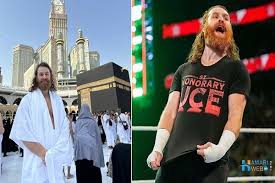
Rami Sebei stands as one of the most compelling and layered performers in the annals of modern professional wrestling. His career is a masterclass in the art of connection. It spans two decades. It is defined by an unparalleled ability to forge a profound, almost tangible bond with audiences worldwide. The core of his enduring legacy is not a collection of championships. Instead, it is his unique talent for emotional transference. He honed this skill across multiple distinct personas and within some of the most iconic storylines of his generation. This report will trace his remarkable journey. It starts from the masked enigma known as El Generico who conquered the global independent circuit. It leads to the celebrated WWE superstar Sami Zayn, a man who became the unlikely heart of a wrestling dynasty. We will explore his key narrative threads: identity, rivalry, and representation. We will chronicle the career of a performer who has consistently proven this. The most powerful force in the squared circle is a story told with undeniable heart.
Part I: The Legend of the Generic Luchador
The foundation of Rami Sebei’s career was built behind a mask. He crafted a persona that was both a loving tribute to wrestling tradition. It was also a clever subversion of it. The character of El Generico was not merely a gimmick. It was a laboratory where Sebei perfected a universal language of physical storytelling. He created a legend in bingo halls and armories around the globe. This happened long before the bright lights of WWE came calling.
From Montreal, by way of Tijuana: The Birth of a Persona
Rami Sebei was born in Laval, Quebec. His parents were Syrian migrants who relocated from Homs in the 1970s. He began his professional wrestling journey on March 1, 2002. He started his career in the Quebec-based FLQ promotion under the ring name Stevie McFly. However, he quickly transitioned to the persona that would define the first decade of his career: El Generico. Billed as “The Generic Luchador” from Tijuana, Mexico, this character was a masterstroke of performance art. A French-Canadian of Syrian descent took on the character of a “generic” Mexican wrestler. This immediately introduced themes of identity. It also brought themes of authenticity and cultural pastiche. These themes would become hallmarks of Sebei’s work.
With his signature mask, spirited “Olé!” catchphrase, El Generico had a happy-go-lucky demeanor that drew energy from the crowd. He became a sensation in his hometown promotion, Montreal’s International Wrestling Syndicate (IWS). It was here that he first honed his craft. He established himself as a premier local talent. He captured the IWS World Heavyweight Championship on two occasions and proved his main event potential early on. The character was deceptively complex. Underneath the cheerful exterior, a “killer instinct” would emerge when he was pushed to his limits. This duality would later become the template for Sami Zayn’s most successful and emotionally resonant character arcs.
The King of the Independents: A Global Conquest
While he was a star in Canada, El Generico’s legend was truly forged on the international independent circuit. His breakout success in the United States came in Pro Wrestling Guerrilla (PWG), a vibrant and influential Southern California promotion. He became a beloved figure at PWG. He was also a foundational figure from 2004 to 2013. His tenure in PWG was nothing short of historic. He was a two-time PWG World Champion and, more remarkably, a five-time PWG World Tag Team Champion with four different partners: Human Tornado (as “2 Skinny Black Guys”), Quicksilver (as “Cape Fear”), Paul London (as “¡Peligro Abejas!”), and his most famous partner, Kevin Steen. This record highlighted his in-ring excellence. It also demonstrated his incredible versatility. He was able to create chemistry with a wide range of performers.
His dominance in PWG was confirmed by a unique accomplishment. This remains unmatched: he is the only wrestler to have won both of the promotion’s prestigious annual tournaments. In 2010, he and Paul London won the Dynamite Duumvirate Tag Team Title Tournament. In 2011, he triumphed in the grueling, star-studded Battle of Los Angeles singles tournament. He defeated his friend and rival Kevin Steen in the final.
His acclaim was not limited to North America. Sebei wrestled in over 30 countries, becoming a true globetrotting veteran. He captured major championships abroad. These included the wXw Unified World Wrestling Championship in Germany’s Westside Xtreme Wrestling (wXw). He also won the KO-D Openweight Championship in Japan’s DDT Pro-Wrestling. In 2012, he was also named the promotion’s “Best Foreigner.” This extensive international experience gave him a wealth of stylistic knowledge. He gained a deep understanding of how to connect with diverse audiences. These skills would prove invaluable later in his career. The mask forced him to master the art of conveying complex emotions—joy, pain, fury, despair—through body language alone. This non-verbal foundation was perfected over a decade. It made his eventual transition to the highly verbal environment of WWE all the more impactful. His physical expressiveness appeared incredibly rich and detailed by comparison.
Table 1: Rami Sebei – Major Independent & International Championships (as El Generico)
| Promotion | Championship | Number of Reigns |
| Pro Wrestling Guerrilla (PWG) | PWG World Championship | 2 |
| PWG World Tag Team Championship | 5 | |
| Ring of Honor (ROH) | ROH World Tag Team Championship | 1 |
| ROH World Television Championship | 1 | |
| Westside Xtreme Wrestling (wXw) | wXw Unified World Wrestling Championship | 1 |
| DDT Pro-Wrestling | KO-D Openweight Championship | 1 |
| DDT Extreme Championship | 1 | |
| International Wrestling Syndicate (IWS) | IWS World Heavyweight Championship | 2 |
| Chikara | Rey de Voladores | 1 (2011) |
Blood Feud: The Steenerico Saga in Ring of Honor (ROH)
His accomplishments on the independent circuit are numerous. However, none is more significant than his partnership with Kevin Steen (the future Kevin Owens). Their subsequent blood feud in Ring of Honor (ROH) is equally foundational. The story of “Steenerico” is the foundational text for their entire careers. The narrative is so powerful that its echoes resonate in their work to this day.
They debuted as a team in ROH in 2007, an unlikely pairing of the villainous, abrasive Steen and the pure-hearted, babyface Generico. Despite their contrasting personalities, their chemistry was undeniable, and they captured the ROH World Tag Team Championship in 2008. However, their partnership imploded in spectacular fashion at the Final Battle pay-per-view in December 2009. After a frustrating loss, Steen turned on his partner, delivering a low blow and a sickening chair shot to the head of a stunned El Generico, kicking off a year-long story of betrayal and revenge that was named 2010’s “Feud of the Year” by the Wrestling Observer Newsletter.
The feud was a masterclass in long-term psychological storytelling. Steen, aided by the devious veteran Steve Corino, relentlessly tormented his former friend, who initially became reclusive and unable to bring himself to fight back. It was only after Steen’s repeated assaults on Generico’s new ally, Colt Cabana, that Generico’s “killer instinct” was finally awakened. The feud escalated through a series of violent, emotional matches, including a brutal Double Chain match and a moment at Glory By Honor IX where Steen committed the ultimate violation, unmasking Generico and leaving him to flee in shame.
This all led to a climactic confrontation at Final Battle 2010. The match was an unsanctioned “Fight Without Honor,” with the highest possible stakes: Generico’s mask versus Steen’s ROH career. The bout was a bloody, chaotic, and emotionally draining war that served as the perfect culmination of their year-long hatred. In the final moments, Steen, beaten and desperate, held up Generico’s previously stolen mask, begging for mercy. Generico, now wearing an all-black mask symbolizing his descent into a darker place, hesitated for a moment before dropping the old mask and braining Steen with a chair—a direct and cathartic act of vengeance for the original sin a year prior. Generico won, forcing Steen from the company and providing a definitive end to one of the most personal and well-told stories in independent wrestling history. Though they would have one final, brutal “Ladder War” at Final Battle 2012 before Generico left for WWE, the 2010 feud established the core psychological dynamic—Steen’s jealous, pragmatic brutality versus Generico’s heartfelt, wounded idealism—that would define their relationship for the next decade and beyond. Every betrayal, every reunion, every match on the grand stage of WWE would be a direct echo of this original, epic conflict.
Part II: The Soul of a New Machine: Forging an Identity in NXT
Rami Sebei’s arrival in WWE in 2013 marked a pivotal turning point in his career. It was also a significant moment in the history of the company’s developmental system. He had to let go of the persona that had made him a global icon. He needed to build a new identity from scratch. As Sami Zayn, he became the heart and soul of NXT during its “golden era.” He also served as a standard-bearer. This proved that his unique ability to connect with an audience was not dependent on a mask.
The Unmasking of an Underdog
Upon signing with WWE, Sebei was faced with the monumental task of evolving beyond El Generico. The company made the strategic decision for him to wrestle without a mask. This move would allow his natural charisma to become central to his performance, as well as his expressive face. He wrestled briefly at live events under his real name, Rami Sebei. He then made his televised debut as Sami Zayn on the May 22, 2013 (good date), episode of NXT.
In the wrestling world, a playful piece of lore was crafted. It was designed to bridge the gap between the two characters. Sebei himself has gleefully maintained this fiction in interviews. The “official” story is that El Generico is a completely separate person. He retired from wrestling to run an orphanage in Mexico. Sami Zayn is simply a great admirer who carries on his legacy. This inside joke allows fans to honor the history of El Generico. It also gives the Sami Zayn character the space to grow on his own terms.
From his very first appearance, the Sami Zayn persona was clearly defined. He was “The Underdog from the Underground,” a plucky, resilient, and instantly likable hero. His high-energy style and never-say-die attitude made him an immediate crowd favorite. In his debut segment, he interrupted the multilingual Cesaro. He showed off his own fluency in English, French, and Arabic. This was a subtle nod to his real-life intelligence and the world-traveled experience he brought with him. This new character was not created from whole cloth. It was a distillation of Sebei’s most authentic qualities. These qualities are now presented to the world without a filter.
The Road to rEvolution: A Champion’s Quest
Sami Zayn’s journey to the NXT Championship became the defining narrative of the brand’s early years on the WWE Network. For over a year, he was the emotional core of NXT. He was a wrestler of immense talent and heart. However, he repeatedly fell short in his biggest matches. His series of bouts against Cesaro were critically acclaimed classics that showcased his incredible in-ring ability. His primary storyline revolved around his pursuit of the NXT Championship. For much of that time, Adrian Neville (PAC), who was pragmatic and high-flying, held the title. The central conflict was about Zayn’s earnest, “nice guy” approach. Could this lead him to the ultimate prize? Did he lack the necessary ruthlessness to win when it mattered most?
This long and arduous quest reached its emotional zenith at NXT TakeOver: R Evolution on December 11, 2014. In a title vs. career match, Zayn put everything on the line and finally defeated Neville to become the NXT Champion. The celebration that followed was a moment of pure catharsis. The entire NXT roster and a jubilant crowd celebrated with the man. He had come to embody the spirit of the brand.
That joy, however, was tragically short-lived. In an unforgettable NXT moment, Kevin Owens made his own debut earlier in the night. He is Zayn’s real-life best friend of over a decade. After Zayn’s victory, Owens came to the ring to embrace his friend in celebration. However, he viciously turned on him. He delivered a brutal powerbomb onto the ring apron. The eternal feud of Steen and Generico was reignited on a global stage. The attack marked the beginning of the end for Zayn’s triumphant reign. He held the title for just 62 days. Owens defeated him at NXT TakeOver: Rival. The referee stopped the match because of the punishment Owens was inflicting. This storyline showed that the authentic, real-life history between the two performers could be used. It created incredibly powerful and emotionally resonant television.
The “Underdog from the Underground” moniker is fitting for his plucky babyface character. However, it carries a deeper potential meaning. This adds a fascinating layer to his entire WWE career. The name is a likely allusion to Fyodor Dostoevsky’s classic 1864 novella, Notes from Underground. The protagonist of the novel is the “Underground Man.” He is a hyper-conscious, alienated, and resentful individual. He believes himself to be more intelligent than those around him. However, he is crippled by his own self-loathing. He is unable to act within society’s norms. This literary figure serves as a striking parallel to Zayn’s later heel personas. The earnest “Underdog” is the idealist trying to succeed within the system. When that fails, he retreats “underground.” He then re-emerges as the bitter, cynical critic, like “The Great Liberator.” This critic despises the very system and audience he once sought to please. This suggests a remarkable, perhaps even deliberate, intellectual depth to the long-term arc of his character.
A Perfect Swan Song: Zayn vs. Nakamura
Zayn remained a beloved fixture in NXT after his feud with Owens. However, it was clear his time on the brand was drawing to a close. His final match served as a perfect, poignant farewell. At NXT TakeOver: Dallas on April 1, 2016, during WrestleMania weekend, Zayn welcomed one of the world’s most acclaimed wrestlers. Shinsuke Nakamura made his WWE debut.
The match was not built on a long-term feud. It was based on the simple premise of two master craftsmen testing their skills on a grand stage. This match was considered Zayn’s swan song. It served as his final defense of the brand he had helped build. The match was against its next major international star. What followed was twenty minutes of wrestling perfection. The bout received universal critical acclaim for its raw emotion, brutal physicality, and flawless in-ring psychology. The Dallas crowd was electric, creating an unforgettable atmosphere. The match is famously credited with originating the “Fight Forever!” chant. It was a spontaneous eruption from an audience. They were so captivated by the art on display that they never wanted it to end.
Critics were effusive in their praise. Some rated the match as perfect or even breaking the scale entirely. They called it one of the greatest matches in NXT history. It was deemed superior to anything on the WrestleMania card that weekend. It was a star-making performance for Nakamura, but it was also a final, definitive statement from Zayn. As the established soul of NXT, he passed the torch. He elevated his opponent and the brand one last time. Then, he departed for the main roster. This match, and his entire NXT run, demonstrated that the powerful connection he forged with audiences was no fluke. By shedding the mask, he learned to speak from the heart. Guided by legends like Dusty Rhodes, he channeled his authentic passion into his performance. This created the emotional core that defined NXT’s golden era. It set a new standard for storytelling in WWE.
Part III: The Critic, The Liberator, and The Honorary Uce
Sami Zayn’s journey on WWE’s main roster has been a complex, winding road of reinvention. It is a story of immense talent navigating the unpredictable currents of corporate creative. This narrative is marked by periods of frustration and brilliant character transformations. Ultimately, it became a history-making run that captivated the entire industry. His main roster character arcs are a fascinating reflection of his perceived career trajectory. Each persona seems to be born from the ashes of the last. This transformation creates an unparalleled level of emotional investment from an audience that has followed every step of his struggle.
Purgatory and the Heel Turn: A Necessary Evil
Zayn arrived on the main roster with significant momentum from his celebrated NXT run. He made a surprise debut on Monday Night Raw in his hometown of Montreal to answer John Cena’s U.S. Title Open Challenge, a testament to the high regard in which he was held. However, he suffered a legitimate shoulder injury during his entrance, sidelining him for months and unfortunately stalling his initial push.
He returned full-time. He was positioned as the “Underdog from the Underground,” the same pure-hearted babyface that had won over the NXT faithful. He participated in numerous high-profile matches and feuds. His in-ring work received praise for its quality and emotional depth. Yet, a frustrating pattern emerged: Zayn was often booked to lose his most important rivalries. He was clearly a fan favorite. However, the character’s inability to win the big one led to a sense of stagnation.
This creative direction led to a crucial development. It resulted in a shocking heel turn at the Hell in a Cell event in October 2017. During a brutal match between his eternal rival Kevin Owens and the on-screen commissioner Shane McMahon, Zayn intervened. He pulled a beaten Owens away from danger as McMahon leaped from the top of the massive steel cell. Zayn’s action saved his nemesis and allowed Owens to win the match. In a passionate promo on the following SmackDown, Zayn explained his stunning decision. He declared that years of being a rule-following good guy had led him to nowhere. Trying to do things the “right way” resulted in mediocrity. It was a fundamental shift in his character. This shift was born directly from the narrative of his career. He had become disillusioned and bitter after realizing his idealism was not being rewarded.
The Great Liberator: Art Imitating Life
His reunion with Kevin Owens was followed by another reinvention. After a period away due to injury, Zayn returned with a new persona: “The Great Liberator”. As a heel manager, he became an obnoxious, fast-talking, conspiratorial critic of the audience and the WWE system itself. He aligned himself with other supremely talented wrestlers he claimed were being underutilized. Wrestlers like Shinsuke Nakamura and Cesaro were included. He promised to “liberate” them from the creative shackles of the company.
This gimmick was a brilliant piece of meta-commentary. The character’s grievances reflected the real-world feelings of many fans and critics. They believed that Zayn, a world-class performer, was being misused on the main roster. As “The Great Liberator,” he was abrasive and strident. He acted as a motormouth. His logic was just reasonable enough to be infuriating. This persona carried him through the challenging “pandemic era” of WWE. During this time, he captured the Intercontinental Championship on three separate occasions. The character was a critical success. It showcased his exceptional microphone skills. However, it also solidified his role as a mid-card antagonist rather than a main event headliner.
Feeling Ucey: The Bloodline Masterpiece
In 2022, Sami Zayn stumbled into a storyline that would redefine his career. It also became one of the most celebrated and compelling narratives in modern wrestling history. His integration into “The Bloodline,” the dominant faction led by Undisputed WWE Universal Champion Roman Reigns, was a masterclass. It showcased long-term, character-driven storytelling. This approach earned universal acclaim and multiple “Feud of the Year” awards.
The story began in April 2022. Zayn, still a delusional and paranoid heel, attempted to ingratiate himself with Reigns’ group for his own protection. He also sought to regain credibility. Initially, he was treated as a joke, an outsider trying to force his way into a tight-knit family. The interaction was fueled by palpable tension with a deeply suspicious Jey Uso. He resented Zayn’s presence. Meanwhile, Jimmy Uso and a bemused Roman Reigns were more welcoming. Zayn used his sheer comedic timing and unwavering loyalty. He was willing to be the group’s court jester. He slowly began to win them over. He was officially christened the “Honorary Uce” on September 23, 2022, when Reigns gifted him his own custom T-shirt.
The storyline’s success was rooted in its foundation of authentic, pre-existing relationships. It utilized the two-decade history between Zayn and Kevin Owens. Kevin repeatedly warned his friend that The Bloodline was just using him. The story also capitalized on the real-life family dynamic of the Anoa’i clan. Zayn’s performance was a tour de force. He seamlessly blended the physical comedy of El Generico with the earnest heart of his NXT persona. He also incorporated the motormouth intensity of his heel characters into one complete, captivating whole.
The emotional climax of his induction came at Survivor Series: WarGames in November 2022. In the final moments of the match, Zayn showed his loyalty by betraying Kevin Owens. He delivered a low blow to secure the victory for The Bloodline. Jey Uso was finally convinced. The image of him embracing Zayn in the center of the ring was an iconic moment. It was an emotional payoff months in the making.
This peak of acceptance, however, was the beginning of the end. At the Royal Rumble in January 2023, after Reigns defeated Owens, the champion demanded that Zayn finish the job and brutalize his friend with a steel chair. Pushed to his breaking point by Reigns’ abuse, Zayn made his choice. In a moment that sent the live crowd into a frenzy, he turned and struck Roman Reigns with the chair instead. The betrayal marked his definitive babyface turn and his violent expulsion from the family he had fought so hard to join.
In the aftermath, Zayn heroically challenged Reigns for the championship. Despite his efforts, he was unsuccessful in an incredibly emotional match. This took place in his hometown of Montreal at Elimination Chamber 2023. He then reconciled with Kevin Owens. Together, they challenged The Usos for the Undisputed WWE Tag Team Championships. This happened in the main event of WrestleMania 39 – Night 1. Their victory marked a historic conclusion to the storyline. It was deeply satisfying because it was a triumph of friendship and heart. This overcame a toxic dynasty, and it was the moment Zayn finally reached the pinnacle of the industry.
Table 2: The Bloodline Saga – A Narrative Timeline of the Honorary Uce
| Date/Event | Key Narrative Beat | Character/Relationship Impact |
| Apr. 22, 2022 (SmackDown) | Zayn first approaches The Bloodline for an alliance. | Establishes Zayn’s sycophantic goal of gaining credibility and protection. |
| May 27, 2022 (SmackDown) | Jimmy Uso dubs Zayn the “Honorary Uce.” | Creates the central internal conflict of the story, as Jey Uso’s distrust deepens. |
| Sep. 23, 2022 (SmackDown) | Roman Reigns gifts Zayn an “Honorary Uce” T-shirt. | Official indoctrination into the family, further isolating a suspicious Jey. |
| Nov. 26, 2022 (Survivor Series) | Zayn betrays Kevin Owens to secure victory in WarGames. | Solidifies his loyalty to The Bloodline and finally earns the trust and embrace of Jey Uso. |
| Jan. 28, 2023 (Royal Rumble) | Zayn refuses to attack Owens and hits Reigns with a chair. | The point of no return. Zayn is cast out, completing his turn into the top babyface. |
| Feb. 18, 2023 (Elimination Chamber) | Zayn challenges Reigns for the title in Montreal. | A heroic but heartbreaking defeat solidifies his status as the people’s champion. |
| Apr. 1, 2023 (WrestleMania 39) | Zayn & Owens defeat The Usos for the Tag Team Titles. | The cathartic culmination of the story; friendship triumphs over the toxic family dynasty. |
Part IV: The Man, The Mission, The Message
The wrestling ring may be filled with scripted drama, but the story of Rami Sebei goes beyond that. It is a tale of profound personal conviction. It also holds cultural significance. His work as a humanitarian is crucial to understanding the man behind the character. Also essential is his role as a trailblazer for Arab and Muslim representation. These roles are not mere footnotes to his career. They are the source of his unique connection with a global audience. The sincerity he demonstrates in his real-life advocacy is palpable. This same authentic passion makes his on-screen performances believable and beloved.
Sami for Syria: A Champion for a Cause
Rami Sebei is the son of Syrian immigrants who left Homs for Canada in the 1970s. This deep personal connection to his heritage fueled one of his most significant real-world endeavors. In July 2017, he launched the “Sami for Syria” campaign. This initiative was a partnership with the Syrian American Medical Society (SAMS), which is a non-political, non-religious humanitarian organization.
The campaign’s primary goal was to raise funds to launch and operate a mobile medical clinic in northwest Syria. The clinic was designed to provide essential services to displaced civilians. It particularly aimed to help the elderly, disabled, women, and children living in camps with no other access to healthcare. The services offered are comprehensive. They include primary medical care for preventable and chronic diseases. Psychosocial services and mental healthcare are provided by a psychiatrist. There is also the support of a midwife for maternal health.
The initiative was an immediate success. The initial fundraising goals were quickly met, and the mobile clinic became operational within weeks of the campaign’s launch. To date, the campaign has raised over $200,000. The clinic provides an average of 1,200 to 1,800 medical services per month. These services are provided free of charge to those in desperate need. Sebei has called the launch of the clinic “the proudest day of my life.” He uses his platform to provide tangible, life-saving aid to the people of his ancestral homeland. This work reveals a man. His on-screen character’s fight for respect and justice mirrors his real-world commitment to humanitarianism.
A New Representation: Changing the Narrative
For decades, Arab and Muslim characters in professional wrestling were seen through a negative lens. Western media also depicted them as one-dimensional villains. The Iron Sheik’s anti-American tirades exemplified these characters. Muhammad Hassan’s controversial terrorist gimmick in the post-9/11 era further fueled this portrayal. They often served as jingoistic foils for American heroes.
Rami Sebei has been instrumental in changing this narrative. From the moment he joined WWE, he was determined to avoid these harmful tropes. He aimed to provide a positive, authentic representation of his culture. He has spoken openly about his desire to “reestablish how Arabs were perceived.” He stated that he never saw himself in the cartoonish villains of his youth. He wanted to “just be me” in the hopes it would strike a chord with young people from all backgrounds.
He has done this not by making his heritage a central gimmick. Instead, he has made it a normalized, celebrated part of a complex and relatable character. He proudly wears gear adorned with Arabic calligraphy. He has delivered promos in Arabic to thunderous ovations on WWE programming around the world. He has shared his experience as a Muslim. This includes making a pilgrimage to Mecca in 2023. In doing so, he has performed a quiet but radical act of representation. He has shifted the paradigm from “the Arab wrestler” to “the wrestler who is Arab.” This nuance is critical. By presenting himself as a multifaceted human being, he has normalized an identity. He just happens to be a Syrian-Canadian Muslim. This identity was previously reserved for caricature.
His impact is undeniable. He is widely recognized as the most accomplished Arab and Muslim wrestler of all time. He was the first Muslim to main event WrestleMania. He acknowledges this legacy with pride and humility. His success and positive portrayal have paved the way for other performers of Middle Eastern descent. These performers are now presented as heroes, fundamentally changing the landscape of representation in the industry for the better. The audience’s deep connection to him is not just because he is a great performer. They sense they are cheering for a man of genuine integrity. This makes his on-screen triumphs more joyous. It also makes his struggles more heartbreaking.
Part V: The Art of Performance
Rami Sebei’s status as an elite-level talent is built on more than just charisma and storytelling. It is founded on a masterful command of the craft of professional wrestling. His greatest talent is his ability to achieve a total synthesis. He merges his character’s emotional state with his in-ring action and verbal performance. Unlike many performers who have a static set of moves, Sebei’s entire presentation evolves to serve the narrative. This evolution makes him less of a wrestler. He is more of a true performance artist whose medium is the squared circle.
The Vanishing Moveset: Wrestling as Character
A deep analysis of Sebei’s in-ring work reveals a performer who uses his moveset as a storytelling device. As a babyface, particularly during his NXT run, his style is explosive and dynamic. It is designed to elicit a powerful crowd reaction. He used a dazzling array of high-flying and high-impact maneuvers. These include the Topé con Giro. It’s a diving flip over the top rope. He also performs a springboard tornado DDT. Additionally, he executes a spectacular moonsault off the ringside barricade. These moves are fundamentally about connecting with the audience, feeding off their energy to perform something breathtaking.
Critically, after his 2017 heel turn, many of these fan-favorite moves vanished from his arsenal. This was not due to injury or physical limitation, but a deliberate character choice. A heel who has become a bitter critic no longer cares about the fans. There is no narrative reason for such a character to perform moves powered by the fans’ adulation. By subtracting these elements from his performance, he communicated his character’s emotional shift in a subtle yet profound way.
Even his more grounded signature moves are imbued with emotional weight. The Blue Thunder Bomb, a spinning sit-out powerbomb, is consistently presented as a potential match-ender. He executes it with an urgency that makes every subsequent near-fall feel dramatic and consequential. Furthermore, he has an amazing ability to absorb tremendous amounts of punishment. Persevering through sheer force of will is a core tenet of his babyface identity. He makes audiences believe he is perpetually on the brink of defeat. This makes his comebacks all the more thrilling. His victories become all the more cathartic. This mastery of selling and pacing sets him apart as one of the best in-ring storytellers of his generation.
Finding His Voice: The Evolution of a Promo
Sebei’s evolution on the microphone is as remarkable as his in-ring work. During the first decade of his career as the masked El Generico, he did not speak much. He relied heavily on physical comedy and body language. Upon joining NXT, he was forced to develop his verbal skills from almost nothing. Under the tutelage of the legendary Dusty Rhodes, he learned to speak from the heart. He developed an earnest, passionate, and authentic promo style. This style felt unscripted and deeply real. His breathless, emotional speech after winning the NXT Championship is a prime example of this newfound ability to connect verbally.
As his character evolved, so did his promo style. As a heel, he transformed into an “abrasive, strident motormouth.” He used his intelligence and quick wit to talk down to the audience and his opponents. This made him one of the most effectively annoying antagonists in the company. Wrestling veterans like Mark Henry have praised him. They regard him as one of the best and most believable promo artists in the business.
His work during the Bloodline saga represents the pinnacle of his verbal performance, showcasing his incredible range. He could generate uproarious laughter with his comedic timing. He could draw deep sympathy with his vulnerability. He could ignite a crowd with fiery passion, often all within the same segment. The effectiveness of his promos stems from a consistent emotional core: vulnerability. Whether he is a babyface expressing a heartfelt desire for respect, his characters are always driven by a deep-seated insecurity. If he is a heel airing paranoid grievances about a system, he feels the system is against him. In this case, he believes his characters need validation. This need for validation is desperate. This constant, relatable struggle is the secret ingredient. It makes his words resonate so powerfully with the audience. By extension, it enhances his entire performance.
Conclusion: The Enduring Legacy of the People’s Champion
The multifaceted career of Rami Sebei is a testament to the enduring power of emotional storytelling in professional wrestling. His legacy will not be defined by any single championship reign. It will not be defined by a list of five-star matches. Instead, it will be defined by his consistent, two-decade-long mastery of forging an authentic connection with the audience. He started in the independent halls of California as a masked luchador. He ascended to the main event of WrestleMania as a beloved hero. He has repeatedly proven something crucial in wrestling. The most potent force in the spectacle of wrestling is a story. It is a story told with unwavering heart.
As a performer, Sebei is a generational talent. His ability to synthesize character, in-ring action, and verbal delivery into a seamless, compelling whole is virtually unmatched. He elevated every storyline he was a part of. His foundational blood feud with Kevin Owens provided the emotional bedrock for a decade of narrative. His role as the “Honorary Uce” transformed an already great story into an all-time classic. He is a craftsman who understands every movement is an opportunity to tell a story. Every word matters. Every moment of silence can elicit an emotional response.
As a man, he is a quiet trailblazer and a dedicated humanitarian. He refuses to be typecast. Instead, he presents a nuanced, positive portrayal of a modern Arab-Muslim man. He has fundamentally shifted the paradigm of representation in his industry. Through his “Sami for Syria” campaign, he has used his global platform to provide tangible, life-saving aid. This demonstrates his profound commitment to his principles. His commitment extends far beyond the ring. This palpable integrity fuels the authenticity of his characters. It creates the unbreakable bond he shares with his fans. Rami Sebei’s career is the ultimate validation of the underdog. He personifies the idea. In a world of giants and spectacle, the most enduring thing is the genuine heart of a true people’s champion.

 ScortonBoy17.ca
Leave a comment