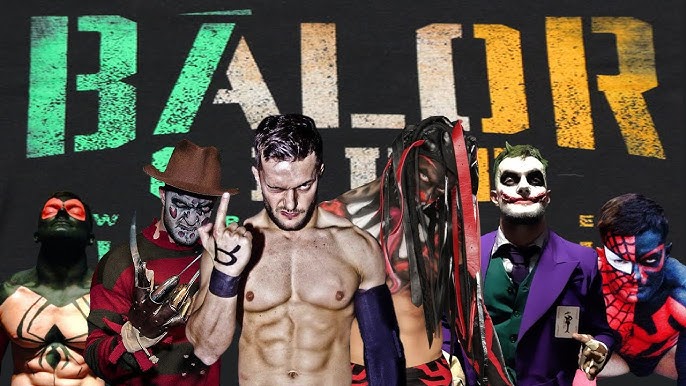
Fergal Devitt stands as one of the most pivotal yet paradoxical figures in 21st-century professional wrestling. He is a man of dualities. He is the beloved fan favorite and the villainous revolutionary. He was the foundational champion of a celebrated era in NXT. He also became the cursed, history-making champion on the main roster. He is both the quiet innovator and the charismatic leader. His career cannot be measured simply by championships won. His influence goes far beyond titles. He shaped the very business of modern wrestling through the global movements he started. He fostered talent and pushed creative boundaries. This document thoroughly explores his journey. It argues that his legacy is of an architect who built the wrestling world of today, brick by brick.
The Fields of Bray: Forging a Wrestler in Ireland
Fergal Devitt’s career began in the coastal town of Bray, County Wicklow, Ireland. It was not laid in the sprawling arenas of America or Japan. He was born on July 25, 1981, to Leonie and Fintan Devitt. He was an accomplished athlete long before he ever stepped into a ring. He played both association football and Gaelic football. This athletic background provided a formidable base for the physical demands of wrestling, a passion he discovered at a young age while watching WWF and
World of Sport with his grandfather. He grew up admiring a diverse set of performers, including the technical prowess of The British Bulldogs and Mr. Perfect, and the showmanship of Shawn Michaels.
A career in professional wrestling was not seen as a viable path in Ireland. However, Devitt had a singular focus. He concentrated on his dream. He pursued it with singular dedication. After finishing school at 18, he traveled to Kent, England. He went there to train at the NWA UK Hammerlock wrestling school. He trained under the tutelage of Andre Baker and Johnny Moss. However, it was his actions upon returning to Ireland that offered the first glimpse of the leader he would become. In mid-2002, Devitt did something highly unusual for a young wrestler. Alongside Paul Tracey, he established his own promotion, NWA Ireland. This school later evolved into Fight Factory Pro Wrestling (FFPW). It became a sister group of NWA UK Hammerlock. It served as a crucial training ground for a new generation of Irish talent. As a trainer, Devitt directly shaped the careers of future WWE superstars. Notably, these include Becky Lynch and a young Jordan Devlin. Devlin would later follow him to WWE as JD McDonagh.
This early decision to co-found a wrestling school reveals a critical element of Devitt’s character. This aspect has remained a constant throughout his career. Most young performers focus exclusively on honing their own craft. They concentrate on getting booked. However, Devitt carried the immense responsibility of building an entire ecosystem for the sport in his home country. This entrepreneurial and mentorship role was not an isolated event but the first iteration of a recurring pattern. It created a blueprint. Later, he would assemble a group of friends to form the revolutionary Bullet Club. He eventually took the reins of The Judgment Day. On a global stage, he mentored his former student McDonagh. His formative years in Ireland were vital. They were more than just biographical background. These years were the initial draft of the builder and leader he was destined to become.
The Prince’s Ascent: Becoming an Ace in the Land of the Rising Sun
In 2006, Fergal Devitt made a career-defining move to Japan, signing with New Japan Pro-Wrestling (NJPW). What was initially planned as a three-month training excursion evolved into a transformative eight-year journey. He fully immersed himself in the culture. He described himself as a “proverbial sponge, willing to soak up the culture and all the different techniques”. Critically, he was invited to train in the notoriously disciplined NJPW dojo system. He was a “young boy,” and the first non-Japanese (gaijin) wrestler to do so in two decades. This grueling process involved a famously ruthless training and hazing regimen. He lived in the dojo, cut off from many modern comforts. He learned the Japanese style of wrestling from the ground up. By embracing this path, he earned a level of respect from NJPW management and fans rarely afforded to foreign wrestlers.
In NJPW, he was given the ring name “Prince Devitt.” This name came from the practical reality. Japanese management and announcers found his birth name, Fergal, difficult to pronounce. As a clean-cut babyface, he became one of the most popular foreign stars in the company. He formed the highly successful tag team Apollo 55 with Ryusuke Taguchi. The duo was celebrated for their high-flying style. They were known for their fast-paced action. Together, they captured the IWGP Junior Heavyweight Tag Team Championship on four separate occasions. Individually, Prince Devitt ascended to become the undisputed ace of the junior heavyweight division. He won the IWGP Junior Heavyweight Championship three times. He also claimed victory in the prestigious Best of the Super Juniors tournament in both 2010 and 2013.
Devitt’s long and successful run as a beloved babyface was more than just a chapter in his career. It was a strategic investment, even if perhaps unintentional. He was willing to endure the hardships of the dojo system. His years of performing as a respectful, hardworking fan favorite created a deep and genuine bond with the Japanese audience. He was not seen as a temporary visitor but as an adopted son of New Japan. The impact of his eventual heel turn was profound. It was tied directly to the formation of Bullet Club. This impact was directly proportional to the perceived depth of this betrayal. When he turned his back on his long-time partner Ryusuke Taguchi, it was not merely a character changing his alignment. He showed flagrant disrespect to the company’s top star, Hiroshi Tanahashi. For the audience, it was a deeply personal and cultural betrayal. The “outrageous amount of heat” he generated was a testament to this narrative power. The fans were not just booing a generic villain. They were reacting with genuine shock and anger. They were reacting to one of their own renouncing everything they, and he, had seemingly valued. It was a masterful story made possible only by the years he had spent painstakingly building their trust.
Too Sweet: The Bullet Club Revolution
The genesis of one of modern wrestling’s most influential factions began with a loss. After Prince Devitt was defeated in a high-profile, non-title match against IWGP Heavyweight Champion Hiroshi Tanahashi, a change began. Devitt felt frustrated by the perceived glass ceiling for junior heavyweights. He also resented the barriers for foreign talent. As a result, he began to display a more cocky and villainous persona. This culminated at the Invasion Attack event in April 2013. He viciously turned on his Apollo 55 partner, Ryusuke Taguchi, after a loss. He declared himself the “Real Rock ‘n’ Rolla”.
On May 3, 2013, at Wrestling Dontaku, the revolution was formalized. The group was conceived by Devitt. It was built around the real-life camaraderie of its four founding members. Devitt was the leader. The imposing Bad Luck Fale served as his “Underboss” and enforcer. Karl Anderson was his second-in-command, and Tama Tonga was also a founding member. Devitt came up with the name “Bullet Club,” a reference to his “Real Shooter” nickname and Anderson’s “Machine Gun” moniker. The stable’s ethos represented an all-gaijin force. They were determined to take over NJPW. They aimed to shatter its traditions of respect and honor.
The group’s impact was immediate and seismic. The group achieved notoriety through constant interference. They also engaged in cheating. This behavior generated intense backlash from the Japanese audience, who were accustomed to Devitt’s babyface persona. The group saluted the New World Order (nWo) by adopting the “Too Sweet” hand gesture. This quickly became a globally recognized symbol of rebellion. The faction’s merchandise, particularly the iconic “Bone Soldier” T-shirt, became a phenomenon. This shirt crashed NJPW’s online store upon release. It proved that a non-WWE act could create a powerful, independently marketable brand. This success was instrumental in opening the eyes of Western fans to NJPW. It is often cited as a key factor in laying the cultural and financial groundwork. This foundation eventually led to forming All Elite Wrestling (AEW). The group’s initial success was built on the authentic chemistry of its founders.
| Member | Kayfabe Role | Real-Life Connection / Background |
| Prince Devitt | Founder & Leader (“The Real Rock ‘n’ Rolla”) | NJPW Dojo graduate; conceived the group’s name and ethos. |
| Bad Luck Fale | Bouncer & Enforcer (“The Underboss”) | Fellow NJPW Dojo graduate; hand-picked by Devitt as his heavy. |
| Karl Anderson | Second-in-Command (“The Machine Gun”) | Trained with Devitt at the NJPW LA Dojo; established tag team specialist. |
| Tama Tonga | Original Member (“The Bad Boy”) | Son of wrestling legend Haku; fellow “Dojo Boy” and friend of the group. |
A New Mythology: The Birth of Bálor and The Demon
In July 2014, Devitt signed with WWE. He reported to its developmental brand, NXT. This marked the beginning of a significant transformation. His name was changed to Finn Bálor, a masterstroke of branding that immediately imbued his character with a rich backstory. The name was deliberately chosen. It was drawn from two towering figures of Irish mythology. One is Fionn mac Cumhaill, a heroic warrior. The other is Balor of the Evil Eye, the formidable king of the demonic Fomhóraigh. This gave his new persona a narrative depth that “Prince Devitt” would have lacked in the WWE landscape.
Bálor quickly became the cornerstone of what is widely considered NXT’s “golden era.” He was the brand’s top star during a period of unprecedented critical acclaim and popularity. He won the NXT Championship from Kevin Owens in a celebrated match in Japan. He held it for a then-record 292 days. It was in NXT that his NJPW tradition of using elaborate body paint was brilliantly re-contextualized. What was once the aesthetic of an arrogant heel was changed. It became the ultimate weapon of a heroic babyface: “The Demon”. This persona was shown as a supernatural alter-ego. It was an undefeated force. Bálor would “tap into” it for his most significant battles. The Demon amazed audiences with its mesmerizing entrances. Its protected booking made it one of the most captivating and marketable acts in all of WWE.
The creation of The Demon was a triumph of WWE’s branding machine. However, it also created a creative paradox that would haunt Bálor’s main roster career. WWE changed the body paint’s meaning from a character affectation in NJPW. It became a supernatural power-up in WWE. With this change, the company created a character that was almost too powerful. This immediately presented a logical conundrum. Fans and analysts frequently pointed it out. If The Demon is an unbeatable final form, why would Bálor not summon it for every important match? Why would he ever risk a critical loss as his “regular” self? This narrative inconsistency diminished the stakes of his non-Demon matches. It placed immense pressure on every Demon appearance to be a monumental spectacle. When The Demon finally suffered a loss on the main roster, it significantly damaged the character’s mystique. Thus, the act of brilliant rebranding in NXT transformed him into a phenomenon. However, it also created the narrative trap that made his main roster character feel inconsistent. At times, it even seemed illogical.
The 24-Hour Champion: A Main Roster Coronation and Curse
When Finn Bálor was called up to WWE’s main roster in the July 2016 brand split, his ascent was meteoric. He was positioned as an immediate main-event star. On his first night on Raw, he defeated Roman Reigns. This victory earned him a shot at the newly created WWE Universal Championship. At SummerSlam, wrestling as The Demon, he defeated Seth Rollins to become the inaugural champion. The victory was historic in many ways. Bálor was the first wrestler in WWE history to win a world title in their pay-per-view debut. He also set a record by winning a world title faster than anyone in company history. He achieved this remarkable feat just 27 days after his main roster debut.
However, the coronation was immediately followed by a catastrophe. During the championship match, Rollins powerbombed Bálor into the ringside barricade, causing a severe shoulder injury, later diagnosed as a torn labrum that would require surgery. In a stunning display of toughness, Bálor popped his own dislocated shoulder back into its socket and managed to finish the match, winning the title as planned. The triumph was painfully short-lived. The very next night on Raw, a visibly emotional Bálor was forced to relinquish the Universal Championship, just 24 hours after his historic win, facing a recovery period of over six months.
This injury was more than just a physical setback. It was a catastrophic blow to his momentum. His main roster babyface character arguably never recovered from it. It created a “what if” narrative that would hang over his career for years. WWE had clearly signaled its intent by making him the first-ever Universal Champion, a massive investment in his future. The injury brought that push to an immediate and screeching halt. When he returned, the creative landscape had shifted, and his spot at the very top of the card was gone. In the years that followed, reports circulated about WWE Chairman Vince McMahon’s opinion. He felt Bálor was not “over” enough. This led to the cancellation of a planned high-profile feud with Brock Lesnar. This indicates a loss of faith from the highest level of management. Likely, this stemmed from his smaller stature and new concerns about his durability. Bálor himself later admitted to feeling creatively stagnant. He said he was at the “lowest” point of his career in the years that followed the injury. The injury was not a singular event. It created a ripple effect of lost creative direction. He also experienced a personal malaise that took years to overcome. A significant character reinvention was eventually necessary.
The Long Road Back: In Search of a Kingdom
Following his return from the devastating shoulder injury, Finn Bálor struggled to find consistent creative direction on the main roster. He was often relegated to the mid-card, lacking the clear trajectory he had upon his debut. He tried to recapture his past glory by forming “The Bálor Club.” This was a reunion with his former Bullet Club stablemates Luke Gallows and Karl Anderson. However, the faction was presented as a lukewarm mid-card act. It was not the dominant, rebellious force they had been in Japan. Ultimately, it failed to revitalize his career. During this period of creative purgatory, Bálor candidly admitted he felt deeply uninvested. He stated he was essentially just “showing up.” He even asked, “who do you want me to lose to today?”.
A lifeline arrived in October 2019. Bálor made a shocking return to NXT. NXT had recently begun airing live on the USA Network. He immediately turned heel, attacking fan-favorite Johnny Gargano and declaring, “The Prince is back.” This run was a resounding critical success. He shed the perpetually smiling babyface persona that had defined his main roster run. Bálor embraced the dangerous, confident, and no-nonsense heel character. This was reminiscent of his “Prince Devitt” days in NJPW. This reinvention culminated in him winning his second NXT Championship, cementing his status as a top star once again.
Bálor’s second NXT tenure was overwhelmingly successful. It served as definitive proof of his most compelling and authentic character. This character is the arrogant, technically superior heel—”The Prince.” His main roster run post-injury showed creative inconsistency. He admitted his own lack of investment in the “smiling Finn” character. This demonstrated that it was a creative dead end. The return to NXT was a tacit acknowledgment from both him and the company of this fact. It was a strategic retreat. This retreat allowed for a complete character reset. It enabled him to reconnect with the persona that had made him a global star in Japan. This was not a demotion. It was a rediscovery of his artistic core. This change proved that the foundation of his appeal was not the body paint or a heroic smile. Instead, it was the believable menace and undeniable credibility of The Prince.
All Rise for The Judgment Day
Finn Bálor’s main roster chapter became truly successful and sustained beginning in June 2022. This happened when he joined the gothic faction known as The Judgment Day. He immediately established his intentions. He led a coup that expelled the group’s founder and leader, Edge. This happened on the very night he joined. Under Bálor’s influence, the stable’s identity underwent a dramatic transformation. Edge’s creation changed from having a dark, brooding theme. It transformed into a swaggering, arrogant, and “cool” collective. The new vibe was more reminiscent of Bullet Club than a supernatural cult. Alongside Rhea Ripley, Damian Priest, and Dominik Mysterio, the group became a dominant, title-holding force on Monday Night Raw.
However, echoing his past, tension began to brew within the ranks. Friction grew between Bálor and Damian Priest. This happened especially after Priest won the 2023 Men’s Money in the Bank contract. This created conflict during Bálor’s own pursuits of the World Heavyweight Championship. This long-simmering storyline came to a head at SummerSlam 2024. It culminated in a dramatic, full-circle betrayal. Bálor intentionally cost Priest his World Heavyweight Championship match against Gunther. The following night on Raw, Bálor officially seized control and formed a “New Judgment Day.” He became the undisputed leader. He was flanked by loyalists Dominik Mysterio, JD McDonagh, Carlito, and Liv Morgan. They formally expelled Priest and Ripley from their ranks.
| Date | Event | Key Development | New/Departing Members |
| April 2022 | WrestleMania 38 | Faction Founded | Leader: Edge, Member: Damian Priest |
| May 2022 | WrestleMania Backlash | Rhea Ripley Joins | + Rhea Ripley |
| June 2022 | Raw | Finn Bálor Joins & Betrays Edge | + Finn Bálor, – Edge |
| Sept 2022 | Clash at the Castle | Dominik Mysterio Joins | + Dominik Mysterio |
| Nov 2023 | Raw | JD McDonagh Joins | + JD McDonagh |
| Aug 2024 | SummerSlam / Raw | Bálor & Dominik Betray Priest & Ripley | + Liv Morgan, + Carlito, – Damian Priest, – Rhea Ripley |
The Judgment Day storyline is not just Bálor’s latest angle; it is the thematic culmination of his entire career. It is a direct and deliberate echo of the actions that first made him a megastar in Japan. In 2013, he betrayed his partner, Ryusuke Taguchi, to forge Bullet Club in his own image. Over a decade later, he betrayed his partner, Priest, to remake The Judgment Day. The new iteration of the faction is built around his allies. These include his real-life former student JD McDonagh and loyalists like Dominik Mysterio. This mirrors how Bullet Club was founded on his real-life friendships. His promo on Priest was cold. He referenced past slights and declared it was time to “man up.” This showcased the same cunning, manipulative character work that defined his run as the “Real Rock ‘n’ Rolla”. This narrative represents the final chapter. It marks the successful integration of his most potent character—The Prince—into his WWE main roster identity. His career has come full circle. At last, it resolves the creative inconsistency that had followed him for nearly a decade.
The Architect’s Legacy: More Than a Champion
To measure Fergal Devitt’s career by his WWE main roster championship reigns is to miss the point entirely. His ultimate legacy is not that of a perennial champion. Instead, it is that of an architect whose designs have shaped the very foundation of the modern wrestling landscape.
His most significant and undeniable contribution remains the creation of Bullet Club. The faction’s explosive popularity revitalized NJPW’s global presence. It created a revolutionary new model for non-WWE merchandise and branding. It also served as a launchpad. The careers of AJ Styles, Kenny Omega, The Young Bucks, and Jay White were propelled to unprecedented heights. The relationships forged within Bullet Club were crucial. The momentum generated was key to the eventual formation of All Elite Wrestling. This forever altered the structure of the industry.
Beyond that singular achievement, Devitt has been a foundational pillar in multiple wrestling scenes. He played a crucial role in building the modern Irish independent scene with his wrestling school. This is where he trained its first major international female star, Becky Lynch. He was the undisputed face and standard-bearer of NXT during its most celebrated “golden era.” He lent the brand main-event credibility. He helped to establish it as a legitimate third brand for WWE. He has been a vocal advocate for LGBTQ+ inclusion. He uses his platform to champion a “Bálor Club for Everyone.” This ensures that fans feel actively included.
His career is a fascinating paradox. He is arguably one of the most influential wrestlers of the past 15 years. Yet, his own main roster WWE journey is often defined by a “what if” narrative. It was forever altered by an ill-timed injury and years of creative inconsistency. He is a known fan of LEGOs. This is a fitting hobby for a man who has spent his career building things. He built a wrestling scene in Ireland. He also established a revolutionary faction in Japan. In NXT, he started a new era. On Raw, he created a dominant stable.
Ultimately, Fergal Devitt’s importance to wrestling is not as a king, but as a kingmaker. He has held major world titles. However, his most lasting contributions are the movements he started. They include the stars he mentored and the paradigm shifts he initiated. The “tree” of his influence is vast. NWA Ireland gave rise to Becky Lynch and JD McDonagh. Bullet Club led to The Elite and AEW. NXT’s golden age was built on his shoulders. His impact is felt more profoundly in the success of others. It is also evident in the health of the industry at large. This is more notable than in his own list of accolades. He is the quiet architect of the modern wrestling world.

 ScortonBoy17.ca
Leave a comment