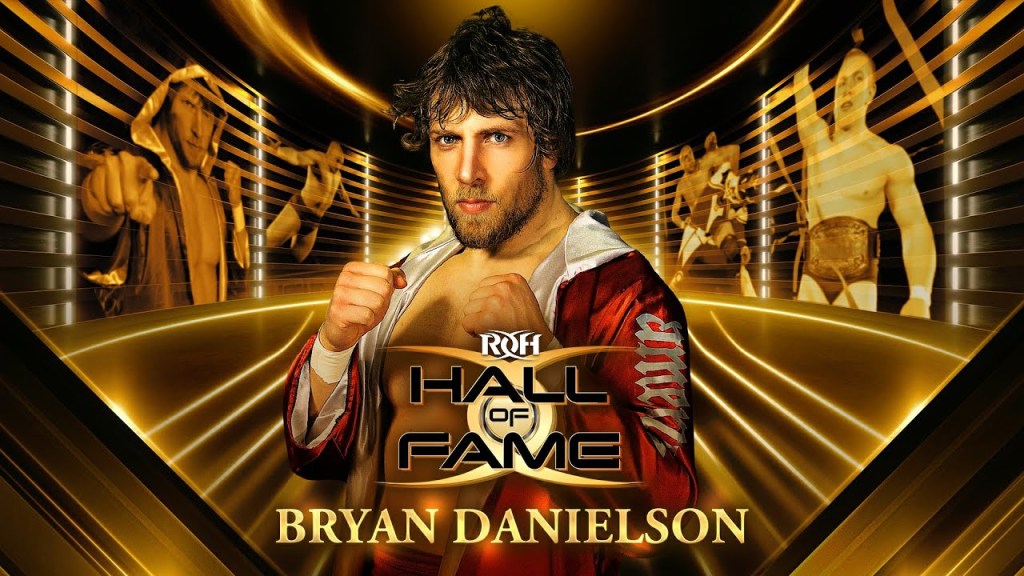
In the pantheon of professional wrestling, few figures stand as tall, paradoxically, as the 5-foot-10 man from Aberdeen, Washington. Bryan Danielson is not just a decorated champion. He is also a celebrated performer. More than that, he is a paradigm shift in a padded turnbuckle. His career is a sprawling, decades-long narrative. It interrogates the very soul of the industry. The career pits the purity of athletic competition against the spectacle of “sports entertainment.” He is revered as one of the greatest technical wrestlers in history. His journey shows a deep connection with his audience. He pursues artistic integrity relentlessly. Fans have fueled his improbable rise to heights many never imagined were possible, including himself. He is the unlikely king. He is the reluctant superstar. He forced an empire to listen. He is the artist who, time and again, has redefined what it means to be the best in the world. This is the story of how a quiet loner from a logging town became a generational icon.
Section 1: The American Dragon’s Genesis
The genesis of one of wrestling’s most ferocious competitors is rooted in an almost contradictory quietude. Bryan Danielson’s story begins with his journey from a shy, unassuming boy to a technically violent artist. This transformation was forged in the wrestling rings of Texas, Memphis, and Japan. However, it was born in the humble Pacific Northwest.
Humble Beginnings in a Logging Town
Bryan Lloyd Danielson was born on May 22, 1981.Would have been better if it was 1987 but I digress. He was born in the logging town of Aberdeen, Washington. The son of a lumberjack, Donald, and a therapist, Darlene, his early life was marked by modesty and upheaval. His parents divorced over his father’s struggles with alcoholism, though they remained on good terms. To help his mother make ends meet, a young Danielson delivered newspapers. His older sister helped, and they later worked at McDonald’s. By his own account, he was a shy, reserved, and even antisocial child and teenager. This personality trait stands in stark contrast to the commanding, charismatic performer he would become.
Despite his introverted nature, he was athletically active. He competed in football and basketball at Aberdeen-Weatherwax High School. It was the same school Nirvana’s Kurt Cobain had attended a decade earlier. But it was a professional wrestling magazine, shown to him by a friend, that ignited a lifelong passion. During his sophomore year, at just 16 years old, Danielson made a resolute decision. He decided to pursue a career in the squared circle. It was the first step on a path that seemed, by all conventional measures, entirely improbable.
Forged in Texas, Mentored by a Lord
Immediately after graduating high school in 1999, Danielson acted on his ambition. An attempt to train at Dean Malenko’s school in Florida fell through when it closed. Following a friend’s suggestion, he drove straight to San Antonio, Texas. He enrolled in the Texas Wrestling Academy (TWA). The academy was run by former WWE Champion Shawn Michaels and veteran wrestler Rudy Gonzalez. This marked his official entry into the world he had always dreamed of. He trained in a class that included future WWE performers Lance Cade, Brian Kendrick, & Paul London.
Within a year, his raw talent was undeniable. In 2000, he signed a developmental contract with the World Wrestling Federation (WWF). He was then assigned to their territory in Memphis, Memphis Championship Wrestling (MCW). It was here that Danielson encountered the single most important influence on his in-ring philosophy: British wrestling master William Regal. Danielson has consistently credited Regal as being instrumental in his development, and the mentorship went far beyond learning holds. He absorbed Regal’s gritty, submission-based, physically demanding style, a philosophy grounded in realism and technical aggression. This tutelage became the cornerstone of his career. He carried this ethos for decades. Eventually, he paid homage to his mentor by wearing maroon gear. Years later, he co-founded a stable in Regal’s image.
The Mask and the Man: The Caterpillar Stage
In MCW, Danielson adopted the moniker that would define his pre-WWE identity: “The American Dragon”. The name was likely inspired by Japanese legends like Tatsumi “The Dragon” Fujinami. The accompanying mask—a red, white, and blue design with spiky spines—resembled the style of the masked innovator Ultimo Dragon. But the mask was more than just a gimmick; it was a psychological necessity. For the shy kid from Aberdeen, the mask was a “cocoon.” It served as a “caterpillar stage,” a shield. This shield allowed him to explore and project the confidence and ferocity required of a top-tier wrestler. Behind the mask, the quiet Bryan Danielson could fully become the technically aggressive American Dragon. It bridged the gap between his introverted personality and his violent in-ring ambitions.
He found early success, winning tag team titles in both TWA and MCW with his partner Spanky (Brian Kendrick). He also toured Japan for Frontier Martial-Arts Wrestling (FMW), gaining valuable international experience. Yet, his first stint with the global wrestling leader was short-lived. Danielson was considered a key figure for a planned cruiserweight division. However, the WWF severed ties with MCW in 2001. After just 18 months, Danielson was released from his contract in July of that year. This early failure, this rejection from the mainstream, could have been the end. Instead, it was the catalyst that set him on the path to becoming a legend on his own terms. Freed from the developmental system, the American Dragon was out of his cocoon and ready to fly.
Section 2: The Founding Father of Honor
Released from the WWF system, Bryan Danielson didn’t fade into obscurity. Instead, he became an architect. The American independent wrestling scene in the early 2000s was a crucible of talent. At its epicenter was a new promotion. This promotion was built on principles Danielson embodied: in-ring action, athletic credibility, and a profound respect for the sport. He didn’t just join Ring of Honor; he helped build it from the ground up.
Building a New Independent Scene
In 2002, Danielson became one of the “Founding Fathers” of Ring of Honor (ROH). This promotion would become his home and his platform for the next seven years. His importance was cemented from the very first show, “The Era of Honor Begins” on February 23, 2002. He competed in the main event against two other pillars of the independent scene: Low Ki and Christopher Daniels. This match was a statement of intent, signaling that ROH would prioritize pure wrestling ability above all else.
In ROH, Danielson was the antithesis of the WWE superstar archetype. He was undersized at 5-foot-8 and 190 pounds. He himself acknowledged this fact. It made him an unlikely candidate for wrestling stardom. His value was not in catchphrases or cartoonish gimmicks, but in his unparalleled ability between the ropes. He became a stalwart of the promotion. He defined an alternative to the mainstream product. He cultivated a fiercely loyal fanbase that appreciated the craft of wrestling. This audience often labeled “smarks” for their deep knowledge of the business. They saw Danielson as their champion. He was a “wrestler’s wrestler” in a world of sports entertainers. This identity was forged in the gritty, intimate venues of ROH. It would become the bedrock of his credibility. This identity would be the seed of the rebellion he would one day lead in WWE.
The Reign of the Dragon
Danielson had years of classic matches and memorable rivalries with Homicide and Austin Aries. He faced an epic 80-minute bout with Aries. His journey culminated in him capturing the ROH World Championship in September 2005. He defeated James Gibson, who was formerly known as Jamie Noble in WWE. This victory marked the beginning of one of the most iconic and critically acclaimed title reigns in the promotion’s history.
For 15 months, Danielson was the undisputed “Best in the World.” He defended the championship 38 times against a stunning lineup of talent from around the globe. This included Pro Wrestling Noah’s KENTA and Naomichi Marufuji. Independent legends like Samoa Joe, Chris Hero, and Colt Cabana were also part of this lineup. He established himself as an “iron man.” He frequently wrestled in grueling matches that stretched to the 60-minute time limit and beyond. His feud with Nigel McGuinness is remembered as one of the greatest rivalries in company history. It was a brutal series of technical masterpieces. Danielson unified the ROH World Championship with the ROH Pure Championship in August 2006.
Even severe injuries couldn’t stop him. In 2006, he suffered a separated shoulder but returned to defend his title against KENTA in a legendary encounter. His reign finally ended at the hands of Homicide at Final Battle 2006. For the remainder of his ROH tenure, he helped establish the next generation of stars. He worked with talents like Takeshi Morishima. He then signed with WWE again in 2009. His farewell tour culminated in a final match against his great rival, Nigel McGuinness. This match closed the first major chapter of his career. He left behind a legacy as the heart and soul of a revolution.
Section 3: A World of Experience: Japan and Beyond
Ring of Honor was his home promotion. However, Bryan Danielson’s evolution into the world’s most complete wrestler took place across the Pacific. His extensive work in Japan was not merely a way to fill his schedule. It was his finishing school. There, he absorbed different philosophies of wrestling. He added the final, crucial layers to his already formidable arsenal.
The Land of the Rising Sun
After his 2001 release from the WWF, Danielson began touring Japan regularly. He competed for the country’s most prestigious promotions, including New Japan Pro-Wrestling (NJPW) and Pro Wrestling Noah. Wrestling under his “American Dragon” persona, he sometimes donned the dragon mask. He immersed himself in the junior heavyweight divisions. These divisions were renowned for their fast pace and incredible athleticism.
His time in Japan was a resounding success. In NJPW, he won the IWGP Junior Heavyweight Tag Team Championship alongside Curry Man (Christopher Daniels) in March 2004. Through ROH’s partnership with Pro Wrestling Noah, he captured the GHC Junior Heavyweight Championship in 2008. These accolades proved his adaptability. However, the true value of his Japanese excursions was in the evolution of his style.
Danielson’s foundation was the methodical, submission-based European/American technical style he had perfected under William Regal. In Japan, he was forced to integrate the hard-hitting, physical “strong style” and the high-flying innovation of the junior heavyweights. He competed against masters of the craft like KENTA, Yoshinobu Kanemaru, and Katsuhiko Nakajima. He added blistering strikes and vicious kicks. A new level of explosive offense emerged in his repertoire. This fusion created the unique hybrid style that would later make him so versatile and compelling. He became a wrestler who could mat-grapple with technical wizards. He could go strike-for-strike with the world’s toughest brawlers. He chained together submissions with breathtaking speed. The experience made him a complete package, a performer with an answer for any style of opponent. His love for wrestling in Japan has endured throughout his career. This passion led to high-profile returns decades later. He participated in dream matches against modern legends like Kazuchika Okada. He also faced Zack Sabre Jr. It is a testament to the profound impact the country had on him as an artist.
Section 4: The Reluctant Superstar: The Daniel Bryan Experiment
In August 2009, Bryan Danielson signed with WWE for a second time. This followed a decade of honing his craft across the globe. He became the most respected wrestler on the independent circuit. This time, however, he was not an unknown prospect. He was a cult hero with a built-in fanbase. His arrival in the mainstream spotlight was less a straightforward debut. Instead, it was a fascinating, and often turbulent, social experiment. The company immediately framed him not by his real name. They presented him as “Daniel Bryan.” The company put its own creative philosophy on trial with him as the central subject.
The Rookie and The Miz
Daniel Bryan debuted on WWE television during the inaugural episode of NXT in February 2010. It was a competition-based reality show. In this show, “rookies” were paired with WWE “pros”. WWE made a move that felt like a deliberate metanarrative. They assigned The Miz to mentor Bryan. The Miz was the embodiment of their “superstar” ideal. He was a charismatic talker who had come from reality TV. Bryan was the embodiment of the independent “wrestler” ideal. The on-screen conflict was a direct reflection of the backstage debate about what makes a star.
From the outset, the storyline was clear. Bryan was an elite in-ring talent. However, he lacked the “personality” and “charisma” to be a true WWE Superstar. The Miz constantly berated him for being boring. He criticized him for not being “awesome.” Miz also said Bryan failed to grasp the tenets of sports entertainment. In doing so, WWE was essentially telegraphing its own skepticism to the audience. However, the plan backfired. The knowledgeable fanbase, well aware of Bryan’s legendary ROH run, saw the irony and immediately sided with him. In his introductory video package, Bryan stated his ultimate goal. He wanted to “headline WrestleMania.” It was a bold proclamation for a so-called rookie. His very first match was against then-World Heavyweight Champion Chris Jericho. This was a competitive bout. It showcased his immense skill and made him look like anything but a novice. Bryan lost every match on the show. Despite this, he became the “unequivocal star” of the first season of NXT. The audience was trained to root for him against the company’s own narrative.
Fired for Violence
After being eliminated from NXT, Bryan and his fellow rookies, now known as The Nexus, made a shocking debut on Monday Night RAW on June 7, 2010. The group was instructed to cause chaos, and they proceeded to dismantle the ring and brutally attack John Cena, the commentators, and ringside personnel. In the heat of the moment, Bryan grabbed ring announcer Justin Roberts by his necktie and choked him.
This act seemed to align with the mayhem of the angle. However, it was deemed too aggressive for WWE’s new PG-rated programming. Sponsors reportedly pressured WWE. There was lingering sensitivity around wrestler conduct after the Chris Benoit tragedy. Therefore, the act of overt choking was a line that could not be crossed. Just days later, Bryan was fired.
What could have been a career-ending blunder turned into an accidental masterstroke of character development. The storyline was that The Nexus were rebels trying to destroy WWE. WWE fired Bryan for being “too brutal” in this invasion. This action inadvertently validated his character’s authenticity. No script could have achieved this validation. He wasn’t just playing an outsider; he was an outsider who broke the company’s real-life rules. This gave him an unparalleled level of anti-authority credibility. He returned to the independent circuit for a brief, triumphant tour. He capitalized on his newfound notoriety. He even sold neckties at his merchandise table. The fan support was overwhelming, and WWE took notice. Just three months later, he returned at SummerSlam. It was a shocking and triumphant comeback. He was no longer a rookie but a martyred hero. The fans were ready to champion him.
Section 5: The Unlikely Duo: The Comedic Brilliance of Team Hell No
After his return, Daniel Bryan steadily climbed the WWE ladder. He won the United States Championship. He also won the Money in the Bank briefcase, which he cashed in to become World Heavyweight Champion. However, his character was still largely defined by his in-ring intensity and an arrogant heel persona. An unlikely, court-ordered partnership in 2012 had a significant impact. It shattered the “no personality” narrative. This allowed his full charisma to connect with the mainstream audience.
From Anger Management to Champions
Following a storyline where he was left at the altar by AJ Lee, who then became the General Manager of Raw, Bryan’s character spiraled into an angry, bitter pessimist, defined by his incessant shouting of “No!”. His path collided with that of Kane, “The Devil’s Favorite Demon,” and after a series of brawls, AJ Lee sentenced them both to attend anger management classes together.
What followed was one of the most entertaining and beloved comedic arcs in modern WWE history. The “odd couple” pairing of the volatile, 7-foot monster and the perpetually infuriated technical master was television gold. Their therapy sessions with Dr. Shelby became must-see segments, highlighting their dysfunctional but hilarious chemistry. The storyline culminated in a fan vote. The audience chose for them to “Hug It Out” in the middle of the ring. This moment solidified their status as a fan-favorite act.
This was more than just about telling jokes. It was character-based comedy that felt authentic. It showcased a side of Bryan that many WWE fans had never seen. His impeccable comedic timing and his quirky, relatable frustrations humanized him. The duo, eventually named “Team Hell No” by the fans, inadvertently became the number one contenders. They went on to win the WWE Tag Team Championship. Bryan’s subsequent insistence on declaring, “I am the tag team champions!” became an iconic catchphrase, cementing his comedic genius. The run with Kane allowed the entire WWE Universe to see the charming and three-dimensional man behind the wrestler. It was not just the hardcore fans who witnessed it. This was the gateway. It was the final, essential ingredient needed for the audience to fully embrace him as their top guy.
Section 6: The Yes! Movement: A Story WWE Couldn’t Write
By 2013, Daniel Bryan was one of the most popular Superstars in WWE. However, the company’s creative direction had other plans. What happened next was not a storyline conceived in a writer’s room. It was a revolution. It was an organic, fan-led groundswell that fundamentally altered the course of WWE history. This culminated in one of the most iconic moments in WrestleMania history.
The People’s Champion
The “Yes!” chant began as an arrogant, obnoxious catchphrase for Bryan during his heel run as World Heavyweight Champion. After every victory, he would thrust his fingers in the air, screaming “Yes!” in a display of unbridled condescension. But something strange happened. The chant was infectious. Fans, initially mocking him, began to co-opt it. Over time, it shed its villainous origins. It transformed into a thunderous chorus of affirmation. It became a rallying cry for the underdog they had come to love. The chant transcended WWE, appearing at sporting events around the globe, becoming a genuine cultural phenomenon. Daniel Bryan didn’t create the “Yes! Movement”; the people did, and they chose him as their leader.
The Ultimate Underdog vs. The Authority
Despite his overwhelming popularity, WWE management, both on-screen and, as many believed, off-screen, remained skeptical. The company’s plans for WrestleMania XXX in 2014 reportedly involved a main event featuring the returning Batista. He won the Royal Rumble to a chorus of boos. The crowd wanted Bryan in that spot. This real-life creative conflict was perfectly mirrored in the on-screen storyline of “Daniel Bryan vs. The Authority.”
On television, Triple H and Stephanie McMahon dismissed Bryan as a “B+ Player.” They considered him unworthy of being the face of the company. This narrative perfectly verbalized the corporate skepticism the fans were fighting against. The on-screen story became a metanarrative. It represented a real-life power struggle. This struggle was between the will of the audience and the creative vision of Vince McMahon. The fans responded by hijacking shows. Segments featuring other wrestlers were drowned out by deafening “Yes!” chants and chants of “Daniel Bryan!”. WWE faced immense pressure. They had no choice but to abandon their original plans. Reportedly, this included a mid-card match between Bryan and Sheamus. WWE then rewrote the main event of their biggest show of the year around the man the people demanded. It was a rare, powerful instance where the audience seized creative control.
One Night, Three Victories
The result was a career-defining, Herculean task set before Bryan at WrestleMania XXX on April 6, 2014. To earn a shot at the title, he had to defeat Triple H first. This would give him entry into the main event. The night started stunningly. Bryan overcame his on-screen tormentor. He pinned Triple H to secure his spot in the main event.
Later that night, Bryan was battered and bruised. He entered a Triple Threat match against champion Randy Orton. The powerhouse Batista also competed for the WWE World Heavyweight Championship. After a grueling war, he was taken out on a stretcher. He fought his way back to the ring. Then, Bryan locked Batista in his signature submission hold, the “Yes! Lock”. As 75,167 fans in the Superdome chanted “Yes!” in unison, Batista tapped out. Daniel Bryan had overcome The Authority. He had beaten two of the company’s biggest stars in one night. He achieved his dream of headlining WrestleMania. It was more than a character winning a title. It was a symbolic victory for the fans. It was a storybook ending to a real-life rebellion. It was one of the most emotional and incredible moments the sport has ever produced.
Section 7: The Fight of His Life: Retirement and Return
The euphoric high of WrestleMania XXX was tragically short-lived. The man had fought so hard to reach the mountaintop. He was about to be knocked off by an opponent. This opponent was one he couldn’t outwrestle: his own body. What followed was a period of heartbreak, frustration, and ultimately, a comeback story that rivaled his initial ascent.
The End of a Dream
Just weeks into his reign as WWE World Heavyweight Champion, Bryan suffered a neck injury. The injury required surgery. This forced him to relinquish the title he had worked his entire life to win. He returned to action in early 2015, winning the Intercontinental Championship at WrestleMania 31, but his health issues persisted. He was soon sidelined again, this time due to the long-term effects of multiple concussions sustained throughout his career.
After months of medical evaluations, the news that the wrestling world dreaded was confirmed. On February 8, 2016, Daniel Bryan announced his retirement from professional wrestling, effective immediately. In an emotional farewell speech on Monday Night RAW, he revealed that the injuries had led to post-concussion seizures. He also disclosed that there was a lesion on his brain. With tears in his eyes, he expressed his profound gratitude for his career. He thanked his wife Brie Bella and the fans who had supported him. He led the arena in one last, cathartic “Yes!” chant before leaving his boots in the ring. It was a heartbreaking end to a dream.
Purgatory as a General Manager
Though his in-ring career was over, WWE kept Bryan on television, appointing him the on-screen General Manager of SmackDown Live. For the next two years, he was a constant presence on the show. However, he was unable to perform the craft he loved. This period was not a peaceful transition into a new role; it was a form of professional purgatory. By his own admission, he “disliked it, strongly.” He often texted writers to ask if he could stay home if he wasn’t needed for a segment. Being near the ring was a constant reminder. He was painfully aware of what had been taken from him. This deep-seated frustration would fuel his relentless fight to return and reframe his entire perspective on his career.
The Miraculous Comeback
Bryan refused to accept his diagnosis as final. For two years, he embarked on a personal crusade to get medically cleared. He traveled the country to see leading neurologists and concussion experts. He underwent extensive evaluations and experimental treatments, all independent of WWE. He was building a case, determined to prove that he could wrestle safely. He consulted with numerous doctors. Perhaps no other athlete in combat sports history has met with more doctors. He fought to change the minds of WWE’s medical staff.
WWE announced on March 20, 2018, that Daniel Bryan had been medically cleared. This was a groundbreaking moment. He could return to in-ring competition. This sent shockwaves through the industry. After being told no for years, he had finally gotten a “yes.” The comeback was complete. He had his career taken away once. He returned with a new urgency to control his narrative. He wanted to perform on his own terms. He refused to let his second chance be defined by complacency. He avoided stagnation. This mindset would soon lead to one of the most brilliant character reinventions of his career.
Section 8: The Planet’s Champion: A Masterclass in Villainy
Daniel Bryan’s return from retirement was a feel-good story of triumph over adversity. He was once again the most beloved babyface in WWE. He could have comfortably ridden that wave of adulation for the rest of his career. But for an artist like Bryan, comfort is the enemy of creativity. Feeling his character had grown “stagnant,” he made a shocking choice that demonstrated his profound commitment to evolution.
The “New” Daniel Bryan
In November 2018, Daniel Bryan actively pushed for a heel turn. He executed this brilliantly by cheating to defeat AJ Styles for the WWE Championship. This was not a decision handed down by management. It was an act of artistic self-preservation. He refused to be creatively complacent. He shed the “Yes! Movement” persona and declared that the “old Daniel Bryan” was dead. In his place stood the “New” Daniel Bryan. He was an intellectually superior and condescending villain. His goal was to make the audience hate him. As soon as the decision was made, Bryan said to himself, “I don’t want anyone to like me.” He rejected the idea of being a “cool” bad guy.
A Fickle Message
To achieve this, Bryan weaponized his most authentic and sympathetic real-life principles: his environmentalism and vegan lifestyle. He became “The Planet’s Champion,” a sanctimonious crusader. He berated fans for their consumerism. He criticized their love of factory-farmed meat and their use of plastic water bottles. He quoted philosophers. He called the audience “fickle.” He criticized WWE Chairman Vince McMahon. He labeled him and the baby boomer generation as “the great parasites of this world.” He said they put profit over the planet.
The gimmick was a masterclass in character psychology. He took his genuine beliefs and twisted them into tools of condescension. The ultimate expression of this was when he declared the traditional leather WWE Championship belt a “symbol of excess.” It was made from the skin of a murdered cow. He dumped it in a trash can and unveiled a new custom title made from sustainable oak and hemp. He had become a villain whose motives were, on some level, reasonable, making him all the more infuriating and effective.
The Architect of #KofiMania
The “Planet’s Champion” character found its ultimate purpose. It served as the antagonist for one of the most genuine and emotional underdog stories in WWE history. This was the rise of Kofi Kingston. In a brilliant, self-aware inversion of his own legend, Daniel Bryan became the very thing he once fought against.
The Yes Movement was the story of a beloved underdog. This long-serving underdog fought a corporate champion who said he wasn’t good enough. In the #KofiMania storyline leading to WrestleMania 35, Bryan was the champion who, alongside Mr. McMahon, told a beloved, long-serving underdog (Kofi Kingston) that he wasn’t good enough. He became the hypocritical hero, the gatekeeper who denied opportunities to a worthy challenger. It was an incredibly sophisticated, long-term character arc. By using his own history and legacy to his advantage, he became the perfect foil for Kofi’s journey. He elevated his peer and used his own stardom selflessly. He did this to create a new, meaningful WrestleMania moment for someone else. This run proved his versatility. It also showcased his deep understanding of storytelling. He cemented his status as not just a great wrestler, but a great artist.
Section 9: The All Elite Artist
Bryan Danielson had an incredible second act in WWE. This included his masterful heel run. It also featured a final WrestleMania main event. His contract expired in May 2021. He had accomplished everything possible within the company. For an artist constantly seeking new challenges, it was time for a new canvas. He chose to return to his roots, embracing the style and freedom that first defined him.
A New Canvas
In September 2021, at the All Elite Wrestling (AEW) pay-per-view All Out, Bryan Danielson made his shocking and electrifying debut. The move represented a conscious return to the values of the independent circuit. He cited a desire for new creative challenges. He also wanted the opportunity to wrestle a different and more athletic style. These were key motivations. He also pointed to a deeply personal reason. AEW’s tribute show for his friend, the late Jon Huber (Brodie Lee), was powerful. It touched him and made him feel that AEW were “the good guys”.
In AEW, he was not “Daniel Bryan, the superstar.” He was “Bryan Danielson, the wrestler.” His very first match was a 30-minute time-limit draw against then-AEW World Champion Kenny Omega. It was a critically acclaimed classic. This match immediately established the high-level, athletic tone of his run. This was not a victory lap. It was a return to his artistic home. Here, he could perform the pure, unadulterated style of professional wrestling that he loved without creative restriction.
Forged in Combat
Danielson’s AEW run saw him come full circle, culminating in the formation of the Blackpool Combat Club (BCC). Initially proposed by Danielson to Jon Moxley, the group was eventually brought together by their shared mentor, William Regal. The BCC was the ultimate manifestation of the principles Regal had instilled in Danielson two decades prior. It was a stable built on a foundation of grit. It promoted mentorship through violence. The club was committed to making wrestling better by beating the best out of their opponents.
As a member of the BCC, Danielson engaged in some of the most violent and acclaimed matches of his career. He captured the AEW World Championship and helped elevate the entire roster. However, the stable’s violent ethos eventually turned inward. In a shocking betrayal at AEW All Out in 2024, after a successful title defense, Danielson was brutally attacked by his BCC stablemates Jon Moxley and Claudio Castagnoli, who suffocated him with a plastic bag in a graphic and disturbing scene. This dramatic implosion set the stage for the next chapter of his AEW story, once again placing him in the role of a wronged hero fighting against his former comrades.
Winding Down, Not Slowing Down
In recent years, Danielson has transitioned into a semi-retired, part-time role. He acknowledges that his full-time career has reached the “enough is enough” stage. This change is due to the cumulative toll of injuries, particularly to his neck. He has been cautious not to use the word “retirement.” Instead, he frames this final act as a period where he will wrestle a handful of special, high-stakes matches each year.
In this new role, his purpose has evolved. He has stated that he no longer needs or desires to be the world champion. Instead, he has become the industry’s ultimate gatekeeper, the final benchmark of excellence. A match with Bryan Danielson in AEW is a final exam for any aspiring main eventer. He puts on classics with “Hangman” Adam Page, MJF, and Will Ospreay. Through these matches, he uses his legendary status to legitimize them. This approach also enhances the promotion as a whole. He has transformed from being the hero of the story into a wise master. Often, he is violent as he forges new heroes.
Section 10: The Man, The Legacy
To fully understand the impact of Bryan Danielson, one must look beyond the championships. You should also look beyond the five-star matches to the man himself. Consider the standard he set. His legacy is not just written in title histories. It is woven into the very fabric of the modern wrestling industry. He fundamentally changed it through his talent, his principles, and his unparalleled authenticity.
Life Beyond the Ring
Behind the “American Dragon” and the leader of the “Yes! Movement” is a man defined by humility and principle. His most significant relationship is with his wife, former WWE Superstar Brie Bella, now known as Brie Garcia. Their partnership, which famously began as a WWE storyline in 2010, blossomed into a genuine, decade-plus romance off-screen. They married on April 11, 2014. Since then, they have built a family with two children. They have a daughter named Birdie and a son named Buddy. Their relationship and family life were chronicled on the reality show Total Divas. This offered fans a glimpse into the authentic person behind the performer. It further strengthened his connection with the audience.
Danielson has achieved fame. Throughout this journey, he has remained committed to a simple, sustainable lifestyle. This commitment is a principle deeply ingrained in his character. He became a vegan in 2009 due to health concerns. However, he has since incorporated some lean meats back into his diet. This change was due to a soy intolerance and the difficulties of travel. His commitment to environmentalism and anti-consumerism is genuine. This coherence between the performer and the person is the bedrock of his career. Unlike wrestlers who adopt completely fabricated personas, Danielson’s characters are almost always extensions of his true self. His real-life underdog status fueled the Yes Movement; his real-life environmentalism became his most effective heel gimmick. This authenticity creates a deep-seated trust with the audience, the ultimate source of his power as a performer.
The Danielson Standard: A Lasting Legacy
Bryan Danielson’s impact on professional wrestling is profound and multifaceted. He shattered the long-held industry belief that a main event superstar had to be a larger-than-life giant. He proved that unparalleled in-ring talent could overcome any perceived lack of size. An authentic, undeniable connection with the audience was also crucial. His incredible versatility is perhaps his greatest asset. He is equally believable and effective as the ultimate, sympathetic underdog babyface. He is also compelling as a detestable, cerebral heel.
His career is a testament to perseverance, from his early release from WWE to his forced retirement and miraculous comeback. But his greatest legacy may be the standard he set for in-ring excellence and storytelling. He is the wrestler that other wrestlers study, the artist who elevates every opponent and every promotion he works for. He didn’t just reach the top of the industry. He changed its landscape. He opened doors for a generation of performers who, like him, might not have fit the traditional mold.
| Promotion | Championship |
| WWE | WWE Championship (4 times) |
| World Heavyweight Championship (1 time) | |
| WWE Intercontinental Championship (1 time) | |
| WWE United States Championship (1 time) | |
| WWE Tag Team Championship (1 time) | |
| SmackDown Tag Team Championship (1 time) | |
| All Elite Wrestling (AEW) | AEW World Championship (1 time) |
| Ring of Honor (ROH) | ROH World Championship (1 time) |
| ROH Pure Championship (1 time) | |
| New Japan Pro-Wrestling (NJPW) | IWGP Junior Heavyweight Tag Team Championship (1 time) |
| Pro Wrestling Noah | GHC Junior Heavyweight Championship (1 time) |
Conclusion
The story of Bryan Danielson is more than a chronicle of wins and losses. It is a continuous narrative about art, integrity, and the enduring power of an authentic connection. He is the quiet kid from a logging town who became a global icon. He is the “B+ Player” who became the people’s champion. He is the technical master. He proved that the most compelling force in professional wrestling is, and always has been, the truth. He climbed the mountain not by conforming to the industry’s standards, but by forcing the industry to conform to his. As he enters the final, curated chapter of his in-ring journey, his place in history is secure. He is the unlikely king who built his own kingdom on a foundation of pure, unadulterated wrestling. He is a once-in-a-generation talent. He didn’t just have a great career—he defined an era.

 ScortonBoy17.ca
Leave a comment