Introduction: More Than a Comeback, It’s a “Ram-Demption”
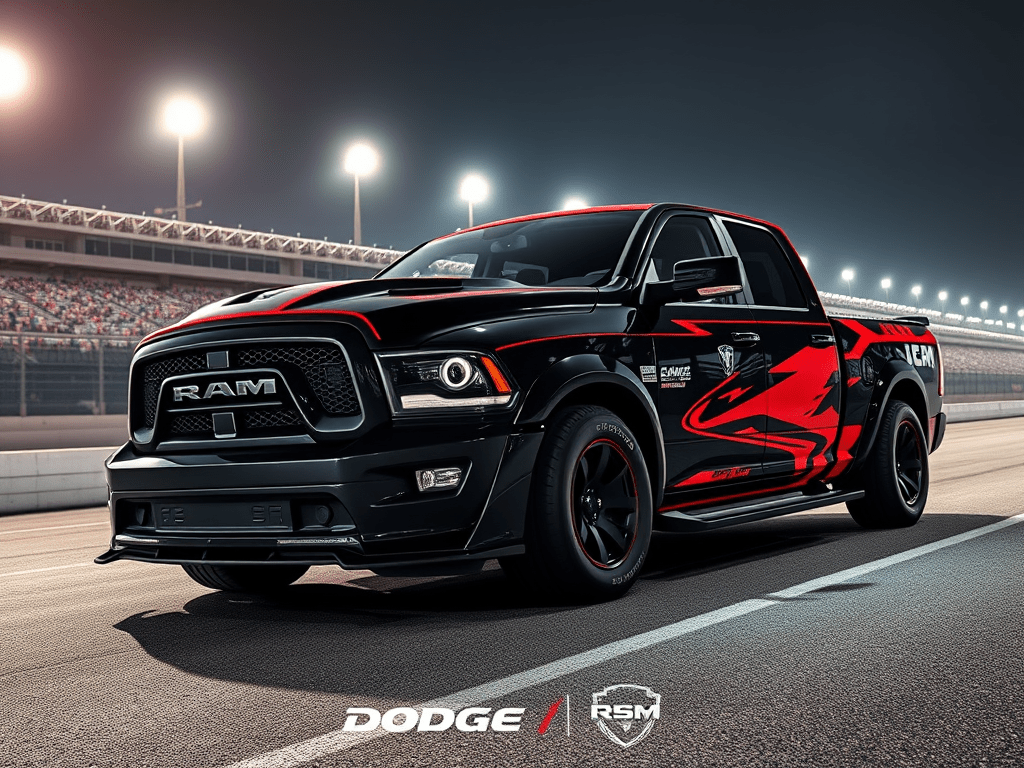
The air at Michigan International Speedway on June 8, 2025, was thick. It contained more than just the scent of high-octane fuel. It was filled with excitement. It also carried the electricity of a revival. Stellantis, the global automotive giant, chose the symbolic heartland of its Detroit rivals, Ford and Chevrolet, for a significant announcement. The Ram brand would thunder back into NASCAR after a 13-year absence. The campaign would begin with a Craftsman Truck Series in 2026. This was no quiet re-entry. It was a marketing blitzkrieg dubbed “Ram-Demption,” a bold statement of intent tied to the much-celebrated return of the 5.7-liter Hemi V-8 to its production lineup. Ram CEO Tim Kuniskis drove a menacing concept race truck in Gloss Black and Molten Red. He made it clear this was not a nostalgic dalliance. Instead, it was a strategic, multi-phase invasion.
“Our intention is not to do a one-hit wonder and go to Truck and not to Cup. That’s not our plan,” Kuniskis stated. This confirmed what the industry had long suspected. The Truck Series is merely the beachhead for an eventual assault on the NASCAR Cup Series. The timeline points towards 2027 or 2028. This deliberate, product-focused strategy is a world away from the brand’s chaotic exit in 2012. Back then, Dodge had to withdraw from the sport. This happened right before winning the Cup Series championship with Brad Keselowski and Penske Racing. This was because its flagship team defected to Ford. This move left the manufacturer with no viable top-tier partners.
The lessons from that painful departure have clearly been learned. This time, Dodge and Ram are not just looking for a team; they are auditioning for a true partner. Kuniskis’s now-famous analogy perfectly frames the search: “We’re looking for a date to the prom right now”. It’s a quest for a partner they can build with. They seek a team that can carry the banner not just for a season. They want a team that can do so for a new era. As NASCAR officials themselves have noted, they anticipate Dodge will be “pretty aggressive in getting a good team lined up”. This report will analyze the field of potential “prom dates.” It will dissect which Cup and Xfinity Series organizations are the most plausible candidates. These candidates could join the “Ram-Demption” and lead Dodge’s charge back to the pinnacle of American motorsport.
Section 1: The Blueprint for a Contender: What Dodge/Ram Needs in a Partner
To identify which teams might switch to Dodge, one must first grasp what the manufacturer seeks. This isn’t just about slapping new decals on a car. It’s about forging a foundational technical and marketing partnership. This partnership must be capable of competing with the established powerhouses of Hendrick-Chevrolet, Penske-Ford, and Gibbs-Toyota. The blueprint for Dodge’s ideal partner is based on its own history. It draws from both its glorious triumphs and its most painful failures.
The “Anchor Team” Imperative
Throughout its storied history in NASCAR, Dodge’s success has been inextricably linked to a powerful “anchor team.” In the 1960s and 70s, the brand dominated with the legendary Petty Enterprises. Richard Petty, driving the iconic No. 43 Plymouths and Dodges, became “The King.” He delivered championships in 1971, 1972, 1974, and 1975 under the Chrysler banner. This achievement solidified the brand’s place in motorsport lore. The winged Dodge Charger Daytona was the first car to break the 200 mph barrier. Buddy Baker achieved this milestone in 1970. The car became a symbol of the era’s engineering prowess. It was all driven by the Petty dynasty.
Dodge returned to the sport in 2001 after a long hiatus. It entrusted its program to a single, visionary leader: Ray Evernham. Evernham left his historic role as Jeff Gordon’s crew chief. He was tasked with building a factory-backed Dodge program from the ground up. Evernham Motorsports became the heart of the Dodge effort. It featured drivers like Bill Elliott and later Kasey Kahne. The team produced its own chassis and powerful engines. These were supplied to other Dodge teams.
This model of relying on a singular, top-tier partner culminated in the Penske Racing era. After switching from Ford to Dodge in 2003, Team Penske became the manufacturer’s sole competitive hope by the early 2010s. The partnership reached its zenith in 2012 when Brad Keselowski won the Cup Series championship in the No. 2 Dodge Charger. However, this ultimate success masked a fatal flaw. Earlier that year, Penske announced a switch to Ford for 2013. This move effectively pulled the rug out from under the entire Dodge program. Dodge lost its only competitive cars. It also lost its primary engine builder and R&D hub. As a result, Dodge had no viable top-tier teams to partner with. Dodge decided not to align with a second-tier organization. They wanted to avoid a long, painful rebuild. Instead, Dodge chose to exit the sport as champions. This history serves as a stark cautionary tale. A successful return requires a stable, multi-car foundation. This stability is necessary to avoid a repeat of that catastrophic single point of failure.
Dodge’s Stated Requirements and Technical Advantages
Learning from the past, Ram CEO Tim Kuniskis has been clear about his requirements. He wants to expand and desires a “minimum of four” cars in the Cup Series. There is potential to expand further to six cars. This indicates Dodge is targeting an established multi-car organization. Alternatively, they may form a strategic alliance of smaller teams. These teams can provide a broad data-sharing platform from day one.
Dodge is fortunate. Its path back to the Cup Series is smoother than for any other prospective Original Equipment Manufacturer (OEM). NASCAR’s racing development chief, John Probst, has noted that a new OEM typically needs an 18-month runway for engine development. However, the engine Dodge last used in 2012, a 5.7L Hemi V-8, is still architecturally relevant to the current-generation V-8s used by its competitors. This gives Dodge what one analyst called the “easiest path to the Cup Series,” significantly shortening the development timeline.
Furthermore, NASCAR is actively rolling out the welcome mat for new manufacturers. The sanctioning body has been in “robust discussions” with multiple potential OEMs. Reports suggest they are “very close” with at least one other manufacturer besides Stellantis. This manufacturer is widely rumored to be Honda. To facilitate this effort, NASCAR is implementing new technologies. These include wheel torque sensors. They will allow for a Balance of Performance (BoP) style of regulation. This system would enable different engine architectures (e.g., V-8s, V-6s, hybrids) to compete on a level playing field, lowering the barrier to entry for global automakers who may not have a production V-8 in their portfolio.
This combination of factors includes a clear need for a multi-car anchor team. There is also a shortened development path and a welcoming regulatory environment. These factors shape the profile of Dodge’s ideal partner. Hendrick Motorsports is the top team at Chevrolet. Team Penske leads at Ford. Joe Gibbs Racing is at the forefront for Toyota. These teams have long-term relationships that are highly successful. They are deeply entrenched and effectively off the market. This means Dodge’s hunt will focus on the next tier of teams. The most attractive candidates are the “Tier 1.5” organizations. These are teams that are consistently competitive. They are well-funded. However, they remain second or third in the pecking order for manufacturer support. The main attraction for these teams is the chance to become the undisputed “big dog” for a new OEM. This elevated status provides priority access to engineering resources. It also includes a larger share of marketing dollars and a seat at the table in strategic decision-making. This is a level of influence they may never achieve with their current manufacturer. This creates a powerful symbiotic relationship. The team gains the status and resources it needs to become a true championship superpower. Dodge secures a hungry, ambitious partner wholly committed to making the program a resounding success.
Section 2: The Cup Series Contenders: Analyzing the Premier Prospects
The blueprint for Dodge’s ideal partner is established. The focus now shifts to the garage. A handful of teams stand out as prime candidates to lead the “Ram-Demption.” Each presents a unique combination of opportunity, narrative, and risk.
2.1 The Sentimental Favorite: RFK Racing
The story is almost too perfect to be scripted. Brad Keselowski delivered Dodge its last, glorious championship in 2012. He could return to the fold as a team co-owner. This would spearhead the brand’s revival. This narrative alone makes RFK Racing the sentimental favorite and a marketing dream for Dodge.
The strategic appeal for RFK is powerful and clear. Despite being a premier Ford organization with a rich history, RFK Racing operates in the considerable shadow of Team Penske. As long as Roger Penske fields Fords, RFK will likely remain the #2 team in the manufacturer’s hierarchy. A switch to Dodge would instantly elevate them to the coveted #1 flagship status. This position comes with unparalleled influence and resources. The team’s recent trajectory demonstrates its ambition. After years of inconsistent performance, the co-ownership of Keselowski has revitalized the organization. It has expanded to a three-car team for the 2025 season with the addition of Ryan Preece in the No. 60 Ford. This move signals a clear intent to grow and compete for championships. This gives them the scale that Dodge is explicitly looking for.
However, the path for an RFK-Dodge alliance is fraught with complexity. The team’s third charter, used for Preece’s No. 60, is leased from Rick Ware Racing (RWR). This arrangement is inherently unstable. RWR is embroiled in a contentious lawsuit with Legacy Motor Club over a separate charter sale. RWR has publicly stated its intention to reclaim its leased charters after the 2026 season. This is to facilitate its own expansion plans. This uncertainty affects a third of their operation. It could make committing to a new, long-term OEM partnership a risky proposition for both RFK and Dodge. Furthermore, RFK’s roots with Ford run deep, dating back to Jack Roush’s entry into the sport in 1988. They have recently announced multi-year sponsorship extensions with partners like Trimble. This is all framed within the context of their Ford alliance. It suggests a degree of forward-looking commitment to the Blue Oval.
RFK’s decision hinges on a critical strategic calculation. Is the guaranteed, top-tier status of being Dodge’s #1 team worth more than Ford’s #2? This is especially true with the looming uncertainty around their third charter. Keselowski values OEM support more than most owners. He has experienced the highs of a manufacturer-backed championship. He has also faced the lows of that same manufacturer’s exit. If RFK can secure a third charter independently, a major obstacle would be removed. The decision would focus on comparing the long-term technical and financial support packages. Ford’s offer would be weighed against what is likely a more lucrative and influential offer from Dodge. The “sentimental favorite” narrative is compelling, but for a shrewd businessman like Keselowski, the business case must be undeniable.
2.2 The Ambitious Power Play: Trackhouse Racing
If RFK represents a return to a successful past, Trackhouse Racing represents a bold leap into the future. Justin Marks founded the team. It has rapidly ascended to become one of NASCAR’s top organizations. The team is built on a disruptive, ambitious, and media-savvy model. Their ethos aligns perfectly with Dodge’s stated desire to “do it different than everyone else”.
Like RFK, Trackhouse faces a pecking order problem. They are a premier Chevrolet team with significant support from ECR Engines. However, they will always be secondary to the four-car Hendrick Motorsports juggernaut. This team serves as the de facto factory team for General Motors. A move to Dodge would provide the undisputed flagship status that Marks’s ambitious vision seems to demand. The timing for such a move is opportune. The team announced a departure for driver Daniel Suárez after the 2025 season. This announcement creates a natural inflection point for strategic realignment. This opens a seat for a new driver. Connor Zilisch, a developmental phenom, is widely expected to fill it. This also creates a clean slate for the team’s next chapter, which could include a new manufacturer.
Critically, Trackhouse’s major commercial partnerships appear to be portable. Key sponsors like Kubota and Anheuser-Busch (Busch Light) have signed multi-year extensions directly with the team. These extensions are not explicitly tied to Chevrolet. This suggests these valuable relationships would follow the team in a manufacturer switch. This financial stability is crucial. Marks has already demonstrated a desire to build a global motorsports empire. He has acquired Chip Ganassi Racing’s NASCAR operations. He also co-owns the CARS Tour. Additionally, there has been expansion into MotoGP. Dodge is a returning American automotive icon. Forming a foundational partnership with them would be a bold move. It would suit his growing enterprise perfectly.
The primary argument against such a move is the team’s deep integration within the Chevrolet ecosystem. Their entire existence has been with Chevrolet. Uprooting their technical foundation would be a monumental task. This is especially true for their engine program with ECR, which would be costly. Additionally, their burgeoning talent pipeline, which includes Zilisch, is being cultivated in partnership with JR Motorsports, another key Chevrolet team. A switch could complicate these crucial developmental pathways.
For Trackhouse, a potential move to Dodge is not about solving a current problem. It focuses on long-term strategic positioning and brand identity. Being “just another great Chevy team” may not align with Marks’s ultimate vision. Becoming the face of Dodge’s NASCAR return provides a unique branding opportunity. This opportunity cannot be replicated within the established GM framework. The departure of Suárez provides the perfect moment for a total reset in 2026. It ushers in a new driver. It also introduces a new manufacturer at the same time. It would be a calculated risk, trading the comfort of the familiar for a chance at absolute market dominance.
2.3 The Ultimate Wild Card: JR Motorsports
Perhaps the most tantalizing, if improbable, scenario involves the most popular name in NASCAR: Dale Earnhardt Jr. His team, JR Motorsports (JRM), has been a perennial powerhouse in the Xfinity Series. They win championships and serve as a launchpad for future Cup stars like Chase Elliott, William Byron, and Tyler Reddick. A move to the Cup Series, backed by a factory Dodge partnership, would be a landscape-altering event.
The logic behind this “wild card” scenario is rooted in mutual need. Earnhardt Jr. has been candid about his desire to take JRM to the Cup Series full-time. However, he has consistently cited the astronomical cost of purchasing a charter as the primary barrier. These charters are now valued at over $40 million. “I can put some money in but I will not… buy the entire thing myself,” he stated after JRM’s successful one-off Daytona 500 entry in 2025. “You almost have to have partners to get in”.
Dodge represents the ultimate partner—an OEM with deep pockets and the most to gain from JRM’s success. A factory deal could provide the capital. It could also facilitate the investment needed for JRM to acquire the charters necessary for a multi-car Cup operation. In return, Dodge would gain a partner with a championship-winning pedigree. They would acquire a massive and loyal fanbase. Additionally, they would benefit from the unparalleled marketing power of the Earnhardt name. The combination of Dale Jr. and Dodge’s return would generate a level of media attention and fan engagement that no other team could possibly match.
The hurdles, however, are monumental. The Earnhardt name is synonymous with Chevrolet. Dale Jr.’s father became a legend in the No. 3 GM Goodwrench Chevrolet, and Dale Jr. himself drove Chevrolets for his entire Cup career. JRM’s entire operation is built around the bowtie. It includes its successful 2025 Daytona 500 debut. This is supported by a deep technical alliance with Hendrick Motorsports. To walk away from that legacy and that top-tier technical support would be a seismic and controversial shift. It would force Dale Jr. to make a difficult choice. He must weigh his family’s deep-rooted legacy with Chevrolet. In contrast, he considers the unique opportunity to realize his dream of full-time Cup ownership with Dodge. It is the classic head-versus-heart dilemma, making JR Motorsports the most fascinating long shot in the Dodge draft.
2.4 The Dark Horse Candidates: Front Row Motorsports & Legacy Motor Club
Beyond the top three contenders, two other teams warrant consideration, though their odds are longer.
Front Row Motorsports (FRM) has shown significant ambition. For 2025, the team expanded to three cars. They purchased a charter from the defunct Stewart-Haas Racing. Most importantly, they upgraded their technical alliance to Team Penske. This move signals a clear commitment to climbing the ranks within the Ford Performance family. While they have the scale Dodge desires, their integration with Ford is deepening. This makes an immediate pivot to a new manufacturer highly improbable. Their focus will be on leveraging their new Penske alliance to challenge for wins as a Ford team.
Legacy Motor Club (LMC), co-owned by seven-time champion Jimmie Johnson, has already demonstrated a willingness to make bold moves. The team executed a high-profile switch from Chevrolet to Toyota for the 2024 season. This decision was driven by the desire for greater manufacturer support. It also aimed for a clearer path to contention. However, this multi-year agreement with Toyota is still in its infancy. The organization’s current focus is on fully integrating into the Toyota Racing Development (TRD) system and building a long-term foundation. A second manufacturer switch in such a short period is extremely unlikely. LMC has proven they are a team to watch in the long term. For now, their future is firmly tied to Toyota.
Table 1: Cup Series Dodge Candidate Matrix
| Team | Current Manufacturer | Current OEM Pecking Order | Key Personnel Ties to Dodge | Strategic Appeal for Team | Primary Obstacle | Likelihood Score (of 10) |
| RFK Racing | Ford | Tier 1.5 (#2 at Ford) | Brad Keselowski: 2012 Champion | Become undisputed #1 OEM partner | Charter instability, deep Ford history | 8.5 |
| Trackhouse Racing | Chevrolet | Tier 1.5 (#2 at Chevy) | None | Become flagship for new OEM, unique brand identity | Strong existing Chevy technical alliance | 7.5 |
| JR Motorsports | Chevrolet (Xfinity) | N/A (Top Xfinity Chevy team) | None | Financial pathway to full-time Cup ownership | Deep Earnhardt-Chevy legacy, charter cost | 6.0 |
Section 3: Building the Foundation: The Xfinity and Truck Series Pipeline
A successful OEM program is not built solely in the Cup Series. It requires a comprehensive developmental ladder to cultivate talent. The program needs to test components. Additionally, it must maintain a brand presence across all of NASCAR’s national series. Ram’s announced entry into the Craftsman Truck Series for 2026 is the crucial first step in building this pipeline. A strategic presence in the Xfinity Series must follow this step.
3.1 The Tip of the Spear: Craftsman Truck Series
For its 2026 debut, Ram needs a partner that can provide immediate credibility and competitiveness. The clear and logical choice is ThorSport Racing. ThorSport is the longest-tenured team in the Truck Series. It is a perennial championship powerhouse. The team has six driver’s titles to its name. Most importantly, the team has a well-documented history of opportunistically switching manufacturers to gain a competitive advantage. Over the years, they have run Chevrolets. They have also run Toyotas and Fords. This demonstrates a pragmatic, business-first approach. It shows that they do not have deep-seated loyalty to any single brand. This makes them the perfect “hired gun.” ThorSport can provide Ram with a turn-key operation. It offers a championship-caliber setup from day one. Their support ensures the new Ram 1500 race truck is a contender immediately. While other top truck teams exist, TRICON Garage (Toyota) and Spire Motorsports/McAnally-Hilgemann Racing (Chevrolet) are examples. However, their allegiances are firmly tied to their Cup Series manufacturers. This makes a switch to Ram highly unlikely. Partnering with ThorSport is the most efficient and effective path for Ram to make an immediate impact.
3.2 The Next Generation: Xfinity Series
Once the Cup and Truck programs are established, Dodge will need a presence in the Xfinity Series. This series will serve as a proving ground for its future stars. The series has many strong, independent teams. They currently operate without significant factory support. These teams would be prime candidates for a partnership.
Teams like Jordan Anderson Racing (JAR), Alpha Prime Racing (APR), and RSS Racing fit this profile perfectly. JAR and APR are ambitious multi-car Chevrolet teams. They have shown flashes of speed and are respected for their ability to compete with limited resources. RSS Racing, a family-owned Ford outfit, has a long history of overachieving and punching above its weight class.
Dodge could quickly establish a robust B-team network in the Xfinity Series. This can be achieved by forming alliances with two or three of these independent organizations. This strategy would provide multiple seats for developmental drivers. It would serve as a technical testbed for new parts and ideas. This would occur away from the high-stakes Cup environment. Additionally, it would ensure a consistent brand presence in NASCAR’s second-most popular series. Building this entire developmental pipeline would be significantly less expensive. It would cost just a fraction of what is needed for a single top-tier Xfinity team like JR Motorsports. This offers Dodge a highly efficient and scalable model for long-term success.
Table 2: Xfinity & Truck Series Partnership Potential
| Series | Team | Current Manufacturer | Rationale for Dodge/Ram Alignment |
| Craftsman Truck | ThorSport Racing | Ford | Championship-caliber, “turn-key” operation with a history of manufacturer switching. |
| Xfinity | Jordan Anderson Racing | Chevrolet | Solid, well-respected independent team ideal for driver development. |
| Xfinity | Alpha Prime Racing | Chevrolet | Ambitious, multi-car independent team with room to grow with OEM support. |
| Xfinity | RSS Racing | Ford | Proven, family-owned team that consistently over-performs its resources. |
Section 4: Recommendations & The Ripple Effect
Dodge/Ram’s re-entry into NASCAR’s top two series is more than just the addition of a fourth manufacturer. It serves as a catalyst for a potential realignment of the entire garage. The decisions made by Stellantis and its future partner teams will create a ripple effect. These choices will alter the competitive balance. They will also influence the strategic landscape for years to come.
The “Dream Team” Scenario for Dodge
Based on the available evidence, the most strategically sound path for Dodge involves a multi-layered approach. This approach targets key teams in each series.
- Cup Series Anchor: The primary target should be RFK Racing. Trackhouse presents a compelling case based on ambition and growth. However, the pre-existing championship narrative with Brad Keselowski offers a marketing and cultural advantage. This advantage cannot be manufactured. Keselowski’s ownership stake provides a level of built-in leadership. His intimate understanding of what it takes to win with Dodge is invaluable for a new OEM program. The move would satisfy RFK’s ambition for undisputed #1 status and give Dodge a credible, ready-made contender.
- Cup Series Growth Partner: The ultimate “wild card,” JR Motorsports, represents the ideal second major partner. A move in the initial 2027-2028 timeframe seems unlikely due to the Chevrolet legacy. However, a successful launch with RFK could pave the way for a JRM entry later in the decade. A Dodge-backed JRM would give the manufacturer the six-car presence it desires. It would also bring NASCAR’s most popular personality into its camp.
- Truck Series Foundation: The 2026 launch should be anchored by ThorSport Racing. Their plug-and-play operation is championship-proven. It is the most logical choice. This ensures the Ram brand is competitive from its very first race.
- Xfinity Series Development: Forming alliances with independent teams like Jordan Anderson Racing and Alpha Prime Racing would be beneficial. This would establish a cost-effective, multi-car pipeline. It would aid in developing the next generation of Dodge talent.
The Ripple Effect
A move by a team as significant as RFK Racing would not happen in a vacuum. It would trigger a cascade of consequences across the sport:
- Impact on Ford: The loss of a three-car team would be a significant blow to Ford Performance. Losing a former champion would add to the impact. The new Penske alliance would immediately elevate Front Row Motorsports. Additionally, the new single-car Haas Factory Team would move into more prominent roles within the Ford hierarchy. It could also force Ford to become more aggressive. Ford might court a new major partner. Alternatively, it might strengthen its support for its remaining teams to counter the new threat from Dodge.
- Impact on Chevrolet: The immediate impact of an RFK-Dodge deal is on Ford. However, the potential for Trackhouse or JRM to be in play puts Chevrolet on notice. Losing a fast-growing team like Trackhouse would significantly weaken their top-tier roster outside of Hendrick Motorsports. They might need to increase support for other teams. This includes teams like Spire Motorsports, to maintain their numerical advantage in the garage.
- Driver & Team Musical Chairs: The NASCAR “silly season” would be supercharged. A major team switching OEMs would create openings for drivers, crew chiefs, engineers, and pit crew members. Drivers with expiring contracts would suddenly have a new, well-funded option. This could potentially increase their leverage in negotiations with their current teams.
In conclusion, Dodge’s return is marketed as a “Ram-Demption.” It is being executed with a clear strategic vision. This plan aims at avoiding the mistakes of the past. The search for a “prom date” is a hunt for a true anchor partner. Several compelling candidates exist. However, RFK Racing stands out due to their combination of historical success, ownership ambition, and narrative power. This makes them the most logical choice to lead the charge. The ensuing “Dodge Draft” promises to be one of the most fascinating off-track storylines in recent memory. It has the potential to reshape team alliances and manufacturer loyalties. It could also change the very competitive fabric of NASCAR for the next decade. Rumors suggest that Honda is also exploring an entry. The sport may be on the cusp of a new golden era of manufacturer competition. Dodge aims to be at the forefront of this revolution.

 ScortonBoy17.ca
Leave a comment