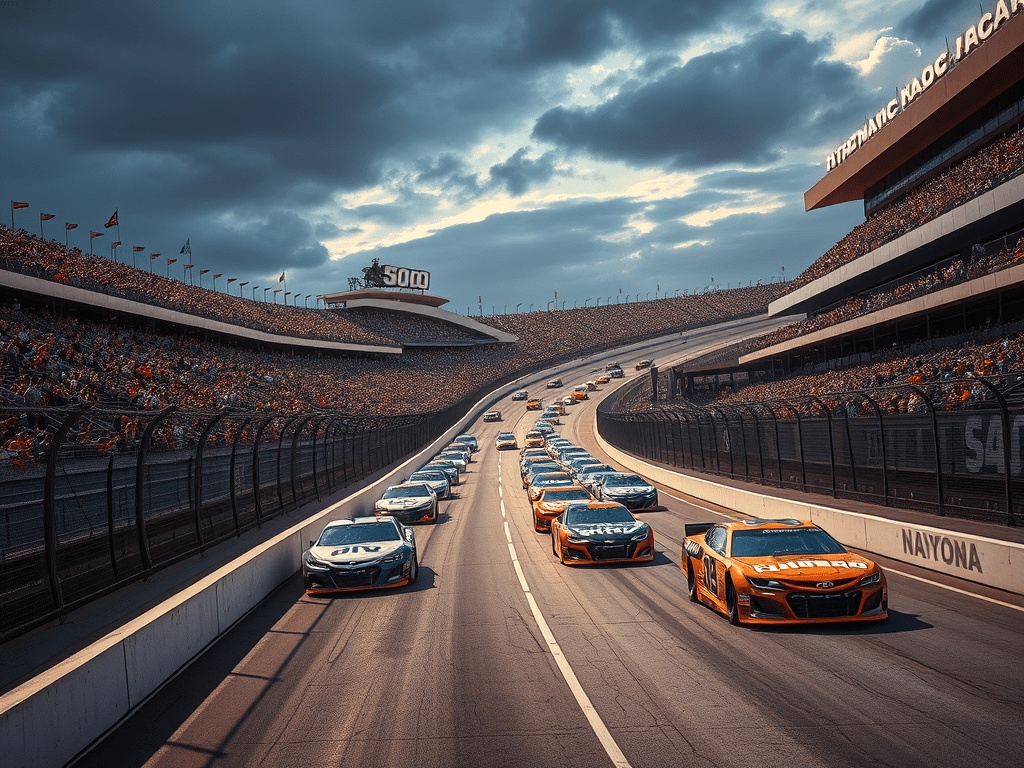
Introduction: A Perfect Storm of Change
The NASCAR Cup Series schedule was once a bastion of tradition. It was predictable. Now, it is undergoing its most profound transformation in a generation. The 2026 calendar is not just an evolution of its predecessors. It results from a perfect storm of powerful and intersecting forces. A new, multi-billion-dollar media rights deal diversifies broadcasts across traditional networks. It also uses streaming platforms. This deal has fundamentally altered the economic landscape of the sport. At the same time, charter agreement negotiations with race teams have been contentious and protracted. These negotiations have brought the business model of team ownership into sharp focus. The schedule serves as a key piece of leverage for all parties.
Overlaying these foundational business shifts is a clear and aggressive strategic mandate from NASCAR leadership. Executives have signaled a bold new era of innovation, one where the schedule is a primary tool for growth. This vision embraces international expansion. It experiments with new event formats like street courses. It also revisits the sport’s historic roots. All these efforts are made while attempting to balance the interests of track owners, broadcast partners, and a passionate fanbase. The result is a scheduling process that embodies dynamic change. Long-held assumptions are being challenged. Few dates outside the crown jewels are truly safe. The 2026 schedule is not just a static list of races. It is a strategic document. It reflects NASCAR’s vision for its future. This future seeks to honor its past while aggressively pursuing new horizons.
Section 1: The Anchors of 2026 – The Crown Jewels and the Championship Rotation
The Enduring Pillars: Daytona, Darlington, and Charlotte
Amidst a sea of change, the foundational pillars of the NASCAR Cup Series schedule remain firmly in place. These pillars provide stability and a sense of identity. The sport’s most prestigious “Crown Jewel” events are non-negotiable anchors around which the rest of the calendar is constructed. The 2025 schedule confirms the traditional placement of these races. This structure is virtually certain to carry over into 2026 and beyond.
The season will launch with its most important event, the Daytona 500, in mid-February. This event will be preceded by the Duel qualifying races. Fans can also enjoy Speedweeks festivities. The Coca-Cola 600 at Charlotte Motor Speedway will retain its traditional Memorial Day weekend slot. It serves as a unique test of endurance. It is also a patriotic touchstone for the sport. The Cook Out Southern 500 at Darlington Raceway will be the kickoff for the NASCAR Playoffs. It remains on Labor Day weekend. This event is a punishing and historic challenge. It raises the stakes immediately for championship contenders. These events are critical to the sport’s heritage. They are also vital to its broadcast partners. Broadcast partners build significant promotional campaigns around these marquee dates.
The Championship Revolution: Homestead-Miami and the “Super Bowl” Model
The single most significant confirmed change for the 2026 season is a complete overhaul of how NASCAR crowns its champion. Phoenix Raceway’s role as the guaranteed host of the season finale ends after its six-year run from 2020 to 2025. NASCAR is adopting a rotating model for its Championship Weekend. This strategic shift is designed to inject new energy and unpredictability into the season’s climax. The first track to host under this new system will be Homestead-Miami Speedway. It will stage the championship races for all three national series from November 6-8, 2026.
The rationale behind this move is multifaceted. NASCAR executives have explicitly compared the new model to other major sports properties. These include events like the Super Bowl or the NCAA Final Four. The primary goal is to create “pent-up demand” in various markets. It aims to transform the finale into a traveling spectacle. This generates fresh excitement each year. This rotation also addresses long-standing debates about competitive balance. For years, the championship was decided at one of two 1.5-mile ovals (Homestead from 2002-2019, followed by the 1.0-mile Phoenix). A rotating venue ensures that the final test for championship contenders changes annually. This stops any single driver or team from having an unfair edge. They avoid a built-in advantage due to their proficiency at a specific track type.
This strategic shift effectively creates a new, elite tier of racetracks within the NASCAR ecosystem. To be considered for the championship rotation, a venue must meet a strict set of criteria. As outlined by NASCAR leadership, venues must be located in a warm-weather market suitable for early November. They should possess a high-quality, modern facility. Additionally, they need to demonstrate a strong capacity for local promotion and event hosting. Officials have indicated that superspeedways like Daytona and Talladega are not in consideration. Their volatile racing style is a factor. Road courses are “probably lower on the list” as well. This narrows the pool to a select group of premier intermediate and short ovals. Phoenix and Homestead are confirmed to be in the long-term rotation. Other likely candidates include Las Vegas Motor Speedway and Kansas Speedway. Perhaps Charlotte Motor Speedway is included too. This new dynamic will inevitably spur competition among these venues. It will likely prompt significant investments in facility upgrades. They will also boost marketing efforts. Venues are vying for the prestige and economic impact of hosting the sport’s biggest weekend.
The competitive implications of this change are profound. Under the previous system, teams could spend years perfecting car setups and race strategies tailored specifically for Homestead or Phoenix. A rotating finale dismantles that advantage. The “final exam” for the Championship 4 will now vary from year to year. A team that masters the abrasive, multi-groove, tire-wearing surface of Homestead-Miami may find its strengths diminished. The following year, they might compete at a smoother, single-groove track. This forces championship-contending organizations to create programs focused on versatility. They also focus on all-around excellence. The system rewards teams that can win on any type of oval. It does not favor those who specialize in just one. This is a fundamental change. It alters the competitive fabric of the playoffs. The change is driven by a strategic decision. The intention is to make the schedule itself a source of drama and unpredictability.
Section 2: The Global Push & The Urban Experiment
North of the Border: The Phased Return to Montreal
NASCAR’s international ambitions are set to advance significantly. A widely anticipated return to Montreal’s Circuit Gilles Villeneuve is expected. The 2025 schedule features a historic points race in Mexico City. Strong and credible reports indicate that Canada is next on the agenda. A methodical, phased-in approach is planned for 2026 and 2027. This strategy is specifically aimed at reducing the immense logistical risks. It is also intended to minimize the financial risks associated with launching a new international Cup Series event.
According to multiple sources, the plan involves bringing the NASCAR Xfinity Series and Craftsman Truck Series to the 2.71-mile road course in Montreal during the summer of 2026. This event would act as a “warm-up lap.” It will allow NASCAR, the event promoter, and broadcast partners to refine operations. The goal is to prepare for a full-scale Cup Series weekend. Should that initial event prove successful, the Cup Series would then join the schedule in 2027. This approach follows a well-established precedent. The Xfinity Series (then the Nationwide Series) raced at the circuit from 2007 to 2012. The Craftsman Truck Series (then known as the Gander Outdoors Truck Series) also competed at Canadian Tire Motorsport Park, F.K.A. MOSPORT (my hometown track!) from 2013-2019. It built a Canadian fanbase and provided valuable operational experience.
This carefully orchestrated, multi-year rollout is more than just a plan for a single race. It represents a strategic blueprint for all future international expansion. NASCAR uses the lower national series as a proving ground. This approach helps them work through complex challenges like cross-border logistics. It also addresses international broadcasting, local marketing, and security. These are tackled before committing the massive resources required for a premier Cup Series event. This model minimizes risk and maximizes the potential for success. If this phased approach works in Montreal, a similar strategy could be implemented for other long-term international goals. These targets have been discussed as a race in Brazil or even a future foray into Europe.
South of the Border: Will Mexico City Become a Permanent Fixture?
The 2025 season marks a watershed moment. It features the Cup Series’ first points-paying race in Mexico. This event takes place at the world-class Autódromo Hermanos Rodríguez. The success of this inaugural event will be the primary determinant of its future on the schedule. NASCAR and the event promoter, OCESA, will heavily scrutinize key metrics. These include ticket sales, television viewership on Amazon Prime Video, sponsor activation, and the overall fan experience.
The promoter holds an extension option for the race. A decision on a 2026 return is expected within a couple of months following the June 2025 event. NASCAR has made a significant strategic investment to re-enter the Mexican market. The venue itself received positive reception from drivers and fans. A return in 2026 is highly probable. This is contingent on the inaugural race meeting reasonable operational and commercial benchmarks. Mexican driver Daniel Suárez is present. The growing popularity of the NASCAR Mexico Series provides a strong local foundation for the event’s long-term viability.
The Street Course Conundrum: Chicago’s Fate and San Diego’s Rise
NASCAR’s bold experiment with urban street course racing faces a critical juncture in 2026. The Chicago Street Race debuted in 2023. It will run the final event of its initial three-year contract in July 2025. The event has proven to be a proof of concept for reaching a new audience. However, its future in the Windy City remains uncertain. The original deal was signed by a previous mayoral administration. It has faced criticism from some city aldermen over its financial terms. There is also concern about the disruption caused by closing major downtown streets during the peak summer tourist season. The current city government has two mutual options to extend the contract, but has remained noncommittal about exercising them.
This uncertainty in Chicago is paired with persistent and credible rumors. NASCAR is nearing an agreement to stage a street race in San Diego. This could happen as soon as 2026. The emergence of a viable alternative in another major market suggests a significant strategic evolution. The “annual street race” on the Cup Series calendar is not anchored to a single city. Instead, it appears to be transforming into a floating franchise.
This model would allow NASCAR to move the event between different major metropolitan areas every three to five years. This strategy offers several advantages. It keeps the event novel and fresh for both fans and broadcast partners. It prevents “event fatigue” in any one city. It also provides NASCAR with significant negotiating leverage with municipal governments. Instead of being beholden to one city’s political climate and financial demands, NASCAR can seek out the most favorable partnership. Therefore, while the 2026 schedule is highly likely to feature a street race, its location is a major variable. The decision will depend on whether Chicago, as the incumbent, provides the more appealing and enduring proposal. Alternatively, San Diego, as the challenger, might offer a better proposal for the sport.
Section 3: Back to the Roots – The Wildcards of Rockingham and Nashville
The Rock’s High-Stakes Gamble
One of the most compelling and fluid storylines influencing the 2026 schedule is the rapid evolution of Rockingham Speedway. The track returned successfully to the NASCAR national series calendar. It held sold-out Xfinity and Truck Series races in April 2025. Immediately after, the historic North Carolina track was put up for sale. The current owner, Dan Lovenheim, who purchased the dilapidated facility in 2018 for $2.8 million and oversaw its revitalization, has stated his intention to select a new buyer by July 1, 2025.
This development is not a sign of failure. Instead, it is a calculated move to accelerate the track’s path back to the Cup Series. The sale explicitly targets finding a new ownership group. This group should have the capital and industry influence to elevate the track “to the next level”. The listing documents note that an additional $12 million in infrastructure upgrades is needed. These upgrades are necessary to make the facility “Cup ready” for a potential race in 2026 or 2027. The timing of the sale is critical. If a new owner is selected in July 2025, they could immediately lobby for a spot. This would be on the 2026 schedule. The schedule is typically finalized and announced in the late summer or early fall.
The identity of Rockingham’s new owner is arguably the single biggest wildcard for the 2026 calendar. The path forward for the track diverges significantly based on who wins the bid.
- Scenario 1: A Major Industry Player Acquires the Track. If Speedway Motorsports (SMI) purchases Rockingham, the return to the Cup schedule would be dramatically streamlined. Alternatively, the return would be streamlined as well if NASCAR’s parent company makes the purchase. They own International Speedway Corporation (ISC). These entities control the vast majority of existing race dates. They could simply reallocate a date from one of their other properties to “The Rock.”
- Scenario 2: An Independent Group Takes Ownership. The path is more challenging if Track Enterprises, the 2025 race promoter, acquires the track as a well-capitalized independent entity. Track Enterprises, which has expressed interest in bidding, finds the path challenging but not impossible. This group would need to engage in a complex negotiation with NASCAR to secure a date. It is likely that another track would need to relinquish one.
The outcome of this sale will determine if Rockingham is a legitimate contender for a 2026 Cup date. Alternatively, it may remain a longer-term aspiration. A return in 2026 is ambitious. However, it becomes a distinct possibility. This can occur if the right buyer with deep pockets and deeper industry connections emerges by the July 1 deadline.
A Dream Deferred: The Nashville Fairgrounds Speedway
The fanbase strongly desires the Cup Series to return to the historic Nashville Fairgrounds Speedway. This desire is palpable. However, the project remains a long shot for 2026. For years, efforts led by figures like Dale Earnhardt Jr. and Speedway Motorsports have aimed to secure a deal to renovate the city-owned track. They want to bring NASCAR back. These efforts have been met with persistent political and local opposition.
Speedway Motorsports is in ongoing discussions with the current Nashville mayor’s office. The project is still described as being in a phase of consulting with “multiple stakeholders.” These stakeholders include neighborhood groups and the Fair Board. This shows there is no unified political will. Such will is necessary to approve and fund a renovation project estimated to cost around $100 million. The timeline for a potential return has been pushed back repeatedly for years. The earliest projections were from 2021, which is now long past.
Given the significant and unresolved off-track hurdles, a Cup Series race at the Fairgrounds in 2026 is highly improbable. The project remains a dream for many. Its realization is likely still several years away. This is contingent on clearing formidable political and financial obstacles. In the meantime, Nashville Superspeedway is located in nearby Lebanon, Tennessee. It has established itself as a popular and successful stop on the Cup Series tour. Its date is secure for the foreseeable future.
Section 4: The Calculus of Contraction – The Zero-Sum Game
The Uncomfortable Truth: Who Loses a Date?
The excitement surrounding new international races, street courses, and returning historic tracks is palpable. However, it comes with an uncomfortable reality. The NASCAR Cup Series schedule is a zero-sum game. With the calendar firmly capped at 36 points-paying races, every addition necessitates a subtraction from an existing venue. This situation became evident before the 2025 season. NASCAR confirmed that Richmond Raceway would lose its spring race date. This change was to accommodate the new event in Mexico City. As NASCAR continues to innovate its schedule for 2026 and beyond, some tracks might face changes. Tracks with two annual dates are particularly vulnerable.
Identifying the Vulnerable: A Multi-Factor Analysis
Determining which tracks are most at risk of losing a date requires a multi-factor analysis. This analysis goes beyond just the quality of the on-track product. Key variables include track ownership, market health, and strategic alignment with NASCAR’s goals.
The most powerful predictive factor in this calculus is track ownership. Two entities control the majority of Cup Series race dates. These are Speedway Motorsports (SMI) and NASCAR itself, through its ownership of ISC tracks. These corporations are not just partners; they are business competitors in the track ownership space. When NASCAR pursues a major corporate objective, it often sacrifices a date from one of its own tracks. This is especially true for initiatives like international expansion. NASCAR prefers this approach over forcing its primary business rival to make sacrifices. Removing the spring date from the NASCAR-owned Richmond Raceway demonstrates this dynamic. It was for the Mexico City race.
Conversely, when SMI wants to add a date at one of its properties, it’s expected to reallocate a date. This date comes from its own portfolio. This could be a potential return to Kentucky Speedway or a newly acquired Rockingham. This has happened before. For instance, SMI moved a date from its Texas Motor Speedway to Circuit of the Americas. SMI acts as the event promoter there.
This ownership dynamic places several tracks with two dates under scrutiny for 2026. On the NASCAR-owned side, Kansas Speedway stands out as a potential candidate to lose a date. While a quality facility, it is in a smaller market. It could be seen as a logical source for a date needed for a new, high-priority event. On the SMI-owned side, Las Vegas Motor Speedway, Bristol Motor Speedway, and Martinsville Speedway each host two points races. Bristol and Martinsville are historic short tracks loved by many fans. However, their spring races have faced attendance and weather challenges in the past. This situation puts them in the conversation. The decision often comes down to a cold calculation of which event provides less overall value to the portfolio. As Virginia native and team owner Denny Hamlin noted regarding Richmond’s lost date, NASCAR looks for new opportunities. If a track does not consistently sell out, they focus on events with higher fan participation. They prioritize this regardless of the track’s history. If a track does not consistently sell out, NASCAR looks for new opportunities. They focus on events with higher fan participation. They prioritize this regardless of the track’s history.
Section 5: The Exhibition Shake-Up
The Clash: Domestic for Now
NASCAR’s season-opening exhibition race, The Clash, has become a laboratory for innovation. The event underwent a three-year experiment building a temporary quarter-mile track inside the Los Angeles Memorial Coliseum. Then, the event shifted dramatically for 2025. It moved to the historic and gritty Bowman Gray Stadium in Winston-Salem, North Carolina. This move signaled a pivot towards celebrating the sport’s roots.
For 2026, the location remains fluid, but the immediate trajectory appears to be domestic. NASCAR Executive Vice President Ben Kennedy has stated that an international Clash is a future possibility. However, the event will “more than likely” remain in the United States for 2026. This indicates a desire to first solidify the new international points races. The preference is to do this before adding the logistical complexity of an overseas exhibition. Two primary scenarios exist for the 2026 Clash. One scenario is a return to Bowman Gray to build on the 2025 event. Another choice is to continue the rotating model. This would mean taking the race to another iconic American short track. Such a move would generate new local excitement.
The All-Star Race: Post-Wilkesboro
The NASCAR All-Star Race found a celebrated home at the revitalized North Wilkesboro Speedway. It hosted the event for the 2023, 2024, and 2025 seasons. The return to the long-dormant track was a massive success, tapping into a deep well of fan nostalgia. The key question for 2026 is whether the event will remain at North Wilkesboro. Alternatively, NASCAR might revert to a rotating model for its mid-season, non-points showcase.
The novelty of North Wilkesboro as a non-points event may begin to diminish after three consecutive years. People feel this way. A move in 2026 is a distinct possibility. Some have suggested venues like the Nashville Fairgrounds for a future All-Star Race. However, that track will not be ready in time. A more plausible shift would be a return to a 1.5-mile intermediate track like Charlotte Motor Speedway or Texas Motor Speedway. This change would not only alter the race dynamic. It may potentially favor a different type of driver and team. Additionally, it would serve as a major event for a different market within the SMI portfolio of tracks.
Section 6: A Forecast for 2026 – The Projected Cup Series Schedule
We can synthesize the confirmed changes and contractual situations. This, along with strategic initiatives and persistent rumors, provides a framework. All of this helps in projecting the 2026 NASCAR Cup Series schedule. The following forecast is built upon several key assumptions derived from the preceding analysis:
- Championship Rotation: The season finale moves to Homestead-Miami Speedway as confirmed.
- Street Course Shift: The Chicago Street Race contract is not renewed. NASCAR moves its urban racing experiment to a new venue in San Diego.
- Historic Track Addition: Rockingham Speedway is purchased by a well-capitalized owner. The new owner successfully lobbies for a Cup date, which requires an additional date to be freed up.
- Date Contraction: To accommodate Rockingham, a NASCAR-owned track with two dates, Kansas Speedway, loses its playoff race.
- Playoff Tweak: In a fan-pleasing move, the Charlotte Roval is no longer in the playoffs. It is replaced by the traditional Charlotte Motor Speedway oval.
This projected schedule represents a significant but logical evolution from 2025, balancing tradition with aggressive innovation.
| Race # | Projected Date | Race / Event Name | Track | Track Type | 2025 Broadcast Partner | Rationale / Change from 2025 |
| Exhib. | Sun, Feb. 1 | Cook Out Clash | Bowman Gray Stadium | Short Track | FOX | Remains at Bowman Gray for a second year to build on the historic return. |
| — | Thu, Feb. 12 | Bluegreen Vacations Duel 1 & 2 | Daytona International Speedway | Superspeedway | FS1 | Traditional Speedweeks kickoff. |
| 1 | Sun, Feb. 15 | Daytona 500 | Daytona International Speedway | Superspeedway | FOX | The Great American Race, season opener. |
| 2 | Sun, Feb. 22 | Ambetter Health 400 | Atlanta Motor Speedway | Superspeedway | FOX | Retains early season date. |
| 3 | Sun, Mar. 1 | Pennzoil 400 | Las Vegas Motor Speedway | Intermediate | FOX | Maintains position in the “West Coast Swing.” |
| 4 | Sun, Mar. 8 | Shriners Children’s 500 | Phoenix Raceway | Short Track | FOX | Retains spring date; no longer the finale host. |
| 5 | Sun, Mar. 15 | Food City 500 | Bristol Motor Speedway | Short Track | FOX | Traditional spring short track race. |
| 6 | Sun, Mar. 22 | EchoPark Automotive Grand Prix | Circuit of The Americas | Road Course | FOX | First road course race of the season. |
| 7 | Sun, Mar. 29 | Cook Out 400 | Martinsville Speedway | Short Track | FS1 | Traditional spring short track race. |
| 8 | Sun, Apr. 5 | The Carolina Sandlapper 400 | Rockingham Speedway | Intermediate | FS1 | NEW EVENT. Replaces Richmond’s former spring date. Assumes new ownership secures a Cup date. |
| 9 | Sun, Apr. 12 | Goodyear 400 | Darlington Raceway | Intermediate | FS1 | Maintains spring date. |
| 10 | Sun, Apr. 19 | Jack Link’s 500 | Talladega Superspeedway | Superspeedway | FOX | Traditional spring superspeedway race. |
| 11 | Sun, Apr. 26 | AutoTrader EchoPark Automotive 400 | Dover Motor Speedway | Intermediate | FS1 | Maintains spring date. |
| 12 | Sun, May 3 | AdventHealth 400 | Kansas Speedway | Intermediate | FS1 | Retains spring date, but loses its fall playoff date in this projection. |
| Exhib. | Sun, May 17 | NASCAR All-Star Race | Charlotte Motor Speedway | Intermediate | FS1 | Rotates back to Charlotte after three years at North Wilkesboro. |
| 13 | Sun, May 24 | Coca-Cola 600 | Charlotte Motor Speedway | Intermediate | FOX | Crown Jewel event on Memorial Day weekend. |
| 14 | Sun, May 31 | Enjoy Illinois 300 | World Wide Technology Raceway | Short Track | FS1 | Moves from playoffs to a spring date. |
| 15 | Sun, Jun. 7 | Toyota / Save Mart 350 | Sonoma Raceway | Road Course | FOX | Traditional summer road course race. |
| 16 | Sun, Jun. 14 | Viva Mexico 250 | Autódromo Hermanos Rodríguez | Road Course | Prime Video | Returns for a second year after a successful 2025 debut. |
| 17 | Sun, Jun. 21 | Iowa Corn 350 | Iowa Speedway | Short Track | NBC | Retains its summer date. |
| 18 | Sun, Jun. 28 | Cracker Barrel 400 | Nashville Superspeedway | Intermediate | NBC | Key summer event in a strong market. |
| 19 | Sun, Jul. 5 | San Diego Street Race | San Diego Street Course | Street Course | NBC | NEW EVENT. Replaces the Chicago Street Race, becoming the sport’s new urban showcase. |
| 20 | Sun, Jul. 12 | The Great American Getaway 400 | Pocono Raceway | Intermediate | USA | Maintains its single summer date. |
| 21 | Sun, Jul. 19 | Brickyard 400 | Indianapolis Motor Speedway | Intermediate | NBC | Retains its prestigious mid-summer date on the oval. |
| 22 | Sun, Aug. 2 | FireKeepers Casino 400 | Michigan International Speedway | Intermediate | USA | Traditional summer race in the heart of auto country. |
| 23 | Sun, Aug. 9 | Go Bowling at The Glen | Watkins Glen International | Road Course | USA | Key late-summer road course event. |
| 24 | Sat, Aug. 16 | Cook Out 400 | Richmond Raceway | Short Track | USA | Retains its single summer night race date. |
| 25 | Sat, Aug. 23 | Coke Zero Sugar 400 | Daytona International Speedway | Superspeedway | NBC | High-stakes regular season finale. |
| PLAYOFFS – Round of 16 | ||||||
| 26 | Sun, Aug. 31 | Cook Out Southern 500 | Darlington Raceway | Intermediate | USA | Traditional playoff opener on Labor Day weekend. |
| 27 | Sun, Sep. 7 | Quaker State 400 | Atlanta Motor Speedway | Superspeedway | USA | Retains its playoff date. |
| 28 | Sat, Sep. 13 | Bass Pro Shops Night Race | Bristol Motor Speedway | Short Track | USA | Iconic playoff cutoff race. |
| PLAYOFFS – Round of 12 | ||||||
| 29 | Sun, Sep. 21 | YellaWood 500 | Talladega Superspeedway | Superspeedway | NBC | Moves from Round of 8 to Round of 12, adding early playoff chaos. |
| 30 | Sun, Sep. 28 | NASCAR Cup Series Race at New Hampshire | New Hampshire Motor Speedway | Short Track | USA | Retains its playoff date. |
| 31 | Sun, Oct. 5 | Bank of America 500 | Charlotte Motor Speedway (Oval) | Intermediate | NBC | Replaces the Roval with the traditional oval, a highly anticipated change. |
| PLAYOFFS – Round of 8 | ||||||
| 32 | Sun, Oct. 12 | South Point 400 | Las Vegas Motor Speedway | Intermediate | NBC | Retains its crucial Round of 8 opening slot. |
| 33 | Sun, Oct. 19 | Würth 400 | Texas Motor Speedway | Intermediate | NBC | Moves from a spring date to a critical playoff race. |
| 34 | Sun, Oct. 26 | Xfinity 500 | Martinsville Speedway | Short Track | NBC | Retains its position as the final elimination race before the championship. |
| PLAYOFFS – Championship 4 | ||||||
| 35 | Sun, Nov. 2 | Ford EcoBoost 400 | Homestead-Miami Speedway | Intermediate | NBC | NEW FINALE. Becomes the first host in the new championship rotation model. |
Now I do realize that this leaves one week short on the schedule for next season. I do anticipate that there will be 36 races on the schedule for 2026. I am just not sure where it would be. I am also unsure about when it would be. There could be a second race in Phoenix later in the season before the Playoffs. Alternatively, they might decide that Montreal gets a Cup series race in 2026. A second race a Pocono could be in the cards as well.
Conclusion: A Schedule in Motion
The 2026 NASCAR Cup Series schedule is shaping up to be a landmark calendar. It reflects a sport in the midst of a strategic and competitive renaissance. The analysis reveals a clear trajectory toward a schedule that is more dynamic. It is more event-driven. The schedule is more strategically complex than ever before. The confirmed move to a rotating championship finale, beginning with Homestead-Miami Speedway, fundamentally alters the competitive landscape of the playoffs. The aggressive push into international markets with Mexico City is significant. A phased return to Montreal is also likely. This, along with the evolution of the street course concept, emphasizes a commitment to reaching new audiences. It aims at creating unique, must-see events.
However, this forecast remains subject to several powerful variables. The single most significant wildcard is the impending sale of Rockingham Speedway. The identity and ambition of the new owner will be decided in mid-2025. This will determine if a return to “The Rock” is a 2026 reality. This could also become a longer-term project. Similarly, the final outcome of negotiations will define the sport’s urban footprint. These negotiations focus on the Chicago and San Diego street courses. This definition will impact the coming years.
The powerful, often unseen, currents of the new multi-platform media rights deal drive this entire process. The unresolved charter agreement with race teams also plays a crucial role. The schedule is vital in these high-stakes negotiations. It is used to deliver value to broadcast partners. It also serves as leverage in the ongoing debate over the economic model of the sport. The era of a static, predictable schedule is over. The state of flux seen in the lead-up to 2026 is the new normal. Fans should anticipate continued evolution. There will be bold experiments and strategic maneuvering as NASCAR charts its course into 2027 and beyond.

 ScortonBoy17.ca
Leave a comment