1. Introduction: The Roar of the Crowd, The Voice of a City
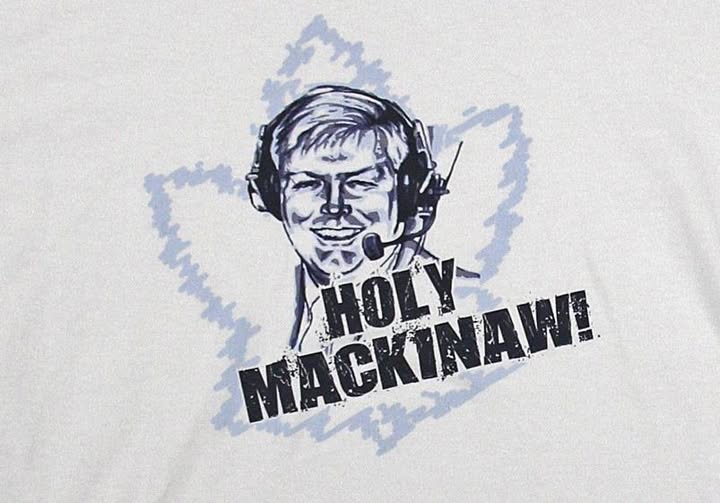
The crackle of the radio fills the arena. Then comes the rising crescendo of 20,000 voices. Cutting through the arena’s din is a booming delivery: “Holy Mackinaw!” It’s a phrase that signifies more than just an exciting play for legions of Toronto Maple Leafs supporters. It’s the sound of shared jubilation. It’s the sound of heart-stopping saves. It’s about goals that lift an entire city. This is the distinctive sound of Joe Bowen. He is not merely an announcer but “The Voice of the Toronto Maple Leafs.” For over four decades, Bowen has been the storyteller. He is the passionate narrator of the Maple Leafs’ saga. He chronicles the soaring triumphs and the agonizing near-misses. The Maple Leafs are one of hockey’s most storied and scrutinized franchises for multiple generations of fans. His career started at the grassroots of Canadian broadcasting. It has reached the pinnacle of his profession. This journey is a testament to dedication, adaptability, and an unwavering connection with the audience.
The very nature of a long-tenured, team-specific “voice” like Bowen’s is rare. He began his Maple Leafs journey in 1982. Today’s sports media often favors national broadcasts with rotating, neutral commentators. Bowen has cultivated a deep, almost familial connection with Leafs fans. This is a direct result of his sustained, passionate, and unabashedly team-focused delivery. Consequently, his career transcends personal achievement. It stands as a powerful emblem of a particular era and style of sports broadcasting. This era fostered profound local loyalty and shaped how fans engage with their teams. This exploration will delve into the career of Joe Bowen. It will trace his path from a hockey-mad kid in Northern Ontario to a Hall of Fame broadcaster. The focus will be on the voice, the moments, and the enduring legacy.
2. Forging the Voice: From Sudbury Steel to Broadcasting Gold
Joe Bowen’s story begins in Sudbury, Ontario, where he was born on April 5, 1951. Raised in the heart of a blue-collar, hockey-obsessed region, the game was ingrained in his early life. He was not just an observer. He participated by playing for the Copper Cliff Redmen, a Northern Ontario championship hockey club in 1967. This hands-on experience with hockey, and also playing football, laid a strong foundation. This foundation included an understanding and passion that would later resonate in his broadcasts. Adding a personal historical note, Bowen is of Irish descent, his paternal grandfather having emigrated from County Cork, Ireland.
The call of the broadcast booth, however, proved irresistible. Bowen enrolled at the University of Windsor to pursue a degree in communications arts. He chose this institution because it allowed him to concurrently gain practical broadcasting experience. It was at the campus radio station, CJAM-FM, covering university sports, that he definitively “caught the broadcasting bug”. During his summers, he returned to Sudbury. He got his initial taste of professional media at CKSO. He started with television operations like camera work and videotaping. Then, he transitioned to sports. This early exposure to various facets of the industry demonstrated a commitment to learning the craft from multiple angles.
Upon graduating, Bowen returned to Sudbury and CKSO full-time. There, he began to hone his on-air skills. He worked as the play-by-play announcer for the Ontario Hockey League’s Sudbury Wolves. He held this role for five years. He also served as the station’s Sports Director. This was his first significant and sustained platform. It was critical for developing his distinctive style. It also helped build the stamina required for live sports broadcasting. The journey continued eastward in 1979 when he moved to Halifax, Nova Scotia. In Halifax, he became the voice of the American Hockey League’s Nova Scotia Voyageurs. He also took on sports director duties for two local radio stations, CHNS AM and CHFX FM. This move to the AHL was a clear progression, bringing him one step closer to the National Hockey League. His Halifax tenure also featured a professional reunion with Michael Cranston. Cranston was a former CKSO colleague. Bowen rekindled an entertaining on-air chemistry with him. This underscored his early ability to build rapport with broadcast partners.
Bowen’s early career began in campus radio. He then moved to the OHL and the AHL. This illustrates a traditional, methodical ascent through the broadcasting ranks. This deliberate progression served as a comprehensive apprenticeship. His roles often included not just play-by-play but broader sports director responsibilities , ensuring a well-rounded development. His extensive experience at multiple levels of the game helped him master the craft from the ground up. This undoubtedly contributed to his preparedness and adaptability. He was ready when the ultimate call from the Maple Leafs arrived.
3. The Call Up: Becoming the Voice of the Maple Leafs
The pivotal moment in Joe Bowen’s broadcasting career arrived while he was in Halifax. He proactively sent out tapes and resumes. Then, Len Bramson offered him a chance to try out. It was for the play-by-play announcer position with the Toronto Maple Leafs. In a touch of relatable humor, Bowen initially suspected the call was a prank by a colleague. After a successful try-out, he replaced Ron Hewat. This achievement made him only the fifth play-by-play radio broadcaster in the storied history of the Maple Leafs. His debut in this iconic role was on October 6, 1982, at the historic Chicago Stadium. He later quipped, “I wondered whether I’d get to do a second game.”
Bowen quickly became a fixture. In 1983, he joined CJCL, the Telemedia flagship station. He assumed roles as the morning sports anchor and the radio voice of the Leafs. His tenure, however, was not without its uncertainties. Rumours circulated in 1995 that he might be replaced. That same year, a bidding war for the Leafs’ radio rights saw Telemedia lose out to Q107. The new station desired a full-time announcer for all 82 regular-season games and playoffs. This prompted Bowen to choose Q107. For a period, he focused exclusively on radio because the station’s policy didn’t permit him to concurrently work on television. Consequently, his then-TV partner, Gord Stellick (also former Toronto Maple Leafs General Manager), was paired with Mark Hebscher. This decision highlighted Bowen’s commitment to being the primary voice of the team. He made this choice even if it meant a temporary shift in his media portfolio.
His talents remained in high demand. By 1997, Bowen was back on television. He took over from Jiggs McDonald for 35 mid-week Maple Leafs broadcasts on Global and ONtv. He did this while maintaining his radio responsibilities with Q107. For many years, Bowen was the voice for regionally televised Leafs games until 2014. These were the games not on CBC or TSN. During this time, Dennis Beyak handled the radio play-by-play. The Canadian sports broadcasting landscape underwent a seismic shift in 2014 when Rogers secured the national NHL rights. This led Bowen to move permanently to radio. He continues to call games alongside Jim Ralph on Sportsnet 590 The Fan or TSN Radio 1050. Commentators from TSN4 or Sportsnet Ontario took over television duties for regional games.
Joe Bowen’s incredible longevity and dedication are remarkable. He called his 3,000th game as the Voice of the Leafs on March 7, 2017. It was a 3-2 home victory against the Detroit Red Wings. Further underscoring the deep appreciation for his contributions, in March 2000, people gave him a gold seat. It was salvaged from the Maple Leafs’ historic former home, Maple Leaf Gardens.
Bowen’s career with the Maple Leafs is a study in remarkable adaptability within a constantly evolving media environment. He successfully navigated changes in employers and broadcast rights holders. He transitioned from Telemedia to Q107. Later, he moved to dual carriage by Rogers and Bell. He also adapted to shifts in the nature of his role, moving between radio-only and television-focused positions and combination roles. Ultimately, he returned to being the primary radio voice. This sustained presence as “The Voice” is therefore not solely attributable to his undeniable talent. It is also due to his significant capacity to adjust. He thrived amidst structural transformations in sports media over four decades. Such resilience is crucial in such an enduring career. It is often unheralded and suggests that future broadcasters will need even greater flexibility. This flexibility will help them navigate the media landscapes to come.
4. “Holy Mackinaw!”: The Artistry and Impact of Joe Bowen
A. Broadcasting Style: More Than Just Words
Joe Bowen’s connection with Leafs Nation is built on a foundation of shared passion. This passion is evident in his distinctive broadcasting style. He has famously stated that he approaches his job “as a fan rather than as a broadcaster or a critic”. This unabashedly partisan, or “total Leafs Homer,” style is not the standard for neutral national broadcasts. However, it is precisely what has endeared him to generations of Maple Leafs supporters. For many listeners, he doesn’t just call the game; he
feels it alongside them, transforming each broadcast into a shared, emotional experience. This deeply resonant approach is a cornerstone of his enduring appeal and legacy. Fans of a team like the Maple Leafs have a fervent and often long-suffering following. They frequently seek validation. They also look for a shared emotional outlet. A strictly neutral broadcast, while objective, may not provide this same level of emotional connection. Bowen’s overt fandom mirrors and amplifies the supporters’ feelings. His perceived “bias” is not a detriment but a defining feature for his target audience. This fosters a profound bond and renders him an integral part of the Leafs fan identity.
Central to his persona is the iconic catchphrase, “Holy Mackinaw!” The exclamation is typically unleashed after a spectacular goal or a crucial save. It is instantly recognizable and deeply embedded in the lexicon of Leafs fans. Bowen attributes the phrase to his father, who used it as a G-rated alternative to swearing. This personal, familial origin lends an air of authenticity. It adds charm to the catchphrase and distinguishes it from a more contrived slogan. It is a piece of his own history shared with millions.
Particularly in the radio medium, Bowen is celebrated for his “superbly descriptive” voice. He has an innate ability to create a vivid picture of the on-ice action. His dynamic descriptions bring the game to life for those who cannot see it. He is often at his most compelling during “frantic moments near the end of games.” His energy and vocabulary escalate to match the intensity of the play. This skill is paramount for a radio announcer, who serves as the sole visual conduit for the audience.
While his style is uniquely his own, Bowen has acknowledged the influence of broadcasting legends. He admits that Danny Gallivan, the revered voice of the Montreal Canadiens, had a significant influence. Bowen regards him as the best he ever heard. Bowen had the opportunity to meet Gallivan, who graciously welcomed him to the NHL broadcasting fraternity in 1982. This acknowledgment connects Bowen to the rich lineage of Canadian hockey broadcasting. It also demonstrates his profound respect for the craft’s pioneers. It suggests a dedicated effort to learn from the greats while forging his own unforgettable path.
B. Memorable Calls: Etched in Leafs Lore
A play-by-play announcer’s legacy is often defined by the moments they immortalize with their words. Joe Bowen’s career is punctuated by calls that resonate deeply within Maple Leafs history.
Nikolai Borschevsky’s overtime goal in Game 7 of the 1993 Norris Division Semi-Finals against the Detroit Red Wings is notable. This goal is perhaps his most recognized highlight. His goal is a standout moment. This moment is known universally. This goal is also cherished as a call. This goal not only won the series but also ignited a memorable playoff run that captivated the city. Bowen himself recalls having a clear view of Borschevsky’s slight redirection of Bob Rouse’s shot from the point. It was a subtle touch that television viewers initially missed without the aid of slow-motion replays. This was due to his broadcast position being closer to the Detroit net for the overtime period. “Little Nikki scored what was one of the most important goals in Maple Leaf history,” Bowen reflected. Fans often recall the essence of the call as an exultant “Nikolai Borschevsky has scored for Toronto! The Leafs Win, the Leafs Win, The Leafs Win!” Exact transcriptions may vary, but it perfectly captured the monumental significance and raw emotion of that franchise-altering moment.
Decades later, another generational talent provided Bowen with a historic moment to call. Auston Matthews delivered an astonishing four-goal NHL debut on October 12, 2016, against the Ottawa Senators. Bowen’s escalating excitement mirrored that of the fans: “Do you believe this? Holy Mackinaw! He’s got three!” and then, culminating with the fourth, “Four goals! Do you believe this? Holy Mackinaw! The kid’s on fire!”. These calls encapsulated the sheer disbelief and thrill of witnessing such an unprecedented debut.
Numerous other clutch moments have been amplified by Bowen’s signature delivery. Playoff clinchers have been met with a jubilant “Holy Mackinaw, they’re going to the playoffs!”. Kasperi Kapanen’s overtime winner against the Washington Capitals in the 2017 playoffs prompted an incredulous “Are you kidding me? Kapanen slaps it home… and the Leafs win it in overtime!”. Similarly, Tyler Bozak’s 2013 playoff overtime winner against Boston was celebrated with excitement. “Tyler Bozak, holy mackinaw, the Leafs have won it!” exclaimed Bowen. And the emphatic “We’re going to Boston, baby!” after a crucial goal with playoff series implications became another memorable soundbite.
Beyond the highlight-reel goals, Bowen’s spontaneity shines through in more unusual situations. One fan fondly recalled a game in the 1990s or early 2000s. In this game, a shot deflected off a player’s errant, dropped stick. It went in for a Leafs goal. This prompted Bowen to exclaim, “AND THE STICK MAKES A GREAT PLAY!”. It’s these unscripted bursts of enthusiastic observation that further cement his connection with listeners.
Table 1: Joe Bowen’s Notable Calls
| Call (Quote/Summary) | Game/Context | Opponent | Date |
| “Nikolai Borschevsky! The Leafs Win, the Leafs Win, The Leafs Win!” | Game 7 OT Winner, Norris Division Semi-Finals | Detroit Red Wings | May 1, 1993 |
| “Holy Mackinaw! Four Goals!… The kid’s on fire!” | Auston Matthews’ NHL Debut | Ottawa Senators | Oct 12, 2016 |
| “Holy Mackinaw, they’re going to the playoffs!” | Clinching playoff berth | Various | Various |
| “Kapanen slaps it home… Leafs win it in overtime!” | Playoff OT Winner, Rd 1 Gm 2 | Washington Capitals | Apr 15, 2017 |
| “Tyler Bozak, holy mackinaw, the Leafs have won it!” | Playoff OT Winner, Rd 1 Gm 4 | Boston Bruins | May 8, 2013 |
| “AND THE STICK MAKES A GREAT PLAY!” | Unusual goal via deflected shot off dropped stick | N/A | 1990s/Early 00s |
C. Broadcast Partners: Chemistry on the Air
Joe Bowen is the lead voice. The chemistry with his broadcast partners has been integral to the listening experience. This has been true over his long career. His most enduring and well-known partnership has been with colour commentator Jim Ralph. The duo has been a fixture in the radio booth for 28 seasons. This impressive tenure is noted as of a June 2025 report. They first teamed up during the 1998-99 season. This was when the Maple Leafs moved from Maple Leaf Gardens to the Air Canada Centre (now Scotiabank Arena). Described as “grizzled broadcasting icons”, they are a “constant source of information and entertainment”. Their remarkable longevity proves exceptional professional synergy. This partnership has persisted through different eras of Maple Leafs hockey. It even continued through changes in broadcast rights holders. The pair has called games on both TSN and Sportsnet radio affiliates. They consistently make remote broadcasts sound live. This is a testament to their consummate professionalism. In 2018, Bowen and Ralph signed a five-year radio deal with TSN and Sportsnet. This agreement further solidified their status as the voices of Leafs radio. The length of this partnership is exceptional in the volatile sports broadcasting industry. It suggests a rare professional alchemy. This has become a defining and comforting feature for Leafs radio listeners. This stability has undoubtedly been a key factor in maintaining audience loyalty through various team iterations and media shifts.
On the television side, Bowen’s most notable long-term partner was analyst Harry Neale. They worked together for 12 years. Their broadcasts during the 1990s and early 2000s are remembered by some fans as “the stuff of legend”. Neale was a respected voice who also worked with other Maple Leafs play-by-play announcers during his tenure covering the team.
Over his extensive career, Bowen has worked alongside several other key figures. Gord Stellick was Bowen’s television partner before 1995. He also served as a radio colour commentator from 1991 to 1995. Bowen took on more television duties. During this time, Dennis Beyak often handled the radio play-by-play. This was notably from 1998 to 2011. Earlier in his Leafs career, Bill Watters provided colour commentary on radio from 1985 to 1991. When Bowen transitioned to Q107 for radio in 1995, Mark Hebscher was teamed up with Gord Stellick. Hebscher participated in the television broadcasts and was a colour commentator from 1995 to 1997. The comprehensive list of Toronto Maple Leafs broadcasters over the decades illustrates Bowen’s role as a central figure. He has been part of a dynamic and evolving team of on-air talent.
Table 2: Joe Bowen’s Key Broadcast Partners
| Partner | Role | Primary Platform(s) | Approximate Years Together with Bowen (and context) |
| Jim Ralph | Colour Commentator | Radio (Sportsnet 590/TSN 1050) | 1998-Present (28+ seasons as of 2025/26) |
| Harry Neale | Colour Commentator | Television (Regional) | Approx. 12 years (various periods, e.g., 1990s-2007) |
| Gord Stellick | Colour Commentator | Radio/Television | Early-Mid 1990s (TV partner pre-1995; Radio 1991-95) |
| Dennis Beyak | Play-by-Play (when Bowen was mainly on TV) | Radio | 1998-2011 |
| Bill Watters | Colour Commentator | Radio | 1985-1991 |
5. Beyond the Leafs Broadcast Booth: A Wider Lens
While Joe Bowen is inextricably linked with the Toronto Maple Leafs, his broadcasting talents have extended to other sports. This showcases his versatility and broader appeal. He was the voice of the National Lacrosse League’s (NLL) Toronto Rock for several seasons. His commentary began with their inaugural season in Toronto in 1999. Before this, they spent one season in Hamilton as the Ontario Raiders. His tenure with the Rock included calling the NLL championship games from 1999 to 2002. He concluded his work with the Rock after the 2007 season. This role showed he could adapt his play-by-play style to another fast-paced indoor sport. It also strengthened his connections with the Toronto sports community.
Bowen’s distinctive voice also found its way into popular culture. Early in his Maple Leafs career, he was cast as the radio announcer in the 1986 hockey film “Youngblood.” The film starred Rob Lowe and Patrick Swayze. This appearance provided his voice with exposure beyond live game broadcasts. More recently, Bowen has become recognizable through his appearances in television commercials for the Harvey’s restaurant chain. He notably promotes their Angus Burger. He frequently employs his “Holy Mackinaw!” catchphrase. He has also lent his voice to numerous other Harvey’s advertisements. These commercial ventures signify his mainstream recognition and the broad appeal of his on-air persona.
His sportscasting repertoire also includes experience in the world of boxing. Bowen provided blow-by-blow commentary for Muhammad Ali’s last professional fight and the Trevor Berbick vs. Larry Holmes World Title Fight. These high-profile assignments outside of hockey underscore his range and capability as a sportscaster across diverse athletic disciplines.
Beyond the microphone, Joe Bowen has been an active and engaged member of the community. He has frequently served as a Master of Ceremonies or guest speaker at a wide array of events. These include banquets, golf tournaments, and charitable events. Notable mentions are the Conn Smythe Dinner, the London Sports Celebrity Dinner, and various Maple Leafs team and alumni functions. A cause particularly close to his heart is leukemia research. This profound commitment is deeply personal. His son, Sean, was diagnosed with Acute Lymphoblastic Leukemia (ALL) at the tender age of one. This experience has fueled his passionate support for organizations dedicated to fighting the disease. His involvement has included events like the Brian Savage Golf Tournament and Have a Heart Dinners. Sean is currently a content producer at Maple Leafs Sports & Entertainment (MLSE). He works for the Maple Leafs & Toronto Argonauts. Sean can also be seen as an in-game host for the Argonauts home games at BMO Field.
These activities outside the Leafs broadcast booth highlight a multifaceted individual. His dedicated charitable work is driven by a personal family experience. This shows he is deeply invested in his community. This humanizes the iconic voice, strengthening his connection with the public in a way that transcends his on-air persona. His legacy, therefore, is shaped by his memorable hockey calls. It is also shaped by his broader contributions to the sports world. Additionally, his unwavering dedication to a cause that profoundly impacted his own life is significant. This adds a significant layer of respect and admiration that complements his extensive professional achievements.
6. Accolades and a Lasting Legacy: The Hall of Fame Voice
The true measure of a broadcaster’s impact often culminates in formal recognition from their peers and the institutions they serve. For Joe Bowen, the pinnacle of such acknowledgment came in June 2018. The Hockey Hall of Fame announced him as the recipient of the Foster Hewitt Memorial Award. This prestigious award honors outstanding contributions by a hockey broadcaster. It is widely regarded as the highest honor for those in his profession in North America. Bowen was officially presented with the award on November 12, 2018. The Foster Hewitt Memorial Award is given to honor distinguished radio and television individuals. They have made outstanding contributions to their profession and the game during their career in hockey broadcasting. A committee from the NHL Broadcasters’ Association chooses the recipients. They are honored with a glass plaque displayed in the Hall of Fame’s media section. This recognition effectively inducts them among the sport’s legendary voices.
Beyond this capstone achievement, Bowen’s career has been punctuated by other notable honors. He was inducted into the Sudbury Kinsmen Sports Hall of Fame in June 1999. This was a nod to his roots and early contributions. In 1988, he received the Fred Sgambati Award from the Canadian Children’s Foundation. As mentioned earlier, a gold seat salvaged from Maple Leaf Gardens was presented as a tribute. This occurred in March 2000 and symbolized his longtime support and connection to the Maple Leafs’ heritage.
In more recent years, Bowen and his long-time radio partner Jim Ralph have faced a new challenge. They call road games remotely from studios in Toronto. They no longer travel with the team. This situation has been frustrating for Bowen. Nonetheless, he consistently maintains his professionalism. He adapts to these evolving broadcast realities. This situation is reflective of broader cost-cutting trends within the sports media industry, which can affect even legendary figures. MLSE, a notably affluent organization, and its media partners Rogers and Bell decided to implement this for their radio broadcasters. This action has drawn criticism. Some observers see it as an unfortunate slight to esteemed professionals. This practice started during the COVID-19 pandemic’s travel restrictions. It has persisted for some radio crews even as restrictions eased. Such measures are applied to iconic figures like Bowen and Ralph. The cost savings for multi-billion dollar corporations are relatively marginal. This signals to some a concerning devaluation of the traditional broadcast experience and the individuals who deliver it. It raises questions about the balance between bottom-line financial considerations and the respect for legacy. It also raises concerns about the quality of the fan experience. It questions the authenticity of the fan experience when broadcasters are removed from the game’s immediate atmosphere.
Looking towards the horizon, Joe Bowen has announced his intention to retire following the 2025-26 NHL season. This would mark the conclusion of an extraordinary 44-season run calling Maple Leafs games. During this time, he anticipates reaching the remarkable milestone of 3,800 career games called. With his characteristic passion, he has publicly shared his deep desire for a Maple Leafs Stanley Cup victory. He hopes this triumph comes soon. He said, “I sincerely hope that this will be the ‘One Before I am Done’ season for the Leafs.” The Leafs are chasing that elusive Cup. This sentiment resonates profoundly with Leafs Nation, which has shared the long journey with him. His retirement announcement was shared on the social media platform X. It included a poignant nod to Frank Sinatra’s “My Way.” This signals the approaching end of a monumental era in Toronto sports broadcasting.
7. Conclusion: The Final Horn (For Now)
Joe Bowen’s career is far more than a collection of games called or years spent in the broadcast booth. It is an indelible chapter in the history of the Toronto Maple Leafs. It is also a significant contribution to the art of hockey broadcasting. For over four decades, his voice has been the unwavering soundtrack to the Maple Leafs experience. He has narrated the dreams, the drama, and the enduring spirit of the team for millions of fans. He has not merely reported on the games; he has amplified their emotional core, his signature calls like “Holy Mackinaw!” becoming ingrained in the cultural fabric of Toronto sports.
The bond he forged with Leafs Nation is unique and powerful. It is built on a foundation of shared passion and unwavering loyalty. This loyalty persisted through both triumphant and trying times. His heartfelt delivery made listeners feel he was one of them. He became more than an announcer; he became a trusted companion through countless hockey nights.
As his announced retirement after the 2025-26 season approaches, it marks the undeniable end of an era. The landscape of sports broadcasting continues to evolve. However, the impact of a voice like Joe Bowen’s is timeless. He perfectly captured the spirit of a team and its city. His legacy will endure. He is a Foster Hewitt Memorial Award winner. He is a beloved Toronto figure. His exclamations of joy and passion will echo in the memories of Leafs fans long after his final call. Joe Bowen’s career stands as a resounding testament to dedication. It highlights the art of storytelling in sports. His voice became the enduring voice of a people.

 ScortonBoy17.ca
Leave a comment