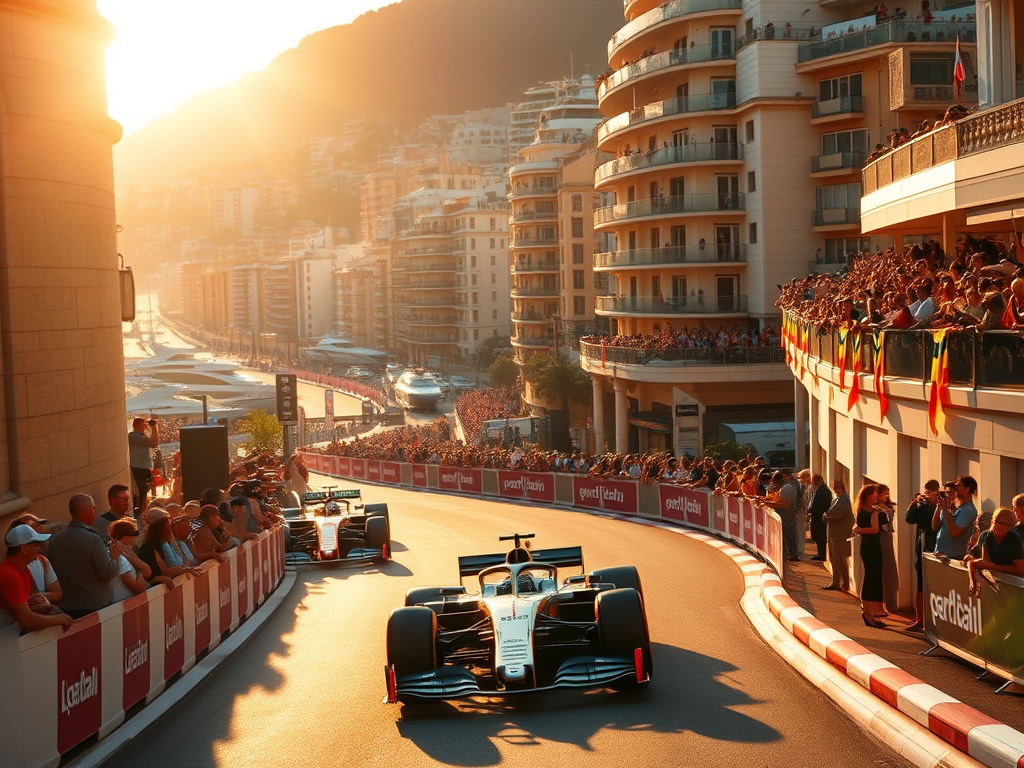
The Monaco Grand Prix stands as a paradox in modern Formula 1. It is undeniably a “crown jewel” of motorsport. The event is steeped in unparalleled heritage and glamour. It is a race every driver dreams of conquering. The Monaco Grand Prix was first included in the inaugural F1 World Championship in 1950. It became a permanent fixture in 1955. Its serpentine streets have borne witness to countless iconic moments. Yet, this illustrious history is increasingly juxtaposed with vocal criticism of today’s Monaco races. These races are frequently labelled as “boring,” “processional,” and “stagnant.” Max Verstappen, the reigning world champion, famously quipped he “should’ve brought my pillow” after the 2024 edition. Many viewers echoed this sentiment of frustration.
This report will delve into the multifaceted reasons behind this paradox. It will explore why a race so revered often fails to deliver on-track excitement. It will analyze the impact of modern Formula 1 car design. It will examine the inherent limitations of the historic circuit. The efficacy of recent and proposed interventions will also be evaluated. The narrow, unforgiving streets of Monaco wind through the Principality and cement its unique historical identity. These elements are primary contributors to its modern racing challenges when paired with contemporary F1 machinery. This is not an entirely new issue, but one significantly amplified by the current generation of cars. Furthermore, the relentless commercial expansion of Formula 1 continues. The introduction of new, purpose-built “destination” tracks intensifies the pressure on historic venues like Monaco. They now need to deliver a compelling “spectacle.” The contract was extended until 2031. This signals F1’s continued valuation of its heritage. However, an acknowledged need for “renovation” underscores the urgency of finding solutions. This exploration seeks pathways to restore the on-track spectacle. It aims to do so without irrevocably damaging the event’s unique soul. The goal is for Monaco to remain not just a glamorous procession, but also a truly unmissable race.
Chapter 1: The Anatomy of a “Boring” Race – Why Has Monaco Stagnated?
The perception of the Monaco Grand Prix as a less-than-thrilling spectacle on Sunday is not without merit. Several interconnected factors contribute to this. These factors primarily arise from the characteristics of modern Formula 1 cars. They also come from the timeless, yet restrictive, nature of the circuit itself.
1.1 The Modern F1 Car: A Behemoth in a Boutique
The evolution of Formula 1 cars has presented a significant challenge for racing at Monaco. This challenge has increased particularly since the 2017 regulation changes that increased their width. Further complications arose with the introduction of the ground effect era in 2022. These machines have become notably wider, longer, and heavier. As Red Bull Team Principal Christian Horner observed, current cars are “almost twice the size”. These cars are compared to those from a decade prior. You can see this in the large vehicles trying to navigate Monte Carlo’s tight confines. One analysis bluntly states that a modern F1 car has a “bigger footprint than a Range Rover”.
A critical factor is the increased aerodynamic sensitivity of modern F1 cars. The phenomenon of “dirty air” is the turbulent wake generated by a leading car. It makes it exceptionally difficult for a following car to maintain close proximity. This is especially true through Monaco’s numerous slow-speed corners. The 2022 regulations were intended to mitigate this by reducing the loss of downforce when following. However, teams relentlessly pursue performance. They have often found ways to exploit design loopholes. This leads to a resurgence of turbulent wakes. A driver finds it challenging to attempt an overtake. The disturbed air decreases their car’s aerodynamics, compromising grip and stability.
The ground effect philosophy was reintroduced in 2022 to promote closer racing on conventional circuits. However, it may have inadvertently exacerbated issues on a unique outlier like Monaco. These cars rely on underfloor aerodynamics and typically run with very stiff, low setups to maximize performance. On the bumpy, low-speed, and often cambered streets of Monaco, this reliance can be problematic. The sheer physical size of the cars remains a primary impediment to side-by-side action, irrespective of improved wake characteristics. Furthermore, the low-speed nature of many of Monaco’s corners may prevent the ground effect aerodynamics from functioning optimally. It may not provide the same benefit in reducing “dirty air” as on faster, more flowing tracks. The aerodynamic philosophies designed for broader applicability across the F1 calendar struggle with Monaco’s unique challenges. This struggle can make the racing less dynamic than in previous eras with different car concepts. The continuous cycle of F1 regulation changes aims to enhance the racing spectacle. Teams often follow these changes with innovative exploitations of the rules. These exploitations can reintroduce issues like potent “dirty air.” Thus, simple rule stability is unlikely to be the panacea for Monaco. A more fundamental re-evaluation of car-to-track compatibility seems necessary for such unique venues.
1.2 The Unforgiving Circuit: A Timeless Challenge, A Modern Bottleneck
The Circuit de Monaco’s layout is legendary. It has remained largely true to its original 1929 design. Modifications over the decades are primarily dictated by the urban development of the Principality. These changes are not driven by specific racing considerations. Iconic corners such as Sainte-Dévote, Massenet, and the famous Loews (now Fairmont) Hairpin are celebrated in motorsport. Portier and the Tunnel section are also famous. They are etched into folklore. This historical consistency is part of its charm but also the root of its modern racing dilemma.
Statistically, Monaco’s reputation for processional races is well-founded. Over the last decade (2011-2021), the Grand Prix has averaged just 10 on-track overtakes per race after the first lap. Some years have been particularly stark. The 2021 Monaco Grand Prix saw zero overtakes after the first lap. The 2024 event recorded only four overtakes throughout its 78 laps. The top 10 finishers mirrored their starting grid positions. These figures stand in stark contrast to other circuits on the calendar. For instance, historical data (1996-2018) shows Monaco averaging 12 overtakes. In comparison, Spa-Francorchamps has 32 overtakes, Interlagos has 34, and Shanghai boasts a remarkable 52
Table 1: Monaco GP Overtaking Statistics vs. Select Other F1 Tracks (Approximate Averages)
| Circuit | Average Overtakes per Race (Dry, Recent Era) | Key Characteristics | Data Source(s) |
|---|---|---|---|
| Monaco | ~10-12 | Narrow, twisty, low-speed, street circuit | |
| Spa-Francorchamps | ~32 | High-speed, flowing, elevation changes, long straights | |
| Silverstone | ~37 | High-speed, flowing, technical sections | |
| Monza | ~42 | Very high-speed, long straights, chicanes | |
| Baku City Circuit | ~55 | Street circuit, very long straight, tight sections |
Note: Averages are approximate, based on data from the last 10-20 years, focusing on dry races where possible. Specific year-to-year figures can vary significantly. The 2024 Monaco GP saw only 4 overtakes. Formula1.com reported 17 overtakes for 2024 , a discrepancy possibly due to differing definitions of an “overtake.” This report primarily uses the lower, more widely cited figures for recent dry Monaco races.
The impact of weather on Monaco’s racing is telling. Wet conditions often act as an equalizer and a catalyst for action. The 2023 race, affected by rain, saw 22 overtakes, while the 2022 event on a wet track featured 13. These numbers are significantly higher than the paltry figures seen in recent dry races. This suggests that car performance differentials become more pronounced when amplified by driver skill. In treacherous conditions, the circuit can host more dynamic contests. It also indicates that when aerodynamic grip becomes less critical, more dynamic contests occur.
People often say, “Monaco has always been difficult for overtaking.” However, the data indicates a particularly sharp decline in on-track action during recent dry races. The 2024 figure of just four overtakes is alarmingly low, even when compared to its own modest historical average. This strongly suggests that modern car characteristics are the primary factor amplifying an existing challenge. Relying on wet weather to make the Monaco Grand Prix exciting is not viable. This highlights a fundamental flaw in the current car-track combination. Proactive solutions are necessary to ensure predictable entertainment, rather than merely hoping for rain.
1.3 The Saturday Focus: When the Race is Run Before Sunday
A direct consequence of the extreme difficulty in overtaking is the disproportionate importance of Saturday’s qualifying session at Monaco. As Williams driver Alex Albon articulated, for drivers, “It’s more just about Saturday though. When you think about qualifying laps… that’s pretty cool”. This feeling is common. Many people perceive the race as a “procession.” The starting grid order largely dictates the final classification, especially for the point-scoring positions. The 2024 race shows this phenomenon clearly. The top ten drivers finished in the same order they started.
This overwhelming emphasis on qualifying has a tangible impact on both driver mentality and fan engagement. Two-time world champion Fernando Alonso has described Monaco as “unique,” yet conceded, “Maybe only Sunday is the bad day… It could be a little bit boring as well, you just need to bring the car home”. Fan discussions online often echo this sentiment. Comments like “The real race is Saturday lol” are common. Many also admit that qualifying “feels a bit hollow when you know the race is likely to be a non-event”.
Monaco’s qualifying is undeniably a breathtaking spectacle of driver skill. Pilots thread their machines millimetres from the barriers. Despite this intense focus, it can create a sense of anticlimax for the main event. If Sunday’s Grand Prix is viewed as predictable, it may lessen the value of the race weekend. It could also reduce the excitement. Many viewers tune in expecting drama and on-track battles. Monaco must keep its “crown jewel” status globally. To achieve this, excitement across the weekend must be rebalanced. Solutions must ensure Sunday is a compelling contest on its own. It should be more than just an epilogue to Saturday’s high-stakes time trial. This necessitates changes that specifically target race-day unpredictability. There must be an emphasis on enhancing on-track interaction. The aim is to move beyond a reliance on chance events like safety cars or rain to stir the order.
Chapter 2: Immediate Interventions – Can Current Tweaks Spark Change?
Formula 1 has faced mounting criticism. Recent Monaco Grands Prix have been particularly processional. In response, Formula 1 authorities have begun to implement specific regulatory changes. These changes aim to inject more unpredictability and strategic variance into the Sunday race. The most significant of these is the mandatory two-stop pit strategy.
2.1 The 2025 Two-Stop Mandate: Strategic Lottery or Processional Parts?
For the 2025 Monaco Grand Prix, and reportedly extending to 2026, a new sporting regulation will take effect. It requires all drivers to make at least two pit stops during the race. Additionally, drivers must utilize three different sets of tires. This rule was largely prompted by the 2024 event. A red flag occurred on the opening lap. This allowed all drivers to make their single mandatory tire change. They did this without a conventional pit stop. This led to an exceptionally static race. The FIA hopes this change will prevent races from being dictated by early safety car or red flag pit stops. It aims to introduce more strategic variables.
Driver opinions on this new rule are mixed but generally hopeful for increased excitement. Max Verstappen suggested it could “spice it up probably a bit more.” It might even “go completely crazy because of Safety Cars coming into play or not making the right calls.” Lewis Hamilton welcomed the initiative, stating, “it’s good to try something different”. Carlos Sainz referred to it as an “element of lottery.” It could “throw some curveballs into strategy.” Meanwhile, Fernando Alonso expressed hope that “the two stops will give some hope after Saturday night.” This could potentially unlock positions on Sunday. Lando Norris anticipated a “complicated race.” He also saw it as an “opportunity for everyone.” This makes a “surprise winner” more likely. However, Oscar Piastri offered a more cautious perspective. He suggested his “head’s still untwisting itself” from the strategic implications. He thought it “will probably lead to a more complicated result.” This is rather than necessarily more on-track overtaking.
The strategic implications are indeed numerous. Teams might consider aggressive early stops. They might even attempt this on consecutive laps, such as lap one and two. This strategy aims to gain track position in clean air. The timing of stops in relation to potential safety car interventions becomes even more critical. The threat of undercuts or overcuts could be amplified. However, there is skepticism. Some observers fear the rule will merely lead to more position changes via pit stops rather than genuine on-track battles. Drivers might manage their pace even more conservatively to control pit windows. Teams could use one car to strategically back up the field to benefit a teammate.
The two-stop rule is designed to create unpredictability. However, its success in enhancing the on-track spectacle is not guaranteed. This is especially true if cars remain fundamentally unable to follow closely or pass. The “lottery” aspect could dominate. This dominance may lead to frustration. People might perceive race outcomes as being overly influenced by chance. Drivers’ skill and racecraft might seem less relevant. Nevertheless, the FIA’s decision to implement a track-specific regulation of this nature for Monaco is significant. It acknowledges the circuit’s unique challenges and sets a precedent. If this experiment is deemed successful, it could boost entertainment. This might encourage similar bespoke rules for other circuits with persistent issues. Conversely, if it fails to deliver a more engaging race, it could strengthen the arguments for more fundamental changes. These changes could be to either the cars or the track itself. This situation acts as a critical test for Monaco’s future approach to F1.
2.2 Tire Strategies: The Softer, the Better? Or Just Managed Processions?
Tire strategy is a cornerstone of modern Formula 1. For Monaco, Pirelli traditionally supplies the softest compounds in its range because of the circuit’s low-energy nature. There is typically low tire degradation. The introduction of the C6 compound, specifically designed for such low-energy street circuits, was partly conceived with Monaco in mind.
There’s an ongoing debate about whether even softer tire allocations could further spice up the Monaco race. George Russell, for example, has suggested that F1 should consider bringing only soft tires to Monaco. He theorizes that this would definitively force at least two stops, even before the mandate. It would create larger pace differentials as tires degrade at different rates. The logic is that softer, faster-degrading tires would introduce more strategic variability. This approach could potentially open up overtaking opportunities if significant pace differences emerge between cars on different tire life cycles.
Experts like Sky Sports F1 analyst Bernie Collins voice a significant counter-argument. They argue that the leader of the race—or the leader of any particular group of cars—can nullify tire degradation advantages. This is due to the extreme difficulty of overtaking. If a car ahead can dictate a slower pace, it can extend the life of its tires. The driver does this without fear of being passed. This reduces tire wear. This slows the overall pace considerably, extending the tires’ longevity. This action negates any potential advantage a chasing car might have on fresher or theoretically faster rubber. This leads to the familiar Monaco “processions.” Drivers manage their pace to the car in front. They do this regardless of their tire situation.
The new two-stop rule interacts with these tire dynamics. Drivers must use three sets of tires. They are still required to use at least two different slick tire compounds during a dry race. This adds another layer to the strategic calculations. Tire strategy’s effectiveness at Monaco is limited. The “track position is king” mantra constrains its use as a primary tool for generating excitement. Softer tires or mandated multiple stops might create potential for pace differentials. However, these may not lead to on-track action. This happens if the leading cars control the pace to such a degree.
The discussion around special tire allocations highlights Monaco’s unique status within the F1 calendar. An approach like “softs only” further underscores this uniqueness. If the sport needs to mandate such specific tire conditions, it goes beyond the usual selection process. This effort is to try and force a more dynamic race. It highlights how standard F1 strategic elements struggle to naturally create excitement at this particular venue. This situation could lead to increasingly artificial interventions. The fundamental issues of car-track compatibility must be addressed more directly.
Chapter 3: The 2026 Horizon – Will New Cars Redefine Monaco Racing?
Looking further ahead, the comprehensive technical regulation changes slated for the 2026 Formula 1 season present an opportunity. They offer a more fundamental way to address some of the issues plaguing the Monaco Grand Prix. These new rules encompass significant alterations to car dimensions, weight, and aerodynamics, all with the stated aim of improving raceability.
3.1 Smaller, Lighter, More Agile: The Promise of New Dimensions
A key component of the 2026 regulations is a reduction in the overall size and weight of the cars. The wheelbase is set to be reduced by 200mm to 3400mm. The width will be cut by 100mm, resulting in 1900mm. Additionally, the maximum floor width will be reduced by 150mm. Alongside these dimensional changes, the minimum weight of the cars is targeted for a 30kg reduction. This will bring it down to 768kg, with 722kg for the car and an estimated 46kg for tires. The FIA’s stated goal for these changes is to create a “more agile car.” The changes aim to “improve efficiency and handling.” They also will “make the cars more raceable.”
Table 2: Evolution of F1 Car Dimensions and Weight (Approximate Values)
| Era | Typical Width (mm) | Typical Wheelbase (mm) | Min. Weight (kg, incl. driver) | Key Car Characteristics / Snippet Refs |
|---|---|---|---|---|
| Late 1960s/Early 1970s | ~1600-1800 (variable, pre-standardization) | ~2200-2500 | ~500-550 (car only) | Lighter, smaller, simpler aero |
| Late 1970s/1980s (Ground Effect/Turbo) | ~2000-2150 (wings often wider than chassis) | ~2500-2800 | ~575-585 (car only) | Ground effect, powerful turbos |
| Early-Mid 1990s (Pre-1998 Narrow Track) | 2000 | ~2800-3000 | ~505-515 (car only) | Complex aero, V10/V12 engines |
| 1998-2008 (Narrow Track Cars) | 1800 | ~3000-3200 | ~600-605 | Grooved tires, narrower cars |
| 2009-2016 (Wider Front Wings/KERS/DRS) | 1800 | ~3100-3400 | ~605-702 | Return of KERS, DRS introduced, higher noses |
| 2017-2021 (Wider Cars & Tires) | 2000 | ~3500-3700+ | 728-752 | Significantly wider cars and tires |
| 2022-2025 (Ground Effect Revival) | 2000 | Max 3600 | 798 | New ground effect philosophy |
| 2026 (Projected) | 1900 | 3400 | 768 | Smaller, lighter, active aero |
Note: Dimensions and weights are approximate and varied within eras. Weight figures often changed year to year. “Car only” weights are pre-driver. The 2000mm width for 1990s refers to overall width including tires; track width was different. The 2026 figures are targets.
Theoretically, these dimensional and weight reductions should benefit racing in Monaco’s notoriously tight confines. Smaller cars inherently have a better chance of navigating narrow sections side-by-side, and lighter cars tend to be more agile. Max Verstappen has commented that smaller, narrower cars would indeed aid racing at Monaco. Accompanying these changes are narrower tires: the fronts will be reduced by 25mm and the rears by 30mm. This change is expected to contribute to around 5kg weight saving per set. Pirelli describes this with a “minimal loss” of grip.
Any reduction in car size is a positive step for a circuit like Monaco. However, the proposed decreases of 100mm in width and 200mm in wheelbase may seem marginal. This is especially true considering the circuit’s extreme narrowness. It remains to be seen if these changes alone are radical enough to fundamentally transform overtaking possibilities. The cars will still be substantially larger than F1 cars from earlier eras. They are also larger than contemporary Formula E machines, which are known to race more effectively at Monaco. However, the targeted 30kg weight reduction could have a more subtle but tangible positive impact. Lighter cars are inherently more responsive and nimble. These characteristics are paramount for driver confidence. They also ensure precision on the Principality’s streets. This could allow drivers to be more aggressive and potentially exploit smaller opportunities, even if outright overtaking remains challenging. Furthermore, reduced mass could positively influence tire wear. It may affect the importance of mechanical grip. This introduces more strategic variables related to low-speed traction.
3.2 Active Aerodynamics (X-mode/Z-mode): Panacea or New Problem for Tight Circuits?
An aerodynamic shift in 2026 will be significant. This change includes introducing an active aerodynamics system. The system features movable front and rear wings. This system will allow drivers to switch between a standard high-downforce configuration (Z-mode) for cornering. It also offers a driver-activated low-drag configuration (X-mode) for straights. This aims to replace the current Drag Reduction System (DRS). It will promote closer racing. This also helps manage energy deployment from the new generation of power units. The FIA anticipates X-mode will be available on straights longer than three seconds. To aid cars in running closer together, front wheel arches will be removed. Specific wheel bodywork will be mandated to optimize wake performance.
However, there are considerable concerns about how this active aero system will function, particularly at a unique circuit like Monaco. Some analysts and fans fear that active aero could bolster “dirty air” in corners when in Z-mode. They also worry it might reduce the effectiveness of the slipstream on straights when in X-mode. The activation parameters for X-mode might render it largely ineffective on Monaco’s very short straights. The associated MGU-K override reportedly only starts to provide a significant boost above 290kph. If X-mode cannot be used for large parts of the lap, it will not be very useful for overtaking at Monaco. Its potential to help will be greatly reduced. If X-mode is not usable for extensive sections of the lap, it will lose its usefulness for overtaking at Monaco. Its potential to enhance overtaking at Monaco will decrease significantly. Also, if the benefits are marginal, overtaking potential will be limited. The benefits might be insufficient if the straight-line distance is too short.
The constant and rapid switching between Z-mode and X-mode could be challenging to navigate Monaco’s labyrinthine layout. This challenge could arise for drivers in terms of workload. It could also affect the systems in terms of reliability and responsiveness. For safety and practical reasons, the use of X-mode might be heavily restricted for much of the Monaco lap. It might even be disabled, which negates its intended benefits for this specific track. Additionally, if teams design the Z-mode (cornering mode) with extremely high levels of downforce, the cars might become more sensitive. This sensitivity could be more pronounced in turbulent air. This sensitivity to turbulent air could be especially pronounced in Monaco’s slow corners. This is intended to compensate for the overall 30% downforce reduction mandated by the 2026 rules. This could counteract any benefits gained from the smaller car dimensions. While features like “in-washing wheel wake control boards” are being introduced to manage this, their effectiveness is unknown. This especially applies to such a tight and twisting circuit. There’s a risk that active aerodynamics could introduce new complexities. These complexities may arise despite their potential benefits on more conventional circuits. Alternatively, they might exacerbate existing problems at Monaco.
3.3 Impact of Reduced Overall Downforce and Drag on Close-Quarters Racing
The 2026 regulations mandate a substantial 30% cut in overall downforce and a 55% reduction in drag. The goal is to make the cars less aerodynamically sensitive. This theoretically allows them to follow each other more closely with less performance degradation from turbulent air. This includes changes to the underfloor. One change is a “partially flat floor.” Another change is a “lower-powered diffuser.” These changes are designed to reduce the intensity of the ground effect. They also aim to lessen the cars’ reliance on ultra-stiff setups. They additionally seek to lessen low ride height setups to mitigate issues like porpoising and bouncing.
A significant reduction in downforce could make the cars more reliant on mechanical grip. This grip is generated by the tires and suspension, especially at a low-speed circuit like Monaco. This shift could lead to cars sliding more. It places a greater emphasis on driver skill in managing the vehicle’s stability. Traction becomes crucial as well. This characteristic might naturally lead to more overtaking opportunities. Alternatively, it could cause more incidents and mistakes that shake up the race order. Direct, side-by-side passing is still inherently difficult. The increased challenge for drivers to handle the car “on the edge”. This could enhance Monaco’s character as the ultimate test of skill.
This combination of smaller cars and significantly reduced downforce could inadvertently reintroduce a higher “attrition” factor. These factors may also lead to potentially more challenging handling characteristics. This is reminiscent of older Monaco Grands Prix. In past eras, simply finishing the demanding race was an achievement. Races were often decided by who could navigate the treacherous streets without error. They were also influenced by whose machinery could withstand the strain. The 1996 Monaco Grand Prix, for example, famously saw only three cars cross the finish line. An increase in incidents and unpredictability might be perceived by some as “excitement.” However, it offers a different kind of spectacle. This is compared to close, wheel-to-wheel racing. This raises a pertinent question about the type of excitement Formula 1 aims to cultivate at Monaco. Is it the thrill of precision driving on the absolute limit? Is it the drama of strategic gambles? Or is it the chaos of high attrition? The 2026 regulations might shift this balance considerably.
Chapter 4: Radical Solutions – Reimagining the Principality’s Challenge?
Beyond the planned 2026 car regulations and current sporting tweaks, more radical solutions are often debated. These solutions aim to fundamentally alter the racing dynamic at Monaco. These range from ambitious track modifications to bespoke car rules and innovative weekend formats.
4.1 Track Modifications: Carving New Paths in Ancient Streets
The existing layout has inherent limitations for modern F1 cars. This has led to various proposals for track modifications over the years. Christian Horner, Red Bull’s Team Principal, mentioned that the circuit “must be adapted for long-term viability.” He believes overtakes are currently “virtually impossible.” Some of the notable suggestions include :
- Removing the Nouvelle Chicane: This is often cited as one of the more “realistic” options. The idea involves creating a longer approach to the Tunnel, potentially incorporating a DRS zone, by removing the current chicane. Creating a new, likely tighter, chicane before Tabac would be necessary. It would require a new concrete pad extending into the harbour at “vast expense”.
- Surpassing Portier: This concept aims to extend the high-speed run through the Tunnel. It does this by re-routing the track after Mirabeau Bas into a long hairpin. This hairpin rejoins at Portier. However, its impact is considered “minimal” unless combined with other changes like the Nouvelle Chicane removal.
- Extended Circuit (Harbour Side): A more ambitious idea suggests removing the Rascasse complex. The track could be diverted along the other side of the harbour. It would loop around the dock before rejoining the main straight near Antony Noghès. This could create an additional DRS zone. However, it would require “extensive widening” of existing roads. It would also cause significant disruption to harbour operations. These include disruptions to the cruise ship dock, maritime police office, and the Monaco Yacht Club.
- “Monaco XXL”: This is the most radical proposal. It suggests a diversion away from Casino Square. The plan includes a newly created straight (and DRS zone). Then, it descends back to rejoin the original circuit near Mirabeau Haute. This would require significantly more development and preparation time.
The feasibility of any such modifications in Monaco is fraught with challenges. The immense cost is a substantial hurdle. It includes logistical complexity of construction in a densely populated city-state. There’s disruption to residents and businesses. It also has a significant heritage impact and the difficulty of ensuring safety, particularly creating adequate run-off areas. The unique urban setting that defines Monaco also makes any alteration a delicate balancing act.
There are limited official public statements from the Automobile Club de Monaco (ACM) or senior Monegasque officials. They have not specifically addressed these F1-centric major track change proposals. However, their past actions offer some insight. The ACM has collaborated with Formula E to adapt the circuit layout for the electric racing series. They included a longer, more F1-like configuration as FE car performance has increased. This shows their flexibility. They are willing to modify the track when a compelling case is presented. The modifications also need to align with the series’ needs. This suggests that Formula 1 might propose specific, feasible changes. These changes need to demonstrably improve racing. If so, the ACM could be open to discussion. However, the changes must not catastrophically impact heritage or incur prohibitive costs. However, F1 would likely need to exhaust car-side solutions first. Only after that could they advocate for disruptive and expensive track alterations.
4.2 Monaco-Specific Car Regulations: A Bespoke Approach?
Another avenue for enhancing the Monaco spectacle involves the idea of implementing car regulations specifically tailored for this unique event. One fan suggestion, for instance, proposes allowing teams to develop unique aerodynamic packages for Monaco. This could include a separate budget allowance. It is similar to how IndyCar teams have different configurations for ovals and road courses.
Such an approach primarily allows for optimizing cars for Monaco’s specific demands. This includes maximizing low-speed mechanical grip. It also involves reducing aerodynamic sensitivity in traffic and perhaps incorporating features that aid overtaking on short straights. However, the disadvantages are significant. Designing, testing, and building bespoke components for a single race would be costly for the teams. This expense would run counter to F1’s current cost cap philosophy. It would also go against efforts to control spending. Contentious “balance of performance” debates might arise. Some teams could gain a disproportionate advantage from such specific rules.
Furthermore, it deviates from Formula 1’s core technical philosophy. In this philosophy, cars are designed to a universal set of regulations. They are then adapted through setup changes for different circuits. Introducing “Monaco specials” could be seen as overly artificial. It might dilute the challenge of creating a car that performs well across a diverse calendar. The existing mandatory two-stop rule for Monaco is a sporting regulation change. Implementing Monaco-specific technical regulations for the cars themselves would be a far more radical step. This change carries broader implications for F1’s identity. It risks blurring the lines between F1 and other series that routinely use different car specifications for different tracks. This situation could potentially make Monaco feel more like an exhibition event. It could reduce its role as an integral part of the World Championship from a technical standpoint.
4.3 Weekend Format Innovations: More Than Just Sunday?
There are challenges in improving on-track F1 racing on Sunday. Some proposals focus on altering the weekend format to ensure entertainment. This is true even if the Grand Prix itself remains somewhat processional. One idea is to further enhance the qualifying spectacle, given its existing importance and excitement. This could involve extending the session. It might adopt a tournament-style knockout format with head-to-head mini-races. There could be mandates for specific tire compounds for different qualifying segments. Another option is a return to single-lap “shootout” qualifying to maximize the drama of each driver’s run.
Some fans have suggested more radical ideas. These include running non-championship races on Sunday. They might feature different car categories like go-karts. Some even joked about using “Lego cars.” The idea is suggested if F1 cars cannot provide adequate entertainment. While whimsical, these ideas underscore the frustration with the current Sunday product. The Monaco Historic Grand Prix successfully showcases classic F1 cars from various eras. It is a popular event in its own right. This success demonstrates an appetite among fans for seeing different types of racing machinery tackle the iconic circuit.
The question of whether F1’s existing sprint race format could be adapted for Monaco is also pertinent. The current snippets do not delve into its specific potential impact here. They only make general statements that sprint races add to the weekend spectacle. A sprint race at Monaco might face the same processional issues as the main Grand Prix. This would happen if overtaking remains impossible.
Shifting the primary focus heavily towards qualifying or introducing alternative Sunday events essentially concedes a significant point. The Formula 1 Grand Prix itself, in its current iteration at Monaco, is difficult to fix for exciting wheel-to-wheel racing. While this might provide entertainment, it risks devaluing the main F1 race. The prestige of winning the Monaco Grand Prix could decrease. This could happen if the race itself is seen as secondary to other weekend highlights. The popularity of the Historic GP indicates a potential for a curated Sunday schedule. This schedule could feature diverse on-track action. F1 could be a key component. This arrangement might ensure a compelling day for spectators. This is possible even if the F1 race has inherent limitations.
Chapter 5: Lessons from Across the Pond and the Electric Avenue – What Can F1 Learn?
To find fresh perspectives on revitalizing the Monaco Grand Prix, Formula 1 might look to other motorsport series. These series have found success with exciting racing on challenging street circuits. Notably, IndyCar and Formula E are examples.
5.1 IndyCar’s Street Fight: Robust Cars, Push-to-Pass, and Action-Packed Racing
IndyCar racing, particularly on its American street circuits like Long Beach or St. Petersburg, is often lauded for its close competition and overtaking action. This stems from a distinct racing philosophy and car design approach compared to Formula 1. IndyCar places a strong emphasis on competitive parity and driver skill, with cars designed to race in close proximity. The series utilizes a spec Dallara chassis (currently the IR-12 with the IR-18 aero kit). It is engineered for robustness. This feature is advantageous for its staple oval races. It also proves beneficial for the cut-and-thrust of street course racing, where minor contact occurs more often.
Aerodynamically, IndyCar uses a universal aero kit. It is designed to simplify aerodynamics and reduce turbulent wake. This kit improves a car’s ability to follow closely behind another. The downforce is significantly generated from the underbody. This makes the cars less susceptible to losing performance in dirty air. F1 cars, in contrast, rely more heavily on complex external aerodynamic surfaces. While IndyCars are generally heavier than F1 cars, their greater durability allows for more aggressive racing.
A key element contributing to IndyCar’s on-track action is the “Push-to-Pass” system. This driver-activated mechanism provides a temporary boost in engine horsepower (typically around 60bhp) for a limited total duration per race. Drivers can deploy this strategically for both attacking and defending. This strategy adds a dynamic layer to battles. It is independent of DRS zones. The limited availability of the boost also means drivers must choose their moments carefully. It creates strategic dilemmas and often leads to late-race drama. Some drivers run out of their allowance while others have preserved it.
Successful IndyCar street races, like the Long Beach Grand Prix, often focus on the overall spectacle. They emphasize fan experience. They offer a diverse motorsport festival, rather than solely relying on the headline IndyCar race for entertainment.
IndyCar’s success on street circuits appears to stem from a holistic approach. Cars are designed with both close racing and robustness in mind. There is also a driver-activated tactical tool for overtaking. F1’s current primary intervention for Monaco is the two-stop rule. This rule is a purely strategic mandate. It does not address the fundamental car design. It also does not provide drivers with additional on-demand overtaking aids. Adopting an IndyCar-style “Push-to-Pass” system for F1 at Monaco could be more palatable. This solution is less disruptive than major track alterations. It also requires less change than bespoke car aero packages. However, its effectiveness would be intrinsically linked to the base level of “raceability” of the F1 cars themselves. If the cars cannot follow closely through Monaco’s corners, they will struggle. They will not be able to use such a system on the short straights. Its benefit would be limited. It could serve as a valuable complement to other changes. These changes include smaller cars. However, it might not be a standalone panacea.
5.2 Formula E in Monaco: Why Smaller, Less Aero-Dependent Cars Thrive
Formula E, the all-electric single-seater championship, has also raced at Monaco. It utilizes a layout that is now virtually identical to the F1 circuit. Remarkably, these races have often produced significantly more on-track action and overtaking than their F1 counterparts. In one Formula E race at Monaco, the winner started from eighth on the grid. Another driver, who finished on the podium, improved eleven positions. The ACM itself noted the 2021 Formula E event for its “unprecedented number of overtakes”.
Several key differences in car design and philosophy contribute to Formula E’s success on the Monegasque streets:
- Car Size: Formula E cars are considerably smaller than F1 machines. They are shorter in length and narrower in width. They also have a significantly shorter wheelbase. This more compact footprint makes it easier for cars to race side-by-side. It allows them to navigate Monaco’s tightest corners without inevitable contact.
- Aerodynamics: Formula E cars are far less dependent on aerodynamic downforce for their performance compared to F1 cars. They generate less overall downforce and, crucially, produce a much less turbulent wake (“dirty air”). This allows cars to follow each other very closely through corners. There is not a significant loss of grip or performance. This is a prerequisite for attempting overtakes.
- Tires: Formula E employs all-weather, durable tires. They are currently supplied by Hankook. These tires are designed to last an entire race. They can even last a double-header weekend with limited sets. There is no artificially induced high degradation forcing drivers into tire conservation mode. This allows for more sustained aggressive driving.
- Attack Mode: Formula E features a unique strategic element called “Attack Mode.” Drivers must deviate from the optimal racing line to activate a temporary power boost. They pass through a designated activation zone. This inherently creates strategic divergence. There are guaranteed opportunities for pace differentials. Drivers trade track position for a temporary power advantage, leading to overtaking attempts.
The 2026 F1 car regulations involve a planned reduction in car size. This is a step in a similar direction. However, F1 cars will still remain substantially larger than their Formula E counterparts. The success of Formula E at Monaco compellingly demonstrates that the circuit itself is not inherently unraceable. The critical variable is the type of car attempting to race on it. This places the responsibility squarely on F1’s car design philosophy if it aims to achieve similar levels of on-track dynamism.
Formula 1 is unlikely to adopt Formula E’s exact car formula. This is due to its positioning as the pinnacle of motorsport technology. It focuses on ultimate speed and aerodynamic prowess. However, the principles demonstrated by Formula E offer a clear conceptual pathway. Smaller dimensions are valuable lessons. Reduced reliance on sensitive aerodynamics for close-quarters racing is another lesson. Potentially innovative strategic elements that force tactical divergence, like Attack Mode’s off-line activation, also provide insights. If the 2026 F1 car changes prove insufficient for Monaco, these concepts provide a blueprint. They help adapt the “tool” (the F1 car) to the unique “job” (racing excitingly at Monaco).
Chapter 6: Balancing Legacy with Spectacle – Monaco’s Path Forward
The Monaco Grand Prix stands at a crossroads. It must preserve its immense legacy, unique glamour, and the ultimate test of driver skill it represents. It needs to address the undeniable demand for a more engaging race. There is a growing need for a more unpredictable Sunday race. With a contract secured until 2031 , the pressure is on to “renovate” the spectacle.
There is no single “silver bullet” solution. Instead, a multi-faceted and iterative approach, combining short, medium, and potentially long-term measures, appears most promising:
Short-Term Interventions: The introduction of the mandatory two-stop pit rule for 2025 is a necessary experiment. It may primarily lead to strategic overtakes rather than on-track passes. However, it will undoubtedly introduce more variables. It can disrupt the familiar one-stop processions, especially if safety cars intervene at opportune (or inopportune) moments. To amplify degradation and pace differentials, softer tire allocations could be considered. Leaders controlling the pace remains a significant mitigating factor. Expectations for these immediate tweaks should be managed. They are palliatives, not cures for the underlying issues of on-track passing difficulty.
Medium-Term Evolution (2026 and Beyond): The 2026 technical regulations bring smaller, lighter, and potentially less aerodynamically dominant cars. This represents a pivotal moment. The reduction in car footprint and weight could make cars more agile. A 30% cut in downforce makes them more reliant on mechanical grip. This places a greater emphasis on driver skill. It could lead to more errors and organic racing incidents. However, the impact of the new active aerodynamic systems (X-mode/Z-mode) on a tight, low-speed circuit like Monaco needs careful scrutiny. If these systems lead to increased dirty air in cornering (Z-mode), this effect could counteract the advantages. The dimensional changes might be undermined. If these systems are largely unusable on Monaco’s short straights (X-mode), they may also counteract some of the benefits. Formula 1 leadership must strike a delicate balance. CEO Stefano Domenicali and the FIA need to uphold the sport’s heritage. They must also meet the modern demand for an engaging spectacle.
Long-Term Considerations (If Car Changes Prove Insufficient): The 2026 car revisions may not yield a significant improvement in Monaco’s raceability. In that case, more substantial interventions may need to be revisited. Limited, high-impact track modifications could be cautiously explored. This includes the often-discussed reprofiling of the Nouvelle Chicane area to create a more viable overtaking opportunity. These modifications could be considered if proven feasible from engineering, cost, and heritage perspectives. Alternatively, F1 could explore more radical, Monaco-specific driver aids. One option is a carefully designed “Monaco Boost” system. This system, inspired by IndyCar’s Push-to-Pass or Formula E’s Attack Mode, could provide temporary advantages for attacking or defending.
The Monaco Grand Prix offers an unparalleled challenge to driver skill. It demands ultimate precision, bravery, and concentration. Qualifying is a spectacle where drivers push to the absolute limit. They are mere inches from the barriers. This remains one of F1’s most compelling sights. However, this Saturday thrill cannot indefinitely compensate for a predictable Sunday.
The “Monaco problem” is, in many ways, a microcosm of a broader challenge confronting Formula 1. The sport must ensure its cutting-edge, high-performance machines can produce exciting racing. This is difficult on historic circuits that were not conceived for their current dimensions and aerodynamic characteristics. Monaco is the most extreme example, but similar, albeit less severe, challenges exist at other classic venues. The solutions and adaptations developed for the Principality could inform strategies. These strategies could help preserve the competitive viability and entertainment value of other cherished historical tracks on the F1 calendar. As Stefano Domenicali has noted, F1 needs to identify areas where technology and entertainment overlap.
Ultimately, Monaco cannot solely be a museum piece, a nostalgic nod to a bygone era. It must also function as a compelling, contemporary sporting contest. Finding the delicate equilibrium between its irreplaceable heritage and the imperative for an exciting race is not just desirable. This balance is key. It ensures the Monaco Grand Prix stays vibrant. It will remain an unmissable highlight of the Formula 1 World Championship for decades to come.
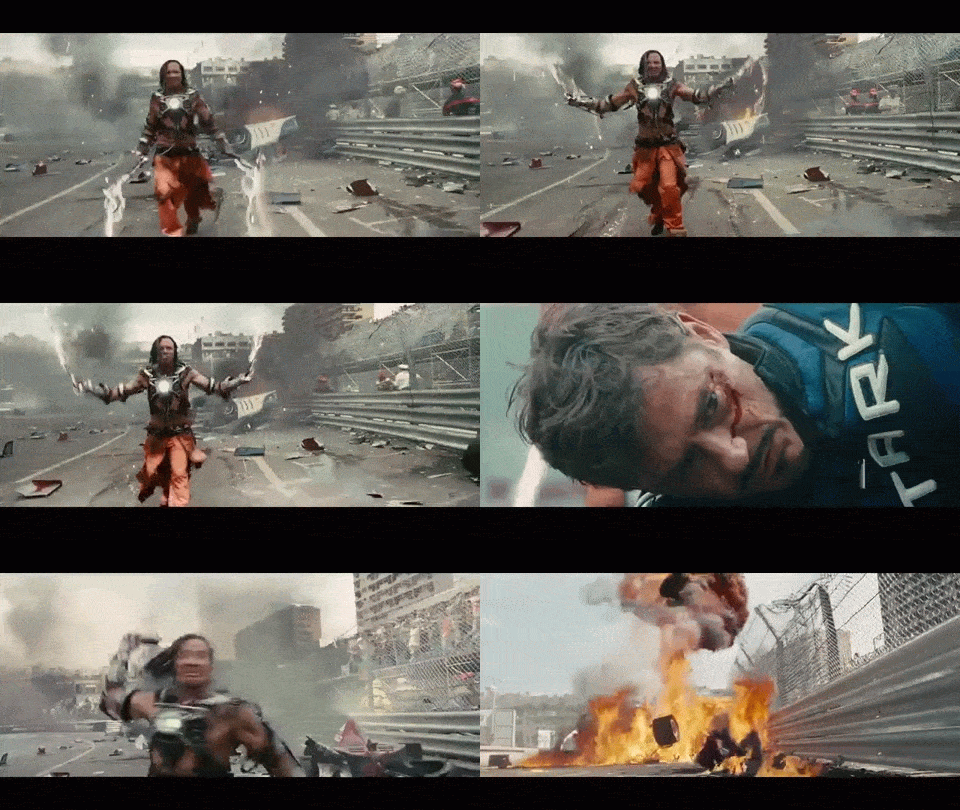
If none of this works, they could always bring in Ivan Vanko to make everything interesting in the race again

 ScortonBoy17.ca
Leave a comment