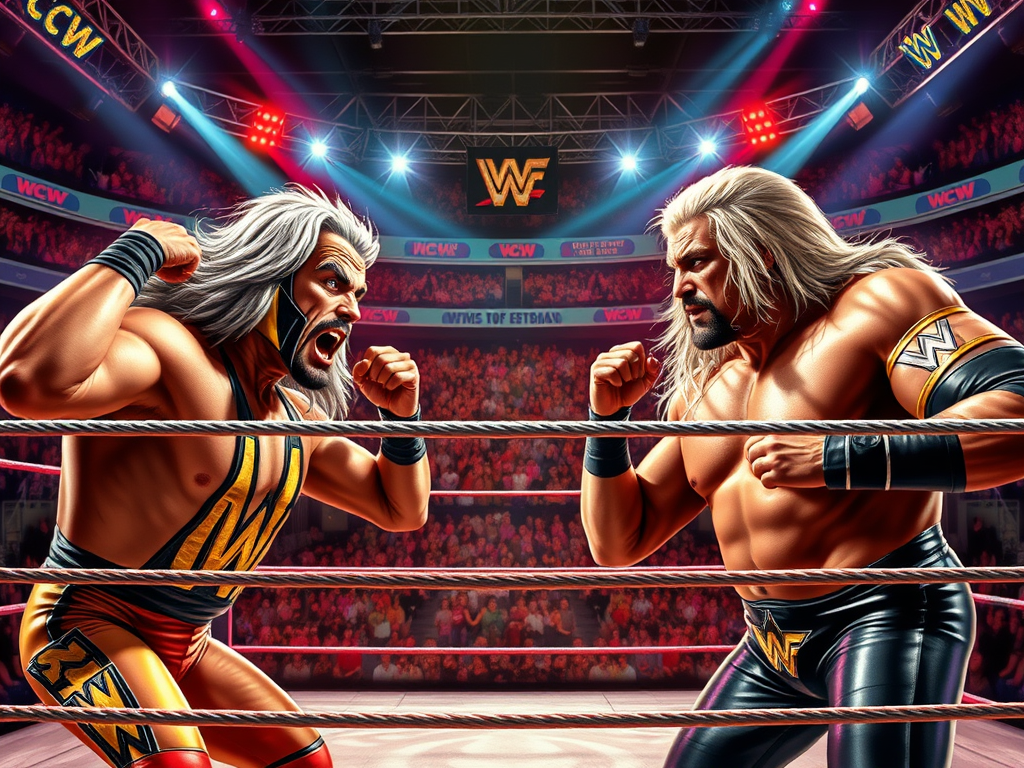
The late 1990s and early 2000s were a pivotal era in professional wrestling. An intense rivalry dominated the scene between World Championship Wrestling (WCW) and the World Wrestling Federation (WWF). This period is famously dubbed the “Monday Night Wars”. This battle for television ratings and fan loyalty captivated audiences, shaping the industry for years to come. Ultimately, the WWF triumphed under the leadership of Vince McMahon. In March 2001, they acquired WCW’s assets for a mere $7 million. This purchase consolidated WWF’s position as the undisputed leader in the professional wrestling world, effectively ending the fierce competition. However, an intriguing hypothetical emerges. What if the financial tides had turned? Imagine if WCW, bolstered by Ted Turner’s media empire, had been poised to acquire the WWF? This analysis delves into the various effects of such an alternate acquisition. It explores its potential impact on finance and creative direction. Moreover, the analysis examines talent management and the long-term landscape of the professional wrestling industry.
The Money Matters: Financial Fortunes Before the Fall (and Potential Rise?)
Understanding whether WCW buying WWF is plausible requires examining the financial standing of both promotions. Evaluating the potential consequences also depends on this financial analysis. This was especially important around the turn of the millennium. In 1999, WCW’s revenue reached approximately $500 million. Based on this impressive figure, WWF’s profit margins suggested that WCW could be valued at $3 billion. This valuation was possible if it could maintain its revenue stream and replicate WWF’s profitability as a standalone entity. However, this optimistic valuation was contingent on sustained success and a similar cost structure to WWF. While a $500 million revenue figure painted a picture of success, the underlying financial health of WCW was more precarious.
Beginning in 1998 and 1999, WCW experienced a significant creative decline, which directly led to a decrease in viewership. This downturn in creative output had a tangible negative impact on the company’s financial performance. Lower viewership translates to reduced advertising revenue. It also potentially leads to fewer pay-per-view buys, creating a detrimental cycle. Furthermore, WCW was notorious for its lavish spending on talent contracts. The company often signed established wrestlers to prevent them from appearing on WWF television. This strategy of hoarding talent was intended to weaken the competition. However, it resulted in an inflated payroll. Many wrestlers were not actively contributing to the on-screen product. This inefficient allocation of resources ultimately weakened WCW’s financial foundation. By the year 2000, WCW’s financial situation had deteriorated significantly, with reported losses of $62 million. Time Warner declined a substantial $500 million offer from SFX Entertainment in the summer of 2000. This decision appears catastrophic in hindsight. The company was sold for a mere $4.2 million less than a year later. This sequence of events suggests a disconnect. It highlights a gap between the perceived value by external entities and the internal assessment within Time Warner. Then there was a rapid decline in the company’s financial standing. Its brand value also decreased.
Conversely, specific revenue figures for WWF in the late 1990s and early 2000s are not extensively detailed. This information is not provided in the snippets. However, it is noted that in 1999, WWF generated $373 million. This was equivalent to $373.10 million in revenue with a profit of $69 million . This indicates a healthier profit margin compared to WCW’s likely negative or low profitability during the same period. WWF’s business model seemingly prioritized profitability alongside revenue generation, positioning them for greater long-term sustainability. The 1990s are also described as a time of high financial success for professional wrestling in general. This suggests that WWF was also benefiting from this industry-wide boom. By 2011, WWE (the rebranded WWF) possessed assets exceeding $380 million. This fact demonstrates a strong financial recovery. It also shows growth following the acquisition of WCW. The acquisition was a financially sound decision for WWF in the long run, despite the low purchase price. It granted them control over WCW’s valuable tape library. The deal also eliminated a major competitor and allowed WWF to absorb some of its talent. This strengthened their market position and future revenue streams.
For WCW to have acquired WWF, a significant financial shift would have been necessary. With more prudent cost management, WCW might have been in a stronger financial position. Developing and pushing its younger talent would have helped too. Avoiding the prolonged creative slump would have been beneficial. Alternatively, Time Warner might have been driven by a desire for market dominance in the wrestling world. The company could have been willing to invest heavily in WCW to facilitate such an acquisition. However, given the actual financial trajectories of both companies, the scenario of WCW buying WWF appears highly improbable. Nevertheless, examining this counterfactual allows us to analyze the potential influence of various leadership philosophies. It also lets us consider creative philosophies on the combined entity.
| Metric | WCW (1999) | WWF (1999) |
|---|---|---|
| Revenue | ~$500 million | ~$373.1 million |
| Profit | Likely Negative/Low | ~$69 million |
| Potential Valuation (Projected) | ~$3 billion | Not Explicitly Stated |
| Acquisition Price (2001) | N/A (Buyer) | $7 million |
Titans of Industry: The Power Brokers and Their Philosophies
The contrasting leadership and philosophies of the key figures in WCW and WWF during this era were crucial. They shaped their respective paths. These factors would have significantly influenced the outcome of an alternate acquisition. Ted Turner owned Turner Broadcasting System and later Time Warner. He provided the essential financial backing. This support allowed WCW to emerge as a competitor to the established WWF. His initial investment enabled WCW to attract top talent and launch a primetime competitor in Monday Nitro. However, Turner’s primary motivation for owning WCW might have been more about filling airtime on his networks. He was also likely motivated by engaging in a media rivalry with Vince McMahon. His actions were not driven by a deep-seated passion for professional wrestling’s intricacies. He also did not focus on its long-term strategic growth. This perspective could explain some decisions made at the ownership level. One such decision was the willingness to incur substantial expenses. This was done without a clear, sustainable strategy for profitability within the wrestling division.
Eric Bischoff served as the driving force behind WCW’s period of mainstream success in the mid-1990s. Bischoff implemented a more adult-oriented and reality-based product. He achieved this as Executive Producer and later President. This approach was evident with the creation of Monday Nitro. WCW strategically signed prominent former WWF talent like Hulk Hogan. His strategy directly challenged WWF’s flagship show, Raw. It included the controversial tactic of revealing Raw’s taped results on live Nitro broadcasts. This approach initially proved highly effective. The New World Order (nWo) storyline was introduced and later dominated the scene. Bischoff himself became a key on-screen figure in this storyline. This series of events propelled WCW to the top of the wrestling ratings for a significant period. However, despite these successes, Bischoff has acknowledged a critical oversight. He failed to adequately promote and elevate WCW’s younger, talented midcard stars to the main event level. He relied heavily on established veterans with lucrative long-term contracts. His later tenure in WCW had a creative decline. There was an overdependence on the nWo storyline. Increasing interference from Time Warner executives allegedly pushed for a more “family-friendly” approach. This potentially hindered the elements that had initially turned the company’s fortunes around. Bischoff’s innovative and risk-taking approach undoubtedly propelled WCW to its peak. However, he could not adapt to changing circumstances. He ultimately failed to build a sustainable future for the company, which contributed to its downfall.
Vince McMahon had a clear and unwavering vision for the WWF. He transformed it from a regional operation into a global entertainment powerhouse. McMahon took a hands-on approach. He was instrumental in creating the spectacle of WrestleMania in the 1980s. He also created the “Rock ‘n’ Wrestling Connection.” This successfully integrated professional wrestling into mainstream pop culture. Faced with the formidable competition from WCW in the late 1990s, McMahon led the “Attitude Era.” This marked a bold shift towards edgier content and more mature themes. The era also featured compelling and often controversial storylines. These changes resonated strongly with a broader audience. A key element of this era was the elevation of homegrown talent. McMahon strategically built new main event stars like Steve Austin, The Rock, and Triple H. Furthermore, McMahon’s own on-screen portrayal as the tyrannical “Mr. McMahon” was central to the Attitude Era. It was highly successful, particularly due to his iconic feud with Stone Cold Steve Austin. McMahon’s relentless drive and adaptability were crucial. His willingness to embrace controversial yet captivating storylines enabled WWF to survive the Monday Night Wars. It ultimately emerged as the dominant force in the industry.
| Key Figure | Company | Role | Key Characteristics/Philosophies |
|---|---|---|---|
| Ted Turner | WCW | Owner, Turner Broadcasting System | Provided financial backing, potentially viewed WCW primarily as a tool for media competition. |
| Eric Bischoff | WCW | Executive Producer/President | A risk-taker, he aimed to modernize WCW with reality-based storylines. He signed established stars and created Nitro and the nWo. Later, he was criticized for mismanagement and his failure to elevate younger talent. |
| Vince McMahon | WWF | Owner/CEO | He was a visionary and hands-on leader. He transformed wrestling into global entertainment. He created WrestleMania and spearheaded the “Attitude Era” with edgier content and compelling storylines. He focused on nurturing and promoting homegrown talent. He embraced his on-screen “Mr. McMahon” persona to great success. |
Creative Collisions: Worlds of Wrestling Clash
The creative philosophies of WCW and WWF during the late 1990s and early 2000s were vastly different. Their wrestling styles presented a stark contrast. This difference appealed to various segments of the wrestling fanbase. Initially, WCW emphasized a more traditional approach to professional wrestling. They focused on in-ring competition and athletic prowess. This style often appealed to fans who preferred a more serious and less theatrical style. Under Eric Bischoff’s leadership, WCW shifted significantly towards reality-based storylines. They incorporated real names into their narratives. Darker themes also became prevalent. The groundbreaking New World Order (nWo) storyline perfectly exemplified this approach. It blurred the lines between kayfabe (the portrayal of staged events as real) and reality. This created a sense of intrigue and unpredictability that captivated audiences. WCW also garnered considerable acclaim for its development of a popular cruiserweight division. This division showcased a fast-paced, high-flying, lucha libre-inspired style of wrestling. It provided a distinct alternative to the more power-oriented matches often seen in WWF.
Despite these creative successes, WCW was frequently criticized for its inconsistent storytelling. The organization faced periods of creative turmoil. There was a perceived overreliance on established, often aging, stars. This tendency to prioritize veteran performers sometimes came at the expense of younger talent. Emerging talent was not always given opportunities to ascend to the main event scene. Furthermore, WCW often incorporated celebrities into pay-per-view matches. They were given prominent roles. This drew criticism from some fans who felt it detracted from the wrestling product. While WCW had moments of brilliance, its creative direction was not consistently guided by a long-term vision. This foresight was ultimately crucial in the Monday Night Wars.
In contrast, WWF embraced a theatrical and entertainment-oriented style. It blended wrestling with compelling storytelling. The style featured well-defined character development and larger-than-life personas. Before the “Attitude Era,” WWF created memorable characters. They were often cartoonish and resonated with a broad audience. The “Attitude Era” marked a significant turning point for WWF. The company deliberately shifted towards edgier content and more mature themes. It included controversial storylines designed to appeal to older teenagers and adults. A key element of WWF’s success during this period was its focus on nurturing and promoting homegrown talent. They strategically built new main event stars such as Stone Cold Steve Austin, The Rock, and Triple H. The intense and personal feud between Steve Austin and the villainous WWF owner, Mr. McMahon, became a central and highly successful narrative thread that defined the Attitude Era. Under Vince McMahon’s leadership, WWF generally maintained a more structured and consistent approach to storytelling compared to WCW. They were also more willing to push creative boundaries and incorporate elements of shock value to capture audience attention.
The contrasting styles and target audiences of the two promotions played a significant role in the Monday Night Wars. WCW initially appealed to a segment of the fanbase. They preferred a more serious, wrestling-focused product. Meanwhile, WWF traditionally targeted a broader audience with its “sports entertainment” approach. With the emergence of the Attitude Era, WWF specifically aimed its edgier content at older teens and adults. This strategy successfully captured a demographic that had perhaps outgrown the more family-friendly presentation of earlier years. Understanding and catering to the evolving tastes of the target audience was crucial. This proved to be a critical factor in WWF’s ultimate victory in the Monday Night Wars.
The Takeover: WCW’s Grip on the McMahon Empire
In the hypothetical scenario where WCW acquired WWF, the immediate implications would have been seismic. WCW would have gained control of WWF’s extensive roster. This roster was incredibly talented. It included iconic figures who defined the “Attitude Era.” These figures were Stone Cold Steve Austin, The Rock, Triple H, and The Undertaker. Furthermore, WCW would have inherited WWF’s valuable intellectual property. This included the prestigious WWF Championship, the Intercontinental Championship, and the tag team titles. It also encompassed globally recognized flagship events like WrestleMania, Royal Rumble, and SummerSlam. This acquisition would have instantly positioned WCW as a dominant force in professional wrestling. It would have possessed a wealth of talent. WCW would have owned established brands.
Integrating two distinct rosters would present a monumental challenge. They have differing wrestling styles, creative philosophies, and deeply ingrained brand loyalties. WCW’s management would have faced the complex task of deciding how to blend the talent pool. They would have also needed to decide whether to maintain separate brands or pursue a full merger. The “Invasion” storyline that WWF actually implemented after purchasing WCW provides a relevant case study. It is often critically reviewed. It shows the difficulties inherent in such a scenario. The success of this hypothetical integration would have depended on WCW’s ability to adeptly manage the egos of top performers. They needed to strategically leverage the unique strengths of both rosters. WCW also had to craft compelling storylines. These storylines must resonate with fans who had previously aligned themselves with either WCW or WWF.
WCW’s strategic decisions regarding the newly acquired assets would have been crucial. Would WCW have chosen to maintain the established “Raw is War” and “SmackDown!” brands under the WCW banner, potentially creating a brand extension similar to what WWF eventually did ? How would WCW have approached the existing WWF storylines and character arcs? Would they have continued these narratives? Would they have adapted them to fit their own creative sensibilities? Or would they have opted for a clean slate and a fresh start? A significant question revolves around the creative direction. Would Eric Bischoff and the WCW creative team have embraced the edgier “Attitude Era” style that had become WWF’s signature? It was a major factor in its resurgence. Or would they have attempted to impose their own, perhaps more “realistic” or nWo-centric, creative vision? WCW historically tended to prioritize established stars. It is plausible that they would have initially focused on the top WWF talent. This strategy would potentially mirror their approach of bringing in established WWF names like Hogan, Hall, and Nash. This strategy could have inadvertently led to the underutilization of some younger WWF stars. These younger stars were on the cusp of breaking into the main event scene. This is similar to how WCW’s own talented midcard and cruiserweight divisions were often overshadowed by the established veterans.
Storytelling Shift: What If Nitro Booked Austin?
Under WCW ownership, the landscape of professional wrestling storylines would have likely undergone significant transformations. The iconic rivalry between “Stone Cold” Steve Austin and Vince McMahon was a cornerstone of the “Attitude Era.” It would have faced an uncertain future. How would WCW have handled this intensely personal and anti-establishment feud? Would they have fully embraced the rebellious “Stone Cold” persona that resonated so strongly with WWF fans? Or would they have attempted to dilute his edgier aspects to fit a potentially different creative vision? Ted Turner or Eric Bischoff could have taken on the role of the “evil boss” figure. This would have created a drastically different dynamic. WCW’s preference for more “realistic” storylines might have made the rivalry less cartoonish or over-the-top. This change could have diminished the unique blend of reality and exaggerated drama that made it so captivating.
The trajectory of The Rock was also central to the Attitude Era. WCW would have had creative control over his career. Would he have been allowed the creative freedom to fully develop his electrifying persona and charismatic connection with the audience? Or might he have been relegated to a more conventional babyface role? Some fans speculate about this alternate scenario. They suggest that The Rock might have joined the dominant nWo faction. This move would have altered his career path and his eventual rise as a top babyface in professional wrestling. This choice would have significantly deviated from his true career path. It could have had deep long-term effects on his success and mainstream appeal.
The ascent of Triple H to the main event scene was a gradual but ultimately successful process in WWF. It might have been handled quite differently under WCW’s creative direction . Would he have still formed the rebellious D-Generation X (DX) stable, a key element in his rise to stardom? Or might he have been paired with different wrestlers? Perhaps he could have been given a completely different character altogether. WCW’s booking practices often lacked the patient, long-term, character-driven focus that WWF employed with Triple H. Consequently, his rise to prominence might have been slower or taken a drastically different direction under WCW’s ownership.
WCW’s historical booking tendencies also raise questions about the potential treatment of the younger WWF talent. WCW had a pattern of featuring veteran performers like Hulk Hogan and Ric Flair. Therefore, there’s a strong possibility these familiar faces were under the WCW banner. They would have continued to dominate the main event scene. This might have overshadowed the younger WWF stars who were on the verge of breaking through. This approach could have stifled the growth and momentum of emerging talents like Kurt Angle or Edge and Christian. WCW was known for its cruiserweight division. However, it rarely elevated those smaller, more agile wrestlers to sustained main event status. Therefore, WCW would have gained talented former WWF cruiserweight wrestlers like Chris Jericho, Eddie Guerrero, and Chris Benoit. Yet, their roles are uncertain. Their roles might not have been significantly more prominent than they had in WWF at that time. Their in-ring talents might have been appreciated, but a glass ceiling to the main event scene might still have existed.
Career Crossroads: Divergent Paths in the WCW-Owned Universe
The alternate reality of a WCW-owned WWF would have led to drastically different career paths for many prominent wrestlers. Changes would have affected wrestlers from both promotions. Established WWF main eventers like The Undertaker and Shawn Michaels had already reached the pinnacle of their profession. They might have continued to thrive under WCW ownership. Their established characters and drawing power would likely have been recognized. This recognition could have led to similar storylines. They might have experienced feuds similar to those in the actual timeline. WWF midcard talents possessed a more traditional wrestling style. They might have found a more suitable environment in a WCW-run promotion. Given WCW’s initial emphasis on in-ring work, these wrestlers might have been given more prominent roles. They also might have had opportunities to showcase their technical skills. Similarly, former WWF cruiserweight stars like Chris Jericho, Eddie Guerrero, and Chris Benoit possessed exceptional in-ring abilities. Their talents might have been prioritized more consistently in a company that had historically valued that style of wrestling. However, as noted earlier, whether this would have translated to consistent main event status remains questionable.
Homegrown WWF “Attitude Era” stars like Stone Cold Steve Austin and The Rock embodied the edgier aspects of that period. They also represented the more unconventional characteristics. They might have faced creative challenges under WCW’s management. WCW’s creative team might not have fully grasped or embraced the unique appeal of these characters. As a result, their momentum could have been curtailed. Their characters might have been significantly altered. This could have diminished their connection with the audience. Many midcard and lower-card wrestlers from WWF might not have been perceived as “main event material” by WCW’s established standards. These wrestlers could have been lost in the shuffle. WCW was known for having a large roster with many underutilized talents. Similarly, a WCW-owned WWF might have struggled to find meaningful roles for everyone. Perhaps the individual most affected would have been Vince McMahon himself. His role in a WCW-owned company would likely have been significantly diminished. This could have possibly led to him departing the wrestling business altogether. Alternatively, he might have ventured into starting a new, smaller promotion to rival the WCW behemoth.
The existing WCW talent would have also faced an uncertain future in this new landscape. How would they have been integrated into a company now boasting the star power of the former WWF roster? Would they have been positioned as equals? Or would they have been relegated to a secondary brand or role? This scenario may reflect the similar dynamic observed in the actual “Invasion” storyline. WCW talent were often portrayed as inferior to their WWF counterparts. The power dynamics and potential egos within a WCW-owned WWF could have caused significant backstage friction. This scenario featured a mix of WCW and former WWF management and talent. It might have impacted the on-screen product. Favoritism towards one group over the other was perceived. This perception, as seen in the real-life acquisition, could have led to resentment. It might have also caused instability within the combined roster.
The Ripple Effect: Reshaping the Professional Wrestling Landscape
A scenario where WCW acquired WWF would have fundamentally reshaped the professional wrestling landscape. It would have led to a drastically different industry structure. The absence of a strong, independent WWF would have eliminated the intense competition that defined the Monday Night Wars. This lack of a major rival could have had significant consequences for other promotions. Extreme Championship Wrestling (ECW) faced financial difficulties around the time of WCW’s demise. This situation might have created a greater opportunity for ECW to thrive. It could have been the primary alternative to a WCW-dominated market. Some fans speculate. They suggest that All Elite Wrestling (AEW) might never have emerged in later years. It might not have occurred in such a scenario. Power consolidation under a single, WCW-owned entity could have led to less innovation. There might have been fewer opportunities for wrestlers outside of that system. Competition often drives companies to evolve and improve.
The question of innovation under a WCW-led regime is also pertinent. Would WCW’s creative team have continued to push boundaries and evolve the product beyond the nWo era? Or would they have become complacent and relied on past successes? Would they have embraced the “Attitude Era” elements that had contributed to WWF’s resurgence? Alternatively, would they have reverted to their more traditional or sometimes erratic creative tendencies? WCW’s later years saw a noticeable decline in creative innovation. This trend might have continued if they had acquired WWF. It was especially likely without the external pressure of a strong competitor. The drive to maintain high television ratings might have resulted in familiarity. They may have relied on known formulas instead of taking creative risks. Such risks are necessary for long-term growth and audience engagement.
The absence of a dominant WWF might have opened opportunities for other wrestling promotions to emerge. This could have led to earlier growth for these promotions. Companies like Total Nonstop Action (TNA) or Ring of Honor arose in the aftermath of WCW’s collapse. They might have found a more fertile ground to establish themselves. These companies could capture a segment of the wrestling audience seeking an alternative to the WCW product . The history of the wrestling industry demonstrates a tendency for new promotions to emerge and fill voids in the market. If WCW had become the sole dominant player, new promotions might have arisen. These would cater to different fan tastes. They would provide opportunities for wrestlers who might have been overlooked or creatively stifled within the WCW system.
Fan Fantasies: The Online Echo Chamber of “What If?”
The “what if” scenario of WCW buying WWF is a popular topic. Fans frequently discuss and speculate about it online. These online forums and communities serve as an echo chamber for fan fantasies. They explore the myriad possibilities and potential ramifications of this alternate history. Several common themes emerge from these discussions.
One prevalent topic is the prospect of dream matches that never came to fruition in the actual timeline. Fans frequently speculate about bouts like Sting versus The Undertaker. They are curious about how Goldberg versus Steve Austin might have played out in a WCW-owned environment. The potential clashes between top stars from both promotions ignite the imagination and fuel endless debates about hypothetical outcomes.
Booking decisions under WCW’s management are another significant area of discussion. Many fans express concern about whether WCW might have mishandled their favorite WWF stars. This concern is based on WCW’s past booking tendencies. These tendencies include a perceived overreliance on established veterans and occasional creative missteps. There is often speculation about which WWF stars might have thrived. People often wonder which stars might have been creatively stifled under a WCW regime.
The fate of the “Attitude Era” is also a subject of much debate. Fans wonder about the edgier, more adult-oriented content that defined WWF’s successful period. Would it have continued or been toned down under WCW’s more traditional creative direction? Sometimes, that direction was erratic. The potential impact on the overall tone and style of professional wrestling is a key consideration for many fans.
The roles of key figures like Vince McMahon, Eric Bischoff, and Ted Turner in this alternate reality are frequently discussed. Some fans even speculate that Vince McMahon might have started a new competing promotion. They think this could happen since he was unable to operate his own company. This move might further alter the wrestling landscape.
The long-term impact on the professional wrestling industry as a whole is another common theme. Fans debate how a WCW acquisition of WWF might have shaped the competitive landscape in the years that followed. They consider the potential rise or fall of other promotions like ECW, TNA, or even AEW.
Interestingly, not all fan sentiment leans towards favoring a WCW takeover. Some fans express a sense of relief that WWF ultimately bought WCW. They cite concerns about WCW’s creative direction, financial instability, and overall mismanagement in its later years. However, this enduring popularity of the “what if” scenario highlights its significant impact. It underscores the Monday Night Wars’ influence on wrestling fans. Fans remain fascinated with exploring alternative possibilities. The passionate discussions online highlight the emotional investment fans had in both promotions. There is lingering curiosity about how things might have unfolded differently. This situation demonstrates the power of “what if” scenarios in the collective memory of the wrestling fanbase.
Conclusion: A Glimpse into a Road Not Taken
The financial realities of the late 1990s and early 2000s made a WCW acquisition of WWF highly improbable. However, exploring this counterfactual scenario offers a fascinating glimpse into a road not taken in professional wrestling history. We are compelled to consider the profound impact of differing leadership styles. Contrasting creative philosophies and distinct business decisions also influence the trajectory of an entire industry. Such an alternate acquisition could have triggered significant shifts in the storylines. It could have affected the character development that defined a generation of wrestling fans. These changes might have led to drastically different career paths for many prominent wrestlers from both WCW and WWF. The long-term consequences for the professional wrestling landscape could have been radically altered. This includes changes in the level of competition. It also encompasses shifts in the pace of innovation. Without a strong, independent WWF, these changes might have unfolded differently. Ultimately, WWF’s purchase of WCW shaped the modern wrestling world. Considering this “what if” scenario provides valuable insights into the complex dynamics of the industry. It highlights the pivotal moments that defined a truly unforgettable era.

 ScortonBoy17.ca
Leave a comment