*Edit added to the the article March 26, 2025*
**Official tweet at the end March 27, 2025**
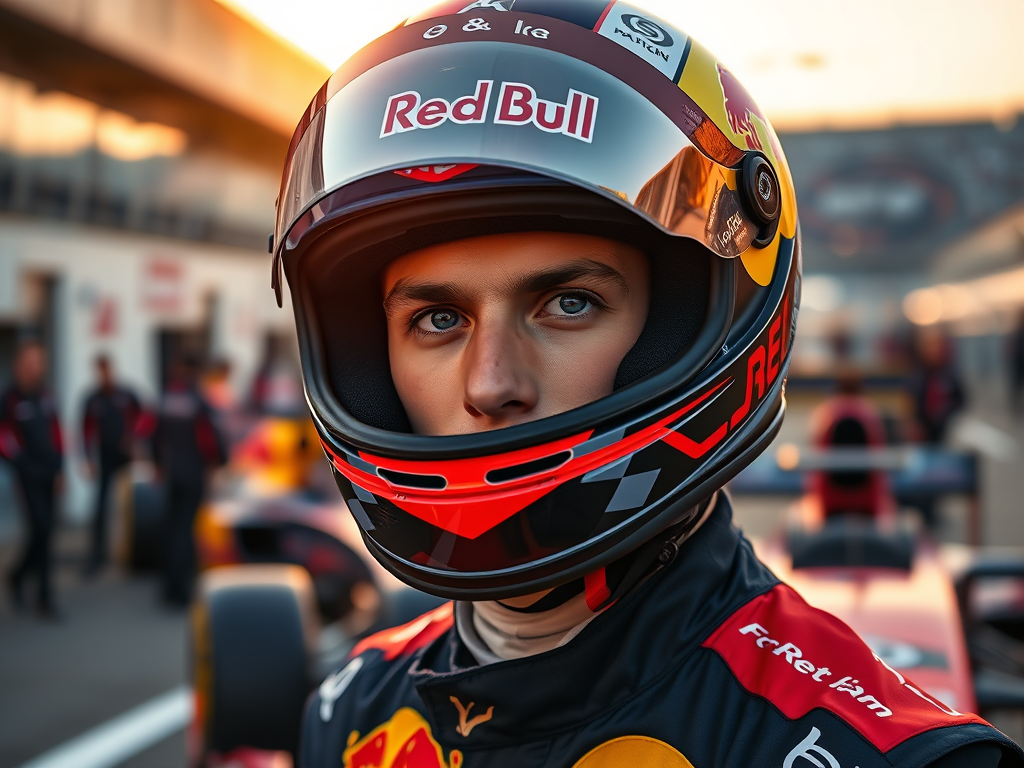
The Formula 1 world watched with keen interest. Red Bull Racing announced Liam Lawson as Max Verstappen’s teammate for the 2025 season. This move signaled a new chapter for the young New Zealander and the team. Replacing Sergio Perez, Lawson stepped into what has often been described as one of the most challenging seats in motorsport. He partnered with a dominant world champion. Lawson faced the immense pressure of a team with relentless championship aspirations. Lawson’s promotion was a testament to his talent and progress within the Red Bull driver development program. However, the initial races of the 2025 season have presented a stark contrast between expectation and reality. This brings up an important question. How much time will Red Bull Racing give Liam Lawson to prove his suitability for the coveted seat? How does team principal Christian Horner plan to assess Liam Lawson’s performance for the role?
Liam Lawson’s journey to a full-time Red Bull drive has been marked by success. He consistently performed well in junior racing categories . Lawson achieved karting titles in his native New Zealand. He secured victories and podium finishes in Formula First, F1600, and Australian F4. Lawson competed in the highly competitive Toyota Racing Series. He also raced in the Euroformula Open Championship. He demonstrated his racing prowess early in his career . His progression continued with a runner-up finish in the 2022 Formula 2 Championship. He gained further experience in the demanding Super Formula series in Japan . Lawson joined the Red Bull Junior Team in 2019. He was groomed for a potential future in Formula 1. He served as a reserve driver for both Red Bull Racing and their sister team. The sister team was initially known as AlphaTauri and later rebranded as RB . In 2023, Lawson’s Formula 1 chance came. He made his debut at the Dutch Grand Prix. He filled in for an injured Daniel Ricciardo at AlphaTauri. Over the course of five races, Lawson impressed with his adaptability. He even secured his maiden championship points with a ninth-place finish in Singapore . In 2024, Lawson was called upon again. He replaced Ricciardo at RB. He scored points at the United States Grand Prix. Lawson consistently showed potential in his limited F1 outings. This likely influenced Red Bull’s choice to promote him to a full-time seat for the 2025 campaign. Lawson described it as a “lifelong dream”.
The transition to the senior Red Bull team has been tough for Lawson. He faced significant challenges in the early stages of the 2025 season. At the Australian Grand Prix, the opening race after his promotion, Lawson struggled in qualifying. He struggled to advance beyond Q1. His race ended prematurely with a crash, a difficult start to his tenure with the team . While team principal Christian Horner acknowledged this as a “tough baptism,” he noted that Lawson set the second-fastest race lap. This was an encouraging sign before the incident. The following Chinese Grand Prix proved even more challenging for the young Kiwi. In the first sprint race weekend of the season, Lawson started at the back of the grid. This was for both the sprint race and the main Grand Prix. While he managed to climb to 14th in the sprint race from a 19th-place start, he gained several positions. However, his qualifying struggles continued to set him back. The main race saw him finish in 15th place, later promoted to 12th due to post-race disqualifications. Lawson himself admitted, “My performances were not good enough.” He expressed a sense of urgency to improve. He stated he felt like he didn’t have much “time.” A key issue was identified during these early races. Lawson had difficulty in getting his Pirelli tires into their optimal operating window. This issue hindered his qualifying performance. Furthermore, the significant gap in pace between Lawson and his teammate Max Verstappen was clear. This gap highlights the steep learning curve he faces. Notably, the team even resorted to making “radical” set-up changes to Lawson’s car in China. They made these changes in an attempt to find a solution and gather crucial data. This move ultimately “didn’t work” as intended. This early experimentation suggests a level of concern within the team regarding Lawson’s initial integration. Adding to the pressure is how Isack Hadjar performs. He is Lawson’s replacement at Racing Bulls. Hadjar qualified impressively in China. This further underscores the performance disparity within the Red Bull system.
The struggles faced by drivers partnering Max Verstappen are well-documented, and this context is crucial when evaluating Lawson’s situation. The sheer dominance of Verstappen creates an immediate and unforgiving benchmark, making any performance deficit highly visible. The Red Bull car is demonstrably capable of winning championships. However, it appears to require a specific driving style. Not all drivers can immediately master this style. Verstappen’s consistent top performances serve as a constant reminder of the car’s potential, further amplifying the pressure on his teammate.
Red Bull Racing’s approach to driver development is renowned. They are committed to nurturing young talent through their junior program. However, this commitment often comes with a relentless aim for performance. This leads to a history of quick driver changes when expectations aren’t met. Throughout its Formula 1 history, Red Bull has shown its willingness to make mid-season swaps. They don’t hesitate in both their senior team and junior outfit. Examples include the early driver rotations in 2005 and 2006. Another example is the promotion of Sebastian Vettel from Toro Rosso in 2007. The replacement of Sebastien Bourdais in 2009 provides further evidence. The demotion of Pierre Gasly in 2019 is also noteworthy. Most recently, the replacement of Nyck de Vries with Daniel Ricciardo in 2023 highlights this trend. The case of De Vries is particularly relevant. His replacement came after a similarly short period of underperformance. This demonstrates Red Bull’s limited patience, even with experienced drivers. This historical context shows Red Bull invests in its junior drivers. Promotion to the senior team comes with significant pressure. Drivers must adapt quickly and perform at a very high level from the outset. The team operates under a high-performance standard, particularly when vying for both the Drivers’ and Constructors’ Championships. Both drivers need to consistently score points. This is crucial for achieving their Constructors’ Championship ambitions. It further underscores the urgency for Lawson to deliver.
Key figures within Red Bull Racing have made public statements. Christian Horner and Helmut Marko, in particular, offer further clues about Lawson’s standing within the team. Initially, after the Australian Grand Prix, Horner offered words of support and called for patience, acknowledging Lawson’s difficult debut. However, his tone shifted noticeably after the Chinese Grand Prix. Horner became more cautious, refusing to confirm Lawson’s participation in the upcoming race in Japan. He acknowledged Lawson’s struggles with confidence and the car. He emphasized the need to analyze the data and provide support. However, he stopped short of offering firm reassurances about his immediate future. Horner emphasized the importance of having both cars performing well. He stated that Red Bull “can’t compete one-legged.” This highlights the crucial role of the second driver in their championship aspirations. While maintaining that Lawson “still has potential,” Horner conceded that the team wasn’t seeing that potential realized at the moment. In contrast, Helmut Marko, Red Bull’s motorsport advisor, has provided a more direct assessment of Lawson’s early performances. He was critical, describing them as “not what we imagined.” Marko has not ruled out bringing in a new teammate for Verstappen. He mentioned that other drivers within the Red Bull system are “recommending themselves” with their performances. Marko initially suggested that Red Bull would wait for the first three races. They would make a definitive judgment on Lawson afterward. He also praised the strong performances of Isack Hadjar at Racing Bulls, further highlighting the performance gap. Marko acknowledged the Red Bull car might be more challenging to drive. Despite this, he still conveyed an expectation for Lawson to perform. Horner uses a more diplomatic approach, while Marko offers a blunt assessment. This difference could indicate internal discussions or differing levels of patience within the Red Bull hierarchy. Marko explicitly mentioned a “three-race” timeframe. This suggests that the upcoming Japanese Grand Prix could be a critical juncture for Lawson.
Red Bull Racing operates under immense internal and external pressures that will inevitably influence their decision regarding Lawson’s future. Internally, the team is driven by a strong desire. They aim to reclaim the Constructors’ Championship title. This comes after finishing third in 2024. To achieve this goal, both drivers need to score significant points consistently. Doing so would allow them to compete effectively with formidable rivals like McLaren and Mercedes. The strong early performances of these competing teams and their driver pairings only amplify this pressure. Externally, Lawson’s performance is under intense scrutiny from the media and fans. Many compare him to previous Red Bull second drivers. These drivers struggled to match Verstappen’s pace. This comparison creates a narrative that Lawson needs to overcome. Calls for Yuki Tsunoda, another Red Bull-affiliated driver, to replace Lawson have also emerged, adding to the external pressure. Beyond performance, team dynamics and harmony are also important considerations for Red Bull. Performance is paramount. However, the team needs a second driver who can work effectively within the team structure. They must also work alongside the dominant personality of Verstappen.
Liam Lawson’s career trajectory has largely followed the conventional path for aspiring Formula 1 drivers. He started with karting at a young age. He then progressed through various junior formula series. He achieved notable success along the way. His participation in Super Formula further honed his skills in a highly competitive environment. Serving as a test and reserve driver provided him with invaluable experience within the Formula 1 ecosystem. His promotion to a full-time seat with Red Bull represents the culmination of years of hard work and dedication. However, the current challenge is his ability to adapt rapidly. He must meet the unique demands and pressures of driving for a top-tier team competing for championships. The typical path to F1 success emphasizes the importance of quickly showing adaptability. It also highlights the need to demonstrate performance, especially when given an opportunity with a leading team. Lawson’s initial struggles suggest a potential misalignment with the immediate performance expectations at Red Bull. His experience highlights the fine line between promising talent and the ruthless realities of Formula 1.
The presence of capable alternative drivers within the Red Bull system complicates Lawson’s situation. This could influence the team’s decision timeline. Yuki Tsunoda is currently driving for Racing Bulls. He has several seasons of Formula 1 experience under his belt. He has publicly expressed his desire for a promotion to the senior team. His strong early performances in the 2025 season have not gone unnoticed. Some observers suggest he has outperformed Lawson in certain aspects. Helmut Marko himself has acknowledged Tsunoda’s improved form and maturity. Speculation about Lawson and Tsunoda potentially swapping seats has been widespread before the Japanese Grand Prix. This is Tsunoda’s home race. This adds another layer of pressure. Another compelling alternative is Isack Hadjar, Lawson’s replacement at Racing Bulls. Hadjar is a highly-rated Red Bull junior. He was the runner-up in the 2024 Formula 2 Championship. He has impressed in his early F1 outings. He even outqualified his experienced teammate Tsunoda in China. Hadjar is a rookie, so he might be considered a longer-term prospect. However, his performance shows the depth of talent in the Red Bull pipeline. These capable alternatives put additional pressure on Lawson to deliver results. They suggest that Red Bull will likely evaluate potential replacements concurrently with assessing his progress.
In conclusion, the question of Red Bull Racing’s patience with Liam Lawson is complex. Christian Horner and Red Bull Racing must decide when Lawson has proven himself. It is also multifaceted. Lawson’s promising junior career and prior glimpses of F1 potential are significant. These accomplishments are weighed against his challenging start to the 2025 season. He is also under immense pressure in the Red Bull environment. The team often makes swift driver changes. Critical comments from key management figures like Helmut Marko emphasize that Lawson is operating within a limited timeframe. The internal imperative to secure the Constructors’ Championship, combined with external media and fan scrutiny, further intensifies the situation. Viable and performing alternatives like Yuki Tsunoda are present. This only adds to the urgency for Lawson to demonstrate significant improvement. The Japanese Grand Prix, the third race of the season, appears to be a pivotal moment. Aligning with Marko’s earlier indication of a three-race evaluation period, Lawson must show tangible progress in qualifying. He also needs to improve his race performance at Suzuka to solidify his position. If Lawson’s struggles continue, Red Bull may quickly consider swapping him with Tsunoda. This is especially true given the increasing speculation and Tsunoda’s strong performances. Hadjar’s impressive debut is noteworthy. However, an immediate promotion might be less likely. His progress will undoubtedly be monitored closely for future considerations. Ultimately, Red Bull’s patience with Liam Lawson is finite. The next few races are crucial to determine if he can adapt and thrive in the team’s demanding environment.
Table 1: Liam Lawson vs. Max Verstappen – Early Season Performance
| Race | Lawson Qualifying | Verstappen Qualifying | Lawson Race Result | Verstappen Race Result |
|---|---|---|---|---|
| Australia | 18th | 3rd | NC (DNF) | 2nd |
| China (Sprint Qual.) | 20th | 4th | 20th | 2nd |
| China (Sprint Race) | 14th | 4th | 14th | 3rd |
| China (GP Qual.) | 20th | 4th | 12th | 4th |
*Rumors on March 26, 2025 is that Yuki Tsunoda will replace Liam Lawson at Red Bull for the upcoming Japan Grand Prix and Liam Lawson will return to VCARB. An official announcement is expected later in the week.*

 ScortonBoy17.ca
Leave a comment