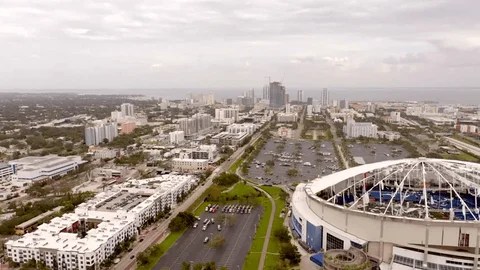
The future of the Tampa Bay Rays in their current home remains a subject of considerable speculation and uncertainty. Since their inception, the franchise has faced persistent challenges related to their stadium situation. This has led to increasing discussions about the possibility of the team seeking a new city to call home. Understanding the complexities of this issue requires a deep dive. We need to explore the history of the Rays’ stadium struggles and the economic factors at play. It also involves looking at the potential destinations on the horizon and the broader implications of such a significant move.
The Long and Winding Road of the Rays’ Stadium Saga in Tampa Bay
The Tampa Bay Rays’ journey in Major League Baseball has faced numerous challenges. A major challenge is finding a suitable and sustainable ballpark. Their tenure began at Tropicana Field in St. Petersburg, a venue with a history predating the team’s arrival. The facility was originally named the Florida Suncoast Dome. It opened in 1990. The primary goal was attracting a Major League Baseball team to the region. Before the Rays took the field in 1998, the stadium hosted the Tampa Bay Lightning. The stadium was called the Devil Rays at that time. They played in the NHL. It was briefly known as the ThunderDome. In 1996, coinciding with the arrival of the baseball franchise, the venue was renamed Tropicana Field. Tropicana Field is versatile in hosting various events. It includes hosting hockey, basketball, and concerts. However, it has faced consistent criticism as a baseball venue. Its domed structure offers respite from Florida’s climate. This affects the ballpark’s aesthetics. It also reduces its functionality. As a result, it is often ranked among the least favored stadiums in Major League Baseball.
Recent developments have further complicated the Rays’ stadium situation in St. Petersburg. A highly anticipated $1.3 billion project to construct a new 30,000-seat ballpark adjacent to Tropicana Field recently fell through. This project was envisioned as a cornerstone of a larger $6.5 billion revitalization effort in the Historic Gas Plant District. The financial agreement for the new stadium involved a partnership. The city of St. Petersburg and Pinellas County would cover approximately half of the costs. The Rays and their development partner, Hines, would be responsible for the remainder, including any potential cost overruns. However, a series of unforeseen events occurred in October. Significant damage to Tropicana Field’s roof was caused by Hurricane Milton. There were also subsequent financing delays. These issues led the Rays to withdraw from the project. The hurricane caused over $55 million in damage to Tropicana Field. This situation further complicated the already tight timeline for the new stadium. As a result, the team will play their home games for the 2025 season at Steinbrenner Field in Tampa. Steinbrenner Field is the spring training home of the New York Yankees. The current plan involves the repair of Tropicana Field, with the Rays expected to return for the 2026 season. Their existing lease with the city runs through 2027. It has been extended to 2028 due to the displacement in 2025.
Prior to this recent setback, the Rays had also explored the possibility of a new stadium in Tampa. In 2018, a proposal for an $892 million stadium in the Ybor City district of Tampa was unveiled . This plan included a seating capacity of around 30,000. It featured a distinctive translucent roof. The aim was to open the new facility by the 2023 season . However, this initiative ultimately did not proceed. Unresolved financing issues and the lack of final agreements between the team and local authorities caused the setback . Despite this past disappointment, officials in Tampa have once again shown their willingness to engage in discussions. They are considering a potential stadium with the Rays on their side of the bay .
Why Consider Leaving the Tampa Bay Area? The Driving Forces
Several key factors contribute to the increasing speculation about the Tampa Bay Rays potentially relocating to a new city. These factors include persistent struggles with fan attendance. There are revenue limitations inherent in their market size. Additionally, there are ongoing challenges associated with their current and former stadium options.
One of the most significant headwinds facing the Tampa Bay Rays has been their consistently low attendance figures. For numerous seasons, the team has struggled with low attendance. They are near the bottom of Major League Baseball in terms of fans through the gates. The following table illustrates the average home attendance for the Rays from 2009 to 2024:
| Year | Average Attendance |
|---|---|
| 2009 | 23,147 |
| 2010 | 22,758 |
| 2011 | 18,878 |
| 2012 | 19,255 |
| 2013 | 18,645 |
| 2014 | 17,857 |
| 2015 | 15,403 |
| 2016 | 15,878 |
| 2017 | 15,670 |
| 2018 | 14,258 |
| 2019 | 14,734 |
| 2020 | N/A |
| 2021 | 9,513 |
| 2022 | 13,927 |
| 2023 | 17,781 |
| 2024 | 16,515 |
This consistent struggle to draw fans contrasts with the local support for other professional sports teams in the area. Teams like the Tampa Bay Lightning of the NHL often experience higher attendance numbers. The team’s revenue generation is directly impacted by the inability to consistently fill the stands. This also affects their long-term financial stability within the Tampa Bay market.
Compounding the attendance issues are the revenue limitations associated with the Tampa Bay market. In 2023, the Tampa Bay Rays generated $301 million in revenue. This falls below the average revenue for an MLB team, which stood at $378 million in the same year . This financial reality places the Rays at a disadvantage. Their disadvantage is compared to teams in larger and more affluent markets. This is reflected in their ranking, such as 27th in Forbes’ valuation . To remain competitive, the team has historically relied on revenue sharing mechanisms within MLB. This highlights the constraints of operating in a smaller market . This reliance can limit their capacity to invest in high-profile players. They may struggle to develop state-of-the-art facilities. This potentially creates a cycle where lower investment impacts on-field performance. It also affects fan engagement.
The condition of Tropicana Field further contributes to the rationale for exploring relocation. Opened in 1990, it is one of the oldest active ballparks in Major League Baseball. It has consistently faced criticism regarding its design. The criticism also includes issues with the fan experience . There are functional drawbacks like the absence of a dedicated suite level. The lack of enclosed concourses also detracts from the overall game-day atmosphere . The recent damage caused by Hurricane Milton highlights the stadium’s vulnerability. It also underscores the ongoing financial demands for repairs and maintenance . These factors create a strong incentive. The Rays are motivated to seek a modern and more fan-friendly home. This home should also be financially sustainable. The team might consider a different market for their new location.
Where Could the Rays Land? Exploring Potential New Homes
As the Tampa Bay Rays navigate their uncertain future, several potential cities have emerged as possible destinations. These cities are located both within Florida and across the United States and Canada.
Remaining within Florida, the Rays could potentially revisit the Tampa option. Despite the previous setback with the Ybor City proposal, Tampa’s Mayor Jane Castor has expressed renewed interest. She is now exploring the construction of a ballpark, focusing initially solely on the stadium itself. The financial complexities that led to the previous plan’s demise are significant challenges. Considering taxpayer interests is also a substantial hurdle. A move across the bay is geographically convenient. However, it does not automatically guarantee a solution to the underlying issues of financial feasibility. Additionally, it does not secure consistent fan support.
Another Florida city gaining traction as a potential home for the Rays is Orlando. The “Orlando Dreamers” group, spearheaded by MLB Hall of Famer Barry Larkin, has emerged as a serious contender . This group has reportedly secured a crucial anchor investor. They have unveiled plans for a 45,000-seat domed stadium situated in Orlando’s bustling tourist corridor . Orlando is the largest market in Florida without a Major League Baseball or National Football League team. Its robust tourism industry presents a significant potential fan base . While Orlando offers compelling advantages, Major League Baseball prefers to keep the Rays within the Tampa Bay region. This adds an element of uncertainty to this possibility .
Beyond Florida, several out-of-state cities are considered viable options. Nashville, Tennessee, appears to be a leading candidate. The “Nashville Stars” initiative is actively working to bring an MLB team to the city . The “Nashville Stars” branding pays homage to the city’s rich baseball history. This includes its Negro Leagues teams. The effort has garnered significant community support . Nashville boasts a growing market. It has favorable demographics and a proven track record of supporting professional sports. This makes it an attractive prospect for MLB expansion or relocation .
Charlotte, North Carolina, also presents a compelling case. Charlotte is a major and rapidly growing city. It has a strong sports culture. Because of this, Charlotte has long been considered a potential home for an MLB team . The city’s attractive television market size and substantial corporate presence further enhance its appeal . Charlotte is already home to the Triple-A Charlotte Knights. They play at Truist Field. It is a facility that could potentially be upgraded to host Major League Baseball . While Charlotte possesses strong market fundamentals. However, the city lacks a highly visible and aggressive ownership group. This might be a factor compared to other bidding cities in the decision-making process .
Portland, Oregon, has also actively pursued an MLB team. The Portland City Council has expressed support for the Portland Diamond Project. They support a proposed new stadium at the Zidell Yards site. Portland is known for its passionate sports fanbase. The potential for a natural rivalry with the Seattle Mariners in the Pacific Northwest adds another layer of intrigue. The city has demonstrated significant interest in securing a team. They have taken tangible steps towards it. However, the financial viability of the project remains a consideration. Potential local resistance to public funding is also a consideration.
Salt Lake City, Utah, is another city firmly in the mix. The “Big League Utah” coalition is led by the Larry H. Miller Company. They are spearheading the efforts to attract an MLB expansion franchise . The coalition has identified a “shovel-ready” site for a new ballpark. It emphasizes Utah’s robust economic growth as a key selling point . Salt Lake City already supports the Salt Lake Bees. The Bees are the Triple-A affiliate of the Los Angeles Angels. This indicates an existing appetite for professional baseball . A dedicated ownership group with a clear vision enhances Salt Lake City’s position. The state’s strong economic performance further solidifies its status as a serious contender for a Major League Baseball team.
Finally, the possibility of a return to Montreal, Canada, continues to linger. The Expos may have left in 2004, but there is still a dedicated effort to bring MLB back to Montreal. This effort is supported by feasibility studies and evident fan enthusiasm . Montreal’s large market size and historical connection to baseball make it an appealing option for the league . A new, modern ballpark must be built before MLB returns. Cross-border relocation complexities add further considerations. . The desire for baseball in Montreal is undeniable. However, the path to realizing this ambition appears less immediate. This is compared to some of the US-based contenders.
The Ripple Effect: Economic and Social Implications of a Potential Move
The potential relocation of the Tampa Bay Rays carries significant economic implications for their current home. It also has social implications for any future host city.
For the Tampa Bay region, the departure of the Rays would represent a substantial loss. The derailment of the $6.5 billion Historic Gas Plant District revitalization project would have far-reaching economic consequences. This project relied on constructing the new ballpark. It would also mean the loss of thousands of anticipated jobs . Local businesses that depend on the revenue generated by home games would also face considerable challenges . Beyond the direct economic impact, the social fabric of the community would suffer. Losing a major league team would affect civic pride. It would also impact fan morale . Even the spring training activities in Charlotte County could be jeopardized. These activities contribute an estimated $11 million annually to the local economy. This threat arises if the team ultimately relocates out of state . Furthermore, the relocation would inevitably lead to job losses. It would affect team employees and stadium workers in the Tampa Bay area .
Conversely, a city that successfully attracts the Tampa Bay Rays would likely experience a significant economic boost. This would include increased revenue from ticket sales, concessions, and team merchandise . The arrival of a major league team typically spurs job creation in various sectors. These include the stadium itself, hospitality, and related industries. Socially, hosting an MLB team can enhance civic pride. It provides additional entertainment options for residents. It also elevates the city’s national profile . However, a new host city would need to consider the infrastructure demands to accommodate a major league team. They must also navigate potential debates about public funding for stadium development .
Looking to the Past: Lessons from MLB Relocations
Examining the history of Major League Baseball relocations can offer valuable context as the Tampa Bay Rays consider their options. The move of the Montreal Expos to Washington D.C. in 2005 provides a particularly relevant example . The Expos left Montreal because of declining attendance at Olympic Stadium. They also faced a pressing need for a new, modern ballpark . Major League Baseball ultimately intervened to facilitate the team’s move to Washington, where they rebranded as the Nationals . The team initially faced challenges in their new home. Eventually, the Washington Nationals achieved significant success. This success culminated in a World Series championship in 2019 . The recent decision by the Oakland Athletics to relocate to Las Vegas marks another significant shift in the MLB landscape. It underscores the ongoing pressures and considerations that can lead to team movement . These historical precedents illustrate the complex interplay of financial realities, stadium requirements, and market viability that shape franchise relocation decisions. The Montreal experience shows a relocated team can find success. It also shows they can build a strong fan base in a new market.
The Rulebook of Relocation: MLB Governance and Agreements
Any potential relocation of the Tampa Bay Rays would need to adhere to the established rules. These regulations govern Major League Baseball. The MLB constitution outlines the process for team relocation. It typically requires a significant majority vote from the league’s owners. The majority could be as high as three-quarters of the affected league. A simple majority of the other league is also needed. Furthermore, territorial rules exist to protect the local revenue streams of existing franchises. These rules could potentially impact a move within Florida. They could also affect a move to neighboring states. The Major League Baseball collective bargaining agreement primarily governs the terms and conditions of employment for players. It may contain provisions related to relocation expenses for traded players. However, it does not directly dictate the rules for franchise relocation. The long-standing antitrust exemption granted to Major League Baseball has played a historical role in shaping team mobility. Its influence has been debated and scrutinized over time. Understanding these governing rules is essential. Assessing the feasibility and potential pathways for the Tampa Bay Rays to relocate requires it.
Conclusion: Charting a Course Through Uncertainty for the Tampa Bay Rays
The Tampa Bay Rays stand at a critical juncture in their history. They face persistent challenges related to their stadium situation. Coupled with the economic realities of their market size, the prospect of relocating to a new city appears increasingly plausible. The Tampa Bay region has been their home since 1998. However, the inability to secure a long-term, viable ballpark solution has forced the organization to seriously consider alternatives.
Several potential destinations have emerged, each with its own set of strengths and weaknesses. Staying within Florida, Tampa offers geographic proximity. However, it carries the weight of past unfulfilled plans. Orlando presents a fresh market with a dedicated ownership group. However, it faces the league’s stated preference for the team to remain in the Tampa Bay area. Out of state, Nashville stands out as a strong contender with its growing market and established sports culture. Charlotte offers a solid economic base, and Portland has demonstrated significant local support. Salt Lake City presents a compelling case with a proactive ownership group and a thriving economy. The possibility of a return to Montreal continues to capture the imagination of baseball fans in Canada.
The decision to relocate would have profound consequences. The Tampa Bay region stands to lose a major league team. It would also lose the economic benefits and community identity associated with it. Conversely, a new host city would gain a valuable asset, potentially sparking economic growth and enhancing its social landscape. Lessons from past MLB relocations, such as the Montreal Expos’ move to Washington D.C., highlight the complexities and potential outcomes of such decisions. The future of the Tampa Bay Rays hinges on multiple factors. These include the team’s ability to secure a viable stadium plan and the willingness of potential host cities to invest. It also requires the final approval of Major League Baseball. As the situation unfolds, the baseball world watches with keen interest. Everyone wants to know the course this franchise will chart during the current uncertainty.

 ScortonBoy17.ca
Leave a comment