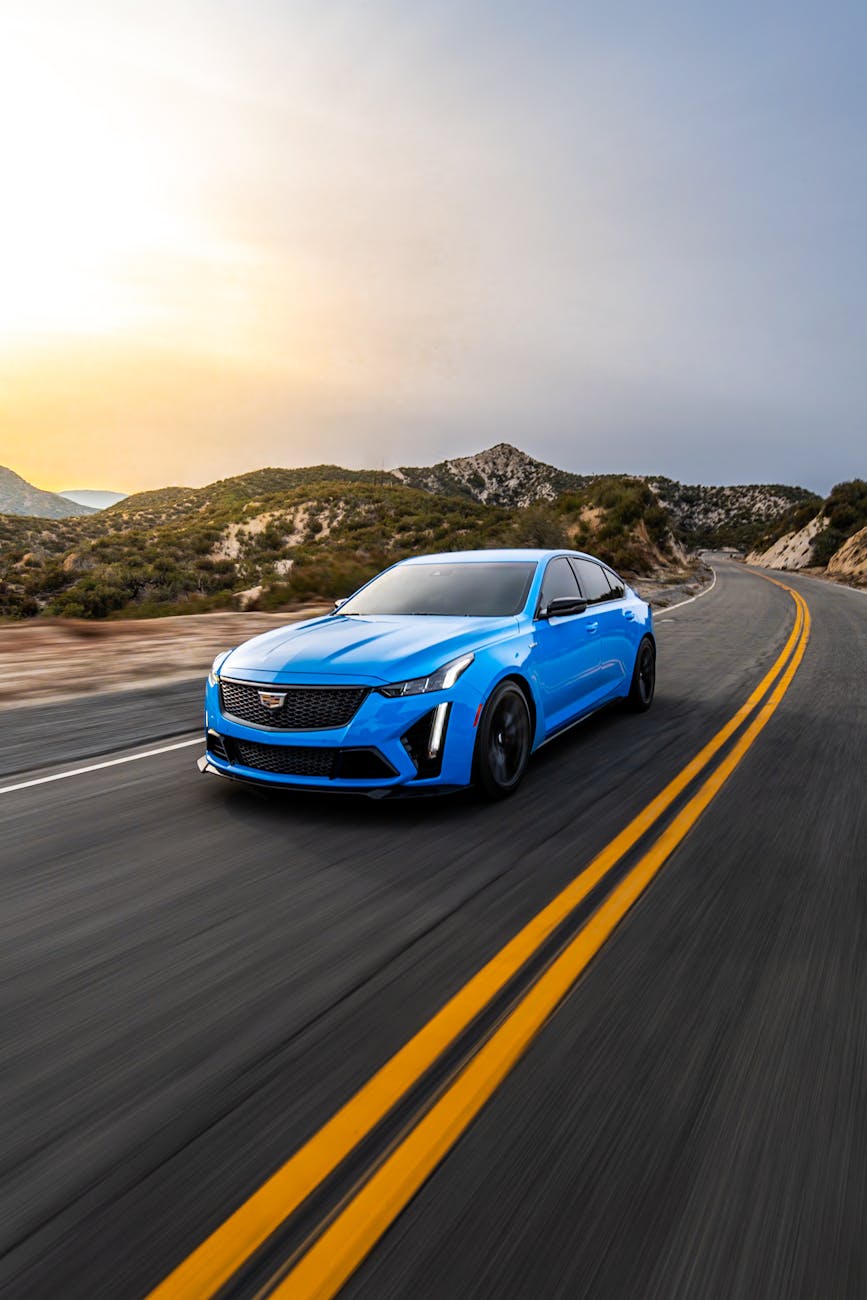
Chevrolet’s legacy in NASCAR is undeniable. With a history steeped in speed and victory, the bowtie brand has become synonymous with stock car racing. Chevrolet boasts an impressive record, including 851 NASCAR Cup Series victories, 42 Manufacturer Championships, and 33 Driver’s Championships . However, the recent discontinuation of the Camaro has raised questions about Chevrolet’s future in the sport. Will the Camaro be relegated to the annals of NASCAR history? Or will General Motors (GM) navigate its racing endeavors in a new direction? A particularly intriguing possibility has emerged: could Cadillac, GM’s luxury marque, be gearing up to take the reins?
Chevrolet in NASCAR: A Legacy of Dominance
Chevrolet’s dominance in NASCAR began in 1955 when Herb Thomas clinched victory in a 1955 Chevrolet 150 . Since then, legendary drivers like Dale Earnhardt, Jeff Gordon, and Jimmie Johnson have all contributed to Chevrolet’s remarkable achievements . In recent years, the Camaro ZL1 has become the face of Chevrolet’s NASCAR success. It consistently battles for top spots. It also secures numerous wins .
Chevrolet’s current driver lineup is impressive. It features stars like Kyle Larson, William Byron, Ross Chastain, and Kyle Busch . These drivers compete for top-tier teams. These include Hendrick Motorsports, Trackhouse Racing, and Richard Childress Racing. All of these teams have strong partnerships with Chevrolet .
Chevrolet shows its commitment to inclusivity and driver development through its partnership with Rev Racing. This partnership supports the NASCAR Drive for Diversity Program . This program aims to create opportunities for female and ethnically diverse drivers and pit crew members in NASCAR’s national series.
Even with the Camaro’s discontinuation looming, Chevrolet’s recent performance in NASCAR remains strong. In the 2023 season, Chevrolet secured its 42nd Manufacturer Championship, marking a remarkable third consecutive title . Chevrolet drivers achieved 18 victories in the 35 races. William Byron led the pack with an impressive six wins .
Chevrolet drivers continue to make their mark on the track. For example, in 2024, Daniel Suarez made history. He achieved his first career oval victory in the NASCAR Cup Series at Atlanta Motor Speedway. In a thrilling three-wide photo finish, Suarez edged out Ryan Blaney and Kyle Busch by the narrowest of margins. He set a record for the closest three-wide finish in NASCAR history. More recently, a young driver named Carson Hocevar participated in the 2025 Atlanta Motor Speedway race. He was in his sophomore Cup Series season. He drove his No. 77 Spire Motorsports Chevrolet to a second-place finish. This was his best result in the Cup Series to date.
Historical Perspective: GM’s Brand Evolution in NASCAR
Historically, GM has been represented by various brands in NASCAR, including Oldsmobile, Buick, and Pontiac, alongside Chevrolet . These brands competed fiercely, contributing to GM’s overall success in the sport. By 2004, Pontiac exited NASCAR. This left Chevrolet as the sole representative of GM. This transition reflects GM’s evolving brand strategy and its focus on Chevrolet as its primary performance and motorsports brand .
It’s worth noting that other manufacturers, once prominent in NASCAR, have also faded from the scene. Brands like Hudson, Mercury, Oldsmobile, Pontiac, and Plymouth all had their time in the spotlight. However, they ultimately ceased participation in NASCAR’s top series. This historical context shows the dynamic nature of manufacturer involvement in NASCAR. It highlights the constant evolution of brand strategies within the sport.
In 2013, Chevrolet introduced the SS, a rebranded Holden Commodore from Australia, to NASCAR . This move demonstrated GM’s willingness to adapt. The company explored different options within its brand portfolio. This was done to maintain a competitive edge in the sport.
Considering this historical context, let’s examine the potential benefits and challenges of switching to Cadillac in NASCAR.
Benefits and Challenges of Switching to Cadillac
Switching to Cadillac in NASCAR presents both potential benefits and challenges for GM.
Potential Benefits:
- Enhanced Brand Perception: Positioning Cadillac as the face of GM’s motorsports efforts could elevate the brand’s image. It could also associate it with high performance and racing success.
- New Audience: Cadillac’s involvement could attract a new demographic of luxury car enthusiasts and potentially expand NASCAR’s fanbase .
- Marketing Synergy: Aligning Cadillac’s NASCAR presence with its involvement in other motorsports series could be beneficial. These series include IMSA and Formula 1. This alignment could create a cohesive marketing strategy.
Potential Challenges:
- Brand Mismatch: Cadillac’s luxury image might not align with NASCAR’s traditional fanbase, potentially alienating some viewers .
- Model Availability: The discontinuation of the CT5-V Blackwing could pose challenges. It may be difficult to find a suitable Cadillac model for NASCAR competition.
- Cost and Investment: Switching to Cadillac would require significant investment in developing a new car and rebranding existing teams .
- Fan Education: NASCAR faces the challenge of educating fans. They need to know where to watch races across different platforms. This task could be further complicated by a brand switch.
GM’s Motorsports Strategy: Electrification and Innovation
GM’s overall motorsports strategy is focused on innovation and technological advancement, particularly in the realm of electrification. The company is actively exploring and testing new technologies. These innovations can be applied to both race programs and production cars. This commitment is evident in the recent unveiling of the Blazer EV.R NASCAR prototype, a 1,300-horsepower electric vehicle that demonstrates GM’s dedication to a more sustainable future for racing .
While GM remains committed to its V8-powered vehicles in NASCAR for the foreseeable future, the Blazer EV.R serves as a crucial platform for exploring and improving power, durability, and efficiency in electric racing . This prototype is built on NASCAR’s Next Gen chassis. It incorporates advanced electric motors. It features a liquid-cooled battery and a programmable all-wheel-drive system .
Chevrolet is set to pace the 2025 Daytona 500 with the Blazer EV SS. It is a 615-horsepower electric vehicle. This vehicle can accelerate from 0 to 60 mph in 3.4 seconds . This move further emphasizes GM’s commitment to showcasing its electric vehicle technology in a high-profile NASCAR setting.
GM’s motorsports strategy also emphasizes the use of data and AI to enhance performance. At the GM Charlotte Technical Center, engineers leverage AI and machine learning to analyze vast amounts of data. They optimize car setups and predict competitor behavior. This data-driven approach allows GM to make informed decisions and improve outcomes on the racetrack. Interestingly, GM’s use of AI extends beyond car performance. The company is also utilizing AI for tasks like real-time audio transcription. It includes analyzing driver-team radio communications. Additionally, AI performs image analysis of photos captured during races .
GM also demonstrates a collaborative approach to motorsports innovation. The company collaborated with other OEMs. These include Honda and Ilmor Engineering. They developed a new hybrid engine for the IndyCar Series . This collaboration highlights GM’s willingness to work with competitors to advance the sport and explore new technologies.
Cadillac’s Potential Involvement in NASCAR: A Luxury Contender?
Cadillac’s potential entry into NASCAR has generated considerable speculation. Some sources have dismissed the possibility. They cite a lack of market alignment and Cadillac’s focus on sports car racing and Formula 1. Others believe that Cadillac could be a viable contender .
Cadillac has seen recent successes in IMSA and the World Endurance Championship. It has also planned entry into Formula 1 in 2028. These achievements demonstrate its growing commitment to motorsports. Some argue for consolidating GM’s motorsports efforts under the Cadillac banner. They believe this could enhance brand perception. It might also attract a new audience to NASCAR. This viewpoint suggests that Cadillac’s luxury image could “class up” the sport and bring in a new demographic of fans.
However, conflicting opinions exist regarding fan perception of Cadillac in NASCAR. Some fans question whether a luxury brand like Cadillac fits with NASCAR’s image and its predominantly working-class fanbase . This presents a potential challenge for GM. They need to gauge fan reception carefully. Managing brand perception would be essential if they were to switch to Cadillac.
Furthermore, challenges remain regarding model availability. The CT5-V Blackwing, Cadillac’s performance sedan, will be discontinued. This could pose a challenge in finding a suitable Cadillac model for NASCAR competition .
Expert Opinions and Analysis
Expert opinions on the future of Chevrolet in NASCAR and the possibility of a switch to Cadillac are divided. Some analysts believe that Chevrolet will continue to race the Camaro for the foreseeable future. They think it might be rebranded as simply “Chevrolet” . Others suggest that GM might explore alternative options. They propose introducing a Corvette-based Cup Series car. Another possibility is bringing back the Chevelle or Nova .
Cadillac has potential. Some experts believe it could be a viable replacement for Chevrolet. They cite its racing heritage and ability to attract a new audience . However, others argue that Cadillac’s luxury image and limited model availability make it an unsuitable choice for NASCAR .
Synthesis and Conclusion
The future of Chevrolet in NASCAR remains uncertain. While the Camaro’s discontinuation presents a challenge, GM has several options to consider. Continuing with the Camaro, albeit rebranded, is a possibility. However, it might not be sustainable long-term. This is especially true. The “win on Sunday, sell on Monday” philosophy has long been a driving force in NASCAR. With the Camaro no longer in production, racing it might not be the most effective marketing strategy for Chevrolet.
Introducing a Corvette-based car could be an exciting prospect, but it might not align with NASCAR’s current direction. Cadillac’s potential entry into NASCAR is a wildcard. While it could bring new excitement and a fresh audience to the sport, it also carries risks. Ultimately, GM’s decision will depend on various factors, including brand strategy, marketing considerations, and the evolving landscape of NASCAR itself.
One thing is certain: the future of NASCAR is heading towards electrification . GM’s commitment to developing electric racing technology, as demonstrated by the Blazer EV.R prototype, suggests that the company is preparing for this shift.
The available information suggests a likely scenario. Chevrolet will continue to race in NASCAR, but with a different model. GM might introduce a new Chevrolet model that better aligns with its current production lineup and future direction. This could involve a crossover or SUV body style, reflecting the growing popularity of these vehicles in the consumer market. Switching to Cadillac seems less probable. This is due to potential brand mismatch. There is also the challenge of finding a suitable replacement for the CT5-V Blackwing. However, GM’s commitment to innovation and its willingness to adapt suggest that any scenario is possible. Whether it’s with Chevrolet or Cadillac, GM is likely to remain a dominant force in NASCAR. GM will drive innovation and push the boundaries of racing technology.

 ScortonBoy17.ca
Leave a comment