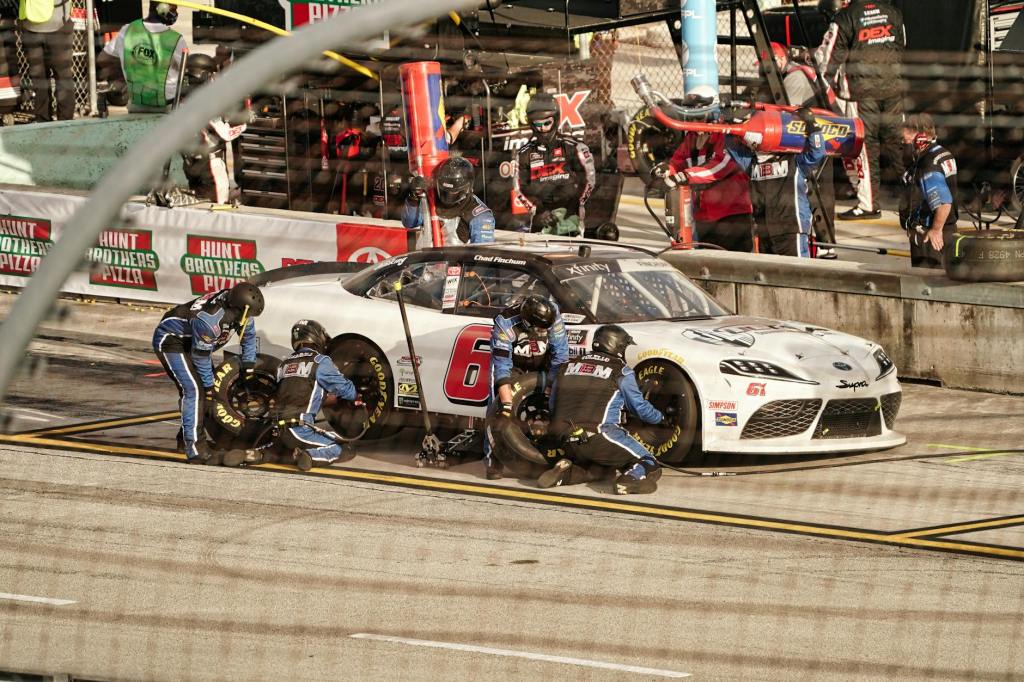
NASCAR has a rich history of exciting racing across its various series. The Cup Series stands as the pinnacle of stock car racing. The Xfinity Series serves as a proving ground for up-and-coming drivers. It also provides a platform for veterans to hone their skills. However, the lines between these two series have blurred in recent years. The cars are becoming increasingly similar. This change leads some fans and experts to question the need for greater differentiation. In this blog post, we’ll examine the current state of the Xfinity and Cup series cars. We will explore the potential benefits and drawbacks of further separating them. Finally, we will offer concrete suggestions for NASCAR to achieve this separation.
A Historical Perspective
Before diving into the current state of affairs, it’s helpful to understand the evolution of NASCAR race cars. NASCAR has consistently adapted and innovated. The journey began with strictly stock cars in the late 1940s. Now, it has reached the era of the technologically advanced Next Gen cars. This evolution has seen cars go through various generations, each with its own unique characteristics and advancements in safety and performance:
- Generation 1 (1948-1966): This era featured cars with stock frames and bodies. The focus was on providing a pure racing experience. Basic safety measures included strapped doors and mandatory seat belts.
- Generation 2 (1967-1980): This period saw the introduction of modified frames, with purpose-built race chassis gaining prominence.
- Generation 3 (1981-1991): Cars were downsized to resemble showroom models, with a focus on aerodynamics and manufacturer identity.
- Generation 4 (1992-2007): This generation saw further advancements in aerodynamics and safety, with cars becoming more specialized for different tracks.
- Generation 5 (2007-2012): Safety took center stage with the “Car of Tomorrow.” It featured a common body and chassis across manufacturers. The design included increased safety features.
- Generation 6 (2013-2022): This generation aimed to bring back the “stock” in stock car racing. It introduced manufacturer-unique body panels. There was a focus on brand identity.
- Next Gen (2022-present): The current generation emphasizes innovation and symmetry, with advanced technology and a single-source chassis for all teams.
This historical context highlights NASCAR’s commitment to tradition. It also shows a dedication to progress. This sets the stage for the current discussion about differentiating the Xfinity and Cup series cars.
The Current State of Affairs
The Xfinity Series currently utilizes cars that resemble the Cup Series “Car of Tomorrow” introduced in 2007. These cars are based on the design philosophies of the early 2010s. They feature a larger cockpit. There is insulating foam in the doors. Additionally, a front splitter is included, all aimed at enhancing safety. The Xfinity Series car has not changed much since its introduction in 2010. In contrast, the Cup Series has advanced to the “Next Gen” car in 2022. This disparity in car development has led to some key differences, which are best illustrated in the following table:
| Feature | Cup Series | Xfinity Series |
|---|---|---|
| Car Model | Camaro ZL1, Mustang GT, Camry | Camaro, Mustang (different model), Supra |
| Horsepower | 670 | 650 |
| Shifting/Gearbox | 5-speed sequential | 4-speed H-pattern |
| Tires | Wider, single center lug nut | Traditional, 5 lug nuts |
| Underbody | Rear diffuser | Traditional undercarriage |
| Chassis | Dallara-designed, tube-framed, 3-piece | Based on “Car of Tomorrow” |
| Body | Steel (Next Gen) | Composite |
| Exhaust | Both sides of car | Right side of car |
| Fuel Delivery | Fuel injection | Carburetors |
Despite these differences, the cars still share some similarities, particularly in engine specifications. Both series use 358 cubic inch, V8, aspirated pushrod engines. This convergence has raised concerns about the unique identity of each series. The increasing presence of Cup Series regulars in Xfinity races adds to these concerns. There are questions about whether further differentiation is necessary.
Beyond the cars themselves, there are other distinctions between the two series. The Xfinity Series has seen varying grid sizes throughout its history. In the past, grids ranged from 43 cars. Currently, there is a maximum of 36 cars. The playoff formats also differ, with the Xfinity Series using a three-round format compared to the Cup Series’ four-round format.
Furthermore, the relationship between the two series is evident in driver development programs. For example, 23XI Racing fields a part-time Cup Series entry for rising star Corey Heim. It also supports a second entry for him in the Xfinity Series with Sam Hunt Racing. This illustrates how the Xfinity Series serves as a stepping stone for drivers aspiring to compete at the Cup level.
Why Separate the Series?
There are several potential benefits to further separating the Xfinity and Cup series cars:
- Enhanced Identity: By creating more distinct cars, NASCAR can reinforce the unique identity of each series. This can help fans better appreciate the different levels of competition and driver development. A clear separation can also help prevent the Xfinity Series from being perceived as a “minor league.” It emphasizes its unique importance compared to the Cup Series.
- Improved Competition: Differentiation can create more diverse racing strategies and passing opportunities. This can potentially lead to more exciting races in both series. The Xfinity Series, with its shorter race lengths, often provides more intense and unpredictable racing than the Cup Series. Drivers push harder with less concern for tire wear and fuel conservation. Additionally, the composite bodies of Xfinity cars can withstand more contact, encouraging more aggressive driving and close-quarters racing.
- Cost Control: Developing unique specifications for each series could potentially lead to cost savings for Xfinity teams. This would make the series more accessible to smaller teams. It fosters greater competition. This could involve using less expensive materials or technologies in Xfinity cars. This change would allow teams to compete on a more level playing field.
- Showcase of Innovation: NASCAR can use the Xfinity Series as a testing ground. They can test new technologies and ideas. This potentially leads to advancements that can later be adopted in the Cup Series. This could involve experimenting with different engine types, aerodynamic configurations, or even alternative fuels. The differences in car handling between the two series can provide valuable learning experiences for drivers. It helps them transition to the Cup Series. Drivers can adapt to different car characteristics and develop their skills.
However, there are also potential drawbacks to consider:
- Reduced “Star Power” in Xfinity: Cup drivers might find the Xfinity Series less appealing due to significant car differences. As a result, they might participate less. This change could potentially diminish fan interest in the series. This could lead to lower viewership and sponsor interest. It might impact the financial viability of Xfinity teams and the series as a whole.
- Increased Costs for NASCAR: Developing and maintaining separate car specifications for each series could increase costs for NASCAR. This situation could potentially impact the overall financial health of the sport. This could involve additional research and development expenses. It might also create logistical challenges in managing two distinct sets of rules and regulations.
- Confusion for Fans: Significant changes to the cars might initially confuse some fans. These fans are accustomed to the current similarities between the series. Fans will need time to adjust. They must learn about the new car specifications. They will also need to understand how these changes affect racing.
How to Achieve Separation
NASCAR has several options to consider when it comes to further differentiating the Xfinity and Cup series cars:
- Engine Specifications: Implementing various engine specifications could create a noticeable performance gap between the series. These specifications include varying displacement or cylinder counts. For example, the Xfinity Series could adopt a V6 engine configuration, while the Cup Series retains its V8 engines. This strategy would create a distinct sound and feel for each series. It could also potentially lead to cost savings for Xfinity teams. Alternatively, NASCAR could explore different engine technologies. They could implement hybrid or electric powertrains in the Xfinity Series. This approach would showcase innovation and promote sustainability.
- Horsepower Limits: Adjusting horsepower limits for each series can create distinct power-to-weight ratios, leading to different driving styles and strategies. This could involve reducing the horsepower in Xfinity cars while maintaining or increasing the horsepower in Cup cars. This would emphasize car control and finesse in the Xfinity Series. It would also reward raw power and speed in the Cup Series.
- Tire Compounds: Using different tire compounds can significantly impact car handling and race strategy. Xfinity Series cars could use harder tires. These tires wear more quickly. This emphasizes tire management and creates more pit stop variations. Adding this strategy would reward drivers who conserve their tires. They would also need to maintain speed.
- Aerodynamic Packages: Implementing different aerodynamic packages can alter downforce levels. This includes unique spoilers, splitters, or bodywork. These changes create distinct handling characteristics. This could involve reducing downforce in Xfinity cars, making them more challenging to drive and rewarding driver skill. Conversely, Cup cars could see increased downforce, leading to higher cornering speeds and more intense pack racing.
- Driver Participation Rules: NASCAR could further restrict Cup Series drivers from participating in Xfinity races. This would allow Xfinity regulars to shine and foster a stronger sense of series identity. This could involve limiting the number of Xfinity races that Cup drivers can enter. Another approach could be creating a separate points system for Cup drivers in the Xfinity Series. This would give Xfinity drivers more opportunities to win races. They would have more chances to win championships. This could increase their visibility. It might attract new fans to the series.
- Visual Distinctions: Creating unique visual cues can help fans easily differentiate the cars. These cues include distinct paint schemes, body modifications, or wheel designs. This could involve using different color schemes or graphics for each series. It may even require modifying the bodywork to create a more distinct look. For example, Xfinity cars could have a more aggressive or futuristic design. Cup cars, on the other hand, retain a more traditional stock car appearance.
The Impact on NASCAR
The decision to further separate the Xfinity and Cup series cars has the potential to significantly impact NASCAR’s future. By carefully considering the benefits, NASCAR can evaluate the drawbacks. With these considerations, NASCAR can examine various options. This enables NASCAR to make informed choices that enhance the sport’s long-term health and fan engagement.
Synthesizing the Findings
The Xfinity Series plays a crucial role in NASCAR’s ecosystem. It serves as a development platform for drivers. It also acts as a proving ground for new ideas. The current cars share some similarities. However, key differences also contribute to the unique character of each series. Further separating the cars could enhance the identity of each series. It could improve competition and potentially lead to cost savings. This could also encourage innovation. However, NASCAR must carefully weigh these benefits against the potential drawbacks, such as reduced Cup driver participation and increased costs.
To strike a balance, NASCAR could implement a combination of the following changes:
- Introduce a V6 engine configuration in the Xfinity Series: This change would create a distinct sound and feel. It could potentially reduce costs. It would also offer a unique challenge for drivers.
- Reduce downforce in Xfinity cars: This would make the cars more challenging to drive. It would reward driver skill. This change could potentially create more exciting races.
- Implement stricter driver participation rules: This would give Xfinity regulars more opportunities to shine and strengthen the series’ identity.
- Introduce visual distinctions: This would help fans easily differentiate the cars and reinforce the unique identity of each series.
NASCAR can revitalize the Xfinity Series by taking these steps. The series can attract new fans. This will ensure a vibrant future for the sport. A strong and distinct Xfinity Series can act as a compelling feeder series for the Cup Series. It showcases rising talent. It also fosters greater interest in stock car racing as a whole. This, in turn, can contribute to the long-term sustainability and success of NASCAR.
I think using a 6 cylinder engine would be the best option for NASCAR. It would separate the Xfinity series from the Cup Series. I will discuss this further in my next blog post.

 ScortonBoy17.ca
Leave a comment