Relocation
The Arizona Coyotes have been losing money almost, if not every, year since relocating there from Winnipeg for the 1996-97 season. According to Forbes, in 2021 the team lost as much as $33 Million in one season. I know that Covid-19 had a major effect on the amount of money they did lose that season, but it is just the tip of the iceberg with the amount of money that team has lost in over 25 years in the state. That as well as the well-documented issues the franchise has had with paying its bills, Cities not allowing them to play there, and no arena deal in place currently for a full-time venue, the NHL has only one real decision to announce and that is the following:
Relocate the Arizona Coyotes to Quebec City!!
Quebec City is the capital of the province of Quebec. The population is estimated at 531,902 in the city and 800,296 in the Metropolitan area as of July 2016. Quebec City is the 11th largest city in Canada and the 2nd largest in the province, behind Montreal. It is expected the population in the area could grow upwards of 936,000 by the year 2035.
Quebecor Inc would be the ownership group that makes the most sense to own the team. They own a vast amount of Telecommunication and Media companies. They also own some music labels The Quebec Remparts of the QMJHL, (Quebec Major Junior Hockey League) and the Videotron Centre which has a capacity of 18,259 for hockey. As of 2017 Quebecor Inc has a revenue of $4.122 Billion Canadian, or roughly $3.235 Billion American.
Quebec City was the home of the Quebec Nordiques in the WHA from 1972-79 and in the NHL from 1979-1995 when the team moved to Denver and became the Colorado Avalanche. Quebec has remained a hockey city as the Remparts became a QMJHL team in 1997 after the Nordiques left. Pre Covid-19 pandemic the Remparts averaged around 10,000/game. The city also hosted the 2015 Memorial Cup, the annual trophy awarded to the best team in the Canadian Hockey League (CHL), which was won by the Oshawa Generals that year. Over the 9 games in the tournament, attendance was believed to be 79,930 in total. These numbers show that Quebec City is a hockey-hungry market and wants an NHL team back NOW!
Attendance was never an issue for the Nordiques while in Quebec. Except for their first two seasons in the NHL, their average attendance was between 13,000 and over 15,000/game. The real issue they faced was the lack of coverage from the English markets in Canada, the 1995 referendum where there was the potential of Quebec becoming its own independent country. The owner feared that he would lose money, which h never did if he did not receive a potential bailout from the Quebec government which was not granted because the Premier did not believe the citizens of Quebec wanted to subsidize an NHL franchise that was paying its players’ multi-million-dollar contracts. Same potential bailouts were also denied for Ottawa and Edmonton.
So, if the Coyotes do move to Quebec City, how would that work division alignment-wise. There is a simple fix to the divisions that makes a lot of sense to do and should be done.
**Edit**
Since the 2005-06 season, the Arizona Coyotes have lost a total of over $219,100,000. I was not able to find numbers before the lockout season but I’m sure it’s similar to the other seasons they have been in the desert.
New Division Alignment should be as follows:
Eastern Conference
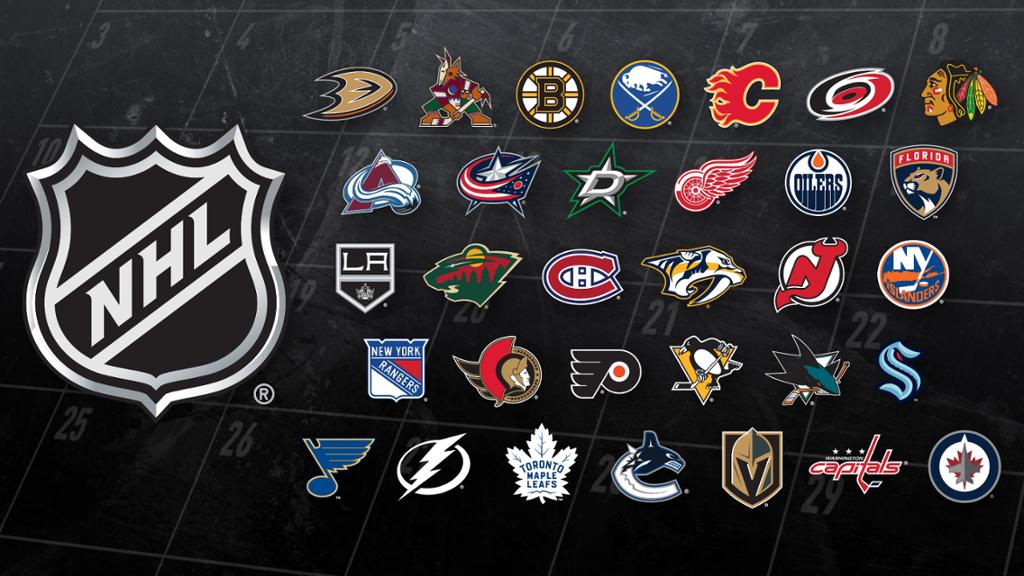
| Atlantic Division | Metropolitan Division |
| Florida Panthers | Carolina Hurricanes |
| Tampa Bay Lightning | New York Rangers |
| Detroit Red Wings | New York Islanders |
| Buffalo Sabres | Pittsburgh Penguins |
| Toronto Maple Leafs | Philidelphia Flyers |
| Ottawa Senators | Washington Capitals |
| Montreal Canadiens | New Jersey Devils |
| Quebec Nordiques*# | Boston Bruins* |
Western Conference
| Central Division | Pacific Division |
| Colorado Avalanche | Vegas Golden Knights |
| Nashville Predators | Los Angelas Kings |
| Minnesota Wild | Anaheim Ducks |
| St. Louis Blues | Calgary Flames |
| Dallas Stars | Edmonton Oilers |
| Winnipeg Jets | San Jose Sharks |
| Chicago Blackhawks | Vancouver Canucks |
| Columbus Blue Jackets* | Seattle Kraken |
*Relocated to division
# Can’t be named anything other than Nordiques.
This makes sense because if you look at a map all teams are generally in the same areas and would be great for rivalries. The only exception is The Atlantic Division with it being primarily in the North and then the two Florida teams but with the number of Canadians that live in Florida during the winter months, it does make logical sense that way. Boston should have always been in the Metro division with its geographical rivals of New York, New Jersey, Philadelphia, and Pittsburgh. Columbus has always seemed weird to me as being a part of the Metro division. All their local rivalries are located in the Central division anyway with their proximity to places like Chicago, Minnesota, and Winnipeg.
Expansion
With the divisions realigned properly now, let’s get to the potential of expansion in the NHL. The league is currently at 32 teams with the addition of the Seattle Kraken for the 2021-22 season and makes all divisions have the same number of teams. The NHL is going to expand in the future again since the expected expansion costs for the new franchises will be over $1 Billion just to get into the league. These fees will help the bottom line of all teams and the league as a whole. So, with that being said they would have to expand to 4 more markets and try to keep the division alignment in check with the realignment that was previously mentioned.
Here are my top picks for potential NHL expansion locations:
Atlantic Division – Hamilton, Ontario
Metropolitan Division – Hartford, Connecticut
Central Division – Houston, Texas
Pacific Division – San Diego, California
Let’s take a look at each potential market, shall we?
Hamilton, Ontario
- City population is 537,917 but the metro area has a population of 767,000
- City has a small airport that can be used by NHL team to enter and leave the area easily
- 68 kms away from Toronto and 102 kms away from Buffalo
- Tiger-Cats (CFL), Forge FC (CPL soccer), Honey Badgers (CEBL), and Toronto Rock (NLL) are the only pro sports teams in town
- The Bulldogs play in the OHL and are the only “major” hockey team in town
- The Bulldogs used to be an AHL franchise for years as well
- Would have lots of local support and from the surrounding areas including Toronto and Buffalo
- Hamilton Tigers was an NHL franchise from 1920-1925 when there was a dispute between players and ownership which led to the players being sold to the expansion New York Americans
- Predict Metro are population to reach 864,000 by the year 2035.
- McMaster University is a major CIS college school with lots of support
- The city has hosted many different sporting events like CFL Grey Cup’s, Rugby world qualifiers, North American Indigenous Games, U Sport Championships, RBC Canadian Open PGA event, MLL games, PLL games, and the NHL Heritage Classic 2022 between the Buffalo Sabres and Toronto Maple Leafs.
- The First Ontario Centre can be used as a temporary home for the franchise as it has a capacity of 17,500 for sporting events.
- A newer arena would be beneficial to having a franchise in this market.
- There are at least 9 different hotels in the immediate are but none of the typical high end hotels NHL teams are used to, but if a NHL team were to be located in Hamilton those hotels would come
- Currently 31 different ice pads that could be used as a practice facility somewhere in the city
- Downtown Hamilton does have some fine dining available but more locations would open up with an NHL franchise
- Countless local establishments for entertainment for both teams and fans to enjoy.
Hartford, Connecticut
- The Capital of Connecticut
- As of 2010 the city has a population of 121,054
- There are 3 airports in the area for NHL teams to use
- A few higher end hotels currently in the city and more would be built with a franchise back in the city
- Lots of local cuisine for teams and fans to enjoy
- Not too many other sports teams in town with the Hartford Wolf Pack of the AHL and the UCONN Huskies of NCAA division 1 being the major teams
- The Whalers were in the WHA from 1974-79 and the NHL from 1979-1997
- Ownership mistakes was the reason for the team moving to Carolina prior to the 1997-98 season
- They got rid of the popular 9, 10 and 20 games ticket packs and instead only offering the full 41 home games as season tickets
- The state and team were close to an agreement on a $147.5 Million new arena split cost but ownership then wanted an additional $45 Million form the state to cover potential losses over the 3 years it would take to build the new arena.
- Average attendance for the Whalers was 9,854 (in 1979-80) and up to 14,575 (in 1987-88)
- Last season in Hartford attendance average was around 13,680/game
- The Binghamton Rangers moved to HArtford for the 1997-98 AHL season and renamed to the Hartford Wolf Pack
- From 2010-2013 the team was briefly renamed the Connecticut Whale before going back to Hartford Wolf Pack in 2013.
- Wolf Pack/Whale attendance has been between 3,129 (Covid-19 restrictions) and up to 7,221/game
- They would eventually need a new arena but could use the XL Center (formally Hartford Civic Center) until a new arena is built
- Current capacity at XL Center is 14,750 for hockey
Houston, Texas
- Sixth highest population in North America with 2,304,580 people
- One of the most major markets in North America without an NHL team
- NBA, NFL, MLB, MLS all currently in town
- Rockets owner Tim Fertitta has stated in the past of his desire to bring an NHL franchise to the city and has tried to bring the Coyotes to the market in the past
- Houston Aeros used to play in the AHL from 1994-2013
- The Aeros used to average up to 7,300/game in attendance
- The Aeros left because the ownership had issues with the then owner of the Rockets and Toyota Center over rent costs among other things so the Minnesota Wild moved the team to Iowa.
- The Aeros were also a WHA franchise from 1972 until the team folded after the 1978 season.
- Lots of local fan support for a team would make it very successful financially and would also help the NHL’s bottom line and raise salary caps.
- Toyota Center is more than capable of holding an NHL franchise as they have a capacity of 18,055 but would like require renovations to have an NHL standard ice surface and facility
- Infrastructure in already in place for everything that could possibly be needed by teams and fans
San Diego, California
- Eighth highest population in the USA and second highest in California with a population of 1,386,932.
- The city averages around 32 million people in tourism annually.
- MLB is the only current major sports league in the city.
- San Diego Seals of the NLL and the San Diego Gulls of the AHL are two of the other pro sports teams in the city.
- There are 3 Division 1 NCAA schools, 2 division 2 NCAA, and 2 NAIA schools in town.
- The current rendition of the San Diego Gulls has playing since the 2015/16 season and averages around 9,000/game in attendance
- Very hockey hungry community
- Their hockey history is extensive starting with the San Diego Skyhawks of the Pacific Coast Hockey League from 1948-1950, then the original version of the Gulls playing in the WHL from 1966 until the league folded in 1974, San Diego Mariners of the WHA from 1974-1977, San Diego Hawks and then later renamed Mariners of the Pacific Hockey League from 1977-1979, the 2nd version of the Gulls played in the IHL form 1990-1995, the 3rd version of the Gulls played in the West Coast Hockey League from 1995-1003 and then in the ECHL from 2003-2006.
- Willie O’Ree, the first black player in the NHL, is a notable alumni of San Diego hockey teams as he played for the Gulls from 1967-1972, Then the WHL version of the Gulls from 1972-1974, he played for the San Diego Charms of the So Cal Sr, League from 1974-1976 before playing for the Hawks in the PHL for the 1978-79 season.
- San Diego would be a major market for the NHL and the revenue from this team alone would help the NHL’s bottom line dramatically
While these are the markets that make the most sense in those divisions, I did come up with three bonus honorable mentions for markets which are the following:
Portland, Maine (Metro Division)
- City population of 68,408
- Close proximity to other major markets in New England
- Currently the home of the Portland Sea Dogs Double A minor league baseball team, Maine Celtics of the NBA G league, GPS Portland Phoenix of the USL League two soccer, and the Maine Mariners of the ECHL
- ECHL team has a descent average attendance of between 2,500-3,000/game
- The Sea Dogs average around 5,600/game
- Portland Pirates used to be a team in the AHL from 1993-2016 and averaged up to 6,500/game in their history
- The NHL would be the first major sports league to have a team in this market
- Besides local support, they would get support from other places in New England as well as Atlantic Canada
- Might not be the first-place people think of for expansion but a team would thrive in this market quite easily
- There is an airport in Portland that NHL teams will be able to use
- Countless hotels and resorts in the surrounding area to be used and more high-end ones would be built with a franchise in the area
- Lots of local restaurants to provide a wide variety of food options for everyone
- Will need to build a new NHL calibre arena in the area as the only arena that could possibly be used has a maximum capacity of only 6,206 for sporting events
Regina, Saskatchewan (Central Division)
- The capital of Saskatchewan
- As of 2020 the population is estimated at 263,184 and has been steadily increasing for years
- Home of the Saskatchewan Roughriders (not to be confused with Rough Riders) of the Canadian Football League (CFL)
- The Regina Pats have been around since 1917 and currently play in the Western Hockey League, WHL
- As many as 165 NHL players have played for Regina at some point in their junior career
- The Pats average between 3,900 and 6,078/game
- The Roughriders lowest average attendance was 24,001 since 2006 but consistently average over 32,000/game
- The province and citizens would have lots of support for an NHL franchise in the city from all over the province
- There is a lot of land to build a new NHL calibre arena in the city or surrounding area
- October 26, 2019 Regina hosted the NHL Heritage Classic between the Calgary Flames and Winnipeg Jets with an attendance of 33,518.
- They also have this catchy song that will be stuck in your head forever at the following link https://www.youtube.com/watch?v=74B5kMLNd5Q
Milwaukee, Wisconsin (Central Division)
- Most populated city in the state with a population of an estimated 577,222
- They would be a natural rival of Chicago and other surrounding areas
- The NHL and NFL are the only major sports leagues in town.
- Home of the Milwaukee Brewers, MLB and Milwaukee Bucks, NBA
- Milwaukee Admirals have been around since 1970 and are currently the AHL affiliate of the Nashville Predators.
- Admirals average attendance is between 4,420 and 6,329/game
- Have hosted NHL exhibition games in the past with attendance of over 16,000
- Currently have an NHL calibre arena ready to go with the Fiserv Forum
- The Forum has a capacity of 17,341 for the Milwaukee Bucks but it would be closer to 16,000 for hockey
- Arena was opened in 2018 and is located in the downtown core of the city and easy to get to
- Infrastructure is already in place for NHL teams to utilize
There are some other markets that I came up with, but I am not entirely sure that it would work in those markets logistically. They are the following:
- Halifax, Nova Scotia – Atlantic Division
- Baltimore, Maryland – Metro Division
- Birmingham, Alabama – Metro Division
- Cincinnati, Ohio – Central Division
- Cleveland, Ohio – Central Division
- Indianapolis, Indiana – Central Division
- New Orleans, Louisiana – Central Division
- Oklahoma City, Oklahoma – Central Division
- Salt Lake City, Utah – Central Division
- Austin, Texas – Central Division
- Sacramento, California – Pacific Division
- San Francisco, California – Pacific Division
The NHL is on its way to expanding to be one of the largest sports leagues in North America, team number-wise, and with the exception of Arizona, a team should excel in the markets that I had mentioned with a write-up on the market. One of the major obstacles in their way though is the current commissioner Gary Bettman but that’s another blog post for another day.

 ScortonBoy17.ca

Leave a comment